MyGenMobile App
- 1.42K
- 4.4
- Installs
- 100.00K
- Price
- Free

Screenshots
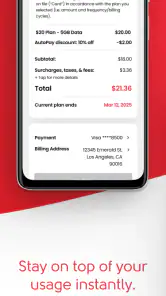
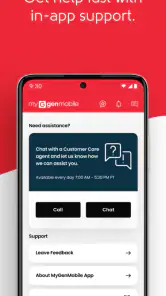
Analysis by Reviewed
I approached MyGenMobile as an everyday events app rather than as a general-purpose social network. Its identity is fairly focused: it comes from Gen Mobile, sits in the Events category, and is available free of charge. That immediately makes the decision simple for someone who wants to try it without committing money first. The more important question is whether it earns a regular place on your phone, and that depends on how closely its event-related purpose matches your routine.
The app has reached a 4.4 average from around 3,300 ratings, with more than 100,000 installs. Those figures suggest that it has found a real audience, but they do not automatically make it the right choice for everyone. I found the strongest case for it among people who want a dedicated way to keep up with activities connected to their Gen Mobile experience, rather than another crowded feed filled with unrelated posts and promotions.
MyGenMobile in everyday use
The first thing I noticed is that the app is easier to understand when treated as a companion for event information, not as a replacement for every calendar, messaging, or discovery tool on a phone. That distinction matters. A calendar is best for appointments I have already accepted. A messaging app is better for coordinating with friends. A broad event-discovery service is usually more useful when I want to search across a whole city. MyGenMobile makes more sense when I want a direct, mobile-friendly place for the event material associated with its own service.
That focused role can be a strength. I do not have to mix event-related information with work reminders, shopping alerts, family conversations, and unrelated recommendations. When an app has a narrow purpose, I can decide quickly whether it belongs in my routine. In this case, the useful question is not “Can it replace my entire event setup?” but “Does it make the Gen Mobile event experience easier to follow while I am away from a desktop?”
The developer, Gen Mobile, has kept the product positioned as a straightforward mobile app rather than presenting it as a premium event-planning suite. The current version is 2.1.7, and the store summary describes an April 2026 update focused on more data and a smoother MyGenMobile app experience. I read that as a sign that the developer is working on refinement and information depth, which is more relevant here than a long list of flashy additions.
Why the free price changes the decision
There is no purchase barrier to testing it. That is the clearest value point: I can install the app, explore its event-related purpose, and decide whether it fits my habits without paying an entry fee. For a free app, the standard is not whether it replaces every paid planning tool. The standard is whether it saves enough time or keeps enough useful information in one place to justify leaving it installed.
I would still avoid treating “free” as a promise that every possible service around an event is included. Free access tells me what I can spend to obtain the app itself: nothing. It does not turn the app into a substitute for tickets, travel, food, venue charges, or any other real-world event expense. Keeping those separate prevents disappointment and makes the value assessment more honest.
For someone who only needs an occasional reminder, the free model makes experimentation painless, but regular usefulness may be harder to establish. If I attend events rarely and already manage them comfortably through email or a phone calendar, adding another app may create more places to check rather than less work. If I interact with Gen Mobile events often, the same free access becomes more attractive because even a modest convenience can add up over repeated use.
A realistic routine for using it
Imagine I am preparing for a busy week and know that an event connected to my mobile service is coming up. Instead of searching through old messages or trying to remember where the relevant information appeared, I can open MyGenMobile and use it as the first place to check. I would review the available event information, note anything that affects my schedule, and then use my normal calendar or messaging app for the next step if I need a personal reminder or want to coordinate with someone else.
That workflow is deliberately simple, and I think that is where the app can be most helpful. It does not require me to rebuild my whole organizational system. I can use it for discovery or reference, then hand off confirmed plans to tools that are better suited to alarms, invitations, directions, or group chat. The practical trick is to use MyGenMobile as the source for event context, not as the only tool for every action that follows.
This also gives the app a useful place in a household routine. One person can check the event information, while another handles transport or reminders elsewhere. That division avoids forcing everyone to adopt the same app simply to attend the same activity. It is a small but important trade-off: the app can centralize the relevant information without necessarily centralizing the entire planning process.
What the recent direction means for users
The April 2026 store summary points to more data and a smoother experience. In practical terms, that makes me more interested in how clearly the app presents information than in whether it adds a large number of tools. Event apps succeed or fail on details such as finding the right item quickly, understanding what is current, and avoiding unnecessary friction between opening the app and seeing something useful.
More information is only valuable when it remains readable. A crowded screen can be just as frustrating as an empty one, especially when I am checking an event while travelling or between other tasks. My preference is to scan the key information first and investigate further only when needed. If the update improves that progression, it supports the app’s purpose. If it simply adds more material without improving clarity, the benefit is smaller.
The wording about a smoother experience also matters because event-related apps are often opened briefly rather than used for long sessions. I do not want to spend several minutes learning an interface for a task that should take a few seconds. MyGenMobile’s best version, in my view, is one that respects those short visits: open it, find the relevant event information, understand what has changed, and leave.
Where it fits beside familiar alternatives
Compared with a normal calendar, MyGenMobile has a different starting point. A calendar is excellent after I have decided what belongs in my schedule, but it usually depends on me entering or importing the details correctly. An event-focused companion can be more useful at the information stage, before I create a personal appointment. I would use the two together rather than expecting one to replace the other.
Compared with email, the advantage is organization. Email can contain confirmations, announcements, and conversations, but those items may be buried among unrelated messages. A dedicated app gives event information its own context. The disadvantage is that email remains more universal: other people can send me details there regardless of which app they use. If my event life is spread across many organizers, I would still need email and other services.
Compared with broad event-discovery platforms, MyGenMobile appears better suited to a narrower relationship with Gen Mobile than to exploring every public activity nearby. That can be a benefit if I want relevance instead of endless browsing. It is a limitation if my main goal is to compare concerts, classes, festivals, or community activities from many unrelated sources. In that situation, a citywide discovery service would likely be the better first stop.
Compared with messaging apps, it is less about conversation and more about checking information. Friends may still prefer to discuss meeting points, changes, and transport in a group chat. I would not move those conversations into an event app unless it specifically made that process easier for my group. The sensible setup is complementary: MyGenMobile for the event context, messaging for people, and the calendar for my own commitments.
Small habits that improve the experience
My first recommendation is to open the app with a question in mind. For example, I might want to know what is happening next, whether an event’s information has changed, or what I need to remember before attending. A defined purpose makes a focused app feel useful; opening it aimlessly can make any event feed feel like another source of notifications.
My second recommendation is to separate discovery from commitment. Seeing an event in the app does not necessarily mean I have placed it on my personal schedule. I would confirm the details that matter to me, then create a calendar entry or reminder using the tool I already trust. This two-step approach takes a little discipline, but it prevents the common mistake of assuming that viewing information is the same as recording a plan.
My third tip is to make a quick post-check part of the routine before leaving for an event. Event information can be more useful close to the day itself than when I first notice it. I would use MyGenMobile as a final reference, then rely on my usual navigation and communication tools for the journey. That keeps the app in the role where it is most likely to help instead of asking it to handle unrelated tasks.
A fourth trade-off is worth mentioning: a dedicated app can reduce clutter inside one service while increasing the number of apps I maintain overall. I would not install it merely because it is free. I would install it if the event information is relevant often enough to justify another icon, another update cycle, and another place to check. Free removes financial risk, but it does not remove attention cost.
Who is likely to get the most value
I think the strongest audience is made up of Gen Mobile users who regularly care about the events presented through that ecosystem and prefer a mobile-first way to access them. The app is also a reasonable choice for people who want to test a dedicated event companion without paying for a planning subscription. Its Everyone age rating makes it broadly approachable for households, although the usefulness still depends on the person’s connection to the events it covers.
It may also suit someone who dislikes digging through general-purpose apps. If I find that event details disappear among emails, social posts, and calendar entries, a focused destination can make the initial lookup less tiring. The benefit is especially clear when I want a quick reference rather than a full planning workspace.
I would be more cautious if my needs are mainly collaborative. A family that requires shared schedules, automatic reminders, task assignments, and ongoing discussion may be happier with a calendar platform or group-planning service. MyGenMobile can be part of that arrangement, but I would not choose it as the sole system until I knew it covered every coordination step my group expects.
I would also skip it if I am looking for broad local discovery unrelated to Gen Mobile. A focused Events app is not automatically a universal city guide. Someone comparing activities from many different organizers may get more value from a platform built around location-based search, categories, maps, and public listings. Choosing the narrower tool for the wrong job would make its focus feel like a weakness.
Compatibility and the commitment involved
The app supports Android devices running version 7.0 or later, which gives it a practical place on many older phones as well as newer ones. That is useful for households that do not upgrade devices frequently. Before installing, I would still check the operating system on the particular phone I plan to use, especially if it has been kept for many years.
The commitment is otherwise modest. It is free, rated for Everyone, and currently at version 2.1.7, so the main decision is about usefulness and phone space rather than purchase risk. I would judge it after a normal event cycle: can I find relevant information quickly, does it reduce searching elsewhere, and does it fit alongside my calendar and messages without creating duplicate work?
That trial should be practical rather than purely visual. A polished opening screen is not enough if I still have to hunt for the information I need. Conversely, a simple interface can be perfectly acceptable if it gets me to the right event quickly. I care more about the complete path from opening the app to taking a useful next action than about presentation alone.
My final recommendation
MyGenMobile is worth trying for the right audience because its free access makes the experiment low-risk and its Events focus gives it a clear role. I like the idea of using it as a dedicated reference point for Gen Mobile-related event information, especially when I want to avoid searching through unrelated messages or feeds. The developer’s current direction toward more data and a smoother experience is also encouraging for a product that depends on quick, clear checks.
My recommendation is more qualified for people who already have an efficient system. If email, a calendar, and a messaging app cover everything I need, MyGenMobile may feel like an extra stop rather than a genuine improvement. It is also not the obvious choice for broad local event discovery or detailed group planning. In those cases, a general discovery service, shared calendar, or collaboration tool may be better.
My verdict: install it if Gen Mobile events are relevant to your routine, but treat it as a focused companion rather than a complete event-management replacement. Because there is no app purchase cost, I would give it a fair trial, use the handoff workflow with my existing calendar and messaging tools, and keep it only if it saves me real searching or helps me stay informed. That is a sensible value proposition, even if it is not a universal solution for every kind of event planning.
Pros
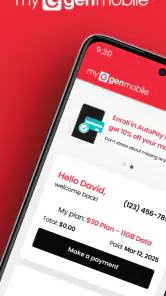
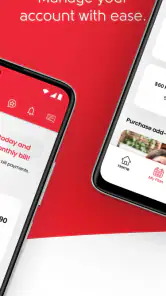
- Simple mobile account management from one convenient app.
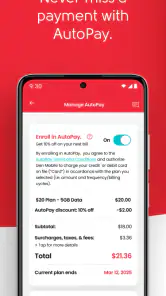
- Quick access to billing details
- usage information
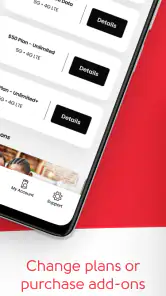
- and plan options.
- Useful tools for checking service status while away from home.
- Keeps important account information available without visiting a store.
- Convenient for users who prefer managing services digitally.
Cons
- Some features may require an active MyGenMobile account or service plan.
- Performance can depend on your internet connection and device compatibility.
- Notifications may need manual setup to be useful and timely.
- Certain account changes may still require customer support assistance.
- The app may offer limited value to users with infrequent account needs.

- Category
- Events
- Version
- 2.1.7