MamaZen: Mindful Parenting App
- 71.00
- 3.8
- Installs
- 10.00K
- Price
- Free

Screenshots







Analysis by Reviewed
Parenting advice is easy to find, but useful advice is harder to apply when a child is upset and I am already running out of patience. MamaZen: Mindful Parenting App takes a calmer, more practical route. It is a free parenting app from Motherhood, Parenting & Family Wellness Institute, built around positive parenting and the idea that a healthier family atmosphere often starts with the parent’s own response.
After spending time with it, I see the main value less as a complete parenting manual and more as a guided pause. It encourages me to notice what is happening in me before reacting to a difficult moment. That makes it relevant to parents dealing with tantrums, bedtime resistance, sibling arguments, guilt, or the simple exhaustion of repeating the same request all day.
The app is aimed at everyone from a content-rating perspective, and it runs on Android devices using version 6.0 or later. Its current version is 1.44.11. The service has passed the early experimental stage, with over ten thousand installs, an average rating of 3.8, and a little over two hundred ratings. Those figures suggest a modest but established audience rather than a universally adopted parenting platform.
How the experience supports different parents and situations
Readability and navigation during a busy day
The most important accessibility question for a parenting app is not whether it contains a huge amount of information. It is whether I can understand what to do when I have one hand free, a child calling from another room, and very little mental energy. MamaZen works best when I treat it as a short, focused companion rather than something I need to study from beginning to end.
The positive-parenting focus gives the experience a clear direction. Instead of encouraging punishment or quick control, it points attention toward connection, emotional regulation, and healthier responses. That makes the material easier to relate to than advice built around rigid rules. I can approach a difficult situation by asking what I am feeling, what my child may be communicating, and what response is likely to help rather than escalate the moment.
For a parent who reads comfortably on a phone, the app’s subject is approachable. The language associated with mindful parenting generally works better when it is concrete, and the strongest parts of this type of guidance are the parts I can translate into a sentence or action immediately. For example, I might pause before answering, lower my voice, or separate my child’s behavior from my judgment of the child.
There is a useful distinction here between learning and remembering. A long article may explain why a reaction happens, but it is rarely available in my mind during a supermarket meltdown. I would get more from MamaZen by exploring it at a quiet time, then choosing one idea to practice that week. The app becomes a preparation tool, not a magical button I press after losing my temper.
More From Our News Desk

Clash of Clans Is Won Between the Battles

Android Auto Makes the Case for Quieter Car Software

MobiOffice: Transforming Mobile Productivity with Seamless Integration

EA SPORTS FC™ Mobile Soccer: Redefining Mobile Sports Gaming

How Microsoft OneDrive Became a Mobile Productivity Giant

How Google Translate Breaks Language Barriers Effortlessly
That workflow is also more inclusive for parents with limited concentration, interrupted schedules, or little confidence with parenting terminology. I do not need to identify myself as a mindfulness enthusiast. I can simply use the material to prepare for a recurring challenge, such as morning delays or a child refusing to stop playing.
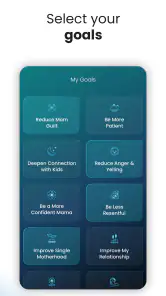
Still, I would not call the navigation ideal for every user. Parenting apps can become difficult when advice is spread across many lessons, topics, or prompts and the user is unsure where to begin. MamaZen makes the most sense when I choose a specific goal instead of browsing without a plan. A new user should start with one recurring family situation and resist the temptation to consume everything at once.
Motor and sensory considerations
Parents with different physical abilities may use a phone in very different ways. Someone may be holding a baby, using a device with one hand, relying on enlarged text, or navigating through touch with limited precision. MamaZen’s usefulness in those circumstances depends heavily on the phone’s own settings and on how comfortably the app’s content can be reached, read, and controlled. I would not assume that every interaction suits every motor need.
The app’s subject matter does offer one practical advantage: much of the value can be absorbed in short sessions. A parent who cannot remain in one position for long does not need to reserve a full evening for it. I can imagine reading a small section while a child naps, returning later after an interruption, and applying one suggestion without completing an entire course in one sitting.
That short-session approach also helps users who become overwhelmed by dense information. Mindful parenting can sound abstract when presented as a large theory. It feels more manageable when I connect it to a single physical action, such as taking a breath before speaking or moving closer to a child instead of calling repeatedly from another room.
Sensory needs deserve equal attention. A parent who is already overloaded by noise, touch, and constant demands may not want an app that adds more stimulation. The best way to use this one is during a low-noise moment, with the phone’s display and sound adjusted to personal comfort. I would avoid opening it in the middle of a chaotic argument and expecting calm guidance to compete with the environment.
For people who prefer audio or who have difficulty reading from a screen, the experience may be less convenient if the particular material they need is primarily visual or text-based. I cannot treat the app as a replacement for every preferred format. A printed note, a voice memo summarizing a useful idea, or support from another adult may work better alongside it.
One non-obvious benefit is that the app can help reduce the physical intensity of a parenting response even when it does not change the child’s behavior immediately. If I use it to rehearse a calmer reaction before a predictable trigger, I am less dependent on perfect timing. That matters for parents whose attention, movement, or speech is affected by fatigue, stress, or disability.
Situational access for real family routines
I find the strongest use case in repeated, emotionally charged routines. Imagine a parent trying to get a six-year-old ready for school. The child refuses socks, breakfast is untouched, and every reminder has become another argument. Opening a parenting app at that exact moment is unrealistic. The better workflow is to use MamaZen beforehand: identify the parent’s trigger, practice a pause, and decide on one calm phrase before the morning begins.
That preparation changes what I expect from the app. It is not there to make children instantly cooperative. It helps me notice the point at which my own frustration starts driving the conversation. I might still need to set a firm limit, but I can do so without adding sarcasm, threats, or a long lecture that nobody can process.
The same approach can work for bedtime. A parent could explore the material after the children are asleep, then choose a small adjustment for the following evening. Perhaps the goal is to stop negotiating after the routine has started, or to acknowledge the child’s disappointment before repeating the boundary. The insight is useful because it turns a broad promise such as “be more mindful” into a repeatable experiment.
MamaZen may also suit co-parents who want a shared vocabulary without attending a formal class together. One person could use a lesson or exercise, then explain the central idea in ordinary language. That does not guarantee agreement, but it can make conversations about discipline less personal. Instead of saying, “You always lose your temper,” we can discuss what response we want to practice next time.
It is less suitable for urgent safety problems, severe family conflict, or situations requiring clinical assessment. If a child is in danger, if a parent fears losing control, or if behavior is connected to a serious health concern, an app should not be the only support. Mindful parenting content can complement professional help, but it cannot replace a pediatrician, therapist, crisis service, or trusted local resource.
Another situational trade-off is privacy and attention. Parenting content often invites personal reflection, and I would use it in a place where I feel comfortable thinking honestly. I would also avoid turning every family incident into an app exercise. Children need direct attention, and parents can become more anxious if they constantly evaluate whether they are parenting correctly.
What the payment model means in practice
The app is free to install, which makes it easy to try without committing money first. That is important in parenting, where people may already be paying for childcare, books, classes, or professional support. I can explore whether the tone and approach suit me before deciding whether it deserves a larger role in my routine.
There are in-app purchases ranging from $9.99 to $49.99 per item. I would therefore treat the free entry point as a chance to evaluate the experience rather than assuming every part of the program is included. Before purchasing, I would check exactly what an item unlocks, whether it addresses my current parenting challenge, and whether I am realistically going to use it more than once.
This is where MamaZen differs from ordinary free articles and social-media advice. A random post may offer a clever sentence or a reassuring story, but it rarely gives me a coherent path for practicing a response. On the other hand, free articles are easier to compare, save, and revisit without a purchase decision. If I only want occasional advice about one narrow problem, a library book, a pediatric resource, or a reputable parenting organization may be better value.
The paid model also creates a risk of buying out of guilt. A tired parent may feel that purchasing a program proves commitment to the family. I would not make that decision emotionally. The real question is whether the structure helps me practice something consistently. If I already have a therapist, parenting group, or trusted course that fits my needs, MamaZen may be a supplementary tool rather than a necessary purchase.
Remaining barriers and where another option may win
The app’s central philosophy will not appeal to every parent. Positive parenting is sometimes misunderstood as avoiding boundaries, but a useful approach still needs limits, consequences, and attention to safety. If I want a strict schedule, a behavior chart, developmental milestones, or a detailed reference organized by age, a different parenting app or a specialist book may be more direct.
It may also feel too inward-looking for a parent who needs help with a very specific external problem. Questions about sleep, feeding, speech, schooling, neurodevelopment, or medical symptoms require focused expertise. MamaZen can encourage a calmer response, but it should not be treated as a diagnostic tool or as proof that a parent’s mindset explains every difficulty.
Parents with neurodivergent children may appreciate the emphasis on reducing reactive conflict, but they may also need guidance adapted to sensory differences, communication styles, transitions, and individual support plans. General mindful-parenting advice can be a useful starting point, yet it should not override advice from professionals who know the child. The same applies to families dealing with trauma, domestic abuse, postpartum mental-health concerns, or major cultural and household differences.
There is a practical barrier for parents who dislike reflective exercises. Some people want a checklist: do this first, then this, and review the result. MamaZen is more valuable when I am willing to notice my own emotions and experiment with a response. If that process feels irritating or vague, a routine planner or a behavior-focused resource may be a better match.
The rating of 3.8 reflects a mixed but reasonably positive public response. I would read that as a reminder to keep expectations realistic. The app may be genuinely helpful for one parent and unconvincing for another, especially because parenting styles, children’s ages, family pressures, and accessibility needs vary so widely.
My inclusive verdict for parents considering it
I recommend MamaZen to parents who want practical support for becoming less reactive and more intentional, especially when the same family conflicts happen repeatedly. Its strongest contribution is not a promise of perfect calm. It gives me a way to prepare for difficult moments, examine my part in an interaction, and choose a small change that I can actually repeat.
I also think it is worth trying for parents who need flexible, interrupted learning. The free starting point lowers the risk, and the Everyone age rating makes it broadly approachable as a family-oriented app. The developer, Motherhood, Parenting & Family Wellness Institute, has positioned it around positive parenting and family well-being rather than entertainment, so I would use it with a reflective mindset rather than expecting quick rewards.
For accessibility, my verdict is qualified. The short, practical nature of the material can fit around disability, fatigue, childcare interruptions, and different schedules, but I would adapt the experience to my own reading, touch, sound, and concentration needs. I would not assume that an app designed for mindful parenting automatically provides every accessibility feature a particular user requires.
My best tip is to choose one trigger before opening it: shouting during homework, resistance at bedtime, or losing patience during a rushed morning. Use the app when calm, write down one response to practice, and review what happened later without blaming yourself. That turns general advice into a small family experiment and makes it easier to judge whether the approach is helping.
I would skip it if I needed medical guidance, urgent crisis support, a detailed child-development reference, or a highly structured behavior-management system. I would also avoid paying for additional content until the free experience proves that I can return to it consistently. For the right parent, though, MamaZen: Mindful Parenting App is a thoughtful companion: most useful not when the family is already calm, but when I am preparing to bring a little more calm into the next difficult moment.
MamaZen: Mindful Parenting App Frequently Asked Questions
Is MamaZen available for my phone, and what age rating does it have?
MamaZen is a parenting app for Android, with a minimum operating-system requirement of Android 6.0. It is rated Everyone, so its store age classification is suitable for a general audience. The app is designed around parents’ wellbeing and family life, rather than being a game or a general meditation library. Check your device’s software version before downloading to make sure it meets the requirement.
Who makes MamaZen, and how widely is it used?
MamaZen is developed by the Motherhood, Parenting & Family Wellness Institute. It has more than 10,000 installs and an average rating of 3.8 from 236 ratings, giving prospective users a snapshot of its reach and reception. Those figures can be useful context, but they do not guarantee that every parent will find the content or approach a good personal fit.
What is MamaZen: Mindful Parenting App designed for?
MamaZen is a mindfulness and emotional-wellness app created to support parents during stressful or overwhelming moments. It offers guided meditations, relaxation exercises, breathing practices, and parenting-focused audio sessions intended to help users calm down, manage emotional reactions, and respond to family situations more thoughtfully. It is a self-help tool, not a replacement for professional medical or psychological care.
What kind of content and exercises are available in MamaZen?
The app generally focuses on short, accessible sessions that parents can fit into a busy routine. Depending on the available program and subscription, you may find guided mindfulness practices, sleep or relaxation content, stress-management exercises, and sessions addressing common parenting challenges such as impatience, frustration, guilt, or emotional overload. The audio-based format makes it possible to practice at home, during a break, or with headphones.
Is MamaZen suitable for beginners who have never practiced mindfulness?
Yes. MamaZen is designed to be approachable for parents without previous meditation experience. Its guided format explains what to do instead of expecting users to meditate independently, and many sessions are structured around practical everyday concerns rather than complicated techniques. Beginners should still start with shorter exercises, practice in a quiet and safe place, and avoid using the app while driving or supervising a situation that requires full attention.
Pros
- Short guided exercises fit easily into busy parenting routines.
- Focuses on emotional regulation rather than promoting perfect parenting.
- Calming audio sessions can be used while sitting
- walking
- or resting.
- Content is approachable for beginners with little mindfulness experience.
- May help parents pause before reacting during stressful family moments.
Cons
- Most useful content may require a paid subscription after the trial period.
- Some exercises may feel repetitive for experienced mindfulness users.
- Benefits depend on practicing regularly rather than using it occasionally.
- The parenting advice may not suit every family’s culture or parenting style.
- It is not a substitute for therapy or professional help during serious distress.
- Category
- Parenting
- Version
- 1.44.11