Liene Photo
- 232.00
- 3.6
- Installs
- 100.00K
- Price
- Free

Screenshots


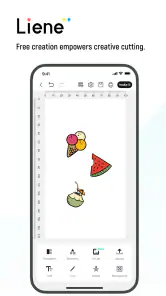

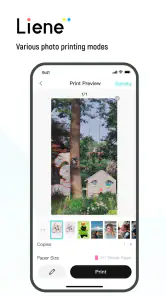

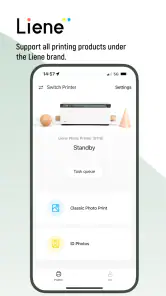

Analysis by Reviewed
I approached Liene Photo as a practical photography app rather than assuming it would replace every camera or editing tool on my phone. Developed by Hannto Technology, it is free to use, aimed at everyone, and built for Android devices running version 7.0 or later. That combination makes it easy to consider if you have an older phone and want to try a dedicated photo application without paying first.
The central question for me was not whether it could sound impressive in a short store description, but whether it felt comfortable during ordinary photo routines: opening it when something interesting happens, working through a group of images, and returning to it after a busy session. My overall impression is that it is best treated as a lightweight, approachable photography option, with expectations kept realistic. It has enough appeal for casual users, but it is not automatically the right choice for someone who needs a highly specialized camera workflow.
How Liene Photo feels in everyday photography
Opening the app and judging its speed
The first thing I pay attention to in a photography app is how quickly it gets me to the useful part. A camera tool is most valuable when I can open it without thinking, frame a subject, and continue with the rest of my day. Liene Photo’s appeal is closely tied to that simple role. It is not something I would install only to admire a complicated control panel; I would use it when I want a direct way to handle photos on a compatible Android phone.
Speed can feel very different from one device to another, especially when the phone is older or has limited free storage. Because Liene Photo supports Android versions reaching back to 7.0, it may be worth trying on hardware that newer photography applications leave behind. That compatibility should not be confused with identical performance everywhere, though. A recent phone may feel ready sooner than an aging model, while a device under pressure from other apps may take longer to respond.
I also prefer judging a photography app by its complete rhythm rather than by the first launch alone. Moving from taking or selecting a picture to reviewing the result is where small delays become irritating. If you are the kind of person who captures several versions of the same scene, the difference between a pleasant tool and a tiring one comes from how consistently it handles that repeated cycle.
What happens during a heavier photo session
A short snapshot is an easy test. A more revealing situation is a family gathering, a walk through a market, or a trip where you take pictures in quick succession. In those moments, the app has to fit around your attention instead of demanding it. I would keep an eye on whether the phone becomes warm, whether switching between images remains comfortable, and whether the application still feels manageable after a longer session.
Those are partly device-dependent experiences, so I would not promise the same result for every reader. The practical advice is to test Liene Photo during the kind of session you actually expect to have. If you mainly capture one or two pictures at a time, modest resource use may be enough. If you regularly work through a large batch, the phone’s available memory and storage will matter more than the app’s simple first impression.
One useful habit is to avoid treating the app as the only place where your photos exist. After an important session, I would review the finished images in the phone’s normal gallery as well. That gives me a second way to confirm that the pictures are where I expect them to be and makes the workflow less stressful when I am dealing with irreplaceable moments.
A realistic everyday scenario
Imagine that I am walking home and notice a colorful storefront just before sunset. I want to take a few pictures, compare them, and keep the best one for sharing later. Liene Photo makes sense in this situation because I do not need a full professional setup. I need an accessible photography tool that I can learn quickly, use without a subscription decision, and put away once the moment has passed.
For a small personal project, I might also use it to collect pictures of a room before rearranging furniture, document an item before selling it, or make a visual record of a hobby. These uses are less glamorous than travel photography, but they are where a free app can become genuinely useful. The value comes from reducing friction in a repeated routine, not from promising that every image will look like it came from a dedicated camera.
Where I would be more cautious is an event where missing a moment would be costly. In that case, I would test the app on the exact phone beforehand and keep the device’s standard camera available as a fallback. That is not a criticism unique to Liene Photo; it is sensible practice whenever a photography app becomes part of an important occasion.
Stability and recovering from interruptions
Reliability matters more to me than a long feature list. Phones interrupt photography sessions with calls, notifications, low battery warnings, and accidental trips to the home screen. A good routine should make it reasonably clear what happened when I return: whether the picture was saved, whether I need to repeat an action, or whether I should check the gallery before continuing.
I would not rely on any photo application as the sole protection for important memories. After capturing something valuable, I prefer to confirm it in the device’s regular photo library and, when appropriate, keep a separate backup. This is especially useful if I have been taking pictures while moving between apps or if the phone is running low on storage.
That recovery habit is one of the less obvious ways to use Liene Photo sensibly. Instead of assuming that an uninterrupted session is guaranteed, I build in a quick verification step after important shots. It takes little time and helps separate a temporary interruption from an actual problem with the saved image.
Older phones, storage, and practical limits
The minimum Android requirement makes Liene Photo interesting for people who do not own a new phone. Still, operating-system compatibility is only one part of the experience. An older device may have a slower processor, less available memory, a weaker battery, or crowded storage. Those constraints can affect launch time and responsiveness even when the app installs successfully.
Before a long photo session, I would clear enough storage for the phone to work comfortably and close demanding applications that are not needed. I would also avoid judging the app while the device is performing several background tasks. This kind of preparation is particularly relevant when using an older Android handset, where a small amount of free space can make everyday actions feel less predictable.
Resource demands also depend on what else is happening on the phone. A device used for games, video editing, messaging, and photography may show more strain than one used mainly for pictures. My recommendation is therefore conditional: Liene Photo is worth testing on an older device, but I would not assume that its broad compatibility guarantees a smooth experience under every workload.
How it compares with the usual alternatives
The most obvious alternative is the camera app already installed on the phone. That option usually has one major advantage: it is already familiar and closely integrated with the device. If I need the fastest possible way to capture a spontaneous moment, I may choose the built-in camera simply because I know exactly where everything is.
Liene Photo becomes more appealing when I want to try a separate photography experience without paying for it. Its free price removes an important barrier, and its Everyone rating makes it suitable for a broad audience. I would still compare the actual controls and handling on my phone before making it my default, because convenience depends on whether the app’s approach matches the way I normally take pictures.
Dedicated editing applications are another comparison point. They can be better for people who want deep adjustments, layered work, or a carefully repeatable professional process. Liene Photo is a more sensible candidate for someone who wants a straightforward photography companion rather than a full production environment. Choosing it over a powerful editor means accepting a narrower workflow in exchange for less complexity.
The same trade-off applies to cloud-based photo services. Those services may be more useful when automatic organization and access across devices are the priority. Liene Photo is easier to understand as a focused app on the phone itself. If my main goal is managing a large library across several devices, I would look beyond it; if my goal is simply having another photography option on Android, it deserves a fair trial.
Small workflow choices that improve the experience
My first tip is to test it with three different situations rather than one: a quick outdoor shot, an indoor image with less light, and a short batch of pictures. That gives a more honest sense of responsiveness than opening the app once and closing it immediately. It also reveals whether the app fits the conditions in which I actually take photos.
My second tip is to separate capture from sorting. I would take the pictures first, then review them when I have a quiet moment instead of repeatedly stopping to inspect every frame. This reduces the number of interruptions during a moving subject or a changing scene and makes the app feel more useful as part of a routine.
My third tip is to keep the phone’s standard gallery in the workflow. I use it to confirm that important images were saved and to make sure I can still find them after switching away. That simple check is more valuable than assuming every session will behave perfectly, particularly on an older device or when storage is nearly full.
A fourth consideration is battery planning. Photography already keeps the screen active and can demand more from a phone than casual messaging. For a long outing, I would start with a reasonable charge and avoid using Liene Photo as the only plan for recording a special event. The app may be perfectly adequate for short sessions, while a full day of heavy use calls for more preparation.
Who will appreciate it most?
I see Liene Photo working best for casual Android photographers, people using older compatible phones, and anyone who wants to explore a free photography app without committing money upfront. It may also suit a user who prefers learning one focused tool instead of navigating the crowded interface of a professional editor.
Its broad age rating makes it approachable for general household use, although adults should still guide younger users around sharing and storing personal photos. The application itself is not a substitute for good privacy habits. I would think carefully before posting pictures that reveal addresses, documents, school details, or other identifying information.
I would skip it if my priority is advanced manual control, a carefully managed professional archive, or a guaranteed replacement for the phone’s camera. In those cases, the built-in camera or a specialized photography suite may be a better fit. I would also hesitate if my phone already struggles with storage or background tasks and I cannot afford any extra friction during an important shoot.
What the current reception suggests
The app has reached over one hundred thousand installs, which tells me it has attracted a meaningful audience beyond a tiny experiment. Its average rating is 3.6, so I would describe the reception as mixed rather than universally enthusiastic. That matches my cautious view: there is enough here to justify trying it, but not enough reason to assume it will suit every phone or every photographer.
There are also more than two hundred written reviews, giving prospective users a useful reminder to look for comments that match their device and photography habits. A complaint from someone processing large batches may not matter to a person taking occasional snapshots, while praise from a casual user may not answer the needs of someone seeking detailed controls.
Version, cost, and the decision to try it
Liene Photo is currently at version 2.5.730 and remains free, so experimenting with it is relatively low risk from a purchase perspective. I would install it with a specific test in mind rather than expecting the app to transform every part of my photography. After a few sessions, I would ask myself whether it opens reliably, whether saved images are easy to find, and whether its workflow is more comfortable than the alternatives already on my phone.
That approach also keeps expectations grounded. A free application can be valuable without being the most advanced tool available. For me, the important question is whether it removes a practical obstacle: perhaps I want a separate photography option, support for an older Android phone, or a simple way to experiment. If it does that without adding noticeable frustration, it has earned a place in my app drawer.
My final performance verdict
After weighing speed expectations, heavier sessions, recovery, and device limits, I would recommend Liene Photo as a trial-worthy photography app rather than an automatic default. Its strongest case is accessibility: it is free, supports older Android software, and is aimed at a general audience. Those qualities matter to someone who wants to start simply or make use of a phone that is no longer compatible with many newer tools.
The best reason to try it is practical flexibility, not a promise of professional-level control. I would use it for everyday snapshots, personal documentation, and low-pressure creative experiments, while keeping the phone’s normal camera and gallery available for important moments. That combination gives me a safer and more adaptable routine.
In the end, Liene Photo is a reasonable option for curious Android users who value a free, approachable photography tool. I would recommend testing it on the actual device, especially if the phone is older or storage is tight. If the app feels responsive during a short batch and recovery is straightforward after an interruption, it may become a useful companion. If I needed advanced controls, intensive editing, or a more dependable professional workflow, I would choose a specialized alternative instead.
Pros
- Quickly turns photos into polished collages and creative layouts.
- Simple editing tools are accessible even for first-time users.
- Useful templates help create social media-ready images.
- Supports adding text
- stickers
- frames
- and decorative elements.
- Convenient for making personalized photo gifts and keepsakes.
Cons
- Some templates and design elements may require in-app purchases.
- Export quality or resolution can vary depending on the selected layout.
- The interface may feel crowded when browsing many creative options.
- Advanced photo-editing controls are limited compared with professional apps.
- Some features may require internet access or display advertisements.

- Category
- Photography
- Version
- 2.5.730