Landing Furnished Apartments
- 163.00
- 4.7
- Installs
- 100.00K
- Price
- Free

Screenshots



Analysis by Reviewed
I found Landing Furnished Apartments most useful as a practical starting point for people who want a ready-to-live-in home without committing to a traditional unfurnished lease. The app sits in the House & Home category and comes from Landing - Furnished Apartments. Its central idea is simple: browse furnished apartments in many cities, then use the service’s support structure to make a move feel less like a long project and more like a coordinated relocation.
That convenience is the main reason I would recommend trying it. It is not merely a collection of property photos, and it is not the best replacement for every rental marketplace. Its value depends on whether you care more about speed, furniture, and a consistent moving experience than about finding the absolute lowest monthly cost or negotiating every detail yourself. In my experience, that distinction matters more than the polished presentation.
What the app is really good at
The strongest part of the experience is the way it frames apartment hunting around a complete living arrangement rather than an empty room. A furnished apartment can remove several tasks at once: buying basic furniture, arranging delivery, deciding what to keep in storage, and planning how to make a temporary home usable on the first night. For someone relocating for work, testing a new city, or waiting for a permanent home to become available, that can be a meaningful advantage.
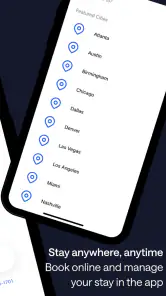
The service covers furnished apartments in more than two hundred and fifty cities, which gives the app a broader purpose than a local rental board. I would look at it when a move crosses state lines or when I need to compare several possible destinations without opening a separate search process in every city. The wide geographic reach is especially relevant for people whose location may change quickly, although the usefulness of the selection will still depend on the particular city and the apartments available there.
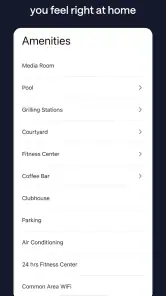
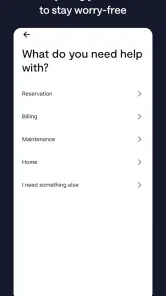
I also like that the app presents premium amenities and round-the-clock support as part of the overall proposition. Those details matter most when something goes wrong outside normal office hours or when a renter is arriving from another place and cannot easily handle an issue in person. Support does not guarantee a perfect stay, but having a service designed around furnished living is more reassuring than relying only on a generic listing platform and an individual landlord.
The app is free to install, and its Everyone age rating makes it approachable for a broad audience. It has reached over one hundred thousand installs and holds a 4.7 average from around eight hundred ratings, with roughly one hundred sixty written reviews. I would treat those figures as encouraging signs of user interest, not as proof that every apartment or city will deliver the same experience. Rental satisfaction is highly dependent on the specific property, expectations, and length of stay.
A useful workflow for a short-notice move
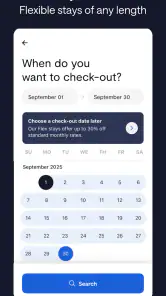
Imagine receiving a job offer in another city and having only a few weeks to relocate. With a conventional apartment search, I might need to compare unfurnished listings, estimate furniture costs, arrange utilities, schedule deliveries, and coordinate a move before I even know whether the neighborhood suits me. Landing’s furnished-apartment focus lets me evaluate the living space first and think about the move as a temporary, usable base.
My practical advice would be to begin with the city and the purpose of the stay, not with the most attractive-looking apartment image. A professional on a short assignment may value a comfortable workspace and easy daily routines. Someone between homes may care more about storage and a smooth arrival. A person exploring a new city may prefer flexibility over extra space. The app becomes more useful when those priorities are clear before browsing.
I would also keep a short checklist beside me while reviewing options. I would note the furniture that is visibly included, the amount of storage shown, the layout of the sleeping and working areas, and anything that could affect daily comfort. Photos can make a furnished apartment look complete while leaving practical questions unanswered. A sofa and a bed are not enough information if I need to work from home, host a child, or bring more than a suitcase.
Another non-obvious benefit is that furnished housing can act as a decision-making buffer. Instead of choosing a permanent neighborhood from a distance, I can use a furnished place as a base for learning the city. That is not automatically cheaper than signing a standard lease, but it can reduce the cost of making a rushed long-term decision. I would consider that trade-off valuable for a relocation where the neighborhood, commute, or personal circumstances are still uncertain.
Where it compares well with ordinary rental apps
Traditional rental marketplaces usually give me a larger mix of properties and price points. They can be better when I want an unfurnished apartment, plan to stay for a long time, or prefer to negotiate directly with an owner or property manager. They also tend to support a broader range of housing styles, from basic rooms to family homes. If my only goal were to find the lowest possible rent, I would not assume a furnished specialist would win.
Landing makes more sense when I want the search, the furniture, and the support model to point in the same direction. Generic apps often require me to assemble the rest of the experience myself. I may find a promising listing, then discover that furniture is absent, the move-in process is complicated, or communication is handled by several different parties. A dedicated furnished-housing service can reduce that coordination burden, even if the choice is narrower or the overall cost is higher.
There is also a difference in how I would use the two types of apps. A standard rental marketplace is something I might browse repeatedly while negotiating a long-term plan. Landing feels more suited to a defined transition: a relocation, a temporary work period, a renovation, or a trial stay in a new city. That makes it less of a universal rental tool and more of a focused solution for a particular kind of housing problem.
The limitation I would take seriously
The main weakness is that furnished convenience can make it easier to overlook the financial and practical trade-offs. Furniture, amenities, and support are valuable, but they are not free from a renter’s perspective simply because the app itself costs nothing to download. Before making a decision, I would compare the complete housing commitment with a conventional rental plus the cost of furnishing it. The right comparison is not just monthly rent against monthly rent.
I would also be careful about assuming that a broad city network means every city offers the same depth of choice. A service can operate across many locations while still having a more compelling selection in some places than others. I would judge the actual apartments available for my dates and needs, rather than treating the overall geographic reach as a guarantee of a perfect match.
Another point of friction is the reduced sense of control that can come with a managed, furnished experience. Some renters enjoy choosing their own mattress, desk, lighting, and storage solutions. Others have belongings that make a furnished apartment feel crowded or redundant. If I already own a complete household setup, the app’s central benefit becomes much less important, and a normal unfurnished lease may be the more sensible route.
I would not use this app casually if I needed highly specific housing requirements without carefully checking each option. A furnished apartment can look flexible while still being a poor fit for a large household, a pet, accessibility needs, or an unusually demanding work setup. The app may help me find candidates, but it does not remove the responsibility to inspect the details that affect everyday life.
Who should consider using it
I think the best audience includes professionals moving between cities, people starting a new job before they have chosen a permanent neighborhood, and renters who need a home that works immediately. It may also suit someone renovating a house, separating a temporary living arrangement from a long-term decision, or spending an extended period in a city without wanting to buy furniture for a short stay.
It is particularly appealing for people who dislike logistical work. If arranging a bed, table, seating, and other basics feels like a bigger burden than it is worth, a furnished option can simplify the first week of a move. The support emphasis is another reason I would point a first-time relocator toward it, especially when traveling to the new city is difficult or when a problem might arise outside standard business hours.
I would be more cautious recommending it to families with very specific space requirements, renters who already own furniture, and people whose priority is the lowest possible cost. It may also be a poor fit for someone who wants to personalize every part of a home or who sees a lease as a long-term investment in a stable neighborhood. In those cases, a conventional rental search gives more control and may offer better value.
For a couple choosing between cities, I would use the app as a research and transition tool rather than assuming the first appealing apartment should become the final answer. Living in a furnished place can reveal whether a commute is tolerable, whether the neighborhood feels comfortable at different times of day, and whether the city matches expectations. That temporary perspective can be useful, but only if the renter treats it as a deliberate experiment rather than an automatic permanent solution.
Details about the mobile experience
The current version is 3.0.5, and the app requires at least iOS 11. That makes it accessible on a range of compatible Apple devices, though anyone using an older phone should check compatibility before planning a move around it. Since the app is free, installing it for an initial search carries little commitment, but the real decision should happen after reviewing the available homes and understanding which one fits the intended stay.
I would approach the app with a two-stage process. First, I would use it to discover whether my target city and timing have realistic furnished options. Second, I would slow down and evaluate the individual apartment as a home, not just as a convenient solution. That second stage is where many rental decisions succeed or fail. The app can make discovery easier, but careful comparison still matters.
One useful habit is to separate “move-in readiness” from “long-term comfort.” A furnished apartment may solve the first problem beautifully while being less ideal for the second. I would ask myself whether the layout supports my routines, whether the included furniture suits the way I work and rest, and whether I am comfortable paying for convenience over a longer period. This distinction helps prevent the attractive simplicity of a ready-made home from hiding a mismatch.
I would also use support as a reason to choose the service only when support is genuinely important to me. If I am experienced with rentals and can handle maintenance conversations independently, a generic platform may be enough. If I am arriving in an unfamiliar city, balancing work and travel, or unable to inspect everything personally, the promise of 24/7 assistance becomes much more meaningful. The same feature has different value depending on the renter’s circumstances.
My verdict after weighing the trade-offs
Landing Furnished Apartments succeeds because it focuses on a real problem: moving into a new city is not only about finding four walls. It is also about having a functional place to sleep, work, and settle in without building a household from scratch. The combination of furnished homes across a large city network, premium amenities, and continuous support gives the app a clear identity rather than making it another general-purpose listing catalog.
My recommendation is strongest for temporary or transitional living. I would open it before a relocation, a short-term work move, or a period when I need a comfortable base while deciding what comes next. I would not treat it as the automatic answer for every rental search, especially when budget, personalization, or long-term control matters more than convenience.
The app’s 4.7 average and growing install base suggest that many people find the approach worthwhile, while the free download makes it easy to investigate personally. Still, I would make the final choice apartment by apartment, checking the practical fit rather than relying on the service’s overall appeal. The best reason to choose Landing is not simply that the apartments are furnished; it is that furnishing and support can remove friction at a moment when moving already demands enough attention.
For the right renter, that is a substantial advantage. For someone who already owns everything, wants the cheapest lease, or needs complete control over the home, it is less convincing. I see Landing Furnished Apartments as a focused tool with a clear audience: people who value a ready-to-live-in home and a more managed relocation experience. Used with realistic expectations and careful apartment-level comparison, it is an app I would genuinely recommend keeping in mind.
Pros
- Browse furnished apartments suited for short- and long-term stays.
- Useful listings help compare locations
- amenities
- and rental options.
- Can simplify the search for move-in-ready accommodation.
- Suitable for travelers
- students
- and professionals needing temporary housing.
- May save time compared with contacting individual landlords directly.
Cons
- Listing availability and prices may change before you complete a booking.
- Coverage can vary significantly between cities and countries.
- Some apartments may include extra cleaning
- service
- or booking fees.
- Photos and descriptions may not fully reflect the apartment’s current condition.
- You may need to verify lease terms
- deposits
- and cancellation policies carefully.

- Category
- House & Home
- Version
- 3.0.5