Kango
- 60.00
- 3.9
- Installs
- 10.00K
- Price
- Free

Screenshots

Analysis by Reviewed
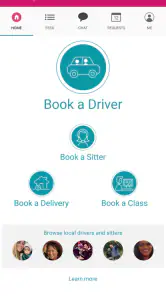
Finding a dependable ride or childcare arrangement is rarely as simple as opening a map and choosing the nearest option. Parents usually need to think about timing, trust, communication, and what happens if plans change. Kango is built around that family routine: it brings rides, childcare, and carpools into one parenting-focused app rather than treating transportation as an isolated trip.
I see it as a practical tool for families who regularly coordinate school runs, activities, appointments, or occasional care. It is free to use, aimed at Everyone, and developed by DoLightful, Inc. The app has been around since Nov 9, 2013, which gives it a more established feel than a brand-new experiment. At the same time, its average rating of 3.9 from around 142 ratings suggests a mixed but generally workable experience rather than something every parent will find flawless.
What to expect before you rely on it
The first thing I would keep in mind is that Kango is not simply a taxi app with a family-friendly label. Its focus is the wider problem of getting children where they need to go and arranging care around that movement. That makes it more relevant to parents with recurring schedules than to someone looking for a one-off ride across town.
The store summary presents the service in three connected parts: rides, childcare, and carpools. In practice, that combination changes how I would approach the app. I would not install it expecting an instant replacement for every local transport option. Instead, I would use it as a place to explore family-oriented arrangements and see whether the available choices fit my routine.
That distinction matters because the best result depends on the situation. A parent who needs help getting a child to an after-school activity may value a scheduled family ride. Another parent may be more interested in coordinating care or sharing transport. Someone who needs an immediate vehicle at an unusual hour may still find a conventional ride service more straightforward.
The most useful mindset is to treat Kango as a planning tool for family logistics, not as a guarantee that every request will be solved instantly. That expectation makes the first session less frustrating and encourages you to check the details before making a commitment.
The app is listed with over 10 thousand installs, so it has reached a meaningful group of users without being one of the enormous mainstream platforms. I would interpret that as a reason to test it carefully in my own area. Family services are highly local: an app can be excellent for one community and much less useful in another.
Because the app belongs to the Parenting category, the design goal feels different from a standard navigation or carpool utility. The important question is not only whether a route exists, but whether the arrangement makes sense for a child, a parent, and the person providing the ride or care. That wider context is where Kango can be more useful than a generic transport app.
Who is most likely to benefit
I would recommend trying it first if your week contains repeated school, sports, music, tutoring, or appointment commitments and you sometimes need help covering the gaps. It may also suit families who want to investigate carpools instead of arranging every trip independently.
It is less convincing for a person who only needs adult transportation, a traveler passing through town, or a parent who already has a dependable informal network and never needs backup. In those cases, adding another app may create more coordination work than it removes.
There is also a practical trade-off for families who need certainty. A familiar local provider, a school-organized carpool, or a direct arrangement with a trusted caregiver may be easier when the relationship is already established. Kango becomes more interesting when you need to discover or organize an option rather than simply repeat one you already know.
Getting started without overcomplicating the first session
After installing Kango, I would begin with a narrow goal instead of trying to understand every possibility at once. Decide whether your immediate need is a ride, childcare, or a carpool. That choice gives the first session a purpose and helps you judge the app on something concrete.
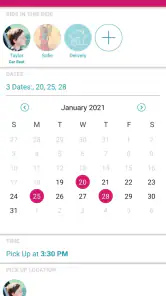
I would then prepare the basic information needed to describe the request accurately: the child’s schedule, the pickup and destination details, the timing, and any important context that another parent or caregiver would need to understand. Even when an app makes the search simple, vague planning creates problems later.
A useful first-session habit is to separate “what I need” from “what I would prefer.” For example, the essential requirement may be arriving at school before a certain time, while a preferred option might be sharing the ride with another family. Keeping those priorities clear helps when the available choices do not match the ideal plan perfectly.
I would also avoid building the entire week around the app before testing one manageable request. Start with a trip or care period that has some flexibility. That gives you room to learn how communication and scheduling feel without putting an important appointment at risk.
The app is free, which removes the financial barrier to trying it. Still, free installation should not be confused with a promise that every arrangement has no cost or that every local service will be available under identical terms. I would read the details of each option carefully and treat the app as the place where the arrangement begins, not as a substitute for checking the actual conditions.
Making the first meaningful request
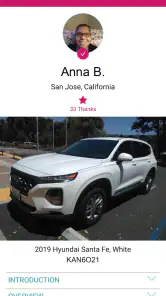
For a first successful action, I would choose a familiar route and a time I already understand well. A school-to-home trip or a regular activity is easier to evaluate than an unfamiliar destination. Once the request is entered, compare the result with your real schedule rather than accepting the first option automatically.
Look at the complete sequence: when the child must be ready, how much transition time is needed, and what happens after arrival. Parents often focus on the ride itself and overlook the handoff before or after it. Kango’s value is strongest when you use it to think through that complete chain.
My practical tip is to write down the arrangement in ordinary language before confirming it. Include the pickup point, the expected timing, and who is responsible at the destination. This is not busywork. It gives you a quick way to notice misunderstandings and makes later communication clearer.
For example, imagine a child finishes an activity while you are still at work. I would use the app to explore whether a ride or carpool can cover that specific gap, then check the timing against the activity’s actual end rather than its advertised schedule. I would also plan what the child should do if the activity ends early or the pickup is delayed. That small amount of preparation is where the app becomes genuinely useful instead of merely convenient.
Once you have completed one straightforward arrangement, you can decide whether Kango deserves a larger role in your routine. If the first experience is smooth, the next step could be a recurring school run or a second family activity. If the process feels unclear, it is better to pause and use a more familiar alternative than to force the app into an important day.
How I would handle childcare and carpools differently
Rides, childcare, and carpools may appear closely related, but they involve different decisions. For a ride, timing and handoff details are central. For childcare, the child’s needs and the length of care matter more. For a carpool, the main challenge is often coordination between several families rather than finding a single trip.
I would not judge all three functions by the same standard. A ride can be useful even if it solves one narrow scheduling problem. A childcare arrangement needs a higher level of comfort and clarity before I would depend on it. A carpool may save repeated effort over time, but it can require more up-front communication with other parents.
One non-obvious advantage of having these options together is that it encourages you to compare solutions instead of assuming transportation is the only answer. A short care arrangement may solve a timing gap better than sending a child on a separate trip. Conversely, a carpool may be more sustainable than repeatedly arranging individual rides for the same activity.
I would therefore test the app by asking, “Which problem am I actually solving?” If the answer is supervision, focus on the childcare side. If the answer is distance, focus on rides. If the answer is repetition, investigate whether a carpool approach makes more sense.
Common points of confusion and how to avoid them
The biggest source of confusion is likely to be assuming that a family-oriented app works like an on-demand transport service. A request may depend on local participation, schedules, and the suitability of available arrangements. I would leave more planning time than I would for a familiar personal ride.
Another easy mistake is entering a destination without checking the exact handoff point. “The school” or “the activity center” may not be precise enough for a child’s pickup. I would use the location that makes the meeting point obvious and confirm it in the conversation or arrangement details.
Timing deserves special attention. Parents often think in terms of the event’s start and end, but the useful window includes preparation, walking to the vehicle, waiting, and the handoff afterward. If you enter only the headline time, the result may look suitable while still being uncomfortable in real life.
I would also avoid treating a carpool as a simple discount version of a private ride. Carpools involve shared expectations. A small delay, a different pickup order, or a change in one family’s schedule can affect everyone. The trade-off is that a well-organized carpool may reduce repeated driving, while an individual ride may offer more control.
Communication is another area where a little precision helps. I would state the child’s name, the relevant schedule, and the exact place for the handoff in a calm, direct message. I would not rely on assumptions such as “they know where to go” or “the usual entrance is fine.” The more children or families involved, the more valuable that clarity becomes.
There is also a difference between discovering a possible arrangement and trusting it for a high-stakes event. I would use the first interaction to learn how the service works, then reserve it for an important appointment only after I felt comfortable with the process. This is a sensible limitation of any app that helps connect families rather than replacing personal judgment.
Where the experience may feel limited
Kango’s combined focus is helpful, but it can also make the app feel less direct than a specialist service. If I only want to order a standard ride, a conventional transport app may present fewer decisions. If I only want to manage a school carpool I already have, a shared family calendar or messaging group may be faster.
The 3.9 average from around 142 ratings is consistent with an app that may work well for some families while leaving others with friction. I would not read that figure as a verdict on my own area, but I would take it as a reminder to test the experience personally instead of assuming universal reliability.
The app’s age rating of Everyone makes it broadly approachable from a content perspective, but that does not remove the need for an adult to make careful choices about rides and childcare. An age label tells me who can access the app’s content; it does not replace a parent’s evaluation of a particular arrangement.
Families using older devices should also check compatibility before planning around it. The listed minimum operating system is version 10, so I would make sure the phone meets that requirement before troubleshooting an installation or login problem. That is a small step, but it prevents wasted time when a parent is already trying to solve a scheduling issue.
Using it successfully in a real weekly routine
After the first successful request, I would create a simple repeatable workflow. Start by reviewing the week’s fixed commitments, identify the one or two gaps that cause the most stress, and use Kango only for those gaps at first. This keeps the app focused on solving a real problem rather than becoming another place to maintain a complete calendar.
For a recurring activity, I would review the plan early enough to handle changes. Do not wait until the child is already preparing to leave. A little advance notice gives you time to compare a ride with a carpool or childcare option, and it makes a backup plan realistic.
My second practical tip is to keep a backup that does not depend on the same arrangement. That might be another authorized adult, a school contact, or a family member who understands the schedule. The point is not that Kango is unreliable; it is that children’s plans can change for reasons no app can control.
A third useful insight is to evaluate the app by reduced mental load, not merely by speed. If using it means fewer last-minute messages, fewer duplicated drives, or a clearer handoff, it may be valuable even when the setup takes a few minutes. If it creates more checking and coordination than your current method, then the familiar method may remain better.
I would also review arrangements after they happen. Note what was clear, what caused hesitation, and which details you had to repeat. That personal feedback helps you improve future requests and tells you whether the app is becoming easier with use. It is a more meaningful test than judging it after one glance at the home screen.
How it compares with familiar alternatives
Compared with a standard ride-hailing app, Kango is more closely aligned with the family context. A general service may be excellent for moving an adult from one place to another, but it does not necessarily encourage you to think about childcare, recurring school routines, or shared family transport in the same way.
Compared with a school mailing list or parent messaging group, Kango can offer a more focused place to investigate rides and care. The trade-off is that a personal network may already contain trust and local knowledge, while an app may require you to learn a new process and communicate details from the beginning.
Compared with hiring a private caregiver directly, the app may be more convenient for discovering an arrangement, but a direct relationship can feel more stable once it is established. I would use Kango to widen my options, not to abandon the trusted people who already understand my child and routine.
Compared with managing everything in a calendar, Kango addresses the service or coordination side rather than merely recording an event. A calendar can remind me that a child has practice, but it cannot by itself help solve the transportation gap. On the other hand, a calendar remains essential for seeing the entire week, so I would use both rather than expecting one app to do every job.
My recommendation after testing the overall approach
I think Kango is worth trying for parents who regularly face the practical puzzle of rides, care, and shared transportation. Its strongest idea is bringing those related needs into one parenting-oriented experience. That makes it more relevant than a generic ride app when the real issue is not simply distance, but who is responsible for a child at each stage of the day.
I would recommend starting small: choose one familiar, flexible request, enter the details carefully, and judge the result by how clearly it fits your actual routine. If that first experience reduces stress, gradually consider it for recurring needs. If it feels slower or less clear than your existing family network, there is no reason to force a change.
The free price makes experimentation easy, and the broad Everyone rating makes the app approachable for a general audience. Still, the modest review average and the local nature of family services mean I would keep my expectations practical. Kango can support good planning, but it cannot remove the need for communication, backup thinking, and adult judgment.
For me, the best use case is a parent with a predictable weekly schedule and occasional gaps that are too small for a major childcare commitment but too important to ignore. That is where rides, childcare, or carpools can turn a stressful afternoon into a manageable one. For immediate adult transport, a fully established caregiver relationship, or a community that already coordinates perfectly, another option may be simpler.
Overall, Kango feels most valuable when I use it deliberately: define the family problem, test one arrangement, confirm the handoff, and then decide whether the result deserves a place in the weekly routine. It is not a magic shortcut, but it offers a focused way to explore family transportation and care when the usual alternatives leave an awkward gap.
Pros
- Simple interface makes lesson navigation quick and easy
- Short activities fit well into busy daily routines
- Useful for building a consistent language-learning habit
- Progress tracking helps users monitor completed lessons
- Works well for beginners seeking structured practice
Cons
- Some advanced learners may find the content too basic
- Certain features or lessons may require a paid subscription
- Limited speaking practice compared with live language platforms
- Repetition can feel monotonous after extended use
- Offline access may not cover all app content

- Category
- Parenting
- Version
- Varies with device