Joy: Baby & Parenting Experts
- 41.00
- 4.3
- Installs
- 10.00K
- Price
- Free

Screenshots





Analysis by Reviewed
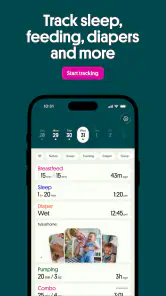
The most useful idea behind Joy: Baby & Parenting Experts is simple: bring everyday baby-care notes and access to parenting guidance into one place. When feeds, naps, and diaper changes blur together, a quick record can be more reliable than trying to remember the details later. I see that tracking as the app’s central strength—not because it makes parenting predictable, but because it can give a tired caregiver a clearer account of what happened.
That focus makes this parenting app from Joy Memories, Inc a practical option for families who want a lightweight record of daily care. It is free to download, rated for Everyone, and has an average rating of 4.3 from around 140 ratings. The key question is whether logging these routines fits your day; if it does, Joy may help you spot patterns and share a more accurate picture with another caregiver or a parenting expert.
Choosing a workable routine
One question worth settling before you start is whether the log is for your own memory, for handoffs, or to help explain a concern to an expert. Those purposes call for different levels of detail. For everyday coordination, the event and its rough place in the day may be enough; when preparing a question, a short note about what seemed different can make the record more useful. I would avoid trying to capture every circumstance unless it helps answer a real question.
This also gives you a practical way to decide whether Joy is earning its place. After a few days, ask whether you are actually checking the record during handoffs or using it to describe a routine more clearly. If you only open it because you feel you ought to log something, the habit may be adding work without solving a problem. There is no benefit in maintaining a detailed history that nobody uses.
Why a running care log can help
Small records, less guesswork
With a new baby, a question such as “When did the last feed happen?” can be surprisingly hard to answer after a broken night. A running log gives that question a concrete reference point. The same applies to naps and diaper changes: rather than relying on memory, you can consult what you have recorded and describe the day more clearly.
The benefit is not that the app diagnoses a problem or tells you what your baby should do. It is that consistent tracking can make everyday conversations more specific. If you are discussing routines with a partner, another caregiver, or an expert, a record may help you explain what you have noticed without turning a vague impression into a certainty.
That distinction matters. A log is a tool for remembering and communicating, not a substitute for professional medical advice. I would use it to organize observations and questions, then rely on qualified care for health concerns. Treating entries as clues rather than verdicts keeps the feature useful without asking it to do more than it can.
More From Our News Desk

Clash of Clans Is Won Between the Battles

Android Auto Makes the Case for Quieter Car Software

MobiOffice: Transforming Mobile Productivity with Seamless Integration

EA SPORTS FC™ Mobile Soccer: Redefining Mobile Sports Gaming

How Microsoft OneDrive Became a Mobile Productivity Giant

How Google Translate Breaks Language Barriers Effortlessly
What the app’s focus means in practice
Joy’s core tracking covers feeds, naps, and diapers. These are recurring parts of infant care, so bringing them together can be more convenient than keeping separate notes or trying to reconstruct a day from messages. The value grows when more than one person shares care: a handoff can start with what has already been recorded instead of a rushed recap from memory.
There is a useful trade-off in that narrow focus. It keeps the experience centered on routine care rather than making the log feel like a complete parenting record. If you want to track many other areas of family life, you may still prefer a broader notebook or a different dedicated tool. I would not assume that every detail you personally care about belongs in Joy simply because the main routine events do.
One practical tip is to agree with anyone sharing care on what counts as worth recording and to enter events close to when they happen. Otherwise, one person may log every detail while another records only occasionally, leaving an uneven history that is harder to interpret. A consistent, low-effort habit is more valuable than an ambitious record no one can maintain.
A realistic day with Joy
Imagine one caregiver handles an early feed, another takes over after a nap, and a third person helps later in the day. When the adults reunite, each may remember a different part of the schedule. A shared record of the key events can help everyone orient themselves, especially when the person taking over is tired or has not been present for several hours.
For example, before asking a parenting expert about a routine, you could review your notes and describe the sequence you have observed: a feed, a nap, and the diaper changes you logged. That is more useful than saying “today felt unusual” with no context. It still leaves room for judgment: one day’s notes are not enough to establish a lasting pattern, and a log cannot explain why something happened.
To keep this workflow manageable, I would record only the events that help with your immediate coordination or questions. If tracking starts to interrupt care, simplify the habit. The point is to reduce mental load, not to make every ordinary moment feel like paperwork.
Where expert access fits
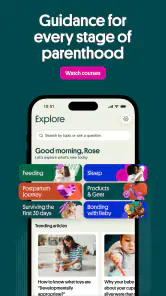
The app also offers a way to talk to real parenting experts. That can complement routine tracking: notes may help you frame a question, while an expert can respond to the concern behind it. In practical terms, I would use the record to prepare a concise description of what has been happening rather than expecting the log itself to provide answers.
“Anytime” access is appealing when a question arises outside a convenient moment, but it should not be confused with emergency care or a promise of an instant answer to every concern. For urgent symptoms or immediate danger, contact appropriate local medical services. For ordinary parenting questions, expert access may be most useful when you can explain the situation clearly and know what you want help thinking through.
Before relying on this part of the app, consider what kind of guidance you are seeking and whether the available format suits you. Some people want a brief conversation to help organize next steps; others prefer an established clinician who already knows their child. Joy’s combination of tracking and expert conversations may appeal to the first group, while the second may treat it as supplementary rather than central.
The trade-offs of recording care
Tracking is only helpful if it remains easy enough to keep up. A log can become another task when you are already juggling feeding, settling, and household responsibilities. If you find yourself missing entries, do not try to reconstruct every detail perfectly; an incomplete but honest record is better than filling gaps with guesses.
There is also a risk of reading too much into routine variation. Babies do not follow a perfectly tidy schedule, and a record can make small differences look more meaningful than they are. I would use Joy to support memory and communication, not to judge whether a day was “good” or to pressure a family into matching an ideal timetable.
Cost is worth considering too. The app is free to download, while optional in-app purchases range from $17.99 to $99.99 per item. That is a wide enough range that I would check the purchase details carefully before paying and decide whether the particular offering matches a real need. If you only want a basic personal log, avoid assuming that a paid option is necessary; if you want more than the free experience provides, compare the cost with the value you expect to receive.
Joy has reached over 10,000 installs and has 41 written reviews, but those figures alone cannot tell you whether its workflow will suit your household. The current version is 8.0.0, and the stated minimum operating system is version 10. I would check device compatibility before setting up a routine around it, particularly if another caregiver will also need access.
How it compares with familiar alternatives
The usual alternatives are a notes app, a paper notebook, or a dedicated baby-tracking tool. A notebook can work well for someone who likes writing by hand and wants a record independent of an app. A general notes app is flexible, but you may need to create your own structure and remember where each entry belongs. A specialist tracker may suit families seeking a more extensive set of logging options, though extra controls can also mean more setup and more decisions.
Joy sits most naturally between a simple log and a broader parenting resource: its clear emphasis is on core care events alongside access to experts. I would choose it over scattered notes if having those routine records and guidance in one app feels useful. I would choose a paper record if screens get in the way of your care routine, or a different tracker if your needs extend well beyond feeds, naps, and diapers.
That comparison is about fit, not a claim that one approach is universally better. The best system is the one you and anyone sharing care can use consistently. Before committing, try to picture a busy day rather than an ideal one: if opening the app to make a brief note feels realistic, Joy’s central feature may earn its place. If it feels like another obligation, a simpler method is likely to serve you better.
Who is most likely to benefit
I would recommend giving Joy a look if you are caring for a baby with another person, often need to hand over responsibility, or want a clearer account of routine events when discussing a parenting question. It may also suit first-time caregivers who find that interrupted sleep makes time and sequence difficult to remember. The combination of a practical log and expert access gives those users a reason to keep their notes in one place.
It is less compelling if you dislike recording routine details, already have a system that everyone follows, or expect an app to make decisions about your baby’s health. Families who need a highly customized record may also want to compare other tools before settling in. In those cases, Joy’s focused approach could feel limiting rather than refreshingly simple.
One especially useful fit is a household where care changes hands but nobody wants a formal schedule. A short record can make a handoff less dependent on whoever happens to remember the last few hours, without requiring the family to treat each day as a timetable to hit. By contrast, if your main need is a detailed, customizable history for many different kinds of events, a purpose-built tracker with a wider scope may be a better starting point than adapting Joy to do more than its central routine log.
Another consideration is how comfortable each caregiver feels using an app during care. If one person is happy to make quick notes and another is unlikely to do so, plan around the person who will use it least. A simple shared expectation—record the essentials, and do not backfill uncertain details—can prevent the log from becoming a source of disagreement. If even that feels burdensome, a brief verbal handoff or a paper note may be more realistic.
Joy: Baby & Parenting Experts is a free parenting app from Joy Memories, Inc, with an Everyone content rating and a 4.3 average. I like its practical premise: record a few essential parts of care, then use those observations to make communication more grounded. Its best role is a helpful memory aid, not a replacement for your judgment or your child’s healthcare team. If that distinction matches what you need, it is worth trying; if routine logging would add stress, you can safely choose a simpler alternative.
Joy: Baby & Parenting Experts Frequently Asked Questions
What is Joy: Baby & Parenting Experts, and who is it designed for?
Joy is a parenting and baby-care app designed to give families access to expert guidance, educational content, and practical support as they care for a child. It may be useful for expectant parents as well as caregivers of babies and young children. The exact topics and tools available can vary by app version, location, and subscription, so check the current store listing before downloading.
What kind of advice and support can I find in the app?
The app focuses on parenting questions and child-care guidance, which may include topics such as feeding, sleep, development, and everyday baby care. Depending on the features offered in your region, support may come through articles, programs, or access to experts. Treat information as general guidance rather than a diagnosis, and contact a qualified healthcare professional about urgent concerns or decisions specific to your child.
Is Joy free to use, or does it require a subscription?
Some app content may be available at no cost, while premium programs, expert access, or other features may require payment. Pricing, trial availability, and what is included can change, so review the in-app purchase details and subscription terms shown in the Apple App Store or Google Play before signing up. If you start a trial, check its renewal date and cancellation instructions to avoid an unexpected charge.
Can I use Joy to get medical advice for my baby?
Joy can help parents learn about common care topics, but an app cannot replace your child’s doctor or provide emergency treatment. Expert availability and the type of guidance offered may depend on the service and your location. For symptoms, medication questions, or concerns about your baby’s health or development, contact a licensed healthcare professional; seek urgent or emergency care when the situation requires it.
What should I check before downloading and sharing information in Joy?
Before installing Joy, confirm that your device meets the current iOS or Android requirements and read the store listing for supported countries, features, and recent updates. Because parenting apps may ask for details about you or your child, review the privacy policy and requested permissions before creating an account. Share only information you are comfortable providing, and check how account data can be managed or deleted.
Pros
- Expert guidance can help parents feel more confident about common baby-care questions.
- Personalized support makes it easier to focus on advice relevant to your family.
- Convenient access to parenting resources from a mobile device.
- Can support parents through different stages of a child’s development.
- Useful for preparing questions and topics to discuss with a healthcare provider.
Cons
- Expert access or consultations may require a paid plan.
- Advice in an app cannot replace care from your child’s doctor.
- Guidance may not cover every medical or cultural circumstance.
- Some features may depend on sharing personal family information.
- The value of the app depends on how often you use its resources.
- Category
- Parenting
- Version
- 8.0.0