Huba Football
- 51.00
- 4.2
- Installs
- 500.00K
- Price
- Free

Screenshots



Analysis by Reviewed
Following football on a busy day usually means jumping between a scores app, a statistics page, a lineup post, and a news feed. Huba Football is built around bringing those match-day needs closer together. I found it most useful as a quick companion for checking what is happening, why a match is developing in a certain way, and what is changing around teams through lineups and transfer news.
This is a free sports app from Appy Tech RK, aimed at people who want football information without treating every match as a full research project. It is rated for Everyone, so its audience is broad, from casual supporters to committed followers who want a faster way to keep up. Its current version is 1.2, and the app was released on May 29, 2025, which makes it a relatively young product with room to mature.
My overall impression is positive, but not uncritical. The strongest part is the way the app fits into short checking sessions: before kickoff, during a match, or while catching up later. The weaker side is that a compact football app has to make difficult choices about depth, coverage, and presentation. If you expect the enormous competition database or highly specialized analysis found in long-established services, this may feel lighter. If you want a focused football dashboard, it makes a convincing case.
How Huba Football fits into a real match-day routine
A practical starting point for live football updates
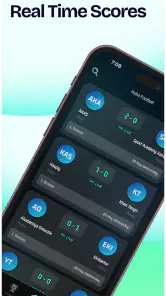
The app’s central purpose is simple: help me follow games as they unfold. Live updates are valuable because they reduce the need to refresh several unrelated pages. I can use the app for a quick score check, then move into match information when I want more context. That makes it especially suitable for people who are not watching every minute but still want to understand the state of a game.
A realistic example is a weekday evening when I am travelling home and cannot stream a match. I can check the current situation, look at the match statistics, and see whether a change in momentum is reflected in the numbers. Later, lineups help me understand which players started, while transfer news gives me something to follow between fixtures. That sequence feels more natural than opening separate tools for each question.
The important distinction is that this is not only a score display. Scores tell me what happened; statistics help explain the match; lineups add team context; transfer news covers the wider football conversation. These parts serve different moments, and the app is most useful when I treat it as a quick information hub rather than as a replacement for watching football or reading detailed reporting.
Match statistics are useful when read with context
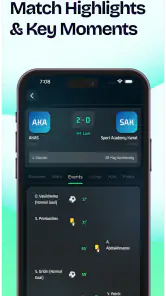
Statistics can be tempting to read as a verdict. A possession figure or shot count may look decisive, but neither automatically tells the whole story. I prefer using the app’s match information as a prompt for better questions: Was one team creating pressure without finishing? Did the game change after a substitution? Is a side leading despite producing little?
More From Our News Desk

Clash of Clans Is Won Between the Battles

Android Auto Makes the Case for Quieter Car Software

MobiOffice: Transforming Mobile Productivity with Seamless Integration

EA SPORTS FC™ Mobile Soccer: Redefining Mobile Sports Gaming

How Microsoft OneDrive Became a Mobile Productivity Giant

How Google Translate Breaks Language Barriers Effortlessly
That approach is one of the more valuable habits the app encourages. Instead of reacting only to the score, I can compare the score with the available match picture. It is particularly useful when checking a game after missing the opening period, because the numbers provide a quick route into the story. Still, users who want advanced scouting, deep player profiles, or highly specialized tactical models may find the presentation less suitable than dedicated analysis platforms.
I also noticed a trade-off in compact sports apps: speed and clarity matter more than displaying every possible metric. A crowded screen can make a live match harder to understand, especially on a phone. Huba Football’s appeal is therefore tied to how quickly I can locate the information I need. For a casual check, restraint is helpful. For serious statistical comparison, I would still use a specialist service alongside it.
Lineups are more than a pre-match detail
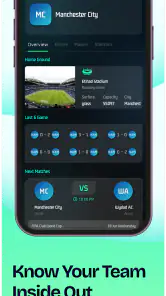
Lineups are one of the features I would check before making any judgment about a fixture. They can change the meaning of a match immediately. A familiar formation with an unexpected starter, a missing regular, or a different attacking setup can explain why expectations should be adjusted before the first whistle.
My preferred workflow is to check the fixture first, inspect the lineup next, and only then look at the broader match information. This prevents me from relying on assumptions formed from previous games. It is also a useful routine for fantasy football players, supporters discussing predictions, and anyone deciding whether a match deserves closer attention.
There is a subtle limitation here. A lineup tells me who is selected, but not necessarily how the coach intends to use every player. A listed forward may drop deeper, a midfielder may move wide, and a substitute may be more important than the starting arrangement suggests. I would therefore use Huba Football to establish the facts, then watch the match or consult deeper commentary for tactical interpretation.
Transfer news gives the app value between fixtures
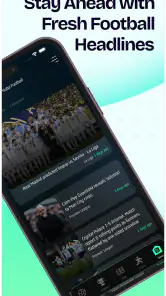
Many football apps are strongest only while matches are being played. Transfer news gives this one a reason to remain relevant on quieter days. It connects the immediate match experience with the longer story of squad changes, possible moves, and team planning.
I like that combination because it reflects how fans actually follow football. One moment I may be checking a live fixture; the next I may be interested in how a transfer could affect a club’s next lineup. The transition from match coverage to team news makes the app feel broader than a simple results utility.
At the same time, transfer coverage needs careful reading. News can develop quickly, and a headline is not the same as a completed move. I would use the app to stay aware of developments, but I would avoid treating every report as settled until the situation is clear. That is not a flaw unique to this app; it is an unavoidable part of transfer reporting, and it is a reason to keep expectations realistic.
What the current version says about the product’s direction
The current version is 1.2, following the app’s May 29, 2025 release. That tells me Huba Football is still early in its product life rather than being a finished, long-established platform. I see that as both an opportunity and a caution. A newer app can feel more focused and less weighed down by years of accumulated menus, but it may also still be refining how information is organized.
For existing users, the practical effect of this stage is that the app should be judged by the quality of its core football workflow rather than by the size of its surrounding ecosystem. I would pay attention to whether future updates make live pages clearer, improve the relationship between statistics and lineups, and keep transfer coverage easy to follow without making the interface noisy.
I would not assume that a young version automatically means poor reliability, nor would I assume that it already matches the polish of the biggest sports platforms. The sensible approach is to use it for its current strengths and watch how consistently it handles the moments that matter most: kickoff, lineup announcements, live events, and post-match checking.
Who will get the most from it
I think Huba Football is a good fit for a supporter who follows several teams but does not want a complicated system. It also suits people who check football in short bursts: during a break, on public transport, before a conversation with friends, or after seeing a score notification elsewhere. The combination of live updates, statistics, lineups, and transfer news gives those brief visits a useful amount of substance.
It may also work well for a fan who wants one familiar starting point before deciding whether to go deeper. I often prefer that kind of workflow. First I establish what is happening; then I decide whether I need video, detailed analysis, or a longer news article. The app can serve as that first step without forcing every visit to become a research session.
People who follow football socially may appreciate the same simplicity. If a friend mentions a match, I can use the app to check the basic situation and gather enough context to join the discussion. That is a different use case from professional analysis, but it is a genuine strength: useful information does not always need to arrive in an intimidating package.
Who should choose another tool instead
I would look elsewhere if my main priority were exhaustive historical records, advanced data visualization, or a highly detailed player-performance database. Those needs usually call for services designed specifically around analytics rather than a broader match-and-news experience.
I would also hesitate to make it my only football source if I needed extensive editorial reporting, long-form tactical articles, or confirmed transfer documentation. Huba Football is better understood as a fast companion. It can help me identify what deserves attention, but it is not necessarily the final destination for every kind of football research.
Fans who follow only one competition may prefer a league-specific app if it offers deeper local coverage. Conversely, supporters who follow clubs across different competitions may find Huba Football’s wider focus more convenient. The right choice depends less on whether the app has football information and more on how much depth and specialization a person expects from each visit.
How it compares with familiar alternatives
Compared with a basic score-only app, Huba Football offers a more complete match-day view because the score is not isolated from statistics, lineups, and surrounding news. That makes it more useful when I want to understand a result rather than merely confirm it.
Compared with a club’s official app, it may be more convenient for someone following multiple teams. Official apps can be excellent for club-specific announcements and identity, but they often require moving from one club ecosystem to another. A broader football app reduces that switching for general match tracking.
Compared with a major all-purpose sports platform, Huba Football’s likely advantage is focus. A large platform may cover more sports, competitions, tools, and historical information, but that breadth can create extra navigation. I prefer Huba Football when I want to open a football-focused space and get to the relevant match quickly.
The trade-off is maturity and depth. Established alternatives may provide more polished customization, richer archives, or more elaborate analysis. Huba Football makes more sense for someone who values a clean football routine over an enormous feature catalogue. I would not replace every other sports tool with it, but I can see it becoming the first app I open for a quick football check.
Small workflows that make the app more useful
My first tip is to check lineups before interpreting expectations. A recent result can be misleading if the team selection has changed, so using the lineup as the first layer of context produces a more grounded view of the fixture.
My second tip is to compare match statistics with the score instead of reading either one alone. A narrow lead supported by sustained pressure tells a different story from a narrow lead achieved through limited attacking output. This habit turns a quick glance into a more informed check without requiring specialist knowledge.
My third tip is to use transfer news as a follow-up path rather than as isolated browsing. If a club is linked with a player, I would look at how that position appears in current lineups and then consider whether the reported move addresses an obvious squad need. The app cannot make that judgment for me, but keeping match context and transfer interest close together makes the research more coherent.
A fourth useful habit is to open the app at different points in the match cycle. Before kickoff, lineups matter most. During the game, live updates and statistics take priority. Afterward, the same information helps reconstruct the match. Between fixtures, transfer news becomes more relevant. Treating the app as a changing tool rather than a single fixed screen helps me get more from its mix of content.
Everyday friction and realistic limitations
The biggest potential friction is the difference between quick information and complete information. A concise view is convenient, but it may not answer every follow-up question. If I want detailed tactical explanations, extensive historical comparisons, or a full account of how a transfer story developed, I may need another source.
There is also a judgment issue around statistics. Numbers can create a feeling of certainty, especially when I am checking a match quickly. I have to remember that the app’s figures are a snapshot of a game, not a complete evaluation of team quality. Anyone using the information for predictions should treat it as evidence, not a guarantee.
The app’s early stage is another factor worth considering. With version 1.2 and a release in 2025, I would keep an eye on how the product evolves. The most important improvements would be practical rather than flashy: clearer navigation, dependable presentation during busy match periods, and better continuity between a team’s lineup information, match activity, and related news.
None of these limitations makes the app unsuitable. They simply define its role. I would be disappointed if I expected a complete football research library, but satisfied if I wanted a convenient companion for following games and staying aware of team developments.
What the audience response suggests
The app has reached over five hundred thousand installs and holds a 4.2 average from around two thousand ratings. Those figures suggest that it has already attracted meaningful interest for a relatively young football app. I read that as encouraging, while remembering that popularity does not remove the need to test whether the workflow suits me.
There are also fifty-one written reviews, which can provide more personal context than a rating alone. I would look for recurring comments about the practical experience, especially around the clarity of live information and the usefulness of the broader football coverage. A rating can tell me the general mood, but my own habits still matter more than a single average.
Because the app is free, trying it carries little commitment in financial terms. That makes it easier to compare with my current score or sports-news app rather than making an immediate all-or-nothing switch. I would install it, follow a few match-day routines, and decide whether it saves time or simply adds another place to check.
Privacy, age suitability, and the everyday decision to install
The Everyone content rating makes the app suitable for a broad audience, including families and younger football supporters. That does not mean every football discussion will be equally interesting to every age group, but it does make the product approachable as a general sports companion.
For me, the more important installation question is whether I want a focused football tool or a single app that covers every sport and every type of analysis. Huba Football is attractive when football is the priority and I value speed. If I rarely follow matches, a general sports app may be more practical because it avoids maintaining a dedicated football tool.
I would also consider how I consume news. Someone who prefers long articles and detailed reporting may find the app best used as a starting point. Someone who mainly wants rapid match awareness may find its combination of live updates and statistics more satisfying. The same feature set can feel either focused or limited depending on the user’s expectations.
What I would watch as the app develops
Since the product is still at version 1.2, I would watch for improvements that make the current concept more dependable rather than simply adding more sections. The most meaningful progress would be smoother movement from a match to its lineup and statistics, clearer separation between live events and general news, and a presentation that remains easy to scan when several fixtures are happening at once.
I would also watch whether transfer news becomes more useful through better context. A headline is helpful, but a supporter benefits more when it is connected to the team, position, and current football situation. The app already has the ingredients for that kind of workflow; future refinement will determine how well they work together.
For existing users, the best sign of evolution would be fewer moments where they need to leave the app for a basic follow-up. For new users, consistency will matter more than a long feature list. If the core experience stays quick while becoming more informative, Huba Football could move from a promising young app to a dependable daily football companion.
My recommendation after using it
I recommend Huba Football to readers who want a free, football-focused way to keep track of matches, check statistics, see lineups, and follow transfer news in one place. I especially like it for short visits and changing match-day needs. It gives me enough context to understand what is happening without demanding the time of a full research session.
I would not present it as the perfect replacement for every football service. Dedicated analytics tools remain better for deep numbers, official club sources remain valuable for club-specific communication, and specialist journalism is still the better choice for detailed reporting. The app works best alongside those sources or as the first place I look before deciding whether I need them.
Its current version and early release stage make the product worth watching, but the present experience already has a clear purpose. With a 4.2 average, over five hundred thousand installs, and a free entry point, it is an easy app to try for football supporters who want fewer disconnected checks. My advice is to use it as a fast match-day home base, while keeping your expectations realistic about depth and interpretation.
Huba Football Frequently Asked Questions
Is Huba Football free, and what should I know before installing it?
Huba Football is free to download, so you can try the app without an upfront purchase. It is a sports app focused on following football, with live updates, match stats, lineups, and transfer news. Before installing, check that your device meets the app’s operating-system requirements and consider whether you want to receive notifications about matches and other activity.
Who makes Huba Football, and is it a popular app?
Huba Football is developed by Appy Tech RK. It has an average rating of 4.2 from around 1.9 thousand ratings, with 51 written reviews and more than 500 thousand installs. Those figures can help you get a sense of its audience, but they do not guarantee that every feature or match update will suit your preferences. The app is rated for Everyone.
What is Huba Football, and what can I do in the app?
Huba Football is designed for football fans who want to follow the sport, discover related content, and stay connected with the latest activity around teams, players, and matches. Depending on the version available in your region, the app may include news, fixtures, results, standings, video or social content, and community features. Its exact options can vary after updates, so checking the current store description is recommended.
Is Huba Football free to download and use?
Huba Football can generally be downloaded without an upfront payment, but some features may depend on the app’s current business model. Certain content, premium sections, advertising-free access, or optional services could require payment or registration. Before downloading, review the Google Play Store or Apple App Store listing for subscription details, in-app purchases, supported currencies, and whether any trial period renews automatically.
Does Huba Football provide live scores and real-time match updates?
The availability of live scores and real-time notifications depends on the specific Huba Football version and the competitions it covers. If these tools are included, you may need to enable notifications and allow background activity for timely alerts. Coverage can also differ by country, league, or tournament, so users should not assume that every match will receive the same level of live information.
Pros
- Simple interface makes match updates easy to find.
- Covers numerous football competitions in one app.
- Useful notifications help users follow important events.
- Lightweight design should work well on older devices.
- Quick access to team and player information.
Cons
- Coverage and detail may vary between different competitions.
- Some features may require an internet connection.
- Frequent notifications can become distracting.
- The interface may feel basic for advanced football analysts.
- Ad-supported areas may affect the browsing experience.
- Category
- Sports
- Version
- 1.2