Groups Recover Together
- 666.00
- 4.5
- Installs
- 100.00K
- Price
- Free

Screenshots
Analysis by Reviewed
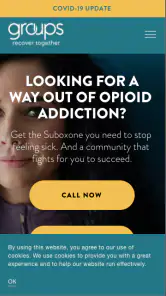
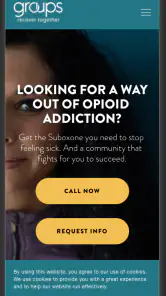
Choosing an app connected with opioid addiction treatment is very different from choosing a casual wellness tracker. I approached Groups Recover Together with that in mind, paying attention not only to its purpose but also to how much confidence a person might reasonably place in a mobile tool during a difficult period. The app is free, aimed at everyone, and belongs to the medical category, while Groups Recover Together is listed as its developer. Its central message is about making treatment feel less intimidating and less shameful, which is an important starting point for a service dealing with a sensitive health issue.
My overall impression is that this is best understood as a digital doorway into a treatment organization, not as a self-contained recovery program that can replace professional care. That distinction matters. Someone looking for a structured medical pathway may find the app relevant, while someone expecting a broad sobriety tracker, a private journal, or an emergency response tool may be disappointed. The value is tied to how well the app supports contact with the treatment service behind it and how comfortable the user feels handling personal health information in a mobile setting.
What the app communicates about trust and treatment
The first trust signal comes from the way the product frames treatment. The language is direct about fear and shame rather than pretending that seeking help is simple. In my view, that tone is more useful than cheerful promises because it recognizes the emotional barrier that can stop somebody from making the first move. The app does not need to turn recovery into a motivational slogan; its strongest role is to make engagement with care feel more approachable.
Groups Recover Together has been available since March 24, 2021, and the current version is 1.8.2. It has passed the threshold of one hundred thousand installs and holds an average rating of 4.5 from around 1.6 thousand ratings, with 666 written reviews. Those figures suggest that the app has reached a meaningful audience, but I would not treat popularity as proof that it is suitable for every patient. Medical apps are intensely personal: a feature that helps one person stay connected can feel intrusive or insufficient to another.
The developer identity is especially relevant here. Groups Recover Together is not presented as an anonymous software project; the app is associated with the treatment provider whose name it carries. That can make the experience feel more connected to real care than a generic addiction app, but it also means the app should be judged as part of a service relationship. Before relying on it, I would want to know exactly which actions are handled inside the app, which require direct contact with staff, and what happens if the phone is lost or the user changes devices.
The age classification is Everyone, which makes the app broadly accessible from a store perspective. That label should not be confused with a promise that every situation is suitable for self-service. Opioid addiction can involve urgent medical risks, and a phone application is not the right place to handle an overdose, severe withdrawal, or an immediate crisis. In those moments, emergency help and qualified medical professionals take priority over any app workflow.
Why the treatment context changes the review
Many medical apps are judged by convenience alone: how quickly they open, how clear the menus are, or whether reminders are easy to set. Those details still matter here, but they are secondary to trust. A user may be deciding whether to enter information that feels deeply private, communicate during a vulnerable moment, or depend on the app not to create extra confusion around appointments and treatment.
I would therefore avoid treating the 4.5 average as a simple recommendation. It is encouraging, yet ratings rarely explain whether people liked the interface, found enrollment easy, received useful support, or simply encountered the app at a particular stage of treatment. The written reviews can provide context, but anyone making a serious healthcare decision should also consider the provider’s direct guidance and their own comfort with the app’s account and communication process.
Checking controls instead of assuming privacy
For a health-related app, the most responsible approach is to inspect visible choices rather than assume that the app is private because its purpose is compassionate. I would look carefully at every screen that requests personal details, notification access, contact information, or communication preferences. I would also check whether the app explains why each item is needed and whether an optional field is clearly separated from something required to continue.
That habit is useful because a treatment app may be opened in places where privacy is limited: a shared home, a workplace, public transport, or a family member’s phone. Before signing in, I would review the lock-screen behavior of notifications and decide whether message previews should appear. If the app offers notification choices, I would select the least revealing wording that still helps me stay engaged. If the phone itself is shared, I would use the device’s available security controls and avoid leaving the account open.
I would also pay attention to account controls that are easy to overlook. A person should know how to sign out, update contact details, manage communication preferences, and request help if access is lost. If those controls are not obvious, that is not automatically a defect in the medical service, but it is a reason to ask the provider before entering more information. In a sensitive setting, uncertainty around account recovery can become a practical barrier at exactly the wrong time.
One useful workflow is to create a short personal checklist before using the app regularly: confirm the correct phone number or email, review notification previews, set a device passcode, and save the provider’s direct contact route somewhere safe. This is not glamorous, but it reduces the chance that a forgotten password or visible alert becomes a source of stress. It also keeps the user from treating the app as the only connection to care.
Moments when data sensitivity matters most
The most sensitive moments are not necessarily the first launch or the download screen. They are the points where a user may enter treatment-related information, respond to a message, confirm an appointment, or use the app while emotionally overwhelmed. I would slow down at those moments and check the recipient, the wording, and the surrounding privacy of the device before pressing send.
A practical example would be someone opening the app during a lunch break at work. They may want to check a treatment-related message quickly, but a notification banner or an accidentally visible screen could disclose more than intended. I would recommend turning off previews before that situation arises, then checking messages only when the phone can be kept private. If the user needs an urgent response, they should use the provider’s recommended urgent channel rather than assuming that an in-app message is monitored instantly.
Another sensitive situation is a change of phone. Before wiping an old device, I would make sure the user knows how to regain access and whether any relevant communication is tied to a phone number, email address, or existing account. I would not assume that reinstalling the app automatically restores everything. Asking the treatment team first may take a few minutes, but it is safer than discovering an access problem during a difficult week.
People should also separate treatment information from general health tracking. A broad mood journal or medication reminder can be useful alongside professional care, but combining tools does not necessarily create one complete medical record. I would avoid copying sensitive details into unrelated apps merely for convenience, especially if the same information is already being handled through the treatment service. Keeping the smallest practical amount of personal information in each tool is a sensible privacy habit.
Where the app gives the user agency
The app’s biggest potential strength is that it can make participation in treatment feel less passive. Instead of relying entirely on phone calls or remembering every instruction, a mobile connection can give the user a more immediate way to stay oriented. That is particularly valuable for someone who finds traditional administrative steps intimidating or who may postpone asking for help because the first contact feels emotionally heavy.
Still, agency depends on clear boundaries. I would want the app to make it obvious which actions the user can complete independently and which ones require staff involvement. A button that appears to send a message is not the same as a guaranteed real-time conversation, and a treatment-related reminder is not the same as clinical advice. Users should read labels carefully and avoid interpreting silence from the app as reassurance that everything is medically fine.
One of my recommended habits would be to use the app as a preparation tool before speaking with the care team. Write down questions separately, note what needs clarification, and use the app only for the appropriate communication route. This prevents a common mistake: trying to compress a complicated medical concern into a short message and then feeling ignored when the issue really requires a conversation. The app can support communication, but the user still needs to choose the right level of help.
There is also a trade-off between convenience and control. A person may prefer automatic notifications because they reduce the chance of missing something important. Another person may need quiet periods and minimal visible reminders to protect privacy. I would not call one choice universally correct. The better setting is the one that keeps the user connected without exposing treatment details to people who should not see them.
How it compares with ordinary alternatives
Compared with a general recovery tracker, this app has a more specific treatment identity. A generic tracker may offer broader journaling, habit streaks, craving notes, or educational material, but it may not feel connected to an actual treatment provider. That makes a general app more attractive for someone who wants private self-monitoring, while Groups Recover Together is more relevant to someone engaging with the organization behind it.
Compared with ordinary phone calls, a dedicated app may feel less intimidating for routine contact and may keep treatment-related activity in one place. The trade-off is that calls can be clearer when a situation is urgent, complex, or emotionally difficult to explain in writing. I would not use the app as a reason to avoid speaking with staff. If a person is unsure whether a message has been seen or whether a concern needs immediate attention, direct contact is the safer choice.
Compared with in-person care alone, a mobile tool can reduce friction between visits, but it cannot reproduce the full value of clinical conversation, observation, and coordinated support. This is why I see the app as an access and engagement layer rather than a replacement for treatment. Someone seeking only a meditation app, a medication log, or anonymous peer discussion may be better served by a different category of product.
The app is also not the right choice for a person who refuses any digital account, shares a phone without reliable privacy, or cannot comfortably manage mobile communication. Those are not personal failures; they are practical constraints. In that case, I would ask Groups Recover Together about non-app ways to communicate and keep appointments rather than forcing the phone into a role it cannot safely fill.
What I would do before relying on it
I would begin by installing the free app on a personally controlled device running Android 7.0 or later, then read each permission and account prompt rather than tapping through automatically. I would confirm that the developer name matches Groups Recover Together, check the current version shown on the device, and make sure the contact details used for the account are accurate. These steps do not guarantee a perfect experience, but they establish a cleaner and safer starting point.
Next, I would test the basic account routine without entering unnecessary information: sign in, locate the settings, review notification behavior, and confirm how to get help with access. I would not send a sensitive message merely to test the system. Instead, I would learn whether the app clearly identifies the intended communication path and whether the provider has explained expected response times through its normal onboarding process.
I would then decide what the app should and should not do in my personal routine. For example, it might be the place I check for treatment-related communication, while emergency numbers, a trusted contact, and direct provider instructions remain available outside it. That separation is one of the most important practical safeguards because it prevents a user from turning a convenient app into a single point of failure.
Finally, I would revisit the settings after a week of real use. Notifications that seemed helpful at home may be too revealing at work. A contact detail may need updating. A person may discover that they prefer direct conversation for complicated questions. User agency is not just having settings on day one; it is being willing to adjust the setup as circumstances change.
My cautious recommendation
I see Groups Recover Together as a worthwhile option for people who are already connected with, or considering treatment through, Groups Recover Together and want a mobile route into that relationship. Its free access, medical focus, broad age classification, and established user base make it easy to consider, while the developer connection gives it a more specific purpose than a generic recovery app.
My recommendation comes with a clear condition: use it as a support for professional treatment, not as a substitute for urgent care or personal clinical judgment. Read the account prompts, control notification visibility, protect the phone, and keep another way to reach help. Those steps are especially important because the most meaningful information handled through a treatment app can also be the most private.
The app earns trust through careful use, not assumptions. If its connection to the provider matches the care a person needs and the user is comfortable managing digital health information, it can reduce friction around staying engaged. If the person needs anonymous self-tracking, immediate crisis support, or a fully offline option, I would choose a different tool or contact method. In my view, that honest boundary is what makes this app easier to recommend responsibly.
Pros
- Peer support from people facing similar recovery challenges.
- Regular group meetings can help build accountability and routine.
- Counselors provide guidance alongside community-based support.
- Medication-assisted treatment may be available through the program.
- Telehealth options can make recovery support easier to access.
Cons
- Availability and services may vary depending on your location.
- The program may not be suitable for urgent mental health crises.
- Group discussions can feel uncomfortable for users who prefer privacy.
- Some features may require eligibility through a participating provider.
- Reliable internet and a compatible device are needed for virtual sessions.

- Category
- Medical
- Version
- 1.8.2