Горбилет: афиша и экскурсии
- 1.00
- 4.4
- Installs
- 500.00K
- Price
- Free

Screenshots

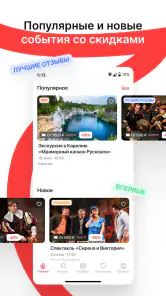
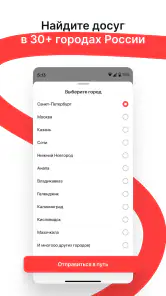
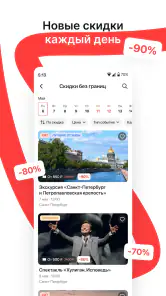

Analysis by Reviewed
I like event apps that help me make a decision quickly rather than simply showing me a crowded calendar. Горбилет: афиша и экскурсии takes that practical approach: it brings together event listings and discounted concert tickets, with a promo code shown in the store summary as BILETIK. In my experience, its value is less about replacing every ticketing service and more about giving me another place to check when I already know roughly how I want to spend an evening.
This is a free events app from ООО «Горбилет», aimed at people looking for things to do rather than at users who need a full cultural archive or a general-purpose city guide. It is available for Everyone, and the Android listing shows support from version 7.0 onward. That broad compatibility matters if you are using an older phone, although the experience will still depend on the device and Android environment you have.
How Горбилет feels in everyday use
The first useful habit is to open the app before deciding on a specific venue. If I begin with a fixed plan, I may be better served by the venue’s own box office. If I begin with a free evening and a budget, an event catalogue with discounted tickets is more helpful because it encourages comparison. I can browse the available choices, notice events I had not considered, and then decide whether the saving or the event itself is the stronger reason to continue.
That distinction is important. Горбилет is not most useful as a passive list that I check once and forget. It works better as a discovery tool for a flexible plan: a concert after work, an excursion at the weekend, or a last-minute cultural outing when the usual options seem too expensive. The app’s focus on listings and offers gives it a clear purpose, even though that also means it may feel narrower than a broad city-services application.
A realistic example would be planning a Saturday with a friend. Instead of messaging back and forth about several websites, I would first use the app to scan the event choices and identify a few realistic options. I would then compare the final conditions before paying, especially the date, venue, seating details, and any restrictions attached to the offer. That workflow saves time at the discovery stage, while still leaving room for a careful check before purchase.
The free price makes this kind of trial easy. I do not need to commit before finding out whether the selection suits my city or interests. The app has also reached over 500 thousand installs and holds an average rating of 4.4 from around 6 thousand ratings, which suggests that many people find the basic proposition useful. I treat those figures as context rather than a guarantee: an events app can be well received overall and still be a poor fit if its current listings do not match what I want to attend.
What the current version suggests
The current Android version is 7.10.8-GOOGLE_PLAY. I would read that as evidence of an established product rather than a newly launched experiment. The app was released on February 27, 2019, so it has had time to develop beyond a simple first release. That history is reassuring when I want a service that has been maintained over time, but it does not remove the need to judge the present experience on its own.
Version information is especially relevant for an events service because the usefulness of the app depends on current content and a smooth path from discovery to ticket selection. A mature version number can indicate ongoing work, yet the real test is whether browsing feels clear, whether event information is understandable, and whether I can move from an interesting listing to a confident decision without unnecessary uncertainty.
I would not install it expecting a radically different social network or a complicated planning system. Its appeal is more direct. It is a focused companion for finding events and looking for a better ticket deal. That focus keeps the idea easy to understand, although users who want detailed recommendations based on a large personal profile may find the experience less tailored than they expect from a specialist discovery platform.
The practical role of the promo code
The visible promo code, BILETIK, is one of the first things I would test rather than assume. A code can be useful, but the sensible workflow is to check where it applies, whether the selected event qualifies, and whether the reduced price is reflected before completing the order. I would never choose an event solely because a code is displayed; the date, location, and ticket conditions still matter more than a headline saving.
This creates a small but important trade-off. Promotional discovery can help me find affordable plans, yet it can also make me focus too much on the discount and not enough on the total commitment. For example, an inexpensive concert is not necessarily convenient if the venue is difficult to reach or the available seats are unsuitable. I see the code as a useful prompt to investigate, not as a substitute for reading the booking details.
A good personal routine is to compare the final offer with the official venue or organiser channel whenever the event is important. The app can be the better starting point for discovery and price checking, while the official source may be preferable when I need the fullest venue-specific information or have unusual requirements. Using both does not cancel out the app’s value; it gives the app a sensible role in a broader decision process.
Who will get the most from it
I would recommend Горбилет to people who enjoy spontaneous plans, want to browse concerts without opening many separate pages, or regularly look for excursions and cultural activities at a lower cost. It is also a reasonable option for someone who does not yet know what they want to attend. The combination of listings and discounted tickets gives that user a starting point instead of forcing them to search by venue first.
It may be particularly useful for a person arranging an evening for two. One person can use the catalogue to narrow down the possibilities, then discuss the practical details with the other before buying. That is more efficient than sending a long collection of unrelated links. The same approach works for a weekend visitor who wants to explore activities but does not want to build an itinerary from scratch.
Families may also appreciate the Everyone age rating as a sign that the app itself is broadly accessible. That rating should not be confused with a guarantee that every listed event is suitable for every child. I would still inspect the event’s own age guidance and format. The application can help locate an activity, but the responsibility for choosing an appropriate performance or excursion remains with the person booking it.
On the other hand, I would skip it if I already have a favourite venue, need a very specific seat immediately, or only want events from one organiser. In those situations, going straight to the official box office is likely to be faster. I would also be cautious if I expect deep editorial recommendations, extensive user planning tools, or a complete replacement for every local ticket service. The app’s strength is focused discovery, not necessarily total coverage of every possible event workflow.
Small details that improve the workflow
My first tip is to search with an open mind but finish with a narrow checklist. Start by looking at the kind of outing you want, then reduce the choice using the details that can actually ruin a plan: timing, location, event format, and the final ticket conditions. This prevents the catalogue from turning into endless browsing and makes the discounted offer useful in a practical way.
My second tip is to treat a discount as a comparison trigger. When I see a promising price, I would check the same event through the venue or organiser if the occasion matters. The point is not to assume one source is always better. It is to verify whether the app’s offer is genuinely the most convenient option after considering the ticket type, seating, and purchase conditions.
My third tip is to use the app earlier for excursions than for urgent concert purchases. An excursion often benefits from comparing themes, schedules, and the overall shape of the day. A last-minute concert decision may require immediate confirmation of availability, where a direct box-office route can be more efficient. This is a useful division of labour: use the app for discovery and alternatives, and use the most direct channel when speed is the priority.
Another overlooked advantage is that the catalogue can expose me to events I would not search for by name. Searching only for a known performer or venue creates a narrow tunnel. Browsing by the kind of experience I want can reveal a better match, especially when my real goal is simply to do something different. The trade-off is that browsing takes discipline; without a budget or time limit, it is easy to collect possibilities without making a decision.
What existing users may notice over time
For someone who has used the service for a while, the current version should be judged by continuity as much as by newness. A long-running events app earns its place when it remains easy to return to: I should be able to repeat my usual discovery routine without relearning the whole product. The version history and continued presence on Google Play point toward an evolving service, but I would still focus on whether the everyday path feels dependable rather than on the version number itself.
Existing users may also value familiarity with the app’s offer style. Once I understand that it combines an event catalogue with discounted ticket opportunities, I can use it more strategically. I do not have to open it for every outing. I can check it when price is important, when I am undecided, or when I want to compare several types of activity. That selective use is more realistic than treating it as the only place to buy tickets.
The developer, ООО «Горбилет», gives the product a clear identity rather than presenting it as a generic calendar. That can be an advantage because the service knows what kind of decision it is trying to support. At the same time, a focused identity means the app may not satisfy users whose needs extend beyond event discovery and ticket offers. A good product does not need to serve everyone, but it should be judged against the job it sets out to do.
Where the experience still needs care
The main limitation is not that the concept is unclear; it is that event purchasing always involves details that a compact listing may not answer at a glance. I would want to inspect the complete event information before committing, especially for an excursion where meeting points, duration, and practical arrangements can affect the whole day. The app can help me discover an option, but I should not confuse a convenient listing with a complete personal plan.
There is also a coverage trade-off. A specialist app may surface attractive offers, but no single catalogue should automatically be assumed to contain every event in a city. If I am looking for a niche performance, a small local venue, or a particular organiser, I would search elsewhere as well. Горбилет is most convincing when it adds useful alternatives, not when I expect it to be the sole authority for the local cultural calendar.
Another point is urgency. Discount-focused browsing is excellent when I have flexibility, but it can be less comfortable when I need certainty immediately. In that case, I would confirm availability and conditions through the most direct channel available before travelling to a venue. This is not a rejection of the app; it is a reminder that discovery and final confirmation are different tasks.
The app’s broad age rating is convenient, but it should not replace event-by-event judgement. Parents, older users arranging accessible outings, and anyone with specific venue needs should read the details carefully and, when necessary, confirm them with the organiser. The application helps narrow the options, while the final suitability check still belongs to the user.
What I would watch next
I would watch how consistently the app keeps its listings useful and how clearly it presents the transition from an attractive offer to an informed purchase. For a service like this, improvements do not need to be flashy. Better clarity around ticket conditions, more efficient browsing, and a dependable route to event details would matter more to me than decorative changes.
I would also pay attention to how the promo code remains relevant in practice. A promotion is valuable when it is easy to understand and apply to a suitable event. If it becomes difficult to tell which listings qualify, the code adds noise instead of helping. My expectation would be simple: the app should make the saving clear without making the user work through unnecessary uncertainty.
Another thing worth watching is the balance between breadth and focus. More listings can make the service feel richer, but too many poorly matched choices can make discovery tiring. The best direction would preserve the straightforward events-and-tickets purpose while making it easier to distinguish a genuinely suitable plan from an interesting but impractical one.
My recommendation
After using it as a discovery tool rather than as a universal replacement for every ticket office, I find Горбилет: афиша и экскурсии easy to understand and genuinely useful for flexible cultural plans. It is free, has a broad Everyone rating, supports Android 7.0 and later, and comes from an established developer with a product that has been available since 2019. Those are practical reasons to try it, not reasons to assume every event will be perfect for you.
I would install it when I want to compare concert options, look for an excursion, or see whether a promo opportunity changes the value of an outing. I would not rely on it alone for a highly specific booking, urgent seat selection, or a complete check of venue requirements. My honest view is that its strongest role is the first half of the decision: helping me discover a worthwhile possibility at a sensible price.
If that is the problem you are trying to solve, the app deserves a place in your search routine. Keep the BILETIK code in mind, check the final conditions carefully, and compare with the official source when the details matter. Used that way, Горбилет: афиша и экскурсии is a practical companion for finding something to do, without pretending to be the only answer.
Pros
- Easy access to Moscow and St. Petersburg event listings
- Useful filters help narrow results by date
- category
- and location
- Supports advance ticket purchases directly in the app
- Includes cultural tours
- exhibitions
- concerts
- and local activities
- Event pages provide practical details such as venue and schedule
Cons
- Coverage may be limited outside major Russian cities
- Some listings may sell out before you complete the booking
- Russian-language content can be difficult for international users
- Ticket prices and service fees may vary between event types
- Requires internet access to browse current events and make reservations

- Category
- Events
- Version
- 7.10.8-GOOGLE_PLAY