Father's Playbook
- 0.00
- 4.1
- Installs
- 10.00K
- Price
- Free
Screenshots
Analysis by Reviewed
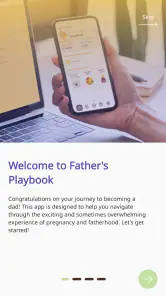
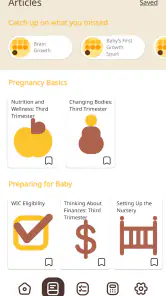
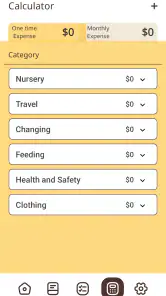
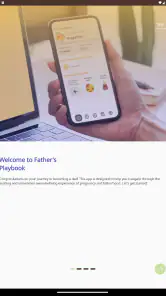
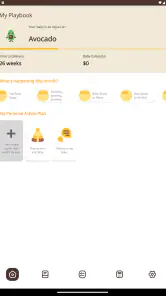
Preparing for a baby can feel strangely one-sided when most pregnancy information is written for the person who is pregnant. Father's Playbook takes a different angle: it is a free parenting app from TX Safe Babies built around the father’s role. I found that focus useful because it turns pregnancy from something I might passively follow into something I can approach with more intention, even when I only have a few minutes to spare.
The app is listed for Everyone, works on Android 7.0 and newer, and its current version is 5.0.0. It has reached over ten thousand installs and holds a 4.1 average from a small group of ratings. Those figures suggest a focused, still-growing tool rather than a huge mainstream platform, which matches my overall impression: this is a practical companion for dads, not an all-purpose pregnancy ecosystem.
What the app feels like in everyday use
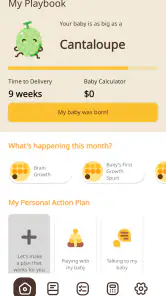
My first impression was that the strongest idea here is not technical complexity but relevance. A general pregnancy tracker usually concentrates on fetal development, appointments, symptoms, nutrition, and week-by-week changes. Those subjects can be valuable, but they do not always answer the questions a father is quietly carrying: What should I be doing this week? How can I support my partner without becoming overbearing? What should I pay attention to before the baby arrives?
That makes the app easiest to understand as a father-focused pregnancy guide. Its value depends less on replacing medical information and more on helping a dad stay mentally present. I would not treat it as a diagnostic tool or as a substitute for advice from a midwife, doctor, or other qualified professional. I see it as the layer that helps translate pregnancy into involvement.
The free price also changes how I judge it. There is little risk in trying it alongside an existing pregnancy app, especially if the usual tracker is designed mainly for the expectant mother. A father can use this one for perspective and practical engagement while the couple continues relying on clinical sources for health decisions.
Why the father-specific angle matters
Many dads do not need another stream of generic facts. They need context. A short explanation of what their partner may be experiencing is more useful when it leads to a sensible action: listen before offering solutions, help organize an appointment, take over an unpleasant task, or create room for rest. That is the kind of usefulness I would look for in this category.
The app’s narrow audience is therefore a strength. It does not have to speak equally to pregnant users, grandparents, medical professionals, and new parents. When I open it, I expect the material to acknowledge that a father may feel excited, uncertain, underprepared, or unsure how to participate. That emotional practicality is difficult to get from a standard countdown app.
There is also a helpful distinction between being informed and being involved. Reading about development can make a person knowledgeable, but involvement usually requires a habit. My most useful approach would be to open the app at a fixed point in the week, choose one idea that applies to my household, and turn it into a concrete action. That keeps it from becoming another application I install, browse once, and forget.
Speed expectations and the right way to use it
Because this is a focused app rather than a large social platform or media-heavy service, I expect ordinary navigation to feel lighter than using a busy pregnancy community. The current version, 5.0.0, indicates an actively maintained release line, but a version number alone does not promise identical performance on every phone. In my view, the sensible expectation is quick access to guidance, not a feature-packed dashboard competing with major health platforms.
That distinction matters for impatient moments. If I am standing in a pharmacy, waiting for an appointment, or sitting beside my partner after a tiring day, I want to reach a relevant piece of advice without building a research project around it. A focused father’s app makes more sense in those short sessions than a broad service that asks me to sort through many unrelated tools.
I would still avoid judging the experience solely by how fast the first screen appears. The real test is whether the content can be understood quickly and acted on afterward. A page that loads instantly but gives vague encouragement is less useful than a slightly slower guide that helps me decide what to do next. For this app, clarity and practical relevance are more important performance qualities than visual effects.
A good workflow is to use it before a conversation, not during an argument. If I read a suggestion about supporting my partner and immediately quote it at her, the app becomes a prop in the discussion. If I read it privately, reflect on what fits our situation, and then offer help naturally, it has done a better job. That is a small but important trade-off: the app can prompt better behavior, but it cannot replace sensitivity.
Heavy-use moments: where it can help most
The busiest periods for a father are not necessarily the moments when he has the most time to read. They are often the moments when plans change, emotions run high, or several practical jobs arrive together. A pregnancy-focused father app is most useful when it gives structure without creating another obligation.
Imagine a weekday evening when my partner is exhausted, the house needs attention, and we are both trying to understand what comes next. Instead of opening a general search engine and reading contradictory pages, I can use the app as a starting point for a father-oriented response. I might decide to handle dinner, prepare questions for the next appointment, or simply ask what kind of support would feel helpful rather than assuming I know.
Another realistic use is before an appointment. I would not use the app to interpret a symptom or second-guess a clinician. I would use it to remind myself to be present, write down questions, and make sure my partner does not have to carry every practical detail alone. The best result is not a dramatic discovery inside the app; it is a smoother conversation outside it.
It can also fit couples who live busy lives or who are approaching pregnancy as a shared project. A father may open it during a commute break, while waiting for a meeting, or after the household is quiet. Short, repeated visits are more realistic than expecting him to complete long reading sessions. That is why I would treat the app as a prompt system for habits rather than a course that must be finished from beginning to end.
There is a limitation here. If someone wants a detailed record of appointments, medication, symptoms, nutrition, or medical measurements, a specialized health tracker may be a better primary tool. The father-focused perspective is valuable precisely because it is selective, but selectivity means it will not cover every need created by a pregnancy.
Reliability, trust, and how I would handle its advice
Reliability has two sides in a parenting app. One is whether the application behaves consistently; the other is whether the user understands what kind of authority it has. TX Safe Babies is the named developer, and the app’s 4.1 average indicates generally positive reception among its raters, though the rating pool is modest. I would interpret that as encouraging rather than conclusive.
For me, trust begins with using the app for the jobs it is suited to do. It can encourage awareness, preparation, communication, and participation. It should not become the final word on urgent symptoms, medication, birth planning, or a personal medical situation. In those cases, the correct next step is professional care, even if an app offers an apparently confident explanation.
This is not a criticism unique to this product; it is especially important because pregnancy content can sound reassuring while still being inappropriate for a particular person. I would keep the app in the supportive-information category and verify health questions with the care team. That boundary makes the experience safer and also prevents disappointment when the app cannot answer a highly individual question.
Stability is similarly practical. A tool earns my trust when I can return to it regularly without feeling that every session is a technical chore. I would pay attention to whether it opens reliably, whether reading is interrupted, and whether I can recover easily after closing it. I would not assume that every phone will behave identically, particularly across older Android hardware, but the minimum operating-system requirement makes the app accessible to a wide range of devices.
One useful recovery habit is to avoid depending on the app for information I need at the exact moment of an appointment or urgent decision. I would read ahead, make my own notes, and treat the app as a companion rather than the only place where important information exists. That protects me from a dead battery, a poor connection, or simply forgetting what I saw.
Device constraints and resource expectations
The Android 7.0 minimum makes Father's Playbook a reasonable candidate for people who keep an older phone instead of upgrading frequently. That matters in a household preparing for a baby, where spending priorities may be elsewhere. The app’s free price removes another barrier, so trying it does not require committing money to an uncertain workflow.
I would nevertheless keep expectations realistic. Compatibility with an older operating system does not tell me how every device will perform, and it does not mean the app will feel equally comfortable on every screen size. Reading is likely to be more pleasant on a phone with a clear display and enough free storage, while a very old handset may make any modern app feel less responsive.
Resource demands are best judged by behavior rather than assumptions. A focused parenting guide should not need the same level of processing as a video service or a graphically intensive game, but I would still watch for battery use during repeated sessions and for whether the phone becomes warm. If I notice unusual drain, I would shorten sessions and avoid leaving the app open unnecessarily. That is sensible device care, not a claim that the app is unusually demanding.
The more important constraint is attention. New and expectant parents often have fragmented time, and a page that requires sustained concentration may be difficult to use no matter how efficient the software is. I would use the app in small windows and keep a note on my phone for questions or actions that come to mind. This turns scattered reading into something I can bring into a conversation later.
There is also a household-device question. If both partners want access to the same information, a father-centered app may work best when one person shares the useful takeaway rather than expecting the other person to adopt the same tool. That avoids creating competing pregnancy routines. The app can support a couple without becoming another system they must manage together.
How it compares with usual alternatives
The most obvious alternative is a mainstream pregnancy tracker. Those apps often offer a broader set of pregnancy details and may be better for monitoring dates, development, appointments, or personal records. If my main goal were comprehensive pregnancy management, I would choose that kind of service first and use Father's Playbook as a companion.
Another alternative is searching the web whenever a question appears. Search is broader, but it can be overwhelming and may lead me toward information that is alarming, outdated, or unrelated to my partner’s situation. A dedicated father-oriented app offers a more intentional starting point. Its trade-off is narrower coverage: I gain focus but give up the endless range of search results.
Parenting communities offer yet another route. They can provide personal experiences and emotional reassurance, but they may also mix helpful stories with advice that does not apply universally. A structured app is quieter and easier to approach privately. If I need peer support, I would look elsewhere; if I need a prompt to become more engaged, this format is more suitable.
Books and prenatal classes remain valuable, especially for couples who want depth, discussion, or guidance from professionals. I would not see this app as a replacement for those options. Its advantage is convenience and father-specific framing. A class may teach more in one sitting, while the app is easier to revisit when I have only a few minutes.
Who should use it, and who should skip it
I would recommend it to a father who feels unsure how to participate, wants pregnancy information framed around his role, or keeps realizing that he means to help but does not know where to begin. It also suits someone who already uses a general pregnancy tracker but wants a second perspective that speaks more directly to him.
It is a particularly sensible trial for a first-time dad who prefers small, practical prompts over long books. The free price means he can test whether the tone and approach fit his personality. A partner, friend, or family member could also suggest it as a low-pressure way to encourage involvement, although the user should adopt it willingly rather than treat it as homework.
I would skip it as a primary solution if I need detailed medical tracking, professional consultation, extensive community discussion, or a complete household organizer. I would also skip it if I already have a trusted resource that both partners use comfortably and I do not want another stream of information. More apps do not automatically mean better preparation.
The app may also feel less useful to a father who wants highly technical explanations or who prefers learning through classes and printed material. Its strength is approachability. Readers looking for clinical depth should use qualified sources instead of expecting a father-focused companion to carry that responsibility.
My performance verdict after weighing the trade-offs
My overall view is positive, with a clear understanding of its boundaries. Father's Playbook is appealing because it addresses a real gap: fathers are often included in pregnancy emotionally but not always served by the tools they are expected to use. The focused design makes it easier to connect information with supportive behavior.
On speed, I would expect short sessions to be the natural fit. On stability, the app’s current release and established install base are reassuring signs, while the modest number of ratings means I would keep my expectations measured. On resource demands, its parenting-guide purpose suggests a more manageable experience than media-heavy alternatives, but individual devices can still differ.
The most valuable performance feature is recovery. If I miss a day, close the app, or become distracted by work, the concept remains easy to return to because it is not tied to a complicated routine. I can open it, take one useful idea, and continue with real life. That flexibility matters more to me than a crowded collection of extras.
My recommendation is to use it as a practical fatherhood companion, not as a medical authority or complete pregnancy manager. Pair it with professional care and, if needed, a broader pregnancy tracker. Used that way, the app earns its place by helping a dad show up with more awareness, preparation, and empathy. For someone who wants exactly that father-centered starting point, the free download is easy to justify; for someone seeking comprehensive health records or expert consultation, a different category of app will serve better.
Pros
- Practical tips help fathers handle everyday parenting situations.
- Easy-to-scan content suits quick reading during busy routines.
- Encourages more confident and intentional involvement in family life.
- Useful ideas can inspire conversations between parents and caregivers.
- Covers relatable challenges rather than focusing only on theory.
Cons
- Some advice may feel too general for complex family circumstances.
- Content may reflect assumptions about traditional fatherhood roles.
- Limited personalization may reduce its value for different parenting styles.
- The app’s usefulness depends on regularly applying its suggestions.
- Some topics may need professional guidance beyond the app’s recommendations.

- Category
- Parenting
- Version
- 5.0.0