Fantasy Football Draft Wizard
- 2.56K
- 4.6
- Installs
- 500.00K
- Price
- Free
Screenshots
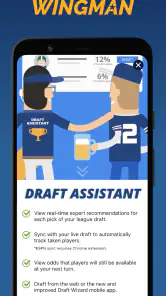
Analysis by Reviewed
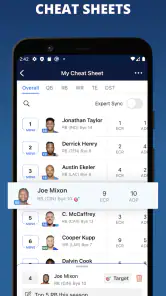
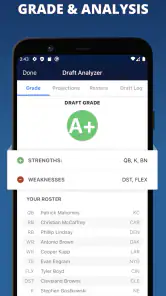
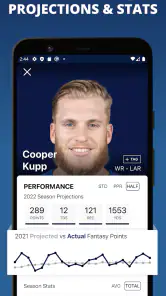
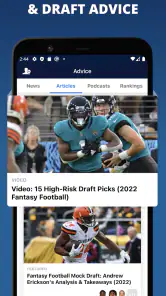
Fantasy football is won or lost long before the first Sunday kickoff, and Fantasy Football Draft Wizard is built around that uncomfortable truth. I used it as a preparation tool rather than treating it like a complete fantasy league platform, and that distinction matters. Its job is to help me approach a draft with a plan, compare players more confidently, and avoid making rushed choices when the clock is running.
This is a free sports app from FantasyPros, with optional in-app purchases ranging from $7.99 to $191.99 per item. That makes the basic entry point easy, but the possible cost of advanced access deserves attention before you commit. The app is rated for Everyone, runs on Android 8.0 or later, and its current version is 4.1.19. With an average rating of 4.6 from around 14 thousand ratings and more than 500 thousand installs, it has clearly found an audience among fantasy football players.
How Draft Wizard fits into a real fantasy football routine
I see this app as a draft-room companion, not a replacement for every fantasy football service you already use. The strongest use case is the period before and during the draft, when you need a practical way to turn general knowledge into decisions. Instead of relying only on memory or whichever player name is most familiar, I can use the app to organize my thinking and keep my selections connected to a broader strategy.
That is especially useful in leagues where the draft moves quickly. A few seconds can separate a sensible pick from an emotional one, particularly after a favorite player is taken just before my turn. Draft Wizard gives the experience a more deliberate feel. I can enter a draft with priorities, react to changing availability, and keep from abandoning my plan simply because another manager has started an unexpected run at a position.
The app is also helpful for people who understand football but are less comfortable with fantasy draft mechanics. Knowing which players are talented is only part of the challenge. Roster construction, positional timing, risk, and the changing pool of available players all affect the result. The app’s value comes from helping connect those pieces instead of leaving the user with a long list of names and no clear way to use it.
What the free starting point means
The app itself is free to install, which is important for casual players. I can try the workflow without paying simply to discover whether it suits the way I prepare. That makes it a reasonable first step for someone joining a league with friends, returning to fantasy football after a break, or wanting more structure without immediately buying a separate draft product.
However, “free” should not be read as “every useful part is automatically included.” The presence of in-app purchases between $7.99 and $191.99 per item indicates a wide range of possible paid options. I would not spend until I had opened the app, checked which tools are available at no cost, and decided whether the extra material addresses a real weakness in my preparation. The free access is a chance to evaluate the workflow, not a promise that every advanced benefit is free.
More From Our News Desk

Clash of Clans Is Won Between the Battles

Android Auto Makes the Case for Quieter Car Software

MobiOffice: Transforming Mobile Productivity with Seamless Integration

EA SPORTS FC™ Mobile Soccer: Redefining Mobile Sports Gaming

How Microsoft OneDrive Became a Mobile Productivity Giant

How Google Translate Breaks Language Barriers Effortlessly
That distinction is one of the most important things to understand before downloading. A casual manager may find the free experience sufficient, while a highly competitive player may consider paid access worthwhile. The right answer depends on how seriously you treat the draft and how much independent research you already do. I would judge the purchase by the time it saves and the quality of decisions it supports, rather than by the number of features shown in a menu.
Using it before draft night
My preferred approach is to use the app in stages. First, I would identify the kind of league I am entering and the mistakes I usually make. Do I wait too long on a position? Do I overvalue a recognizable name? Do I panic when a run begins? Draft preparation is more useful when it targets those habits instead of becoming a vague search for the “perfect” player.
Next, I would use the app to create a short decision framework. I do not want to stare at an enormous pool of options during the draft. I want a manageable group of players I would be comfortable selecting, plus a sense of when a position is becoming thin. That preparation makes the live experience calmer because I am not starting from zero every time my turn arrives.
A less obvious benefit is psychological. A draft tool can act as a brake on recency bias. If a player has just made a highlight play in a preseason conversation or appears repeatedly in a group chat, it is easy to inflate his value in my head. A prepared plan gives me something to check against. I can still make an aggressive choice, but it becomes a conscious deviation rather than an impulse.
Making better decisions while the clock runs
During a live draft, I would keep the app open as a reference rather than constantly switching between several unrelated sources. That reduces friction. When another manager takes a player I wanted, I can move to the next reasonable option instead of rebuilding my entire strategy under pressure.
The practical trick is to use it for comparisons, not just rankings. A ranking tells me who appears attractive in isolation. A draft decision asks a different question: which available player best fits my roster, the remaining player pool, and the risk I am willing to accept? The app is most valuable when I use its guidance as a starting point for that judgment instead of treating a single recommendation as an automatic command.
I would also avoid making every selection at the same speed. Early picks often deserve more thought because they shape the rest of the roster. Later, when the available choices are closer together, a prepared shortlist becomes more valuable than prolonged analysis. This is where a draft-focused app can be more useful than a general sports news application: it is designed around decisions, not just information consumption.
A realistic evening with the app
Imagine I am joining a league with coworkers and the draft begins after dinner. I have limited time, do not follow every team equally, and know that the most confident managers will try to create urgency. Before the draft, I use the app to review my priorities and decide which positions I am willing to address early. I mark the players I would genuinely consider rather than copying a list without thinking.
When the draft starts, two managers select players from the same position in quick succession. My first reaction is to join them, but my preparation reminds me to check the rest of the board. I choose a player who fits my roster instead of chasing the run. A few rounds later, a player I expected to disappear is still available. Because I have not filled every slot according to a rigid script, I can take advantage of the value.
That scenario shows the app’s real role. It does not remove uncertainty, and it cannot make other managers behave predictably. What it can do is give me a repeatable process. For a social league, that may be enough to turn a chaotic evening into a more enjoyable one.
Where the experience can feel limited
The first limitation is that a draft assistant cannot replace league-specific judgment. Every league has its own settings, manager habits, roster requirements, and tolerance for risk. A recommendation that looks sensible in a broad context may be less attractive in a league with unusual scoring or a different roster structure. I would always check that the app’s guidance matches the rules I am actually playing under.
The second limitation is overreliance. If I follow the app mechanically, I may produce a technically tidy roster that does not reflect my knowledge of the league or my appetite for upside. Tools are strongest when they improve discipline, not when they eliminate personal judgment. I still need to understand why a pick makes sense.
There is also a possible cost tradeoff. Since paid items can reach $191.99, the upper end is not a casual purchase for most people. A serious player might see that spending as part of a competitive hobby, but someone playing one friendly league may not recover enough value from it. I would begin with the free experience and upgrade only after identifying a specific problem the paid option could solve.
Another tradeoff is attention. Draft preparation can become excessive if I keep adding rankings, notes, scenarios, and backup plans until the process is harder than the draft itself. The app is most effective when I use it to simplify decisions. If it encourages me to second-guess every pick, I would step back and return to a short, clear plan.
How it compares with familiar alternatives
The usual alternative is to rely on a general fantasy football platform, browser searches, spreadsheets, or personal notes. Those options can work, especially for experienced managers who already have a process. A spreadsheet offers control and can be customized around a particular league, but it also requires more preparation and maintenance. It is easy for information to become outdated or difficult to use when the draft is moving quickly.
General fantasy apps are often better for managing the league after the draft: checking matchups, monitoring the roster, and handling weekly decisions. Draft Wizard has a narrower identity. I would choose it when the draft itself is the part I find stressful or when I want a dedicated preparation layer alongside my normal league app.
Compared with simply reading articles, the app should be more useful for turning research into action. Articles can explain trends and player situations, but they do not necessarily help me decide what to do when three acceptable players remain and my next pick is approaching. On the other hand, a knowledgeable manager who enjoys building personal models may prefer a spreadsheet or a specialized research workflow. This app is aimed more at practical draft assistance than at giving complete control over every assumption.
Who will get the most from it
I would recommend trying it to a beginner who wants guidance without immediately paying for a full fantasy football service. The free starting point lowers the risk, and the draft-centered approach gives a new manager something concrete to practice. It can also help a returning player refresh his process after time away from the game.
It suits busy players too. If I have only a short window before draft night, a focused tool is more realistic than reading dozens of separate sources. The app can help me organize the decisions that matter most, particularly when I need a plan that is easy to consult from a phone.
Competitive managers may also find value, but they should be more selective. If I already maintain detailed projections, track league tendencies, and enjoy doing my own analysis, the app may be most useful as a second opinion rather than the foundation of my strategy. I would compare its guidance with my own process and keep only the parts that improve speed or consistency.
I would skip it if I am looking for a complete weekly fantasy management experience rather than a draft tool. I would also skip paid upgrades if I play only occasionally and am not prepared to use the additional material actively. Paying for information that I will glance at once and ignore during the draft is poor value, regardless of how polished the app feels.
My verdict on paying for extra value
The free download makes Fantasy Football Draft Wizard easy to test, and that is its biggest financial advantage. I can find out whether its organization and draft guidance fit my habits before spending anything. That is a better proposition than committing upfront to a tool I may not use beyond one draft.
Paid value is more personal. The listed purchase range stretches from a relatively modest optional expense to a substantial one, so I would not describe every tier as equally suitable for every manager. Someone competing seriously across several leagues may value deeper assistance and time savings. Someone in a single casual league should be much more cautious and should first prove that the free workflow changes the way they prepare.
My practical recommendation is to install it, use the free tools for one complete preparation cycle, and write down whether it helped me make faster, calmer decisions. If the answer is yes and I can name the specific paid benefit I need, an upgrade may be reasonable. If I am still unsure what problem I am paying to solve, I would keep the free version or rely on my existing fantasy platform.
Overall, this is a focused sports app with a clear purpose. It will not make every fantasy decision for me, and it should not be treated as a substitute for understanding my league. Used properly, though, it can reduce draft-night panic, expose impulsive habits, and give a casual or busy manager a more reliable preparation routine. My recommendation is to try the free access first, then pay only when the extra value is concrete and relevant to the way you play.
Fantasy Football Draft Wizard Frequently Asked Questions
Is Fantasy Football Draft Wizard only for fantasy football, or can it help with other sports?
Fantasy Football Draft Wizard is built specifically around fantasy football drafts, so its player research, rankings, mock drafts, and draft-day guidance are intended for football leagues. If you manage teams in other fantasy sports, this app may not fit those needs. Its focus is useful when you want one place to prepare for a football draft rather than a general-purpose sports manager.
Will I need to create an account or connect a fantasy league to use the app?
You can use Fantasy Football Draft Wizard as a draft-preparation tool, and connecting or entering league details can help tailor recommendations to your format. For a live draft, accurate league information and current picks are important to the guidance it provides. Before relying on it on draft day, explore its setup options and make sure you can use the workflow that suits your league.
What devices can run Fantasy Football Draft Wizard?
Fantasy Football Draft Wizard is an Android app for fantasy football draft preparation and draft-day support. Check that your device runs Android 8.0 or later before downloading, since that is the minimum operating-system requirement. It is listed as suitable for everyone, so its content rating does not restrict it to adult users.
Who makes Fantasy Football Draft Wizard, and how popular is it?
Fantasy Football Draft Wizard is developed by FantasyPros and focuses on helping users prepare for fantasy football drafts. It has over 500,000 installs and an average rating of 4.6 from around 14,000 ratings, suggesting it has attracted a substantial audience of fantasy players. Those figures offer a sense of its reach, but your experience will depend on your league and how you use its tools.
What is Fantasy Football Draft Wizard?
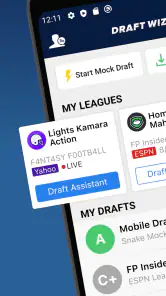
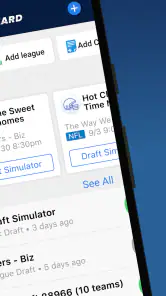
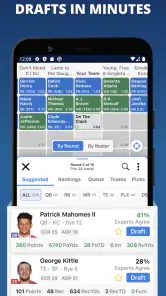
Fantasy Football Draft Wizard is a draft-preparation and draft-day assistant designed for fantasy football managers. It helps you research players, compare rankings, build draft strategies, run mock drafts, and make more informed selections during a live draft. The app is particularly useful for users who want structured recommendations instead of relying only on memory or basic player lists.
Pros
- Fast mock drafts help you practice different draft strategies.
- Player rankings and projections make research easier before draft day.
- Custom league settings support more realistic draft simulations.
- Draft history lets you review picks and identify strategy mistakes.
- Useful for comparing player values across positions and scoring formats.
Cons
- Many advanced tools require a paid subscription.
- Projection accuracy can vary throughout the changing NFL season.
- The interface may feel crowded for first-time fantasy players.
- Mock drafts may not fully reflect your league’s actual managers.
- Some features depend on an active internet connection.
- Category
- Sports
- Version
- 4.1.19