Fake Police Call
- 7.00
- 4.7
- Installs
- 10.00K
- Price
- Free

Screenshots



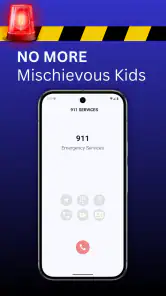
Analysis by Reviewed
Getting a child to tidy up can turn a simple request into a long negotiation. Fake Police Call takes a playful shortcut: it lets a parent stage a pretend call from the police to make cleanup feel urgent. I approached it as a small parenting aid rather than a full behavior system, and that distinction matters. It can add a moment of drama when a child is ignoring repeated reminders, but it works best when used carefully and followed by a calm explanation.
As a free parenting app from M.128KB, it is built around one very narrow idea. The store summary frames the situation with humor, while the short description makes the purpose clear: this is a fake police call. The app has an Everyone age rating, so the intended audience is broad, although the way an adult uses the call is far more important than the label. A frightened child may react very differently from a child who enjoys pretend play.
My main advice is to treat the call as make-believe, not as a threat. If you present it like a game and keep the tone light, it may help break a stubborn moment. If you use it to create fear or use it every day, the effect can quickly become stressful and the child may stop trusting the routine. That balance is the central question for anyone considering this unusual little tool.
What to expect when you open Fake Police Call
The first thing to understand is that this is not a chore chart, a reward calendar, a parenting course, or a replacement for a conversation. It is a focused intervention for one familiar scene: a child refuses to tidy up, and the parent wants a different prompt. Its value comes from changing the mood of the moment, not from tracking long-term progress.
That narrow focus is also its strongest advantage. Many parenting apps ask you to create profiles, enter tasks, configure rewards, and maintain a routine. That can be useful for families who want a complete system, but it is too much when the immediate problem is a bedroom floor covered in toys before dinner. Fake Police Call is easier to understand because its purpose is obvious from the beginning.
In my experience, the best results come when the child already understands pretend play. The call then becomes a short performance: an unexpected voice or scenario interrupts the argument and gives the child a reason to switch from resisting to participating. It is less suitable for a child who is sensitive to authority figures, anxious about police, or likely to interpret the situation literally.
The app’s audience size suggests that it has found a modest but interested group of parents. It holds a 4.7 average from around 419 ratings and has passed 10K installs, which makes it more than an experiment with no users at all. I would still read those signals as encouragement rather than proof that it will suit every family, because reactions to a pretend police call depend heavily on age, temperament, and the parent’s delivery.
There is no cost to try it, which lowers the risk of testing it once in a calm situation. The practical question is not whether it is worth paying for; it is whether the approach fits your household’s sense of humor. Parents looking for gentle visual schedules, positive reinforcement, or a way to teach organization will probably get more lasting value from another kind of parenting tool.
Before the first call, decide what the call means
Do not install the app in the middle of a heated argument and immediately use it without a plan. First decide on a simple, believable goal: putting blocks in one box, moving clothes into a hamper, or clearing a small section of the floor. A vague instruction such as “clean everything” gives the child no clear finish line and makes the call feel like pressure rather than help.
I also recommend deciding in advance how you will reveal the pretend nature of the interaction. You might let the child enjoy the role-play briefly and then explain that it is a game, or you might tell them immediately that the call is pretend. The right choice depends on the child. The important part is that the adult remains responsible for keeping the situation emotionally safe.
A useful boundary is to avoid connecting the call with real punishment, arrest, or danger. The app can be a theatrical nudge, but it should not become a story about a real officer coming to take the child away. That distinction is not a minor detail; it determines whether the experience feels playful or frightening.
From installation to the first successful cleanup
Start with a small, visible task
Once the app is installed, I would not begin with the hardest cleanup of the week. Pick something that can be completed quickly and seen immediately. A child who is already refusing may be willing to put away a few obvious items, while a large mess can turn the call into another source of frustration.
Give one instruction before activating the scenario. For example, ask the child to place the toy cars in their container, then use the call as a reminder of that specific request. This workflow gives the pretend interaction a purpose. Without the first clear instruction, the child may focus on the novelty of the app and forget what action you actually want.
Keep your own voice relaxed. If you sound angry, the child is more likely to hear the call as a threat. If you sound amused but firm, the same moment can feel like a short piece of family theater. I found that the parent’s tone matters at least as much as the app itself, because the application cannot decide whether a particular child will experience the scenario as funny, confusing, or alarming.
Turn the interruption into a finish line
The most useful workflow is to connect the call to a concrete ending. “Let’s finish this one basket before we move on” is more helpful than repeatedly demanding that the child clean. Once the selected task is done, acknowledge it and stop. Do not keep extending the cleanup just because the child has started cooperating.
This is one of the less obvious trade-offs. The app may help initiate action, but it does not teach the organization skill by itself. If you want the result to last, use the successful moment to show where items belong and why that location makes the next cleanup easier. The pretend call opens the door; the follow-up routine does the teaching.
For younger children, you can make the task collaborative by sorting alongside them. For older children, it may work better to agree on the target beforehand and let them complete it independently. In both cases, the call should remain a brief prompt rather than the main event.
Use the first success to build a routine, not dependence
After the room is tidy, I would avoid immediately promising another call tomorrow. Instead, point out what made the task manageable: a small area, a clear instruction, and a visible endpoint. The goal is for the child to learn that cleanup can be completed without drama. If the app becomes the only trigger that works, it may solve the moment while weakening the ordinary routine.
A practical approach is to reserve the tool for occasional stuck points and use normal reminders most of the time. That preserves its novelty and gives the child opportunities to respond without theatrical pressure. Repeated use can also make the police theme less effective, turning it into background noise or encouraging the child to wait for the performance before doing anything.
What can be confusing during use
The name may lead a parent to expect a detailed police simulation, a collection of scenarios, or a broader discipline toolkit. I would set expectations lower and think of it as a focused fake-call utility for a very specific parenting moment. That mindset makes the app easier to judge fairly.
Another possible confusion is the difference between the child’s reaction and the app’s success. A child who laughs but does not tidy has not completed the goal, while a child who quietly starts cleaning may not show an exciting reaction at all. Measure the tool by whether it helps produce a safe, manageable action, not by how dramatic the pretend call feels.
Parents may also wonder whether it is appropriate for every age because the content rating is Everyone. I would not use that rating as a substitute for individual judgment. A child who is fascinated by emergency services may enjoy the role-play, while another may worry about police visits long after the room is clean. Watch the child’s body language and ask how the call felt afterward.
Privacy and trust are practical parts of the experience too. Because the premise depends on pretending, be especially careful not to use it in a way that makes the child feel secretly manipulated. Explain enough for your family’s age and communication style, and be ready to stop if the child becomes upset. A clean room is not worth damaging confidence in a parent.
When another parenting approach is better
Fake Police Call is not the right choice for families trying to avoid authority-based discipline altogether. It is also a poor fit when the child has a strong fear of police, has difficulty separating fiction from reality, or is already overwhelmed. In those situations, a visual timer, a two-choice instruction, a music-based cleanup routine, or a simple reward system may be more constructive.
It is less useful for teaching recurring household responsibilities. A chore planner can show what needs to happen, when it should happen, and how progress is recognized. A visual schedule can help a child anticipate transitions without surprise. Those alternatives require more preparation, but they support independence in a way this app does not.
It can also be the wrong tool when the real issue is that the task is too difficult. If a child cannot reach storage boxes, does not know where items belong, or is exhausted after a long day, a pretend call only adds pressure. In that case, changing the room setup or reducing the task is the better first step.
How the current version fits into the experience
The current version is 1.6.3, and the app supports devices running Android 5.0 or later. That makes it accessible to people using older Android hardware rather than requiring a recent phone. For a parent who keeps an older spare device in the kitchen or playroom, that compatibility can be convenient.
Still, I would keep the phone in the adult’s hands and prepare the scene before bringing it into the child’s attention. The device should support the interaction, not become another object the child grabs, explores, or argues over. This small preparation step makes the call feel shorter and keeps the focus on the cleanup task.
Three practical insights that make a difference
First, use the app after a clear request rather than before one. The child needs to know what success looks like. This turns the call from a vague scare into a prompt connected to one achievable action.
Second, choose a neutral room and a neutral moment when possible. Using the app during a public meltdown, near bedtime, or while several adults are arguing can amplify embarrassment and stress. A quiet home setting gives you room to explain and repair the moment if the joke does not land.
Third, pair the call with a transition object or location. Asking a child to put all toys “away” can be abstract; pointing to one basket gives the child a physical destination. Once the first container is full, pause and decide whether more cleanup is genuinely needed. This prevents the app from becoming an excuse for an endless demand.
A fourth insight is to notice what happens after the novelty fades. If the child starts cleaning only when the pretend police appear, reduce use and return to ordinary prompts. The application should be a temporary bridge to cooperation, not a permanent authority figure in the household.
Who will get the most from it
I can see this being useful for a parent who has tried ordinary reminders, wants a playful change of pace, and knows their child responds well to imaginative role-play. It may also suit families that need a quick prompt before leaving the house, provided the target is small enough to finish without turning the departure into a longer conflict.
It is particularly practical when the adult has already established that the police theme is pretend. That foundation lets the app add humor without asking the child to process a frightening uncertainty. In that setting, the tool can be memorable while still remaining a minor part of the family routine.
I would skip it if you want detailed tracking, shared chore management, educational explanations, or a structured reward economy. The app’s appeal is its simplicity, and that simplicity is also the reason it cannot replace those broader tools. Choosing it means choosing a quick situational prompt over a complete parenting framework.
My recommendation after trying the approach
Fake Police Call is a curious, highly specific app that can help in the right household and feel inappropriate in another. I like that it addresses a real everyday struggle without pretending to be a complete parenting solution. The free price makes experimentation easy, and the straightforward concept means a first-time user can understand its purpose quickly.
My reservation is not about the idea of pretend play itself; it is about how easily a parent could lean too heavily on fear or authority. The app cannot supply the judgment needed to choose the right moment, the right tone, or the right child. Those decisions belong to the adult, and they determine whether the experience ends in cooperation or distress.
If you decide to try it, begin with one small cleanup target, explain or reveal the pretend element in a way your child can handle, and end the performance as soon as the task is complete. Then reinforce the practical habit that made the success possible. Used that way, Fake Police Call is best understood as an occasional nudge for a stuck moment, not a daily discipline method.
For parents who enjoy playful role-play and need a quick change from repeating the same instruction, it is worth testing. For families seeking calm, predictable, long-term organization skills, a visual routine or chore system will be a better investment of attention. My final view is cautiously positive: the app works best when the joke stays small, the task stays clear, and the child’s sense of safety stays more important than a tidy room.
Pros
- Simple interface makes fake calls quick to set up.
- Useful for creating an excuse to leave uncomfortable situations.
- Custom caller names and numbers can make scenarios feel more realistic.
- Scheduled calls help you prepare an exit before an event.
- Usually lightweight and does not require an account to get started.
Cons
- Call simulations may look unconvincing on some phone models.
- Limited customization can make repeated calls feel predictable.
- Ads may interrupt setup or appear during use.
- It should never be used to impersonate emergency services or authorities.
- Privacy depends on how the app handles contacts
- permissions
- and call data.

- Category
- Parenting
- Version
- 1.6.3