Ember: Walk With God
- 537.00
- 4.8
- Installs
- 100.00K
- Price
- Free

Screenshots
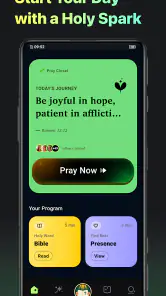
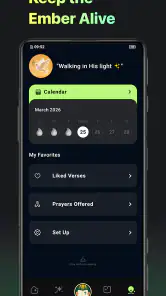
Analysis by Reviewed
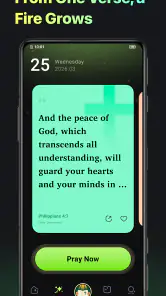
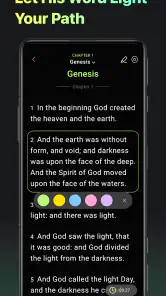
Ember: Walk With God is the kind of Books & Reference app I would open when I want a quieter, more intentional moment with Scripture rather than another busy feed on my phone. Its focus brings together Bible reading, prayer, and Bible quiz activities, which gives it a broader purpose than a simple digital text reader. I found that combination useful because it can support both reflection and active recall instead of leaving the experience at passive reading.
The app is free and aimed at Everyone, so it is easy to consider for personal use, family routines, or a small study habit. WiseWakeTech is the developer, and the app has already built a strong public response, with a 4.8 average from around 2.1 thousand ratings and more than 100 thousand installs. Those figures suggest that Ember has found an audience, although they do not replace trying it yourself to see whether its style fits the way you approach faith and reading.
How Ember feels in everyday use
My first impression is that Ember works best when treated as a repeatable daily companion, not as a complete replacement for every Bible resource. The three-part idea is straightforward: read Scripture, spend time in prayer, and test what you remember through quizzes. That structure gives a short session a natural beginning, middle, and end. You can approach the app with a specific intention instead of wondering what to do after opening it.
A realistic use case is a short morning routine. I might read a passage before checking messages, pause to turn one thought into a prayer, and then use the quiz element later in the day to revisit the material. The value is not necessarily in making the session longer. It is in giving the reading a second contact point, which can make the content easier to remember than a single quick glance.
That workflow also suits people who struggle to maintain consistency with a physical Bible or a general reading app. A dedicated space for Scripture and prayer reduces the temptation to jump between unrelated tools. At the same time, I would not expect Ember to solve motivation on its own. If the routine is too ambitious, the app can become another icon that gets ignored. I had better results by keeping the goal modest and returning regularly.
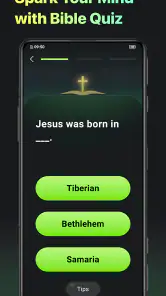
The quiz element is particularly interesting because it changes the user’s role. A standard Bible app usually asks me only to read or search. A quiz asks me to retrieve something from memory, which is a different mental task. That makes Ember more suitable for someone who wants to learn themes, details, or passages over time, especially when reading is paired with later review rather than used as a one-off activity.
Reading, prayer, and recall serve different needs
It is worth separating the three parts instead of treating them as one feature. Scripture reading is useful when I want context and a focused passage. Prayer is more personal and depends heavily on whether the prompts or presentation match my own practice. Quizzes are more structured and can appeal to families, study groups, or anyone who enjoys checking their knowledge. The app’s strength comes from putting these modes together, but their usefulness will vary from person to person.
More From Our News Desk

Clash of Clans Is Won Between the Battles

Android Auto Makes the Case for Quieter Car Software

MobiOffice: Transforming Mobile Productivity with Seamless Integration

EA SPORTS FC™ Mobile Soccer: Redefining Mobile Sports Gaming

How Microsoft OneDrive Became a Mobile Productivity Giant

How Google Translate Breaks Language Barriers Effortlessly
For example, someone looking for an advanced study tool with extensive commentary, original-language resources, cross-references, or detailed note management may prefer a specialized Bible platform. Ember’s appeal is different. It is a compact devotional and learning experience rather than a research desk. That distinction is important: choosing it for scholarly comparison would create the wrong expectations, while choosing it for a simple Scripture-and-prayer habit makes much more sense.
I also see a practical benefit in using the quiz after a delay. Reading a passage and immediately answering questions can feel easy because the information is still fresh. Waiting until an evening break or the next day makes the exercise more revealing. This is one of the app’s less obvious strengths: its quiz function can be used as a memory check, not merely as entertainment.
What the current release tells me
The current version is 1.1.6, and the app was released on March 21, 2026. That places Ember in an early stage of its product life compared with long-established Bible applications. I would interpret that in two ways. First, the app already has a clear identity instead of presenting itself as an undefined reading utility. Second, users should expect the experience to continue developing as WiseWakeTech learns which parts people return to most often.
The version number is also useful context for existing users. An early release can feel focused because it has not accumulated years of extra menus and overlapping tools. I appreciated that kind of restraint in principle. The trade-off is that a newer app may not yet cover every workflow that experienced Bible-app users take for granted. Ember feels more like a focused starting point than a mature all-purpose library.
I would avoid assuming that a newer version automatically means a dramatic redesign or a large feature expansion. What can be said with confidence is that 1.1.6 is the version to evaluate now, and that the product’s present identity centers on Scripture, prayer, and quizzes. If you are already using Ember, the sensible approach is to judge updates by whether they make those core activities smoother rather than by expecting the app to become something completely different.
For a new user, this release context suggests a simple test: install it, try one complete reading-prayer-quiz cycle, and decide whether the flow feels natural before building a long-term routine around it. Because the app is free, that trial does not require a purchase decision. The more important investment is attention, and that is where the app needs to prove itself.
How it compares with familiar alternatives
Compared with a printed Bible, Ember is more interactive. A paper Bible offers a slower, distraction-free reading experience and can be better for people who value physical pages, handwritten notes, or a screen-free routine. Ember is more convenient when I want Scripture, prayer, and a knowledge check in one place, especially while traveling or during a brief break.
Compared with a general e-book reader, Ember is more purpose-built. An e-reader may provide stronger typography controls, broad book collections, and a better environment for long reading sessions. It usually does not create the same bridge between reading, prayer, and recall. If your main goal is to read large amounts of text comfortably, an e-reader may be the better tool. If your goal is a guided spiritual routine, Ember has the clearer focus.
Compared with a large Bible platform, Ember may feel less overwhelming. Many established services are excellent for searching across translations, comparing passages, following study plans, and exploring reference material. Their breadth can also make a short devotional session feel like a research project. I would choose Ember when I want a focused entry point and a quiz-based review, and a more comprehensive platform when I need deep study tools.
Prayer apps create another comparison. A prayer-focused app may offer more specialized journaling, reminders, or themed prayer material, depending on the product. Ember’s advantage is the connection between prayer and Scripture within the same routine. Its limitation is that people seeking a highly developed prayer journal may find a dedicated option more flexible. The right choice depends on whether prayer is your main activity or one part of a wider reading habit.
Who will get the most from it
I think Ember is a good fit for someone who wants a low-friction way to combine Scripture reading and prayer without assembling several separate apps. It is also promising for readers who learn better when they are asked to recall information. The quiz feature can give a family conversation or personal study session a concrete next step, rather than ending as soon as the passage is closed.
It may also suit a person returning to regular Bible reading after a long break. Starting with a manageable routine is often easier than committing to an elaborate plan. Ember’s defined mix gives that person a simple pattern to try: read something, reflect through prayer, and check retention. I would still keep expectations realistic. A tool can make a routine easier to start, but the habit depends on choosing a time and returning to it.
People who should probably skip it are those who primarily need advanced research features, extensive customization, or a large reference system. The app is also unlikely to satisfy someone who wants a purely unstructured reading experience with no quiz element. If testing knowledge feels distracting or uncomfortable, a traditional Bible reader may be a better match. Ember’s distinctive feature is also the feature that will divide opinions.
Small workflow choices that improve the experience
My first practical tip is to avoid treating the quiz as a score-chasing activity. Use it to identify what you actually remember from a passage. If an answer is missed, return to the relevant text instead of simply moving on. That turns the quiz into a feedback loop and makes the reading portion more valuable.
A second useful approach is to assign different moments to different activities. Reading may work best when your attention is fresh, while a quiz can fit into a short afternoon pause. Prayer may need a slower setting than either one. Separating the activities prevents the whole experience from feeling rushed and lets each part serve its own purpose.
Third, I would use Ember alongside—not instead of—a physical Bible or a deeper study resource when the situation calls for it. Read a passage in Ember for routine and recall, then move to another resource when you need extensive context or comparison. This hybrid approach avoids forcing one app to handle every possible need and makes its focused design an advantage rather than a limitation.
For families, the quiz can become a conversation starter rather than a test. One person can read a passage, another can explain what stood out, and the quiz can reveal which details everyone remembers differently. That use does not require turning the app into a competition. The better outcome is shared discussion, especially when the questions lead people back to the text.
Where the experience still needs care
The biggest limitation is the risk of confusing a compact experience with a complete one. Ember brings together three useful activities, but that does not automatically give it the depth of separate specialist tools. A reader who wants detailed annotations, broad reference material, or a highly personalized study system should investigate whether the focused format provides enough room for those needs.
There is also a possible tension between convenience and concentration. Because Ember lives on a phone, the same device that opens Scripture can also deliver notifications, social feeds, and work messages. I found that the app is most effective when I create a small boundary around the session: silence interruptions, choose one activity, and resist switching away. Without that boundary, the digital format can weaken the reflective mood it is meant to support.
The prayer portion may be especially personal. Some users will appreciate having prayer placed beside Scripture, while others will want more freedom to write, organize, or revisit their own words. I would not choose Ember solely on the promise of prayer unless that part of the interface matches your preferred style. Its strongest case is the relationship between all three activities, not necessarily specialization in one of them.
Because the app is still relatively early in its release history, I would also pay attention to how consistently its central flow develops. Future improvements should ideally make reading, prayer, and quizzes clearer and more dependable without burying them under unnecessary extras. For current users, a stable, focused experience may be more valuable than a rapid expansion of unrelated functions.
What I would watch as Ember develops
The most meaningful future progress would be improvements that deepen the existing routine. I would watch for changes that make it easier to move from a passage to prayer, return to previously studied material, or understand mistakes in a quiz. Those areas directly affect whether the app becomes part of daily life or remains something people try once.
I would also watch how WiseWakeTech balances simplicity with the needs of returning users. Newcomers benefit from a clear path, while regular readers eventually want more control over how they revisit content. The best evolution would preserve the approachable first session while adding useful depth for people who have already formed a habit.
For someone deciding whether to download it now, the answer is fairly straightforward. Ember is worth trying if you want a free, focused combination of Bible reading, prayer, and recall practice. Give it a fair test across more than one kind of session: a quiet morning, a short break, and a later quiz review. That will tell you more than a single first impression.
My final view is positive but measured. Ember: Walk With God has a clear purpose, a helpful combination of activities, and enough flexibility to support personal or shared routines. Its current version, 1.1.6, feels like a foundation rather than the final word on what the app can become. I would recommend it to readers who want structure without a crowded study suite, while directing advanced researchers and highly specialized prayer users toward tools built specifically for those jobs.
As a free app in the Books & Reference space, it is easy to explore without committing money, and its Everyone rating makes it approachable for a wide audience. The real question is not whether it contains every Bible feature imaginable. It does not need to. The better question is whether its particular rhythm—Scripture, prayer, then quiz—helps you return with more attention and remember what you read. For me, that focused rhythm is the reason to give Ember a genuine try.
Ember: Walk With God Frequently Asked Questions
Who develops Ember: Walk With God, and what kind of app is it?
Ember: Walk With God is a Books & Reference app from WiseWakeTech. Its short store description is “Ember,” while its summary highlights Scripture, prayer, and Bible quizzes. That gives prospective users a quick sense of its faith-centered focus before they install it. The app is listed for everyone, so it is presented for a broad audience.
What is Ember: Walk With God?
Ember: Walk With God is a Christian devotional and spiritual-growth app designed to help users build a more consistent prayer and Bible-reading routine. It offers guided reflections, faith-based content, and prompts intended to encourage daily time with God. The app is aimed at people who want practical encouragement and a structured way to deepen their Christian walk through short, accessible sessions.
Is Ember: Walk With God suitable for beginners in Christianity?
Yes. Ember: Walk With God is generally approachable for both new and experienced Christians. Its guided format can help beginners understand how to create a devotional habit without needing extensive biblical knowledge, while more experienced users may appreciate the reminders and reflective prompts. However, it should be viewed as a companion to personal study and church involvement, rather than a replacement for reading the Bible directly or receiving pastoral guidance.
Does Ember: Walk With God require a subscription or in-app purchases?
Ember: Walk With God is free to download. Before installing, users should still check the current app-store listing for any purchase options and the terms attached to them, since these can change over time. If an optional plan or trial is offered, review its renewal terms and cancellation instructions before signing up so you understand what continued access may involve.
Can I use Ember: Walk With God offline?
Offline availability may vary depending on the type of content and the app version. Some material may need to be loaded while connected to the internet, particularly streamed audio, newly released devotionals, or account-based features. If uninterrupted access is important to you, open the app before traveling, test whether your preferred sessions remain available without a connection, and confirm the developer’s latest offline-use information in the store description.
Pros
- Simple daily format makes spiritual reflection easy to maintain.
- Short sessions fit well into busy routines or quiet morning time.
- Encourages prayer
- gratitude
- and intentional Christian living.
- Clean presentation keeps attention on the devotional content.
- Can support users seeking a consistent faith-based habit.
Cons
- Content may feel repetitive for users wanting deeper Bible study.
- Christian-focused material may not suit users of other faiths.
- Limited customization could reduce long-term engagement for some users.
- Requires regular commitment to gain the full benefit of the app.
- Some reflections may feel too general for users seeking personal guidance.
- Category
- Books & Reference
- Version
- 1.1.6