EcoNet
- 4.95K
- 4.0
- Installs
- 100.00K
- Price
- Free

Screenshots
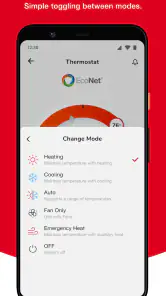
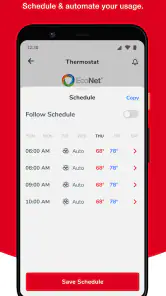
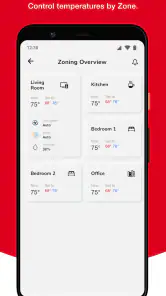
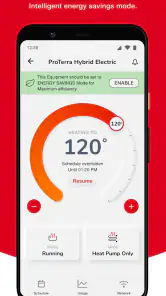
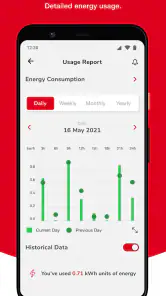
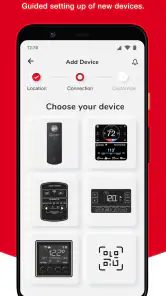
Analysis by Reviewed
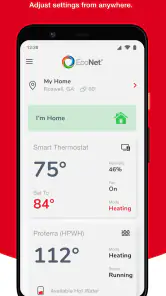
Smart home apps often feel exciting during the first few days and less useful once the novelty wears off. EcoNet, Rheem Manufacturing’s free House & Home app, faces exactly that test. It is designed for consumers who own compatible Rheem-brand HVAC equipment or water heaters and want to control those systems from a phone. After spending time with it, I found the strongest part is not the novelty of changing a setting remotely; it is the way the app can become a small, practical part of a household routine.
That usefulness depends heavily on your equipment and habits. If your home already has compatible Rheem equipment, the app can make everyday control more convenient. If you are looking for a universal smart-home controller, EcoNet is a much narrower choice. I would think of it as a companion for a specific Rheem setup rather than a general-purpose home automation platform.
From first-week convenience to lasting household value
The first week is about learning what deserves remote control
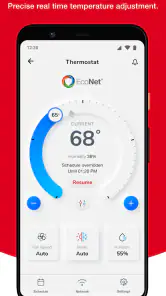
The initial appeal is easy to understand. Instead of walking to a thermostat or checking a water-heater control directly, I can use the phone as a convenient control point. That matters most when I am already away from the equipment: leaving home, returning after a trip, or trying to adjust comfort without interrupting whatever I am doing.
The app covers smart control for HVAC systems and water heaters from Rheem brands, so the first practical step is identifying which of those devices it can work with in your home. This is more important than downloading the app itself. EcoNet is not a magic upgrade for every heating or cooling system, and its value begins only after the compatible equipment is properly connected and recognized.
During the first week, I would avoid changing settings constantly. A better approach is to use it for a few normal routines. Try adjusting the temperature before arriving home, checking the system when you are in another room, and using the water-heater controls when your household schedule changes. These small tests reveal whether remote access solves a real inconvenience or merely gives you another screen to watch.
One useful habit is to treat the phone as a backup control rather than the only control. If another family member needs to make a quick adjustment, the physical thermostat or equipment controls may still be the fastest option. EcoNet is most comfortable when it adds flexibility, not when everyone must understand the app before the home can be comfortable.
What makes it different from a normal thermostat app
A standard thermostat interface usually concentrates on heating and cooling. EcoNet’s identity is broader within the Rheem ecosystem because it also addresses water heaters. That combination can be useful in a home where both systems are compatible, since one app gives me a single place to think about two major comfort systems.
The trade-off is that this focus makes EcoNet less appealing for people with mixed equipment. If your HVAC system comes from another manufacturer, or your water heater is not part of the supported Rheem setup, the app may not become the central control panel you expected. A universal smart-home platform may be a better fit when your priority is bringing devices from several brands together.
I also would not compare EcoNet with a simple programmable thermostat as though they were identical products. A programmable thermostat is often easier for a household that wants a set schedule and minimal interaction. EcoNet makes more sense when remote access and phone-based adjustments are genuinely useful. The choice is less about which interface looks smarter and more about whether your daily life benefits from controlling these particular systems away from their usual location.
A realistic everyday scenario
Imagine leaving for a weekend and realizing that the home settings were left in their normal routine. With a compatible setup, EcoNet can be useful as a remote checkpoint and control option rather than requiring a trip back home. On the return journey, I can use the app to prepare the house for arrival instead of waiting until I walk through the door.
The same idea applies to a household with changing schedules. Someone working late, children returning at different times, or an unexpected overnight guest can make a fixed routine inconvenient. In those situations, a phone-based adjustment has more lasting value than a novelty feature because it responds to real changes rather than asking the household to reorganize around the technology.
For water heating, the benefit is similarly situational. A household may want different control behavior during travel or periods of unusually high use. I would still make changes deliberately, because a remote control is not a substitute for understanding how your home uses hot water. The app is helpful when it reduces unnecessary trips and makes an existing Rheem system easier to manage; it is not a reason by itself to keep opening the phone all day.
What the public response suggests
EcoNet has an average rating of 4.0 from around eleven thousand ratings, with roughly five thousand written reviews and over one hundred thousand installs. Those figures suggest a substantial audience and a generally positive, though not flawless, experience. I read that as a reasonable sign that the app works well for many compatible households, while also leaving room for setup problems, device-specific differences, and frustrations that do not appear in a short store summary.
It is also an app with a long presence in this category, having been released on June 2, 2014. That history matters to me because a home-control app needs to survive beyond the initial installation. At the same time, longevity does not automatically guarantee a smooth experience on every phone or equipment configuration. I would judge it by how reliably it fits your Rheem system and routine, not by age alone.
The month-to-month reason to keep it installed
After the first week, the question changes from “What can this app do?” to “Will I still use it next month?” My answer is yes for owners who regularly need remote control, but only occasionally for everyone else. The recurring value comes from reducing small points of friction: walking to the thermostat, remembering a setting before travel, or making a comfort adjustment when the usual routine changes.
That value is easy to lose if the app becomes another notification source or another place where household members disagree about settings. I prefer a restrained approach. Use it when there is a clear reason, then return to ordinary routines. The app earns its space when it quietly prevents inconvenience, not when it encourages constant monitoring.
A useful monthly review is to ask whether EcoNet helped with at least one genuine situation: a trip, a schedule change, an uncomfortable room, or a water-heater adjustment. If the answer is consistently no, a standard local control may be enough. Keeping an app installed simply because it is available is not the same as receiving ongoing value from it.
Maintenance is more than updating the app
Smart equipment creates a small maintenance relationship. I need to remember which account or household setup is connected, keep the phone ready to access the app, and confirm that remote control still behaves as expected after changes to the home network or equipment. These are not dramatic tasks, but they are part of owning connected HVAC or water-heating equipment.
My best practical tip is to test EcoNet before you need it. Do not wait until the morning of a long trip to discover that the app needs attention. Make a normal adjustment while you are at home, check that the equipment responds as expected, and return the setting afterward. This simple test separates a useful backup from a false sense of security.
I would also keep local controls familiar to everyone in the household. If one person manages the app but another person handles daily comfort, the system can become confusing. A short explanation of what the app changes and when to use it prevents the phone from becoming a hidden source of conflicting adjustments.
Because EcoNet is free, the main cost is not a subscription payment. The cost is attention: installation, connection, occasional troubleshooting, and the mental effort of deciding whether a setting should be changed remotely. That makes the app easier to justify than a paid service, but “free” does not mean maintenance-free.
Where the experience can become tiring
The biggest source of fatigue is dependency on compatibility. A person may download EcoNet expecting a broad home-control experience and then discover that its usefulness is tied to Rheem equipment and the particular setup in the house. This is not a flaw in the idea of the app, but it is a reason to check your equipment first and keep expectations focused.
Another source of friction is the difference between remote visibility and physical certainty. A phone interface can make a system feel accessible, but it does not remove the need to investigate unusual behavior, comfort problems, or equipment issues in person. I would never treat a remote adjustment as proof that the underlying system is healthy.
There is also a household coordination problem. If several people change settings without a shared routine, the app can create more confusion than convenience. Agreeing on who makes major changes and when to use remote control is surprisingly valuable. This is one of those apps where good household habits matter almost as much as the interface.
Users who prefer simple appliances may find the connected layer unnecessary. If you rarely travel, your thermostat is easy to reach, and your water-heater settings almost never change, EcoNet may feel like extra administration. In that case, a conventional control method is likely the calmer choice. Smart control is not automatically better control.
Who should use it and who should skip it
I would recommend EcoNet to owners of compatible Rheem HVAC equipment or water heaters who want phone-based control and can point to a real recurring use case. It is especially sensible for people who travel, manage changing household schedules, or want one Rheem-focused app for both comfort and hot-water equipment.
I would be more cautious if you are shopping for a new system mainly because of app control. The app should be a supporting factor, not the sole reason to choose equipment. Reliability, installation quality, service access, and the suitability of the HVAC or water-heating system for your home matter more than the convenience of changing a setting from a phone.
I would also skip it if your home is built around several unrelated smart-home brands and you want one universal dashboard. EcoNet’s focused approach can be a strength for Rheem households, but it is not the most natural center for a mixed ecosystem. A broader platform may better match that goal, even if it cannot offer the same manufacturer-specific relationship.
Version, access, and everyday expectations
EcoNet is free and rated for Everyone, which makes it approachable for a household that wants to try phone-based control without adding an app purchase. The current version is 6.17.0-10941-0de1f09. I would still install it with realistic expectations: the experience depends on the connected Rheem equipment and the way your household chooses to use it.
The developer is Rheem Manufacturing, and that manufacturer connection is central to the app’s appeal. I prefer that focused arrangement over a generic controller when I want a direct companion for Rheem equipment. It also reinforces the main limitation: this is not a universal solution that becomes equally useful in every home.
Does it earn a permanent place?
For me, EcoNet earns a lasting place when it becomes part of a few dependable routines: checking the home before travel, preparing for a return, handling an unusual schedule, and making occasional comfort or water-heater adjustments without walking to the equipment. Those uses are modest, but they are exactly the kind that survive after the first-week excitement fades.
It does not earn that place merely because remote control sounds modern. If I open it only to experiment, or if my equipment is not a natural match, the app quickly becomes something I forget. The difference between a useful household tool and digital clutter is whether it removes a repeated inconvenience.
My final view is positive but specific. EcoNet is a sensible free companion for people with compatible Rheem systems, and its combination of HVAC and water-heater control gives it a clearer purpose than a single-use thermostat app. I would recommend trying it when remote access solves a real problem, while keeping local controls and ordinary maintenance habits in place. Its long-term value comes from quiet, occasional usefulness—not from constant interaction.
If that description matches your home, EcoNet is worth the space on your phone. If you want broad brand support, highly automated routines, or a completely hands-off experience, another approach may suit you better. For the right Rheem household, though, the app can remain useful well after the novelty has disappeared.
Pros
- Helps users monitor and reduce household energy consumption.
- Provides practical eco-friendly tips for everyday routines.
- Clear interface makes key information easy to find.
- Can encourage long-term sustainable habits through regular use.
- Useful for environmentally conscious users and families.
Cons
- Some features may depend on available regional data or services.
- Results can vary depending on the accuracy of entered information.
- May offer limited value to users already tracking energy use elsewhere.
- Regular notifications could feel repetitive for some users.
- Advanced insights or tools may require an account or subscription.

- Category
- House & Home
- Version
- 6.17.0-10941-0de1f09