DUPR
- 179.00
- 4.1
- Installs
- 100.00K
- Price
- Free

Screenshots
Analysis by Reviewed
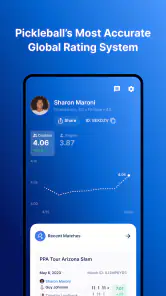
Pickleball ratings are easy to misunderstand when they depend only on who wins and loses. A narrow win against a strong opponent can say more about your level than a comfortable victory over a beginner, and that is the problem DUPR tries to solve. I used it with that idea in mind: not as a replacement for playing, but as a way to turn recorded match results into a more useful picture of my current level.
Developed by DUPR, this free sports app is aimed at pickleball players who want their results to carry more meaning than a note in a group chat. It has passed 100K installs and holds a 4.1 average from around 1.5K ratings, so it has enough visibility to feel like an established tool rather than a private score notebook. The app is rated Teen, runs on Android 8.0 or later, and its current version is 1.9.51.
My overall impression is positive, especially for players who regularly compete with different partners and opponents. The most useful part is not simply seeing a number; it is building a habit of recording matches consistently. That habit also exposes the app’s limitations. DUPR is only as helpful as the match information entered into it, and it is less compelling for someone who plays casually but never wants to track results.
How clearly the app presents your pickleball level
Readability and navigation in everyday use
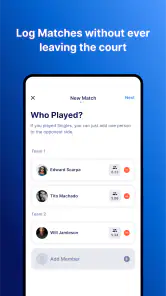
The central idea is straightforward: record pickleball matches and use those results to develop a rating that reflects the quality of competition. That focus gives the app a clearer purpose than a general sports tracker. I do not open it expecting training videos, a large social feed, or a complete tournament-management suite. I open it when I want my match history to contribute to a more meaningful assessment of my level.
That narrow purpose is helpful for navigation. A player who already understands the difference between a casual game and a properly recorded result can move through the experience with less confusion than in an app overloaded with unrelated features. The important workflow is also easy to understand conceptually: play, record, review how the result affects your rating, and use that information when choosing future games.
There is a subtle but important difference between a rating app and a simple win-loss log. A notebook can tell me that I won three games this week. DUPR is more useful when I want to ask whether those wins came against players near my level, whether a loss was actually a valuable result, or whether my recent opponents have changed the meaning of my record. That makes the app particularly relevant for players moving between open play, club sessions, and more competitive matches.
I would still advise new users to slow down during their first few entries. The temptation is to treat the rating as an instant verdict, but it becomes more informative when the match history grows. Recording one unusually good or bad result and then judging yourself from it is a poor use of the system. The practical workflow is to enter matches regularly, look for patterns, and avoid making a major decision about your ability after a single session.
More From Our News Desk

Clash of Clans Is Won Between the Battles

Android Auto Makes the Case for Quieter Car Software

MobiOffice: Transforming Mobile Productivity with Seamless Integration

EA SPORTS FC™ Mobile Soccer: Redefining Mobile Sports Gaming

How Microsoft OneDrive Became a Mobile Productivity Giant

How Google Translate Breaks Language Barriers Effortlessly
The app’s free entry point is another reason it is easy to try. There is no purchase required simply to begin exploring its purpose, although optional in-app purchases range from $1.99 to $34.99 per item. I would not spend money immediately. First, I would check whether I play often enough to benefit from keeping a rating and whether the available experience fits the way my local games are organized.
Useful for more than personal curiosity
A rating becomes practical when it helps me choose the right game. If I am constantly placed in matches that feel far above or below my ability, the number can give me a better starting point for finding balanced opponents. It can also help a regular group notice that a player’s results are changing, rather than relying on an old reputation from several seasons ago.
One realistic example is a player who normally plays with the same three friends but joins a larger open-play session on the weekend. A personal win-loss list may make that player look stronger or weaker than they really are because the opponents are so familiar. Recording matches against a wider range of people gives the rating more context. In that situation, DUPR can turn an intimidating new session into a more informed experiment: I can accept challenging games without assuming that one poor result defines me.
Another useful case is partner selection. Doubles players often know that a strong partnership is not created by combining two impressive individual records. A rating can at least provide a common reference when a group is trying to create balanced games. It does not replace communication, court awareness, or compatibility, but it is more neutral than letting the loudest player decide who belongs where.
The trade-off is that a numerical rating can change the mood of a recreational group. Some people enjoy measurable progress; others become anxious when every match feels like an evaluation. I would recommend agreeing with your playing group about when matches should be recorded and when they should remain purely social. The app supports a competitive mindset well, but not every pickleball session needs to become a performance review.
Motor and sensory considerations
For players with different physical abilities, the most important advantage is that the app separates the act of playing from the act of documenting the result. I can focus on the court first and handle the record afterward, rather than needing to interact with a phone during a rally or between points. That makes the workflow more realistic for anyone who has limited hand mobility, uses a larger text setting, or simply finds quick touchscreen entry tiring.
I would use a simple routine: keep the phone safely away during play, finish the match, and enter the result while seated somewhere stable. This avoids rushed tapping with sweaty hands and reduces the chance of entering the wrong score. It is a small habit, but it matters more for players who have tremors, reduced dexterity, or difficulty switching attention quickly after exercise.
Players with low vision or light sensitivity should judge the interface in their own device settings rather than assume that every screen will be equally comfortable. Larger system text, display contrast adjustments, and a screen reader may help, but the experience can vary depending on the phone and operating system. I would test the most important actions before committing to a long-term workflow: opening the match entry area, identifying the relevant fields, reviewing the result, and correcting an error.
For people with hearing differences, the core value of the app does not depend on hearing an alert during a match. The information is primarily useful after the game, which is a strength in a noisy sports environment. I would still avoid relying on a phone notification to remember every task. A written or agreed routine with playing partners is more dependable, especially if the phone is stored in a bag or left on silent.
There is also an emotional accessibility issue that is easy to overlook. A rating can make progress visible, but it can also make a player feel exposed. Someone returning after an injury, adapting to a new paddle, or learning doubles positioning may perform below their eventual ability for a while. I would treat the number as feedback about recent recorded play, not as a permanent label. That mindset is especially important when the player’s physical circumstances are changing.
Situational access beyond the court
DUPR fits best into a post-match routine, but that routine looks different for everyone. A player with limited energy may prefer to record several matches later rather than complete each entry immediately. A caregiver or parent may only have a short window after leaving the facility. Someone who plays in a busy public venue may need to wait until they are somewhere quieter before checking details.
That flexibility is useful, but delayed entry creates a memory problem. If I wait too long, I may confuse the score, partner, or opponent. My practical solution would be to make a quick note immediately after each game, even if the full app entry happens later. The note does not need to be elaborate; it only needs to preserve the facts needed for accurate recording. This is one of the most important habits for getting value from the app without making the phone part of the match itself.
The app can also support players who do not have a fixed club identity. A traveler, a newcomer to a city, or a player moving between facilities may find a rating more portable than a local organizer’s informal opinion. That does not guarantee that every group will use the same system, but it gives the player a consistent record to bring into new conversations about level and match balance.
For a coach or group organizer, the rating can be a useful discussion tool rather than a final selection rule. If two players appear close on paper but have very different styles, I would still watch them play before arranging an important match. A player who is excellent in fast exchanges may struggle in a slower game, while another may look ordinary in casual rallies but defend exceptionally well under pressure. The rating helps start the conversation; it should not end it.
Situational access also means considering connectivity, battery, and attention at the facility. I would not design a tournament schedule around the assumption that every participant will enter results immediately. A shared process, clear responsibility, and a later review are safer than forcing people to use their phones while moving between courts. The app is most comfortable when it supports the event instead of competing with it.
What still creates friction
The biggest barrier is not the basic concept but the discipline required from the people entering results. If matches are skipped, entered late, or recorded inconsistently, the rating becomes less useful as a reflection of current form. That is not a flaw unique to this app, but it is central enough that every prospective user should understand it before becoming invested in the number.
There is also a social barrier. A rating system works best when opponents and partners agree that the match should count and when everyone understands what is being recorded. In a casual group, one player may want every game tracked while another sees that as unnecessary pressure. The app cannot solve that disagreement. I would ask first, particularly when playing with people who are new to rating-based competition.
Beginners may find the idea more intimidating than helpful. If I am still learning basic positioning, scoring, and serving, a rating can distract me from the skills that matter most at that stage. I would prioritize instruction and enjoyable repetition first, then use DUPR once I have enough regular match experience for comparisons to mean something.
At the other extreme, highly organized players may want tools beyond a rating record, such as detailed performance analysis, structured training plans, or broad event administration. DUPR is not the obvious choice if the main goal is to analyze every rally or manage an entire competition from one place. A specialized coaching platform or tournament tool may be better for those needs, while DUPR remains focused on the rating side of pickleball.
The optional purchases deserve a measured approach as well. Because the app is free to start, I can evaluate the basic workflow before paying for anything. I would only consider an in-app purchase after identifying a specific need and understanding whether it improves my actual routine. Paying for access without recording matches consistently would not fix the underlying problem.
Finally, a rating can encourage unhealthy comparisons if users treat it as a status symbol. I found it more useful when asking practical questions: Which opponents challenge me without making the game one-sided? Am I improving against players with different styles? Is my recent level stable, or am I relying on one good day? Those questions turn the app into a learning aid instead of a scoreboard for self-worth.
An inclusive verdict for pickleball players
I recommend DUPR to regular pickleball players who want a shared language for match level and are willing to record results carefully. It is especially useful for people entering unfamiliar open play, balancing club sessions, or trying to understand whether their progress is carrying over against stronger opponents. The free starting point makes experimentation sensible, and the focused design keeps the main purpose clear.
I would be more cautious about recommending it to someone who plays only occasional social games, dislikes numerical comparison, or expects a complete coaching and tournament-management package. That player may get more enjoyment from a simple personal note or from choosing games based on conversation and observation. A rating is not automatically better just because it is more formal.
For accessibility, my view is practical rather than absolute. The post-match workflow can fit many different abilities and schedules because it does not require phone interaction during play, and players can build their own routine around rest, memory aids, and device settings. At the same time, users should test text size, navigation, and data entry on their own device, and groups should avoid making participation depend on instant phone use.
The strongest tip I can offer is to treat consistency as more important than speed. Record matches when the details are fresh, review trends instead of isolated results, and tell your group what you want the rating to accomplish. If you do that, DUPR can make pickleball competition easier to understand without taking the fun out of it. In my experience, that balance is where the app earns its place: not as a judge of every player, but as a useful reference for finding fairer games and noticing genuine progress.
DUPR Frequently Asked Questions
Can I check whether my phone is compatible with DUPR before downloading?
DUPR is a sports app for players who want to record pickleball matches and follow their rating. Before installing, check that your device runs Android 8.0 or later, since that is the stated minimum operating system. The app is free to download, so you can install it and explore its features without paying an upfront download price.
Who is DUPR intended for, and is it suitable for beginners?
DUPR is aimed at pickleball players who want to record match results and get a rating, so it can be relevant to both newer players and people with more playing experience. Beginners may find it useful for following their progress, while established players can use it to compare performance over time. The app is rated Teen, which is worth considering for younger users and families.
What is DUPR and what is it used for?
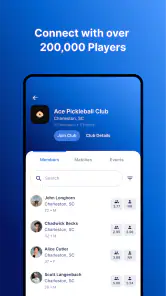
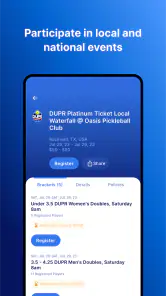
DUPR is a pickleball rating and player-management app designed to help players track their skill level, record match results, and connect with the wider pickleball community. After creating a profile, you can enter eligible match scores, review your rating history, discover events or clubs, and compare your level with other players. It is particularly useful for players who want a more consistent rating than informal self-assessment.
How does the DUPR rating system work?
DUPR calculates a dynamic rating based on your recorded match results rather than relying only on your own description of your ability. The system considers factors such as the result, the rating of your opponents and partners, and the competitiveness of the match. Your rating may change after new results are processed, so it should be viewed as an evolving estimate of current performance rather than a permanent skill label.
Can I use DUPR without playing in official tournaments?
Yes, you can generally use DUPR even if you do not regularly participate in formal tournaments. Depending on the available features and local participation, players may be able to submit results from organized club sessions, leagues, or other eligible matches. However, not every casual game will necessarily qualify. Match verification, event rules, and organizer participation can affect whether a result is accepted and included in your rating.
Pros
- Simple way to track and share pickleball ratings
- Useful match history helps monitor performance over time
- Supports player discovery within the pickleball community
- Ratings can add structure to casual games and leagues
- Helpful for comparing progress against similar players
Cons
- Rating accuracy depends heavily on honest match reporting
- Some features may require an account or paid access
- Less useful in areas with a small DUPR player base
- New players may need several matches before ratings stabilize
- Privacy-conscious users may dislike publicly visible player data
- Category
- Sports
- Version
- 1.9.51





