Draft Punk - Fantasy Football
- 1.46K
- 4.6
- Installs
- 100.00K
- Price
- Free
Screenshots
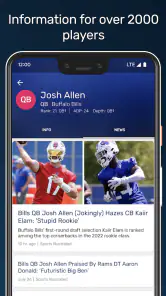
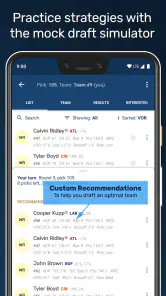
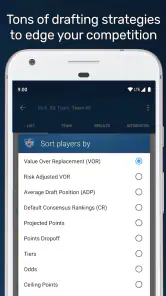
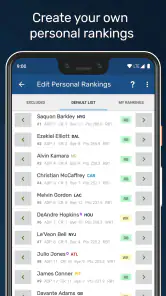
Analysis by Reviewed
I approached Draft Punk - Fantasy Football as the kind of tool I would open shortly before a fantasy draft: not to replace my judgment, but to give me a second opinion when the clock is running and several players look equally tempting. It is a free sports app from Josh Clemm, built around AI-assisted draft advice. After spending time with it, my view is fairly clear: it is most useful as a compact draft companion for people who already understand the basics of fantasy football and want help making quicker, more consistent choices.
The important distinction is that this is not a full fantasy league platform. I would not choose it as my main place for league chat, live scoring, roster management, or a complete season-long dashboard. Its appeal is narrower and more practical. It focuses attention on the draft itself, where a small hesitation can turn into a missed player or a badly balanced roster. Its real value is decision support under pressure, not replacing the rest of your fantasy football routine.
What the app feels like to use before and during a draft
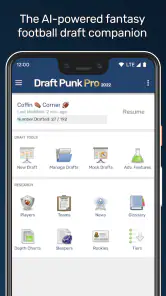
The app’s short store label is “Draft Punk,” while its longer description presents it as a fantasy football draft companion that uses AI to help you outdraft your league. In everyday use, that positioning makes sense. I think of it as an extra voice beside my draft board: useful when I want a recommendation, a reminder to consider roster construction, or a way to avoid making an emotional pick after a favorite player goes earlier than expected.
That focus makes the experience easier to understand than a broad fantasy football app. A full league service can overwhelm you with standings, injury news, waiver options, projections, matchup screens, and notifications. Those tools have their place, but they also create noise. Draft Punk is better suited to a specific moment: I have a pick approaching, I need to compare realistic options, and I want guidance without opening several articles or switching between multiple fantasy resources.
I would still prepare before opening it. An AI recommendation is only as useful as the situation you give it and the way you interpret it. I would enter a draft knowing the league’s scoring rules, roster requirements, and draft position rather than expecting the app to magically understand every custom setting. That preparation is one of the less obvious keys to using a draft assistant well: the app can support a plan, but it cannot make a nonstandard league behave like a standard one.
Who benefits most from the AI guidance
I see the strongest fit among casual and intermediate fantasy managers. A first-time player can use it to reduce the fear of making an obviously poor early selection, while a more experienced player can use it as a quick challenge to personal bias. If I am determined to draft a player because I like watching him, an outside recommendation can force me to ask whether that choice actually fits my roster.
It is also useful for people who do not want to spend hours reading fantasy content before every draft. Instead of collecting opinions from several sites, I can use the app as a starting point and then apply my own knowledge. That saves time, especially for a casual league where I want to be competitive without turning draft preparation into a second job.
More From Our News Desk

Clash of Clans Is Won Between the Battles

Android Auto Makes the Case for Quieter Car Software

MobiOffice: Transforming Mobile Productivity with Seamless Integration

EA SPORTS FC™ Mobile Soccer: Redefining Mobile Sports Gaming

How Microsoft OneDrive Became a Mobile Productivity Giant

How Google Translate Breaks Language Barriers Effortlessly
There is a particularly practical use case for a busy draft day. Imagine I am joining a league from a phone while commuting or taking a short break at work. My pick is approaching, my preferred player has disappeared, and I need to choose between filling a position or taking the best remaining talent. In that situation, a focused companion is more useful than a long article. I can use the recommendation to narrow the decision, then check whether it matches my roster needs and league rules.
On the other hand, I would skip it if I want a complete fantasy football ecosystem. Managers who rely heavily on detailed projections, customizable rankings, deep player news, trade analysis, or live league management may find a dedicated fantasy platform more suitable. Draft Punk’s narrow purpose is a strength during a draft, but it also limits its usefulness outside that event.
How I would build a reliable workflow around it
My preferred workflow would begin before draft night. I would write down the scoring format, position requirements, bench size, and any unusual rules. Then I would decide on a few broad priorities, such as whether I want early stability at a scarce position or more flexibility in the middle rounds. When using the app, I would compare its advice with those priorities instead of treating every recommendation as an instruction.
That approach prevents a common mistake with automated advice: following isolated suggestions without considering the whole roster. A player can be attractive in a vacuum and still be the wrong pick if I have already filled that position while another part of my lineup is thin. I find the app more valuable when it helps me think through that trade-off than when I use it as a simple “pick this player” button.
A second useful habit is keeping a short personal note during the draft. I would record why I passed on a recommended player, whether because of roster balance, league settings, or a personal risk limit. This creates an audit trail for my own decisions. It also makes the app a learning tool: after the draft, I can see where I ignored the guidance for a good reason and where I acted impulsively.
I would also avoid opening it for the first time seconds before the draft begins. A companion app should be tested calmly, with enough time to understand its flow and any account or setup steps. That is not a criticism unique to this product; it is simply good practice when a tool may influence fast decisions. The worst time to discover friction is while the league timer is counting down.
Trust, controls, and the moments that deserve attention
Trust matters more here than it might in a simple score-tracking app because fantasy football advice can influence how I spend draft time and how much confidence I place in a recommendation. I therefore look at the product in two separate ways. First, does it give me enough control over my decisions? Second, does the surrounding experience make it clear what I am choosing when I use the app?
From a user perspective, the most important control is the ability to treat the advice as optional. I do not want an assistant that makes me feel locked into one strategy. The best way to use Draft Punk is with a deliberate pause: read the recommendation, identify the reason it seems attractive, and then decide whether that reason applies to my league. If the app encourages that kind of interaction rather than blind obedience, it earns more of my trust.
I would pay close attention to any screen that asks for information, especially during setup or when connecting the app to a draft workflow. Fantasy football can involve league details, team preferences, and account-related choices. I would review each prompt instead of tapping through automatically, and I would avoid entering information that is not needed for the task I am trying to complete. This is a sensible habit for any sports app, but it is especially relevant when the tool is positioned as an intelligent assistant.
The same caution applies to notifications and account controls. If I only want help during draft preparation, I would not automatically enable every alert. I prefer choosing which interruptions are useful and which would simply pull me back into the app. I would also look for clear ways to manage my account and any connected services before relying on the app for an important league event.
There is a difference between a visible choice and an assumed choice. If the app presents a setting in plain language, I can make an informed decision. If a setting is buried or unclear, I become more cautious. My recommendation is to slow down around permissions, sign-in screens, data entry, and purchase prompts. The app is free to download, but optional in-app items range from $2.99 to $6.99 each, so I would make sure I understand what I am buying and whether it improves my particular workflow before paying.
Where personal data can become relevant
The most data-sensitive moments are likely to be the parts of the experience where the app needs context to make its advice useful. League format, draft position, roster needs, and personal preferences can all affect the quality of a recommendation. I would share only what is necessary and would avoid treating convenience as a reason to provide more information than I need to.
I would also separate fantasy identity from personal identity where possible. For a casual league, there is rarely a good reason to include unrelated details in a team name, note, or profile. Using a simple team label and keeping private information out of free-text fields is an easy precaution. It does not interfere with the app’s main purpose, and it reduces the chance that I accidentally disclose something irrelevant.
Another useful boundary is deciding whether I want to use the app independently or connect it to a league service. Independent use may be enough if I only need draft guidance. Connecting services can be convenient, but I would only do it when the benefit is clear and I understand what the connection enables. If I am uncertain, I would begin with the least connected workflow and add access only if the draft experience genuinely requires it.
I would use the same care with screenshots and sharing. A draft screen can reveal team names, league names, draft positions, or private notes. Before sending an image to friends or posting it in a group chat, I would check what is visible. That is a small but practical detail that many users overlook when they are focused on discussing a pick.
What the free model means in practice
The free price makes it easy to try without committing money first, which suits an app used mainly around draft season. I appreciate that approach because I can test whether its advice fits my league and my decision-making style before considering any optional purchase. The trade-off is that the free experience may not satisfy users who expect every advanced convenience immediately.
Because purchases are offered per item, I would not buy anything simply because a draft is approaching. I would first identify the exact problem I am trying to solve: faster decisions, more guidance, or a particular convenience. If the free version already helps with that problem, spending more may not add enough value. If I do purchase something, I would treat it as a targeted upgrade rather than assuming it transforms the app into a full fantasy management suite.
This is also where Draft Punk compares differently with the usual alternatives. A general fantasy platform may bundle rankings, league tools, news, and season-long management into one service. A collection of fantasy websites may provide more detailed written analysis and broader player context. Draft Punk’s advantage is concentration: it is easier to approach as a draft-time assistant. Its disadvantage is that I would still need other resources for deeper research and ongoing roster decisions.
Compatibility and everyday practicality
The app currently lists version 26.0.0 and supports Android 5.0 or later, which gives it a broad compatibility range for Android users. I would still check my device before draft night and update it in advance rather than waiting until the last minute. A draft is not the right time to troubleshoot installation, sign-in, or update issues.
It is rated for Everyone, so its presentation is accessible to a broad audience. That does not mean every fantasy football concept will be explained for a complete beginner, however. I would expect a new player to benefit from knowing basic terms such as roster position, scoring format, and draft value. The app can help with choices, but it is not a substitute for understanding what the league is asking me to build.
The product has been available since August 13, 2010, and its current presence suggests a long-running focus on the draft companion idea. Its audience is not tiny: it has passed 100 thousand installs, with an average rating of 4.6 from around 3.7 thousand ratings and around 1.5 thousand written reviews. Those figures make it easier for me to take the app seriously as an established option, although they do not remove the need to judge whether its approach fits my own league.
My honest limits with AI draft advice
I would never use an automated recommendation as my only source for a high-stakes league. AI can make a decision feel more objective, but confidence is not the same as accuracy. A recommendation may be sensible in a typical setup and less useful in a league with unusual scoring, keeper rules, a small bench, or a group of managers who draft in an unpredictable way.
There is also a psychological limitation. If I already want a particular player, I may interpret neutral guidance as support for that choice. Conversely, if the app recommends someone I dislike, I may reject the advice without examining it. The tool cannot solve that bias by itself. I get more value when I use it to explain my reasoning, not when I use it to justify a decision I had already made.
For experienced managers, the trade-off may be even sharper. Someone with a carefully maintained personal model might prefer their own rankings and notes. In that case, Draft Punk is best used as a disagreement detector. If its suggestion differs from my plan, I can investigate why. If I simply follow it, I may lose the advantage that comes from knowing my league’s habits and settings better than a general assistant does.
My cautious verdict is that Draft Punk - Fantasy Football is worth trying for Android users who want a focused, free draft companion and are comfortable keeping the final decision in their own hands. Josh Clemm’s app fits the person who wants less frantic searching on draft day, a prompt against personal bias, and a simple way to think through difficult picks.
I would recommend it to casual and intermediate managers, especially those who prepare briefly rather than spending weeks on fantasy research. I would not recommend relying on it alone for customized leagues, deep statistical analysis, or full season management. Review the setup choices, limit information sharing to what is necessary, manage notifications deliberately, and think carefully before buying optional items.
My bottom line: this is a useful draft-side sounding board, not a complete fantasy football command center. Used with league knowledge and a little skepticism, it can make a rushed draft feel more organized. Used as an unquestionable authority, it may encourage decisions that do not fit the details of your league. That balance is what determines whether the app becomes a genuinely helpful companion or just another screen open during the draft.
Draft Punk - Fantasy Football Frequently Asked Questions
Who develops Draft Punk - Fantasy Football, and what kind of app is it?
Draft Punk - Fantasy Football is a sports app developed by Josh Clemm. Its purpose is to support fantasy football preparation, particularly when you are getting ready to make picks in a draft. If you are choosing between several draft companions, consider whether you want focused help with player research and draft decisions or a broader tool for managing your league throughout the season.
What is Draft Punk - Fantasy Football?
Draft Punk - Fantasy Football is a companion app designed to help fantasy football managers prepare for drafts, evaluate players, and make more informed roster decisions. It focuses on draft planning and player analysis rather than replacing your league’s official platform. Before downloading, check that your preferred fantasy format and scoring system are supported, since recommendations may be more useful for some league settings than others.
Can Draft Punk be used with my fantasy football league?
The app can be useful alongside many fantasy football leagues, but compatibility may depend on the platform, league type, scoring rules, and available integrations. It is best viewed as a research and draft-preparation tool unless your specific league connection is clearly supported. Check the app’s current listing and permissions before installing, especially if you expect automatic roster syncing or direct control over your league.
What features does Draft Punk offer for fantasy football drafts?
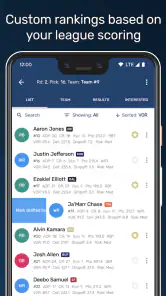
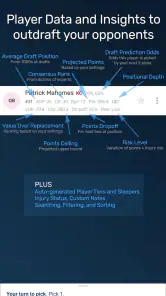
Draft Punk generally helps users organize draft research through player rankings, projections, comparisons, and strategy-oriented information. These tools can make it easier to identify value picks, monitor positional needs, and build a balanced roster during a live draft. However, projections are not guarantees, so users should also consider injuries, depth-chart changes, coaching decisions, bye weeks, and the scoring rules of their own league.
Is Draft Punk - Fantasy Football free to download?
Draft Punk is free to download, with in-app purchases ranging from around three to seven dollars per item. The availability of free features, premium tools, subscriptions, or in-app purchases can change over time and may differ between Android and iOS. Before downloading, review the store listing carefully to see what is included without payment and whether advanced rankings, projections, or other analysis tools require a subscription. This is particularly important if you only need basic draft assistance rather than a complete premium package.
Pros
- Quickly build and manage fantasy football drafts.
- Useful player rankings help with draft-day decisions.
- Supports competitive leagues with friends.
- Clean interface makes team management straightforward.
- Helpful for users who enjoy planning before the season starts.
Cons
- Limited appeal outside fantasy football fans.
- Some features may require an account or league access.
- Player data and rankings may not update instantly.
- Draft tools can feel overwhelming for first-time users.
- Performance may vary on older Android or iOS devices.
- Category
- Sports
- Version
- 26.0.0





