Cozi Family Organizer
- 28.67K
- 4.7
- Installs
- 5.00M
- Price
- Free

Screenshots




Analysis by Reviewed
Ever found yourself juggling between school events, soccer practice, and work meetings, wondering how to keep everything in check? Well, that’s where the Cozi Family Organizer swoops in like a superhero without a cape. This app is like having a personal assistant in your pocket, minus the hefty salary you'd have to pay a real one.
A shared routine, not another inbox
What makes a household planner useful is not a long feature list; it is whether it prevents small bits of family information from falling between people. Cozi is strongest when several members need to see the same plan and contribute to it. I would not treat it as a replacement for conversations, school notices, or work calendars. I would use it as the place to record the decisions that everyone needs to act on.
That distinction matters in a family with different habits. One person may check a phone constantly, while another remembers plans only when they are written on a kitchen calendar. Cozi helps only if the household chooses a routine for consulting it. A simple agreement—check the calendar in the morning, add shopping needs as they come up—can be more effective than trying to make every feature part of daily life from day one.
One practical tip is to start with the kind of missed handoff that causes the most friction. If pickups are the problem, make those events clear before adding every appointment. If grocery requests disappear, begin with the shared list. This keeps the change manageable and makes it easier to tell whether the app is solving a real household problem rather than creating another chore.
Where a shared plan earns its place
The strongest case for Cozi is not that it can replace every tool a household uses, but that it gives family members a common place to check and add everyday information. I find that especially useful when one adult handles a school pickup while another is arranging dinner: the calendar can show the commitment, and a shared list can keep the shopping request from getting lost in a private message. That small handoff is where a family organizer can save real back-and-forth.
A practical routine is to add recurring kinds of responsibilities as they arise, then check the calendar before the week begins and the lists while running errands. For example, if a child mentions needing supplies after practice, adding the item straight to the shared shopping list is more reliable than expecting someone to remember a text later. The useful habit is to treat Cozi as the household’s working noticeboard, not as another place to duplicate every note and conversation.
All-in-One Family Planner
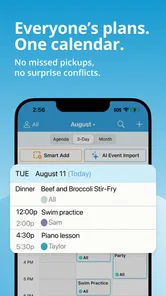
The Cozi Family Organizer app isn’t just your everyday calendar app. It’s more like a Swiss Army knife for family management. You can create shared calendars where everyone from mom to the little ones can see upcoming events. Say goodbye to the chaos of double-booked schedules! Plus, you can color-code each family member, which is both functional and, let's admit, a bit fun.
More From Our News Desk

Weather by Xiaomi Review: Clear at a Glance, Less Clear Up Close

X Under Pressure: Can It Recover When Posting Goes Wrong?

Clash of Clans Is Won Between the Battles

Android Auto Makes the Case for Quieter Car Software

MobiOffice: Transforming Mobile Productivity with Seamless Integration

EA SPORTS FC™ Mobile Soccer: Redefining Mobile Sports Gaming
Color-coding is most helpful when people agree on a simple convention and stick with it. I’d use it to make ownership of an event visible at a glance, rather than assigning a different color to every type of activity; too many rules can make a shared calendar harder to scan. Before relying on it for a busy week, make sure the people who need the information actually check the shared calendar. A tool only coordinates a family if everyone participates.
Making the calendar work for different ages
For younger children, the calendar can be a visual prompt rather than a demand that they manage a schedule independently. A parent can use it to show what is happening after school, while older children can contribute information they are responsible for remembering. That division is more realistic than expecting every family member to use the app in exactly the same way.
It is also worth deciding what belongs on the shared calendar and what should stay private or elsewhere. Household commitments such as a pickup or a family appointment are natural entries. Detailed work tasks, long-term project plans, and every minor reminder can make the shared view noisy. I get more value from a calendar when it answers the immediate question, “Who needs to be where, and when?” rather than trying to document every part of everyone’s day.
Task Lists and Beyond
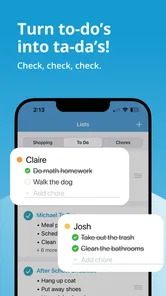
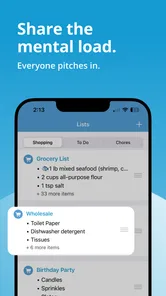
Ever had that moment when you realize you forgot to pick up milk—again? With Cozi, you can create shopping lists that everyone in the family can add to. No more "I thought you were getting it" scenarios. And the to-do lists? They’re a lifesaver. Assign tasks to family members and finally divide and conquer that endless list of chores.
These lists work best when they are kept specific and current. “Get groceries” is easy to overlook; a short list of actual items is useful to the person standing in the shop. For chores, assigning a clear task can reduce the familiar uncertainty over who is handling it, but a family still needs to agree on expectations and check items off. Cozi can make responsibilities visible; it cannot settle a disagreement about what counts as finished.
Small list habits that prevent clutter
A shared shopping list is especially handy when the person buying groceries is not the person who noticed what ran out. I would keep one list for ordinary household purchases and add an item when it is noticed, rather than relying on a last-minute memory sweep. If the household prefers categories or separate lists for different errands, it should keep that structure simple enough that everyone knows where to add things.
There is a trade-off here: a shared list is only as trustworthy as its upkeep. If someone buys an item but forgets to remove it, or adds a vague request that needs clarification, the list can create a second round of checking. A quick review before leaving the house helps. For families that mostly shop alone and do not need to coordinate requests, a basic notes app may be enough; the shared workflow is the reason to choose a family organizer.
Meal Planning Made Simple
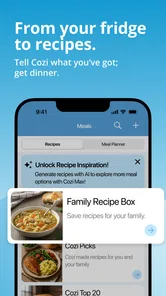
Meal planning is another area where Cozi shines. You can plan out weekly meals and even save recipes. It’s like having a meal prep service at your fingertips without the expense. Plus, with easy access to these features, you can involve the whole family in planning, making those "what's for dinner?" questions a thing of the past.
A useful way to approach meal planning is to connect a plan with the shopping list before the week gets hectic. That gives whoever shops a better chance of buying what the household actually intends to cook. The trade-off is that plans still need maintenance: if the evening changes, the calendar or meal plan will not magically adjust itself. I’d keep the system lightweight, planning only as far ahead as the family can realistically follow.
Meal plans are most helpful when they reflect the week the family actually has, not an idealized one. If practice runs late on one evening, I would plan a simpler meal then and save a more involved recipe for a day with room to cook. The app can keep the choice and recipe in one family routine, but it cannot predict changing appetites, schedules, or who will have energy to make dinner. Flexibility is part of making the plan usable.
Not to forget, the app has a handy journal feature. Capture those little moments that make family life special. Whether it's a silly drawing from your five-year-old or a snapshot of a Sunday hike, keeping memories has never been easier.
Keeping memories without turning it into homework
I see the journal as a different kind of family tool from the calendar and lists: it is for keeping moments, not managing obligations. It may appeal to a parent who wants a place for small snapshots of family life, especially if those memories would otherwise be scattered among notes and photos. The best approach is occasional use. If recording every outing becomes another household duty, the feature loses the relaxed quality that makes it appealing.
Families should also think about who will maintain that record and who is meant to enjoy it. A parent might write a short note after a memorable day, while children can contribute a drawing or a detail worth remembering. That can make the journal feel shared without requiring everyone to document everything. If preserving memories is not a priority, it is easy to focus on the planning tools and leave this part aside.
Why It’s a Game Changer
Now, you might wonder why you’d need an app for all this. Isn’t a regular calendar enough? Well, Cozi brings everything under one roof. No more flipping between apps to manage your day-to-day. It’s streamlined and user-friendly. Even the grandparents can get on board with its intuitive design.
That convenience has a limit: someone who already relies on a calendar and task system that the whole household uses may not gain much by moving everything. Cozi’s appeal is the family-focused combination of scheduling, lists, meals, and journaling; it is not the right fit for a person who wants a specialized project manager, detailed work scheduling, or a minimalist calendar with nothing else attached. In those cases, staying with a familiar tool may be simpler.
For a household comparing it with separate calendar, notes, and meal-planning apps, the main advantage is having family routines gathered together. Separate apps can offer a more focused experience, but they also ask people to remember where each item belongs. Cozi makes more sense when the recurring problem is coordination across family members, rather than a lack of advanced features in any one category.
Choosing between a family organizer and familiar alternatives
A shared calendar from a general-purpose calendar app can be a better choice when scheduling is the only real need, particularly if everyone already uses that service. It avoids moving appointments into a second system. Cozi earns its place when the household also wants shopping and to-do lists, meal plans, and a journal connected to family routines. That is a convenience trade, not proof that one approach is best for every family.
Compared with a paper calendar on the fridge, a digital shared plan is easier to consult away from home and update as plans change. Paper still has one clear advantage: it is visible without anyone opening an app. Some households may sensibly use both, with Cozi as the place for contributions and a simple kitchen view for quick reminders. The key is avoiding two competing versions of the schedule.
And if you’re worried about accessibility, Cozi’s got you covered. Available on both Android and iOS, everyone in the family can stay connected no matter their device preference. Plus, there’s a web version for those who prefer a larger screen.
What to expect before making it the household hub
Cozi is free to start, but optional in-app purchases are available, with individual items priced from $0.99 to $79.99. I would check the choices presented in the app before building a routine around an assumption that every option is included without charge. The app is for everyone, and its long-running presence since December 21, 2010, suggests it has had time to settle into its family-organizer role. Its current version is 2025.11.21, and Android support begins at version 6.0.
Its audience figures also point to a well-established service: it has a 4.8 average from around 110,000 ratings and more than 5 million installs. Cozi Inc. develops it, and the app has around 28,000 written reviews. Those numbers can help a new user understand that it is widely used, but they do not guarantee that the household will enjoy maintaining a shared system. Fit depends far more on whether family members will contribute and check it.
One question I would ask before switching is whether everyone who needs the plan can access it on a device they already use. Cozi is available on Android and iOS, and the web version gives people another way to consult the household’s information. Another is whether the family wants a single organizer or merely a calendar: if the latter, a familiar shared calendar may require less adjustment. If the family wants to coordinate meals and errands too, Cozi has a stronger case.
Privacy and household boundaries also deserve a little thought in any shared organizer. I would keep the shared space focused on details the family needs to coordinate, and avoid treating it as a universal record of every personal or work commitment. Agreeing on what belongs there reduces clutter and helps everyone understand what they are expected to check. That is a practical habit, not a special feature, but it can make the difference between a useful family view and an overwhelming one.
For a realistic test, I’d start with one shared week: add appointments, invite the family to contribute shopping items, and use a small to-do list for responsibilities that otherwise get passed around verbally. If the household naturally checks and updates it, expand to meals and the journal. If people keep reverting to messages or a paper note, that is useful feedback too; the best organizer is the one your family will actually maintain.
My recommendation
Cozi Family Organizer isn’t just about keeping track of appointments. It’s about making family life a bit smoother, a bit less chaotic, and a lot more enjoyable. So, if you’re tired of the constant juggling act, give Cozi a try. Trust me, your future self will thank you.
I would recommend it most to families whose plans and small requests are currently scattered across texts, separate notes, and memory. It is less compelling for someone who wants a powerful work planner, a highly customizable calendar, or a tool that will coordinate the household without shared habits. Start with one genuine friction point, keep the setup modest, and give everyone a clear reason to check in. If that routine sticks, the combination of calendar, lists, meal planning, and journaling can make Cozi a practical home base rather than one more app to maintain.
Cozi Family Organizer Frequently Asked Questions
Can I use Cozi Family Organizer on both Android and iOS?
Cozi Family Organizer is available as a family organization app, and the shared calendar and lists are intended to help keep household information together. On Android, it requires version 6.0 or later. Before downloading, check that each family member’s device can run the app, especially if your household uses a mix of phones or tablets.
Can several family members contribute to the same schedule and lists?
Yes. Cozi is built around shared family information, so members can access and update calendars and lists rather than keeping separate versions on individual devices. That shared approach can be useful for coordinating appointments, errands, and household tasks. Families should decide who needs access and agree on how they will keep shared information current.
Is Cozi Family Organizer free to download, and are there optional purchases?
Cozi Family Organizer is free to download, with optional in-app purchases. The app has a free version with useful everyday features, while Cozi Gold offers additions such as an ad-free experience, extra reminders, and a mobile month view. Review the purchase details in the app before choosing an upgrade so you can decide whether its added features suit your household.
How much space or device support does Cozi Family Organizer need?
Cozi Family Organizer is a productivity app for Android devices running Android 6.0 or later. It is free to download, with optional in-app purchases. If you are choosing it for a household, check that the devices family members plan to use meet the app’s system requirements before setting up shared schedules and lists.
Who can use Cozi Family Organizer, and is it suitable for children?
Cozi Family Organizer is rated Everyone, so its content rating is intended to be suitable for a general audience. The app is designed around organizing family schedules, lists, and shared information, which can make it useful across a household. Adults can decide which family members should access the account and how they will use its shared features.
Pros
- User-friendly interface
- Shared calendar for family
- Shopping lists sync across devices
- Meal planning feature
- Customizable reminders
Cons
- No offline access
- Some features behind paywall
- Occasional sync issues
- Limited customization options
- Ads in free version