Coda
- 78.00
- 3.0
- Installs
- 100.00K
- Price
- Free

Screenshots

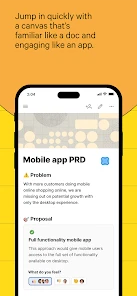
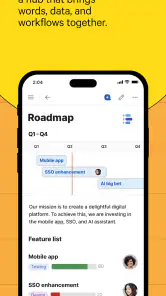


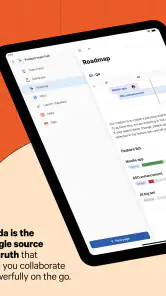
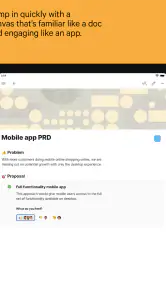
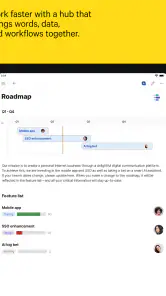
Analysis by Reviewed
I find the main appeal of Coda is the idea of shaping a workspace around a task instead of splitting notes, lists, and structured information across separate apps. That can be useful, but it also changes what I’d expect from a simple phone tool: the more you customize, the more you need a clear plan for how the document should work. I’d start with one small, real task rather than trying to move an entire work system at once.
Where setup and everyday use can snag
On a phone, a workspace designed around linked information can take more thought to navigate than a plain note or checklist. If a page has several tables, filters, or actions, it may be harder to scan quickly on a small screen. I’d keep the mobile view focused on the details I need while away from my desk, and do heavier restructuring when I have time to think it through.
A practical first test is a shared project tracker: keep tasks, owners, and due dates together, then use a filtered view to focus on what needs attention. Before adding extra fields or buttons, decide what decision each one helps you make. That small discipline prevents a flexible workspace from turning into a crowded one. For a family plan or a personal reading list, a simpler page may be enough; Coda is most compelling when the information needs to relate to other information.
Checks that make a workspace easier to trust
Before relying on a document with other people, I’d agree on a few basics: who is responsible for keeping entries current, what each status means, and which view is the shared reference point. Those conventions matter more than clever formatting. They also make it easier to spot whether a blank field means “not started” or simply “not entered yet.”
If a change does not appear as expected, I’d first check that I’m looking at the intended document and view, then revisit the relevant filter or table entry. A filtered view can hide an item without deleting it, so checking the broader table is a useful recovery step. I’d also avoid treating an automated action as a substitute for reviewing the underlying information: automation is only as dependable as the rules and entries it uses.
When a different tool is the better fit
Coda is not automatically the right answer for every productivity problem. If I only need quick notes, a lightweight notes app will usually involve less setup. If my work depends on a conventional spreadsheet with familiar formulas and a dense grid, a dedicated spreadsheet may feel more direct. Coda makes more sense when I want a document to combine explanation with structured, connected information, and when the people using it are willing to learn its layout.
The Ultimate Productivity Tool
When I first stumbled upon Coda, I was intrigued by its promise to revolutionize how we handle our work and personal projects. Unlike traditional apps where you jump between docs, sheets, and apps, Coda brings them all together in one seamless experience. It’s like having your own digital Swiss army knife!
More From Our News Desk

Clash of Clans Is Won Between the Battles

Android Auto Makes the Case for Quieter Car Software

MobiOffice: Transforming Mobile Productivity with Seamless Integration

EA SPORTS FC™ Mobile Soccer: Redefining Mobile Sports Gaming

How Microsoft OneDrive Became a Mobile Productivity Giant

How Google Translate Breaks Language Barriers Effortlessly
Features That Stand Out
Let’s talk features, because Coda is absolutely packed with them. One of the standout features is its ability to create customizable tables that act like databases. You can link tables, create filters, and even add buttons to automate tasks. It’s like Excel on steroids but without the complexity that can make your brain hurt.
Another feature I love is the integration capability. Coda connects with popular tools like Slack, Google Calendar, and Jira, making it easier to pull in data and keep everything updated without manual intervention. This is a game-changer for teams that rely on multiple tools to get the job done.
Why You Should Give It a Try
Now, you might be wondering, “Why should I switch to Coda when I’m already using other apps?” Well, the answer lies in its flexibility and ease of use. Whether you’re planning a project, managing a team, or just organizing your life, Coda adapts to your needs. It’s perfect for those who love to customize their workflow and hate being boxed in by traditional app limitations.
Plus, the app is incredibly intuitive with a clean, minimalist design that doesn’t overwhelm you with options. It’s suitable for both tech-savvy users and novices alike, making it an ideal choice for anyone looking to boost their productivity without a steep learning curve.
Making a small workspace useful on a phone
A phone-first routine works best when the document has a clear “capture now, sort later” boundary. I’d use a compact intake table for new requests or errands, with only the fields needed to record the item and who should handle it. Then, when I’m back at a larger screen, I could add context, connect it to related work, and tidy the views. This keeps quick mobile entry from becoming a miniature data-entry project.
Another useful trade-off is deciding whether a table is a record of truth or merely a temporary planning aid. If a deadline or owner matters, keep it in one authoritative place and make other views present that same information rather than duplicating it. Duplicate copies feel convenient at first, but they create a quiet maintenance burden when one changes and the others do not.
What a realistic workday looks like
Imagine I’m helping coordinate a small community event. In the morning, I check a focused view for tasks due soon, add a note after a planning conversation, and mark an item for follow-up. Later, another organizer can consult the same document for the agenda and the task record instead of asking me to resend details. The benefit is not that the app makes decisions for us; it is that the context and the work can sit together, provided everyone follows the same conventions.
That arrangement is less helpful if the group only needs a one-time checklist. In that case, building linked records and maintaining views may take longer than the event itself. I’d use the smallest structure that answers a real recurring question, such as “what still needs an owner?” or “which decisions affect this task?” If nobody needs those answers, a plain shared document is likely the calmer choice.
Choosing a sensible level of structure
Tables become valuable when they help answer questions across a set of items, not just because a table looks organized. For instance, a reading list may benefit from fields for status and topic if I regularly want to see unfinished books by subject. If I only add titles as I go and rarely revisit the list, those fields are decoration. My test is simple: if a column does not change what I do, I would leave it out.
Views also deserve restraint. A filtered view can make a large set of information approachable, but every additional view creates another place a person might look and wonder whether it is complete. I’d name views by the question they answer, such as “Needs a decision,” rather than by an internal design term. Clear names reduce the chance that a collaborator mistakes a focused slice for the whole project.
Final Thoughts
In a world where efficiency is key, having a tool like Coda can make all the difference. It’s not just about getting things done; it’s about doing them smarter. So, if you’re on the lookout for a new way to organize and enhance your workflow, give Coda a shot. With its robust features and adaptability, it might just become your go-to app for all things productivity.
Who gets the most from it
I’d recommend trying it if you coordinate a small project and repeatedly need to connect decisions, tasks, and reference notes. For example, while planning an event, you could keep the agenda beside a table of tasks and use a filtered view to check only the items assigned to you. The useful trade-off is that one shared workspace can reduce context switching, but someone still needs to maintain the structure and keep entries consistent.
For solo use, I’d begin with a personal project that has a few related parts, such as planning a move with a checklist, contacts, and notes. That gives you a fair test of linked information without making your whole routine depend on a new system. If all you need is a place to jot down an idea while walking, opening a structured workspace may be more effort than the note itself warrants.
Keeping collaboration clear as a project grows
When several people contribute, I’d agree on how to add new work before the table fills up. One person might write a task as an action, while another enters a broad topic; both are understandable, but they make sorting and review less useful. A short naming convention and a clear owner field can make the workspace easier to scan without adding more machinery.
I’d also decide what belongs in the shared document and what should remain in the team’s usual communication channel. A workspace is useful for durable decisions and records; a conversation is often better for working through uncertainty in real time. Copying every discussion into a table can make it noisy, while leaving an important decision only in chat can make it hard to find later. The practical middle ground is to capture the outcome and link it to the relevant work.
Choosing it and getting comfortable
Coda is a free productivity app from Coda Project, Inc., and its content rating is Everyone. It was released on April 1, 2019, and version 1.0.34 requires Android 7.0 or later. It has passed 100,000 installs, with a 3.0 average from around 750 ratings and 78 written reviews. I’d treat that average as a reason to try it against your own workflow rather than as a verdict: a customizable workspace can suit people who enjoy building a system and frustrate those who want a ready-made list.
If you’re deciding whether to move from a document editor, spreadsheet, or notes app, ask what is currently being duplicated. When the same project details are copied into several places, combining explanation and structured records may help. When each tool has a clear, narrow job, replacing them may add setup without solving a real problem. I’d keep existing sources as the reference until the new workspace is accurate enough for everyone involved.
For someone coming from a spreadsheet, I’d avoid rebuilding every familiar calculation immediately. Start with the parts that benefit most from being beside written context, such as decisions attached to tasks or a project brief beside its records. A dedicated spreadsheet remains the more comfortable choice for work centered on dense numerical analysis. For someone coming from a notes app, the shift is the reverse: structure is helpful when information needs sorting and relating, but it can slow down free-form capture.
Recovering without overcomplicating things
When something seems missing or out of date, I’d avoid immediately rebuilding the page. Check the document, the table, and any active filter first; then confirm that the information was entered in the place the view is meant to display. If a team workflow depends on a button or automation, test the steps with a low-stakes example before making it part of a routine. This is a practical way to separate a display or setup issue from a problem with the underlying record.
There is also a people side to troubleshooting. If one collaborator uses a status differently from everyone else, the table may look unreliable even though the app is behaving as configured. A short shared definition for labels and ownership can prevent that confusion. I would not build a complicated workflow around a feature until the basic entries and responsibilities are clear.
When the app may not be the cause
If a shared workspace seems inconsistent, I’d check the process as well as the screen. Ask whether the person who owns an item has updated it, whether the group agrees on what “done” means, and whether everyone is checking the same view. These checks are more useful than making extra copies of a document, which can quickly produce competing versions of the truth.
For a change that appears not to have taken effect, I’d make one small test and inspect the underlying entry before altering several parts of the setup. If the record is correct but a focused view does not show it, revisit the view’s filters; if the record itself is wrong, fix the entry and then check where it appears. Keeping those steps separate makes recovery less stressful and helps avoid accidental structural changes while trying to solve a simple visibility problem.
My practical verdict
For me, Coda is worth considering when a project needs both readable context and organized, connected details, and when I’m willing to spend time shaping that workspace. It is less convincing as a universal replacement for quick notes, a dedicated spreadsheet, or a simple task list. The most sensible way to judge it is to build one modest workspace, use it through an ordinary week, and notice whether it reduces repeated work or merely gives you another place to maintain.
I’d especially consider it for a small team or an individual managing a project with recurring decisions and related records. I’d skip it when speed, simplicity, or a familiar specialist tool matters more than combining formats. Start with one real workflow, keep the structure lean, and let daily use show whether the connected approach earns its place.
Coda Frequently Asked Questions
Is Coda free to download, and what kind of app is it?
Coda is a free productivity app built around the idea of an all-in-one collaborative workspace. You can use it to bring documents, structured information, and work-related tools together rather than keeping every project in a separate app. Its free download makes it easy to try, while the way it fits into your routine will depend on whether you prefer a flexible workspace over a collection of standalone tools.
What devices and software versions can run Coda?
Coda is available for Android and iOS, so it can be used on supported phones and tablets from either platform. On Android, the minimum operating-system requirement is version 7.0, which is useful to check before installing if you have an older device. The app is rated for everyone, making its stated age suitability broad, though individual documents and shared workspaces may contain content chosen by their users.
What is Coda and how does it function?
Coda is a versatile document application that combines the flexibility of documents, the power of spreadsheets, and the utility of apps. It functions as a single platform where users can create, edit, and organize tasks, integrate data, and automate processes. Coda's unique capability allows users to design their own interactive documents and tools to suit their specific needs.
Is Coda available on both Android and iOS devices?
Yes, Coda is available on both Android and iOS platforms. Users can download the app from the Google Play Store for Android devices and the Apple App Store for iOS devices. This cross-platform availability ensures that users can access and manage their documents and projects seamlessly across different devices.
Does Coda offer offline access to documents?
Coda provides offline access to documents, allowing users to continue working without an internet connection. Any changes made while offline are automatically synced once the device is back online. This feature ensures productivity and convenience, particularly for users who need to work in areas with limited or no internet connectivity.
Pros
- Intuitive interface for easy navigation.
- Powerful integration with other apps.
- Supports real-time collaboration.
- Customizable templates for various needs.
- Cross-platform availability.
Cons
- Limited offline functionality.
- Steep learning curve for beginners.
- Occasional syncing issues.
- Some advanced features are paid.
- Limited mobile app functionalities.
- Category
- Productivity
- Version
- 1.0.34











