Clean Sweep Master
- 813.00
- 4.1
- Installs
- 1.00M
- Price
- Free

Screenshots


Analysis by Reviewed
I noticed Clean Sweep Master at a moment when a shared Android phone had become difficult to manage. The storage warning was appearing, old downloads were mixed with useful documents, and several people used the same device at different times. That is the kind of situation where a cleaning app sounds appealing, but it also needs to be handled carefully. Removing clutter is helpful; removing somebody else’s important file is not.
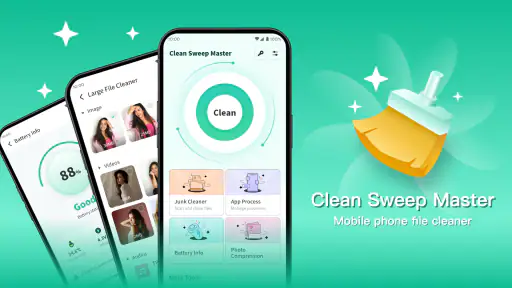
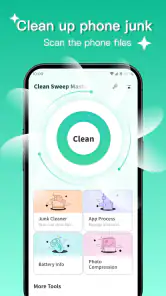
After spending time with this productivity app, my view is fairly practical. It is aimed at making device cleaning less intimidating, especially for people who want a guided way to deal with unnecessary files instead of searching through folders manually. Its store summary focuses on resolving device cleaning issues, and that description is a good indication of its role: this is a maintenance tool, not a complete replacement for Android’s own storage controls or a full household file-management system.
Clean Sweep Master is free, developed by ZJDevKing, and suitable for Everyone. It has reached over a million installs and holds a 4.1 average from around seventeen thousand ratings, which suggests that many users find the basic purpose understandable and useful. I would still approach it as a helper rather than an automatic solution. The safest results come from deciding what can go and what must stay before confirming any cleanup.
Using it on a shared household device
The most convincing use case for me is a phone or tablet that moves between members of a household. Imagine a device used for school messages, recipe searches, photos, streaming, and occasional work. Over time, screenshots accumulate, downloads lose their context, and temporary material becomes mixed with files that someone still needs. A cleaning tool can bring these items into one maintenance routine instead of forcing each person to remember where Android stores them.
That shared-device scenario also exposes the app’s main limitation. A cleaner can identify material that looks disposable, but it cannot understand the personal meaning of every file. A screenshot may be an old joke, or it may be the only copy of a booking confirmation. A downloaded document may look forgotten, while another household member is waiting to read it. I would never hand the phone to someone and tell them to approve every suggestion quickly.
My preferred routine is to choose a quiet time, open the cleaner, review the groups it presents, and pause whenever a file belongs to another person. If the phone is used by several people, I ask each person to check their own photos, downloads, and recordings before anything is removed. This takes longer than a one-tap cleanup, but it prevents the most frustrating household argument: “Who deleted that?”
The app is especially useful when the problem is visual clutter rather than a single emergency. If the phone is nearly full and you need space immediately, Android’s built-in storage screen may be the faster first stop because it shows system-level categories directly. Clean Sweep Master becomes more useful when you want a more approachable cleaning session and need help narrowing attention to material that has built up through ordinary use.
More From Our News Desk

Clash of Clans Is Won Between the Battles

Android Auto Makes the Case for Quieter Car Software

MobiOffice: Transforming Mobile Productivity with Seamless Integration

EA SPORTS FC™ Mobile Soccer: Redefining Mobile Sports Gaming

How Microsoft OneDrive Became a Mobile Productivity Giant

How Google Translate Breaks Language Barriers Effortlessly
What I would check before the first cleanup
I would begin by identifying the device’s main owner and agreeing on a simple boundary: no one deletes another person’s personal material without asking. That rule matters more than any cleaning feature. On a private phone, the decision is yours. On a shared phone, the decision belongs to the person responsible for each file, even if the app presents it during one combined scan.
I would also make sure important photos, school files, travel documents, and work attachments already exist somewhere safe. A cleaner should not become the only place where a family decides what is valuable. If a file matters, keep another copy before treating it as clutter. This is a sensible habit with any cleaning app, not a special promise about this one.
The current version is 1.1.2 and it supports Android 7.0 or later. That makes it relevant for older Android devices that may not offer the same storage experience as newer phones. Still, older hardware often has less free space and slower storage, so I would be patient during a scan or review. A delay is preferable to approving a large removal list without reading it.
Because the app is rated for Everyone, I can see why it may appeal to a household that wants a straightforward maintenance tool. That age label should not be mistaken for permission to let a young child manage deletion decisions alone. The interface may be approachable, but the consequences of removing files are still real. An adult should supervise the first sessions and establish which folders or file types are off-limits in practice.
Boundaries matter more than speed
One useful habit is to separate “easy to replace” from “hard to replace.” Repeated downloads, disposable screenshots, and files that can be obtained again are lower-risk candidates. Family photos, identification documents, creative work, and school submissions are high-risk even when they are old. I use that distinction before opening any cleanup screen because it gives me a decision framework instead of relying on a visual impression.
A second habit is to clean in small passes. I would rather review one category, stop, and let the household confirm ownership than approve a huge mixed selection. This is particularly important when the same Android profile is used by multiple people. A short, focused session is easier to explain and easier to undo mentally, even though the app itself should not be treated as a backup or recovery service.
A third habit is to avoid cleaning immediately before an important event. If someone is preparing for a trip, an exam, or a work presentation, the phone may contain temporary files that are currently essential. Household coordination works better when cleaning is scheduled as routine maintenance, not performed in a panic after a storage warning appears.
How it fits into everyday coordination
Clean Sweep Master does not replace communication between users, and that is worth stating plainly. I would not expect it to know which files belong to a parent, child, guest, or colleague. It is better understood as a shared checklist for device housekeeping. One person can open the app, another can identify what should remain, and the final decision can be made together.
For a family tablet, I would create a simple verbal system: personal photos stay unless their owner approves removal; school and work folders are checked by the relevant person; general clutter can be reviewed by the device owner. This approach turns the app into part of a process rather than giving it authority over everyone’s information. It also reduces the chance that a child assumes every old-looking item is safe to delete.
For a couple sharing a phone occasionally, the issue may be less about large amounts of storage and more about mixed downloads. One person may save menus, tickets, or maps while the other saves manuals and receipts. In that case, a cleaning session should begin with a conversation about temporary files. The app can help bring attention to accumulated material, but it cannot settle ownership by itself.
For an older relative who finds Android storage menus confusing, I think the app may be easier to introduce as a guided cleaning appointment. I would sit beside them, explain each group in everyday language, and let them make the decision. That preserves trust. Quietly deleting files on someone else’s behalf, even with good intentions, is not a responsible way to maintain their device.
There is also a useful distinction between a phone that is genuinely full and a phone that merely feels untidy. If the problem is limited storage, removing unnecessary material can help. If the problem is disorganization, cleaning alone may not solve it. The household may need clearer folders, a better photo routine, or separate user accounts where the device supports them. Clean Sweep Master can support the maintenance part, but it should not be expected to create boundaries that Android or the household has not established.
Where the usual alternatives are stronger
Android’s built-in storage tools are the obvious alternative. They usually have the advantage of being integrated into the operating system and closely tied to installed apps, storage categories, and device settings. If I want to see which applications consume space or manage system-level storage, I would start there. The built-in route may feel less friendly, but it is often the clearest place to understand the phone as a whole.
A manual file manager is better when I need precise control. It lets me inspect folders, rename items, move them, and decide exactly what remains. That precision is valuable on a shared device, although it requires more knowledge and patience. Clean Sweep Master is more appealing when I want a focused cleaning workflow rather than a full file-browsing task.
Cloud photo services and computer transfers solve a different problem. They help preserve memories before cleanup, while a cleaner deals with local clutter. I would use those tools together rather than treating one as a substitute for the other. If the household has irreplaceable photos, the priority should be maintaining another copy before reducing local storage.
Dedicated security suites may combine cleaning with malware scanning or privacy checks, but that broader package can also add complexity. I would not choose Clean Sweep Master because I expected it to be a complete security product. Its appeal is narrower: it gives device cleaning its own place in a productivity routine. That simplicity can be an advantage for someone who does not want an all-in-one utility, provided they understand the boundary.
Questions I would answer before recommending it
The first question is whether it is suitable for an older Android phone. Since the minimum operating system is Android 7.0, it can serve users who are not running the newest software. I would still check the phone’s available space and general condition before installing any utility. On a very old or heavily constrained device, even a helpful maintenance app may feel like another item competing for room.
The second question is whether a child can use it independently. My answer is no, not for deletion decisions. The Everyone rating makes the app broadly accessible, but age suitability is not the same as file ownership awareness. A child can help identify obvious clutter with an adult, yet important family files should remain under adult supervision.
The third question is whether it is safe for a shared phone. It can be part of a safe routine, but safety comes from review and agreement rather than blind approval. I would use separate turns for each person, ask owners to confirm sensitive categories, and stop when a file’s purpose is unclear. That workflow is slower, but it is the right trade-off when several people depend on one device.
The fourth question is whether it can replace Android’s own storage management. I would not make that substitution. The system tools remain useful for understanding applications and broader storage behavior, while this app is better considered an additional cleaning option. If you want exact folder control, a file manager is likely the better choice. If you want a simpler cleaning-focused session, Clean Sweep Master has the more approachable role.
The fifth question is whether free means there is no cost to using it. The listed price is free, but the more important cost is attention. Reviewing files takes time, and careless approval can cost much more than money if a needed document disappears. I judge the app by whether it helps me make better decisions, not by how quickly it can make a list smaller.
My household verdict
After looking at it through a shared-device lens, I see Clean Sweep Master as a useful but deliberately limited productivity companion. It can make routine cleaning feel more organized, especially for people who do not enjoy navigating Android’s storage menus. The broad adoption and 4.1 average indicate that it has found an audience, but those figures do not remove the need for careful review on a household phone.
I would recommend it to a device owner who wants a dedicated way to tackle accumulated clutter and is willing to approve removals thoughtfully. I would also recommend it for a supervised family maintenance routine, where each person has a clear say over their own files. The practical benefit is not just freeing space; it is creating a repeatable moment to inspect what the phone has collected.
I would skip it if my main need were advanced file organization, reliable backups, detailed account separation, or complete security protection. In those situations, Android’s own controls, a manual file manager, cloud storage, or a broader security tool may be a better fit. I would also avoid making it the center of a rushed emergency cleanup, because urgency encourages exactly the kind of careless approval that shared devices cannot afford.
My final recommendation is simple: use it as a review assistant, not as an unquestioned delete button. Establish ownership rules, protect important files elsewhere, involve the people who use the device, and clean in small sessions. With those boundaries, the app’s straightforward purpose makes sense. Without them, even a convenient cleaning workflow can create more household trouble than it solves. The best result is a cleaner device without sacrificing anyone’s trust.
Clean Sweep Master Frequently Asked Questions
Does Clean Sweep Master require an internet connection to clean a device?
Whether a cleaning tool needs internet access can affect how convenient it is to use, especially when you want to check storage while offline. Clean Sweep Master is intended to help resolve device-cleaning issues, but its main cleaning steps should be approached on-screen and reviewed before anything is removed. If you are concerned about data use, check the app’s permissions and behavior when you first open it.
What should I check before granting Clean Sweep Master access to my files?
Before allowing file or storage access, consider what the app needs to scan and whether you are comfortable with that access. Read the permission prompts rather than approving them automatically, and look at the app’s privacy information and developer details. It is also sensible to keep a backup of important content. Granting access carefully helps you stay in control of personal files during cleanup.
Can I use Clean Sweep Master on an older phone?
Clean Sweep Master’s current version is 1.1.2, and the stated minimum operating-system requirement is version 7.0. A phone running an older system may not be eligible to install it, while a device that meets the requirement may still have limited storage or performance. Check compatibility through the official store for your device before downloading, and keep the operating system updated when possible.
Does Clean Sweep Master work the same way on Android and iOS?
The options available to a cleaning app can differ between Android and iOS because each operating system handles files and app data differently. Clean Sweep Master is a mobile productivity app for cleaning and organizing a device, but the actual access and cleanup options depend on the platform. Before installing, check that the app is available for your device and review the permissions and actions it offers.
Is Clean Sweep Master intended for children and general use?
Clean Sweep Master is rated for Everyone, so its content rating is suitable for a general audience. It is a productivity app intended to help with device cleaning and organization, rather than an entertainment app. As with any utility that can access files, younger users should have guidance from a parent or guardian before granting permissions or confirming deletion of personal content.
Pros
- Quickly identifies junk files and unused app data.
- Simple interface makes routine phone cleaning easy.
- Can help free storage space without technical knowledge.
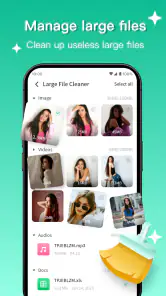
- Useful tools for spotting large files and forgotten downloads.
- Scan results are generally organized for quick review.
Cons
- Some recommended files may require careful checking before deletion.
- Cleaning benefits can vary depending on your phone and storage habits.
- Frequent notifications may encourage repeated scans or upgrades.
- Advanced cleanup options may be limited in the free version.
- Deep scans can take longer on devices with extensive storage.

- Category
- Productivity
- Version
- 1.1.2