Calendar 2026
- 1.81K
- 4.5
- Installs
- 5.00M
- Price
- Free
Screenshots
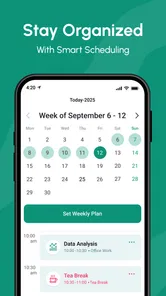
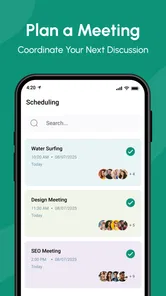
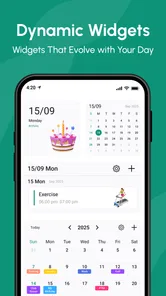
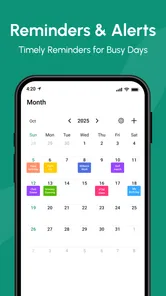
Analysis by Reviewed
Calendar apps earn their place through repetition, not novelty: the real test is whether opening one still feels useful after the first tidy week. I approached Calendar 2025 with that in mind. It is a free productivity app from Calendar 2025, and its focus is straightforward: keeping routines, work, tasks, and meetings organized without turning planning into a project of its own.
Where it fits into an ordinary day
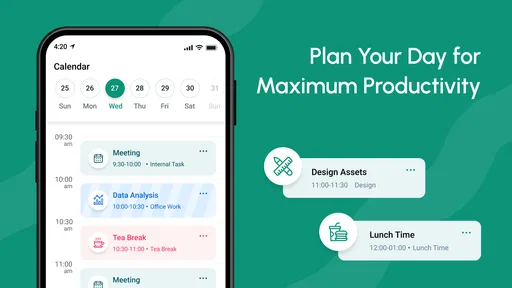
A useful way to judge a planner is to imagine a day with several kinds of commitments competing for attention. I might need to remember a work meeting, leave space for a personal errand, and keep a task from slipping past the end of the afternoon. Separating those plans visually can make a busy calendar easier to scan, especially when I check it quickly between activities rather than sitting down for a full planning session.
That approach suits people who want a familiar calendar at the center of their routine. It is less compelling if you need a detailed project-management system, shared team workflows, or a place to manage complex task dependencies. In those cases, a dedicated work planner may be a better fit; a calendar is most useful when the main problem is knowing what is happening and when.
The first-week appeal
Hey there! So, I recently got my hands on Calendar 2025, and let me tell you, it’s more than just a calendar app. If you’re anything like me, juggling work, personal life, and a million other things, you know how crucial a reliable calendar app is. Well, I dove into Calendar 2025 to see what all the fuss is about, and here's my take.
First Impressions and User Interface
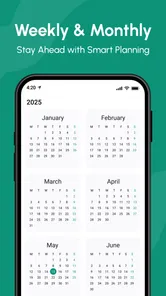
Right off the bat, the interface of Calendar 2025 is sleek and intuitive. It’s got this modern vibe that makes navigating through it a breeze. When you first open the app, you're greeted with a clean layout that doesn't overwhelm you with options. It's like the designers knew exactly how to keep things simple yet functional. The color scheme is easy on the eyes, making it a joy to plan your day without feeling like you're staring into a rainbow explosion.
Features That Stand Out
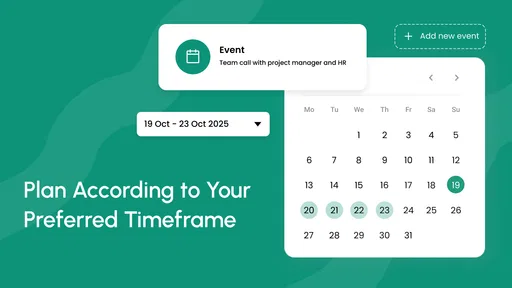
Let’s talk about features, because this app is not just about marking dates. One of my favorite things is the event categorization system. You can color-code your events, making it super easy to differentiate between work meetings, family gatherings, or personal time. It’s these little touches that make organizing your life feel less like a chore.
Another nifty feature is the smart reminders. You can set up reminders with specific alerts, so you’re never late for anything important. Plus, it syncs seamlessly with other calendars you might be using, like Google Calendar or Outlook. And for those who love a bit of nostalgia, there’s a retro calendar view that brings a touch of old-school charm to your planning experience.
More From Our News Desk

Weather by Xiaomi Review: Clear at a Glance, Less Clear Up Close

X Under Pressure: Can It Recover When Posting Goes Wrong?

Clash of Clans Is Won Between the Battles

Android Auto Makes the Case for Quieter Car Software

MobiOffice: Transforming Mobile Productivity with Seamless Integration

EA SPORTS FC™ Mobile Soccer: Redefining Mobile Sports Gaming
Making the calendar useful beyond appointments
A helpful way to use a calendar for both tasks and meetings is to give each entry a clear purpose. I would put fixed commitments in first, then add tasks only when I know when I intend to work on them. A task written down without a time or a realistic place in the day can become visual clutter; placing it beside the relevant part of the schedule makes it easier to act on. For example, a reminder to prepare for a meeting is more useful near the time I plan to do that preparation than buried among unrelated errands.
Color categories work best as a quick sorting tool, not as decoration. I would begin with a few distinctions that affect decisions—work, personal commitments, and perhaps health or family—and avoid assigning every small item its own color. If the calendar is hard to interpret at a glance, the color system is doing too much. This restraint matters especially on a phone, where a crowded week can be difficult to scan in a hurry.
From setup to a lasting habit
For recurring value, I would keep the setup modest: start with the commitments that genuinely shape the week, then add categories only when they help answer a real question at a glance. Too many colors can turn a simple calendar into a legend you have to decode. A practical habit is to review the next day before bed and use reminders for appointments that need a prompt, rather than alerting yourself about everything. That keeps notifications meaningful instead of easy to ignore.
When deciding whether it can replace a calendar already on your phone, the key question is where your schedule lives. If you rely on another calendar service, check that the events you care about appear correctly before making this your daily home; keeping two calendars active without a clear system can create duplicates or missed changes. People who mostly need a straightforward personal schedule may appreciate the simplicity, while anyone who depends on elaborate sharing or coordination should compare those needs carefully before switching.
A realistic week in practice
Imagine a week with a changing work schedule, a regular appointment, and a household task that is easy to postpone. I would enter the fixed work times first, mark the appointment in a separate color, then choose a specific opening for the household task instead of leaving it as an undated intention. A reminder makes sense for the appointment if arriving on time depends on a prompt; it may be unnecessary for a task I will see during a daily review. This small distinction can stop the calendar from becoming a stream of alerts that all feel equally urgent.
On a busy morning, I would use the calendar as a quick decision aid: what is fixed, what can move, and where is there a realistic gap? That is a more useful test than filling every available space. If the day is already packed, seeing that clearly is valuable, but no calendar can create extra time or decide which task should be dropped. I find it better to leave some breathing room than to treat every blank slot as an invitation to add another commitment.
Maintenance without turning planning into work
The main upkeep is not complicated, but it does require consistency. When plans change, I would update the entry at once rather than rely on memory to reconcile the schedule later. A brief weekly review can catch appointments that have moved and tasks that no longer belong on the list. The trick is to keep that review short: if maintaining categories and reminders takes longer than checking the week itself, the system needs simplifying.
Recurring routines deserve a little care too. They can make a calendar more dependable by reducing repeated entry, but a routine that changes often can leave stale commitments behind if it is never revisited. I would periodically check whether the pattern still reflects real life, especially after a change in work hours or household responsibilities. Keeping only useful repeat entries protects the calendar from accumulating plans that look authoritative but are no longer accurate.
For someone sharing a device or moving between calendars, I would also establish one clear source of truth. The app can sync with services such as Google Calendar or Outlook, but that convenience only helps if I know which calendar I am editing and where changes should appear. Before relying on a new setup for an important appointment, I would create or adjust a low-stakes event and confirm that it shows up where expected. That simple test is more reassuring than assuming a connection is working because the calendar looks familiar.
Performance and Reliability
In terms of performance, Calendar 2025 runs smoothly without any hiccups. I didn’t experience any lag, even when loading it with tons of events. It’s reliable, which is paramount for an app that you depend on to manage your schedule. The developers have clearly put effort into optimizing it for both Android and iOS, so no worries if you switch between devices.
When another kind of planner is better
Compared with a built-in phone calendar, this app’s appeal is its emphasis on a clean presentation, event colors, reminders, and a retro view. If the calendar already included with your phone is where every appointment lives and it shows your week clearly, switching may add more maintenance than value. A dedicated calendar earns the extra space only when its way of presenting plans helps you notice something the default view leaves easy to miss.
It also occupies a different lane from task managers and project boards. Those tools are better when work involves dependencies, ownership across a team, or a long sequence of steps that needs tracking. Calendar 2025 makes more sense when the question is primarily “when am I doing this?” rather than “what is the status of the whole project?” I would not try to force a schedule into a project system, or expect a personal calendar to replace one.
People who need shared household planning should think through how everyone will keep the schedule current before choosing any single calendar. A view that is easy for one person to maintain may not solve coordination if others use different systems. Likewise, someone whose schedule changes minute by minute may prefer a tool built around live team coordination. For personal routines and ordinary appointments, though, a simple calendar can be easier to keep accurate than a more elaborate platform.
What to expect over time
The app has an average rating of 4.5 from around 22,000 ratings, and it has been installed over 5 million times. Those figures suggest that it has found a broad audience, though they cannot tell me whether its particular workflow will suit yours. It is rated for Everyone and is free to download, with in-app purchases ranging from $1.99 to $39.99 per item. I would treat the paid options as something to assess against your own routine, not a reason to assume you need to spend money to begin organizing your schedule.
Calendar 2025 was released on October 16, 2018, and its current version is 2.0.5.7; the stated minimum operating-system requirement is version 7.0. That makes checking device compatibility a sensible first step, especially if you use an older phone. The developer is Calendar 2025. For someone choosing between this and a built-in calendar, I would weigh familiarity and existing habits against the appeal of its visual organization. The built-in option may be easier if it already handles everything you need; this app has a stronger case when a clearer view and a more deliberate planning routine would help.
Sources of fatigue and lasting value
The features that make a calendar feel helpful at first can also become tiring if I use them without a purpose. Too many alerts interrupt the day, while too many categories add decisions every time I enter a plan. The solution is not to keep tweaking the setup indefinitely. I would choose a small number of useful labels, reserve alerts for commitments where a prompt matters, and review the coming week at a regular moment. That keeps the app in a supporting role instead of turning it into another task to manage.
Someone who prefers paper planning may also find the digital routine unnecessary. Paper can be faster for sketching an open-ended week or jotting down ideas without deciding a precise time. A calendar has the advantage when plans need reminders or need to be checked repeatedly throughout the day, but it is not automatically better for every kind of planning. I would use this app for time-bound commitments and keep brainstorming elsewhere if that feels more natural.
The paid items are another reason to start with the routine rather than the purchase screen. The app is free to download, and I would first see whether its basic approach suits my week before considering an optional expense. If the calendar does not change how reliably I remember or organize commitments, paying for more would not fix the underlying mismatch. Its value is in a repeatable habit, not in collecting settings or features for their own sake.
Month-to-month value and the final call
All in all, Calendar 2025 is a solid choice for anyone looking to streamline their scheduling needs. It’s got a bunch of cool features packed into a user-friendly package. Whether you're planning a major project or just keeping track of daily tasks, this app is like having a personal assistant in your pocket.
If you’re still on the fence, give it a try. It’s one of those apps that makes you wonder how you ever managed without it. So, grab your phone, head to your app store, and take Calendar 2025 for a spin. Trust me, your future self will thank you!
My longer-term verdict is more measured: the app earns a lasting spot only if it becomes part of a small, repeatable routine. A quick weekly check and a glance before the day starts are enough to reveal whether its layout and reminders genuinely reduce missed plans. If maintaining it starts to feel like extra admin, or if you need stronger collaboration than a personal calendar can provide, moving back to a familiar built-in option is reasonable. For everyday scheduling, though, its approachable presentation gives me a low-friction place to start and a fair chance of sticking with it.
Calendar 2026 Frequently Asked Questions
Is Calendar 2025 suitable for someone looking for a simple calendar app?
Calendar 2025 is a productivity app with a straightforward focus: helping users schedule routines, work, tasks, and meetings. Its store description emphasizes simple planning, making it worth considering if you want a calendar centered on everyday organization rather than a specialized project-management tool. Whether it fits your routine depends on the planning features you need.
Can I use Calendar 2025 to plan tasks as well as appointments?
Yes. Calendar 2025 is intended to help with scheduling routines, work, tasks, and meetings, so it can bring several kinds of commitments into your planning. You might use it to keep track of work plans alongside personal responsibilities. The app’s main appeal is having a calendar-based place to organize these parts of your schedule.
Is Calendar 2025 appropriate for all ages?
Calendar 2025 has an Everyone content rating, so its listed age classification makes it suitable for a broad audience. That can be useful when choosing a basic planning app for different members of a household. As with any app, it is sensible to consider the features and purchase options that matter to the person who will use it.
Can Calendar 2025 help me organize both work and personal routines?
Calendar 2025 is designed as a productivity app for planning routines, work, tasks, and meetings. It may suit people who want to keep everyday commitments in one calendar, whether they are organizing a personal schedule or tracking work-related plans. Its focus is on straightforward scheduling, so it can be a practical option to consider if you want a dedicated calendar app.
What features does Calendar 2025 offer?
Calendar 2025 offers a comprehensive suite of features tailored for personal and professional use. It includes customizable calendar views, event reminders, integration with other apps, and the ability to sync with cloud services. The app also supports multiple time zones, public holiday calendars for various countries, and allows for sharing events with other users.
Pros
- User-friendly interface for easy navigation.
- Multiple calendar views for better planning.
- Syncs seamlessly with other devices.
- Customizable reminders and notifications.
- Supports international holidays.
Cons
- Limited offline functionality.
- Some features require premium upgrade.
- Occasional sync delays.
- Ads in the free version.
- Lacks advanced event customization.