Ascension One
- 313.00
- 4.7
- Installs
- 100.00K
- Price
- Free

Screenshots
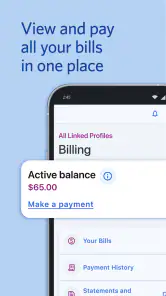
Analysis by Reviewed
Managing healthcare can feel like a second job: finding the right department, keeping track of appointments, checking messages, and remembering what needs attention next. Ascension One is designed to bring those tasks into one place for people receiving care at Ascension sites. After spending time with this medical app, my view is fairly clear: it is most useful as a practical companion to an existing Ascension care relationship, not as a replacement for a doctor’s advice or a universal health tracker.
That distinction matters. The app is free, available to everyone by age rating, and developed by Ascension Health, but its usefulness depends heavily on whether your care is connected to Ascension. If it is, the central idea is sensible: instead of jumping between phone calls, paper reminders, and separate digital tools, you get a single starting point for handling everyday care tasks. If your providers are outside that system, the experience is naturally less relevant.
What Ascension One gets right in everyday care
The strongest part of Ascension One is its focus. It is not trying to be a general-purpose fitness dashboard, a symptom encyclopedia, or a social health platform. Its purpose is to help users manage aspects of care at Ascension locations. That narrower role makes the app easier to understand than many health apps that mix exercise, nutrition, medication reminders, records, and wellness content into one crowded screen.
In practical terms, I would treat it as a control panel for an Ascension patient relationship. When I need to think about an upcoming care task, I want the app to reduce the number of steps between opening it and knowing what deserves my attention. The value is less about spending time inside the app and more about making healthcare administration feel less scattered.
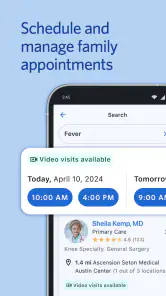
That makes it particularly useful during busy periods. Imagine arranging a visit while working, then needing to check the details later from a phone rather than searching through email or calling a facility again. A well-organized care app can prevent small uncertainties from becoming missed appointments or unnecessary calls. For someone managing several appointments or coordinating care for a family member, that convenience can be more meaningful than flashy extras.
I also appreciate that the app’s identity is clear. The short store description, “Ascension One,” does not try to promise a complete medical universe, while its broader purpose is managing care at Ascension sites. That sets a more realistic expectation than a wellness app that suggests it can solve every health concern.
A useful companion rather than a medical authority
The most important way to use Ascension One is as an organizational tool. I would open it when I need to prepare for care, review what is already arranged, or keep the next step visible. I would not use it to decide whether a serious symptom requires emergency attention. A healthcare app can make access and administration easier, but it cannot replace urgent services, professional judgment, or a direct conversation with a clinician.
This is also where the app’s medical category matters. People often expect medical apps to provide immediate answers, but care-management tools serve a different purpose. Ascension One is better suited to reducing friction around an established care process than to answering an unfamiliar health question at midnight. That difference should guide your expectations before you install it.
For routine needs, I found the single-app approach easier to live with than relying on memory alone. I would recommend checking the app before a planned visit, after receiving a new care instruction, and whenever several members of a household are trying to keep healthcare details straight. Those short check-ins are more useful than opening it aimlessly every day.
Why the reception is encouraging
Ascension One holds a 4.7 average from around 5.2 thousand ratings, with more than 300 written reviews, and it has passed 100 thousand installs. Those figures do not prove that every patient will have a smooth experience, but they do suggest that the basic concept is working for a substantial group of users. I read that response as evidence that a focused care-management app can solve a real problem when it is connected to the right healthcare network.
The rating should still be interpreted carefully. A patient’s experience may depend on the facility, the type of care involved, and how much of their information is available through the connected system. An app can be well designed and still feel limited if the user expects it to cover providers or services that are not part of Ascension. In other words, the high average is encouraging, but your relationship with the health system remains the deciding factor.
Small workflows that make a difference
One useful habit is to use the app as a pre-visit checklist rather than waiting until the last minute. Before leaving home, I would review the relevant care information, confirm what I already know, and make a short note of questions to raise during the visit. This does not require the app to perform a medical task; it simply turns a vague appointment into a more prepared interaction.
A second practical use is reducing repeated phone calls for ordinary coordination. Calling a medical office is sometimes necessary, especially for urgent or unusual situations, but many people lose time asking for information they have already received or trying to reconstruct a previous conversation. Keeping the app as the first place to check can spare that effort. The trade-off is that digital convenience only helps when the information is current and when the task fits the app’s role.
A third insight is that the app is likely to be more valuable for people who manage care in bursts than for people who need constant health monitoring. Someone with a series of appointments, follow-up care, or several Ascension locations may benefit from having one familiar entry point. Someone looking for continuous fitness measurements, broad medication management across unrelated providers, or a complete personal health journal may be better served by a different kind of application.
I would also suggest keeping expectations modest during the first setup. Health apps often become frustrating when users assume every feature will be immediately available for every care relationship. Start by identifying the tasks you actually need, then judge the app by whether it makes those tasks easier. That approach avoids confusing a missing workflow with a personal failure to understand the interface.
Where it fits beside ordinary alternatives
The usual alternative is not always another app. For many people, it is a combination of phone calls, web pages, calendar entries, paper instructions, and memory. Ascension One has an advantage over that combination because it gives care-related activity a dedicated home. It also has a clearer healthcare context than a general calendar, which can be helpful when an appointment is only one part of a larger care process.
Compared with a general health tracker, the difference is even more important. A tracker may be better for exercise, sleep, nutrition, or long-term personal trends. Ascension One is better positioned for interacting with care connected to Ascension sites. I would not replace a fitness app with it, and I would not expect a fitness app to organize Ascension care as effectively. They solve different problems.
Compared with calling a provider, the app can be more convenient for routine administration, but a phone conversation remains better when the situation is complicated, time-sensitive, or emotionally difficult to explain through a screen. I see the app and the phone as complementary. The best workflow is to use the app for straightforward tasks and escalate to a human when the matter requires interpretation, flexibility, or immediate reassurance.
The friction I would want users to understand
The main limitation is not that Ascension One tries to do too much; it is that its usefulness is tied to one healthcare ecosystem. That is a reasonable design choice, but it narrows the audience. If your primary doctors, specialists, or facilities are not connected to Ascension, the app may not become the central health organizer you are hoping for.
There is also a psychological limitation to care-management apps: they can make healthcare feel organized without making it simple. A clean digital view cannot remove confusing medical language, long treatment decisions, billing concerns, or the stress of waiting for answers. I value the app for reducing administrative friction, but I would be disappointed if I expected it to resolve the harder parts of being a patient.
Another trade-off is that convenience encourages users to depend on a single screen. I would still keep important appointment details in a backup place when they matter, especially before travel or a busy day. That is not a criticism unique to this app; it is a sensible precaution whenever a phone becomes part of a healthcare routine. Digital access is helpful, but it should not be the only thing standing between you and an important reminder.
The app may also feel unnecessary for someone who has one occasional visit and prefers speaking directly with staff. Installing an app, learning its layout, and remembering to check it can be more effort than making a single call. I would not recommend it simply because it is free. I would recommend it when the expected reduction in repeated searching or calling is greater than the setup effort.
Ascension One is currently at version 4.6.0 and requires Android 8.0 or later. For users with a compatible Android phone, that requirement is not especially demanding, but it is still worth checking before planning to rely on the app. The version information also matters because healthcare apps evolve: an update can improve a workflow, alter navigation, or require users to adjust a familiar habit. I prefer to revisit the app after updates rather than assume that every screen will remain exactly where I remember it.
Who should choose it
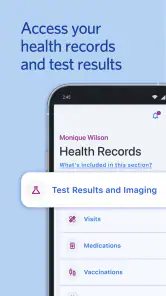
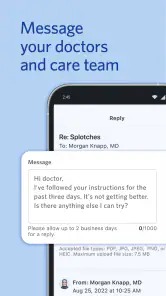
I think Ascension One is a strong fit for an Ascension patient who wants a more orderly way to handle care-related tasks. It is especially sensible for people with recurring visits, multiple appointments, or a tendency to lose track of instructions among messages and paperwork. Family members helping another person coordinate care may also appreciate having a dedicated place to begin, provided they use it appropriately and respect the patient’s privacy and account access.
It is less suitable for someone searching for symptom diagnosis, emergency guidance, a broad wellness dashboard, or one tool that combines every provider in a person’s life. It is also not the first choice for people whose healthcare is mainly outside Ascension. In those situations, a broader health-record solution, a provider-specific app that covers the relevant doctors, or a simple calendar may offer a better match.
Before committing to it, I would ask myself three questions. Do I receive care at Ascension sites? Do I regularly need to keep track of more than one care task? And would a central digital starting point save me time compared with calls, paper, and memory? If the answer is yes to those questions, the app is worth trying. If not, the download may add another account and another notification stream without solving a real problem.
My verdict after using it as a care companion
Ascension One succeeds because it understands a common healthcare frustration: ordinary care management is often fragmented. Its best quality is not entertainment or novelty but purpose. It gives Ascension patients a dedicated place to organize their interaction with Ascension sites, which can make routine care feel more manageable.
I would recommend it to the right audience, with one important condition: think of it as a bridge to care, not care itself. Use it to prepare, check, and coordinate. Keep a phone conversation available for complicated issues, and seek urgent medical help when the situation calls for it rather than waiting for an app workflow.
The free price and Everyone age rating make it easy to try, while the strong 4.7 average and growing install base suggest that many users find the approach worthwhile. Still, the real test is personal relevance. If Ascension is part of your healthcare routine, Ascension One can replace a surprisingly messy collection of reminders and searches with a more focused habit. If it is not, I would skip it and choose a tool built around the providers and tasks you actually use.
My final recommendation is therefore positive but specific: choose Ascension One when your goal is simpler Ascension care management, not general health tracking. That focused expectation is what turns the app from another medical download into a genuinely useful part of a patient’s routine.
Pros
- Clear spiritual focus with guided practices for personal growth.
- Content is organized to support consistent daily reflection.
- Calm presentation makes the app easy to use before bed or during breaks.
- Suitable for users exploring mindfulness
- faith
- and self-improvement.
- Progress features can help maintain motivation over time.
Cons
- Some content may feel too general for users seeking advanced guidance.
- The spiritual approach may not suit every belief or personal preference.
- Certain features may require a subscription or in-app purchase.
- Limited offline access can be inconvenient when traveling without internet.
- The amount of available content may feel overwhelming at first.

- Category
- Medical
- Version
- 4.6.0