ArtPro - Art Auction Results
- 1.00
- 4.5
- Installs
- 10.00K
- Price
- Free

Screenshots
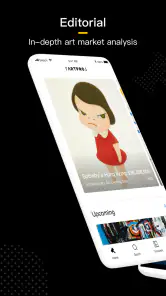

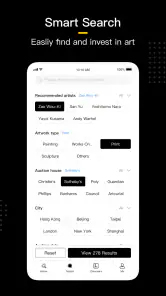
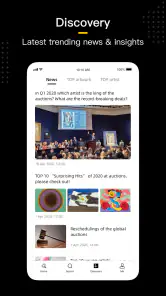
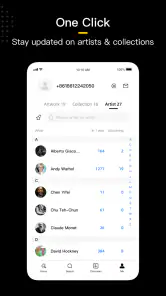
Analysis by Reviewed
If you are curious about what artworks actually sell for, rather than relying on gallery talk or a hopeful estimate, ArtPro - Art Auction Results is a focused app worth examining. I see it as a research tool for people who want to search art prices and auction results from a phone. It belongs to the Art & Design category, but it is not a drawing app, a digital canvas, or a place to create images. Its purpose is much narrower and, for the right user, more practical: helping you investigate the market history around artworks.
I approached it as a first-time user who wanted to move from curiosity to a useful answer quickly. The experience makes most sense when you already have an artist, artwork, or auction-related question in mind. If you install it expecting a broad art community, lessons, or a visual inspiration feed, you may feel that it is too specialized. If you want a compact way to explore auction information, however, its focused design is easier to appreciate.
What to expect before you begin
ArtPro is best understood as an art-price lookup companion. The store summary points directly to searching art prices and auction results, and that description sets the right expectations. I would use it before considering a purchase, while researching an artist, or when trying to understand whether a quoted value seems connected to real auction activity. It can also be useful for students, collectors, dealers, and anyone who wants a more grounded starting point for art-market research.
The app is free to install, which makes it simple to test without making an immediate financial commitment. It does include in-app purchases ranging from a few dollars to several hundred dollars per item, so I would not treat “free” as meaning that every possible part of the experience is necessarily available without cost. A sensible approach is to install it, learn how the search works, and decide whether the information fits your needs before considering any purchase.
The public response is encouraging but still relatively small: ArtPro has an average rating of 4.5 from a few dozen ratings, with a single written review shown alongside them. I would read that as a positive early signal rather than definitive proof that it will suit every researcher. The app has passed ten thousand installs, so it is not an entirely unknown experiment, but it remains more niche than the large general-purpose art platforms many people already know.
ArtPro was developed by ArtPro HK Limited and first appeared on November 12, 2019. The current version is 3.134.56, and it supports Android devices running Android 5.0 or later. Those details matter mainly for compatibility: owners of older phones may still be able to use it, while anyone on a newer device should have a reasonable starting point. The content rating is Teen, so families should still consider whether the market-oriented content is appropriate for younger users.
Who will get the most from it
I think the strongest audience is someone who asks specific questions. For example, you may have seen a painting attributed to a known artist and want to investigate whether similar works have appeared at auction. You might be comparing an artist’s market presence before visiting a fair, checking background information before speaking with a dealer, or building a research file for a class. In all of those cases, a search-centered app can be more useful than scrolling through a general art social network.
It is also a reasonable tool for a cautious beginner. You do not need to begin with an advanced collecting strategy. A simple question such as “What kind of auction history is associated with this artist?” gives you a concrete reason to open the app. The important habit is to use results as research clues, not as an automatic verdict on authenticity, condition, or the value of one particular object.
I would be less enthusiastic about it for someone who wants to make art, learn painting techniques, edit photos, or browse a large stream of contemporary work. Those needs call for a creation app, an image editor, or a discovery platform. ArtPro’s narrow purpose is its main strength, but that same focus means it is not a substitute for the usual creative tools in the Art & Design category.
Getting started without overcomplicating the search
My recommendation is to begin with one clear search idea instead of trying to explore everything at once. Choose an artist or a particular work that you already recognize. This gives you a way to judge whether the results are useful, understandable, and relevant to your question. Starting with a familiar name also makes it easier to notice whether you are looking at the right kind of information rather than simply collecting attractive figures.
When you first open the app, resist the temptation to treat the search field like a general web search box. Art-market searches work better when your wording is deliberate. Use the artist’s name as the first step, then narrow your thinking around the work, medium, period, or auction context if the app presents those paths. The goal is not to produce the longest query; it is to create a result set that you can interpret.
A useful first-session workflow is straightforward:
Pick an artist or artwork that you can identify with confidence.
Run the simplest relevant search rather than adding guesses about price or quality.
Read the result context before focusing on an amount.
Compare more than one related result when the app provides alternatives.
Write down the question the results answer and the question they leave open.
This last step is easy to overlook. Auction information can answer whether comparable activity exists, but it may not answer whether your specific artwork is genuine or fairly priced. Keeping those questions separate prevents a quick search from becoming an overconfident conclusion.
The first meaningful success
For me, the first successful action would not be finding the biggest sale connected to an artist. It would be finding a small group of relevant auction results and understanding what they can tell me. That is a more realistic measure of usefulness. A result becomes valuable when it helps you form a better next question, such as whether the artist appears consistently at auction, whether the works vary significantly, or whether the example in front of you is difficult to compare.
Imagine that you are considering a small painting offered by a local seller. Before discussing the price, you search the artist in ArtPro and review related auction results. You notice that the examples differ in size, medium, and condition. That does not produce a final valuation, but it gives you a much better conversation starter. You can ask which comparable work is truly similar instead of treating every result as interchangeable.
That workflow is one of the app’s more useful practical lessons: auction history is evidence for comparison, not a magic price tag. A sale amount can be affected by condition, provenance, dimensions, timing, buyer interest, and many other details. Even if the app presents the information clearly, the interpretation still belongs to you.
Another good first success is learning how quickly you can move from an artist name to relevant market context. If the process feels natural, ArtPro may earn a place in your research routine. If you find yourself needing broad biography, exhibition history, images, or detailed scholarly references, you will probably need to combine it with other sources rather than expecting one app to cover the whole subject.
Where beginners may become confused
The most likely confusion is the difference between an auction result and a current asking price. An auction result reflects a completed market event, while a dealer, gallery, or private seller may ask for a different amount. Those figures can be related, but they are not automatically equivalent. I would use ArtPro to understand market context and then treat any purchase decision as a separate investigation.
A second point is comparability. Two works by the same artist may differ greatly in medium, scale, subject, date, condition, and documentation. Searching only by artist can therefore produce a broad picture rather than a precise comparison. This is where patience matters. Look for patterns and relevant similarities instead of selecting one eye-catching result and applying it directly to your own artwork.
Names can also create problems. Artists may be known by alternate spellings, initials, translated names, or names shared with other people. If a search seems empty or produces an unexpected group of results, check the spelling and try a simpler variation. Do not assume that a weak result means the artist has no market history; it may indicate that the search wording needs adjustment.
There is also a practical difference between researching an artist and researching an object. ArtPro can help you investigate prices and auction activity, but a search result alone cannot verify that a work is authentic. It cannot replace condition inspection, provenance review, specialist advice, or proper documentation. I would be especially careful with expensive purchases: use the app to prepare questions, not to eliminate every other form of due diligence.
How it compares with familiar alternatives
Compared with a general search engine, ArtPro offers a more focused reason to search. A normal web search may return dealer pages, news articles, social posts, advertisements, and unrelated images alongside useful auction information. That broader approach is valuable when you need background, but it can be inefficient when your immediate question is about auction activity. ArtPro’s appeal is the attempt to keep the research centered on art prices and results.
Compared with a gallery website or dealer catalog, the app serves a different purpose. A gallery presents selected works and current offerings, while an auction-results tool helps you look backward at market events. Neither view is complete on its own. The gallery context may be better for condition and presentation; the auction context may be better for seeing how comparable works have performed.
Compared with an art social network, ArtPro is less about conversation and more about investigation. You are not opening it primarily to follow artists or collect visual inspiration. That can feel limited if you enjoy discovery through images, but it is an advantage when you want to avoid a feed and get directly to a research task.
Compared with a specialist desktop research service, a mobile app is naturally more convenient for quick checks. I can imagine using ArtPro during a conversation, at a fair, or while looking at a catalog. The trade-off is that serious research may still be easier on a larger screen, especially when comparing many records or keeping notes open beside the results. I would choose the app for access and speed, then move to a broader research setup when the decision becomes important.
Practical habits that make the app more useful
My first tip is to search in layers. Begin with the artist, inspect the available context, and only then refine the question. This avoids a common mistake: adding uncertain details too early and accidentally excluding useful results. A broad first pass tells you how the artist is represented; a narrower second pass helps you investigate the specific comparison.
My second tip is to separate discovery from verification. Use ArtPro to discover which sales or comparable works deserve attention. Then verify the details through the relevant catalog, specialist, or documentation connected to the artwork you are considering. This two-stage workflow is slower than trusting one result, but it is much safer and produces better questions.
My third tip is to record why a result matters. Instead of saving only an amount, note the reason it is comparable: perhaps the medium is similar, the scale is close, or the subject resembles your example. This turns a casual search into a small research file. It also makes it easier to explain your thinking to a dealer, teacher, collector, or fellow enthusiast.
A fourth useful habit is to look for variation rather than a single headline number. If related works show different outcomes, that spread is informative. It may signal differences in quality, condition, demand, or context. A single high result can attract attention, but a group of results usually gives a more honest sense of uncertainty.
Finally, be deliberate about in-app purchases. Because individual purchases can range from $2.99 to $399.99, I would read the purchase screen carefully and consider whether the proposed access matches your actual research need. A casual user may only want to explore the app, while a professional researcher could have a different reason to pay. The right decision depends on the value of the specific information to you, not simply on the presence of a premium option.
When I would recommend it, and when I would skip it
I would recommend ArtPro to a beginner who wants a direct introduction to auction-oriented art research. It gives you a concrete starting point: choose an artist, search, compare, and turn the results into better questions. I would also recommend it to collectors who need a mobile reference during early-stage investigation, provided they understand that market results are only one part of a purchase decision.
I would skip it if my main goal were creative work. Someone looking for brushes, layers, drawing tools, photo adjustments, or design templates will not find the right kind of experience here. I would also skip relying on it alone for a high-stakes valuation, authentication decision, or detailed academic study. In those situations, the app may be a useful first stop, but not the complete process.
The Teen content rating is another reason parents and younger users should think about context. The subject is art-market research, not a children’s creative playground. That does not make it unsuitable for every teenager, but it does make supervision and common sense appropriate when the app is used for purchases or discussions about expensive works.
After using it as a focused research aid, my view is positive but measured. ArtPro - Art Auction Results is most convincing when you give it a specific question and judge it by whether it improves your next decision. It is free to start, has an average rating of 4.5, and offers a specialized alternative to wandering through unrelated web results. At the same time, its narrow purpose, possible purchase costs, and the limits of auction comparisons mean it should be part of a research process rather than the entire process.
If you are installing it for the first time, start small: search one artist you already know, compare several relevant results, and write down what remains uncertain. That first modest success will tell you more than an hour of unfocused browsing. For anyone who wants a practical way to explore art-market history from an Android device, ArtPro is worth trying with realistic expectations and a careful eye.
Pros
- Useful auction price history for researching artists and artworks.
- Helps compare past sales across galleries
- houses
- and auction events.
- Artist-focused search makes finding relevant market data straightforward.
- Compact format is convenient for checking results while visiting exhibitions.
- Can support more informed bidding and collecting decisions.
Cons
- Coverage may vary significantly between artists
- regions
- and auction houses.
- Some records may lack complete details about condition or provenance.
- Historical prices do not guarantee an artwork’s future market value.
- Advanced data or features may require a subscription or paid access.
- Niche auction terminology can be confusing for first-time collectors.

- Category
- Art & Design
- Version
- 3.134.56