10 Minute Language
- 229.00
- 4.6
- Installs
- 1.00M
- Price
- Free
Screenshots
Analysis by Reviewed
I judge a short-session language app by a practical question: does it make starting easier without giving me the illusion that a few minutes alone will make me fluent? 10 Minute Language is aimed at people who want a manageable daily habit rather than a long study block. I’d consider it for fitting practice around work, school, or family life, while treating its brief lessons as one part of learning—not a substitute for every kind of practice.
Choosing a routine you can actually keep
Before choosing any language app, I’d ask what tends to stop me from studying: lack of time, uncertainty about what to do next, or the discomfort of practicing aloud. A short daily format is most helpful for the first two. It lowers the effort required to begin and gives a learner a compact activity to return to. It does not automatically solve the third, because exercises completed privately cannot fully reproduce the pressure and unpredictability of a conversation.
I’d also decide what a useful outcome looks like. If the aim is to recognize common words, explore a language, or make practice part of a regular day, this kind of app has a sensible role. If the goal is to handle a job interview, follow fast speech, or prepare for an exam, I’d want a course or teacher that can address those specific demands. Matching the tool to the task prevents a convenient routine from being mistaken for a complete learning plan.
Who benefits most from a short daily routine
The format makes the most sense if you often have a small, predictable gap in your day and can use it consistently. For example, I could make a lesson part of a morning coffee break, then spend a moment later trying to recall the new material without looking. That second step is a useful way to check what stuck, rather than simply completing a session and moving on.
This approach also suits a curious beginner who wants to explore a language before committing to a more demanding study plan. It may be less satisfying if you already need advanced conversation practice, detailed grammar explanations, or preparation for a formal exam. In those cases, a structured course, a tutor, or regular conversation with other speakers may be a better fit; short app exercises can still support those methods, but shouldn’t be expected to replace them.
How it compares with other ways to learn
Compared with a textbook, a brief interactive lesson can feel easier to pick up when motivation is low. Compared with a conversation group or tutor, though, it offers a different kind of practice: working through exercises is not the same as responding naturally in a live exchange. I’d use the app to build familiarity and keep a routine, then look for real listening and speaking opportunities when those are my main goals.
There is also a middle ground between using only an app and enrolling in a full course. A learner might use short sessions to keep words and basic material in view, then add a reader, a podcast, or a language exchange when ready. Those alternatives bring different demands: reading lets you pause and inspect a sentence, audio practice exposes you to speech, and a live partner expects you to respond. I wouldn’t treat one as universally better; the right mix depends on whether your weak point is recall, comprehension, or spontaneous expression.
More From Our News Desk

Clash of Clans Is Won Between the Battles

Android Auto Makes the Case for Quieter Car Software

MobiOffice: Transforming Mobile Productivity with Seamless Integration

EA SPORTS FC™ Mobile Soccer: Redefining Mobile Sports Gaming

How Microsoft OneDrive Became a Mobile Productivity Giant

How Google Translate Breaks Language Barriers Effortlessly
One practical trade-off is that a ten-minute routine is convenient precisely because it is limited. If a topic needs more explanation, or I want to revisit a difficult point, I may need to supplement the session instead of assuming it has covered everything. A helpful habit is to jot down one question or word that remains unclear and return to it later. That keeps a short lesson from turning into a checklist of taps with no follow-through.
Quick Learning on the Go
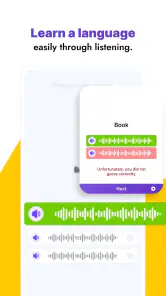
Let’s dive into the heart of what makes 10 Minute Language stand out. The concept is simple yet brilliant—learn a new language in just 10 minutes a day. It’s like having a personal language coach in your pocket, ready whenever you are. The lessons are designed to be short and effective, focusing on practical use rather than rote memorization. Believe me, you’ll be surprised by how much you can actually learn in such a short span!
Engaging and Interactive Lessons
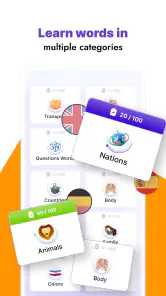
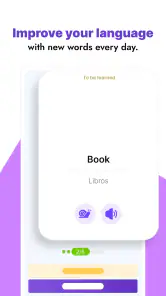
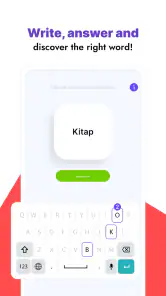
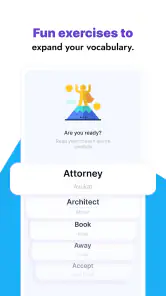
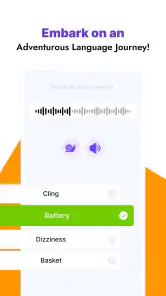
What I love about this app is its interactive approach. The lessons are not just about reading or listening; they actively engage you with quizzes and exercises that test your understanding and retention. It’s almost like playing a game, and who doesn’t love a bit of fun while learning? The app uses a mix of audio, visual, and text-based exercises that cater to different learning styles. So, whether you’re an auditory learner or a visual one, 10 Minute Language has got you covered.
For a better return on each session, I’d pause after a quiz and say the answer aloud before checking it. Then, later in the day, I’d try to remember it from context rather than reopening the same screen straight away. This small routine makes the exercises a prompt for active recall, instead of letting recognition do all the work. It also helps reveal a useful distinction: knowing which answer looks familiar is easier than producing a word when you need it in conversation.
Turning a quick lesson into something usable
A realistic day might look like this: I open a lesson during a quiet break, complete the exercises, and choose one item I want to remember. Later, while walking to a shop or waiting for transport, I try to recall that item and form a simple sentence with it. I would not expect a perfect sentence every time; the point is to make the material easier to retrieve without the prompt on screen. If I cannot remember it, that is a useful signal to revisit it rather than proof that the session was wasted.
For words that keep slipping away, I’d keep a small personal note with the word, a meaning, and one situation where I might use it. This is not a replacement for the app’s exercises; it is a way to connect a new item to my own day. The trade-off is that note-taking can become busywork, so I’d keep the list short and review only the items that genuinely matter to me. A few chosen reminders are easier to act on than an ever-growing pile of copied material.
Motivation and Progress Tracking
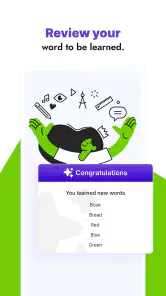
Staying motivated can be tough, especially when learning something new. Thankfully, this app incorporates a fantastic progress tracking system. You can set daily goals, and the app sends you reminders to keep you on track. Plus, there’s nothing more satisfying than seeing your progress chart climb higher and higher! It gives you that extra push to keep going, and trust me, it feels rewarding.
I’d treat a growing chart as evidence of consistency, not a measure of speaking ability. A realistic routine is to choose a daily moment you can repeat, keep the reminder tied to that moment, and make a brief note of what you want to review next time. If you miss a day, restarting with a manageable session is more useful than trying to compensate with an exhausting catch-up. The app’s value here is making the next small step visible; steady progress still depends on how actively you use what you encounter.
Another nifty feature is the app’s ability to adapt to your learning pace. If you’re breezing through the lessons, it ramps up the difficulty. If you need a bit more time, it adjusts accordingly. This personalized approach ensures that you’re always challenged but never overwhelmed.
Variety of Languages Offered
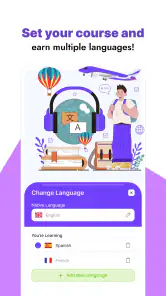
Let’s not forget the impressive range of languages on offer. From popular ones like Spanish and French to more niche languages like Korean or Arabic, there’s something for everyone. It’s a great opportunity to explore different cultures and expand your horizons. And because the lessons are bite-sized, you can even dabble in more than one language at a time. How cool is that?
Although sampling two languages can be enjoyable, I’d avoid splitting a beginner’s limited practice time if the goal is usable progress in one of them. A better experiment is to try a short stretch with one choice, then decide whether the lesson style and subject still hold your interest. If you are comparing languages for travel or personal curiosity, keep a simple list of phrases you want to recognize; it gives each session a purpose beyond collecting completed lessons.
Practical details and the cost of trying it
WE CENTER publishes this free education app, which is rated for Everyone and has an average rating of 4.6 from around 9,400 ratings, alongside more than 200 written reviews. It has passed one million installs. The current version is 1.2.3, and it requires Android 6.0 or later. Those details make it easy to see whether it fits an Android device and whether its broad age rating suits a household, but the learning experience itself is still a personal fit rather than a guarantee of results.
The app is free to start, with optional in-app purchases priced from $4.99 to $29.99 per item. I’d use the free experience first and decide whether the routine is genuinely useful before paying for anything. That avoids spending on the idea of learning a language before finding out whether this particular lesson format keeps me engaged. If you already prefer long explanations, detailed reference material, or live correction, putting money toward a course or tutor may serve that goal better.
Questions worth settling before committing
Can a short lesson fit into an unpredictable schedule? I think it can, provided you have a fallback moment that does not depend on an ideal morning or a perfectly quiet room. A commute, a break, or a few minutes between tasks may work, but I would avoid opening a lesson when I cannot give it enough attention to answer and reflect. The session is brief; that does not mean it has to be rushed.
Is it suitable for someone who has studied before? It can still be useful for refreshing familiar material or rebuilding a habit, but someone who has already moved beyond basic learning may find the format too light for their main needs. I’d test whether the exercises make me think, rather than assuming a completed activity means the level is appropriate. If I can answer everything by recognition alone, I’d add more demanding reading or conversation practice instead of relying on repetition that no longer stretches me.
Should a family member use it? Its Everyone age rating makes it broadly suitable from a content-rating perspective, but I would still help a younger learner turn sessions into active practice: saying answers aloud, relating words to familiar objects, and taking breaks when attention fades. A gentle routine is more useful than insisting that a chart stay perfect. For a learner who needs classroom instruction or individualized support, the app is better treated as a supplement than as a teacher replacement.
My recommendation
Since its release on October 31, 2024, the app has offered a straightforward proposition: make language practice easier to begin and repeat. I’d recommend 10 Minute Language to a busy beginner who values brief interactive sessions and wants a low-pressure way to explore a language. I would not choose it as my only resource for fluency, advanced study, or conversation confidence. Used with realistic expectations—and paired with occasional speaking, listening, or review outside the app—it can be a sensible starting point. If that is the kind of routine you will actually keep, it is worth trying before you commit to a more demanding option.
10 Minute Language Frequently Asked Questions
Is 10 Minute Language free to download, and what might cost extra?
10 Minute Language is free to download, so you can try the app without paying upfront. It also offers in-app purchases, with listed item prices ranging from $4.99 to $29.99. As with any learning app, check the purchase details shown in the app before confirming a transaction, especially if you are deciding whether the extra content or features suit the way you plan to study.
What is 10 Minute Language and how does it work?
10 Minute Language is a mobile application designed to help users learn a new language quickly and efficiently. The app offers short, focused lessons that are only 10 minutes long, making it easy to fit language learning into a busy schedule. Through interactive exercises and games, users can build vocabulary, improve pronunciation, and enhance their understanding of grammar. The app supports multiple languages, allowing users to choose the one that best suits their needs.
Is 10 Minute Language suitable for beginners?
Yes, 10 Minute Language is perfect for beginners. The app starts with basic vocabulary and phrases, gradually increasing in complexity as the user progresses. Each lesson is designed to build on the previous one, ensuring a solid foundation in the new language. The bite-sized lessons make it less overwhelming for new learners and keep them engaged without feeling pressured.
What languages can I learn with 10 Minute Language?
10 Minute Language offers a variety of languages for users to learn, including popular options like Spanish, French, German, Italian, and Mandarin Chinese. The app continuously updates its language offerings, making it a versatile tool for anyone looking to pick up a new language. Users can select a language based on their personal or professional needs and start learning right away.
Does 10 Minute Language require an internet connection to use?
While 10 Minute Language offers offline access to some of its content, a stable internet connection is recommended for the best experience. This allows users to access all features, including real-time updates, interactive exercises, and progress tracking. Offline mode is useful for downloading lessons in advance, but certain features, such as community interactions and live support, require connectivity.
Pros
- Quick learning sessions
- User-friendly interface
- Diverse language options
- No internet needed
- Engaging exercises
Cons
- Limited free content
- Ads in free version
- Requires login
- Limited advanced levels
- No speech recognition
- Category
- Education
- Version
- 1.2.3