Solitaire Tripeaks: Card Games
- 18.22K
- 4.8
- Installs
- 1.00M
- Price
- Free
Screenshots

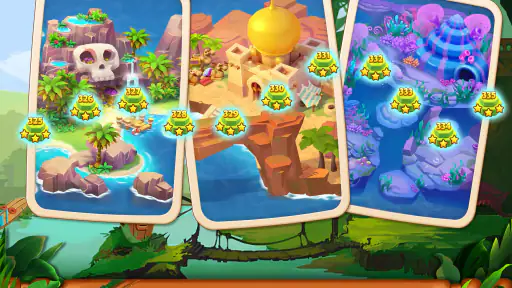
Analysis by Reviewed
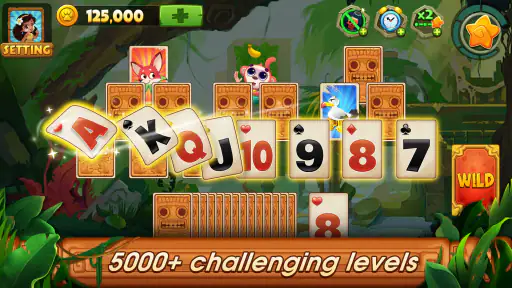
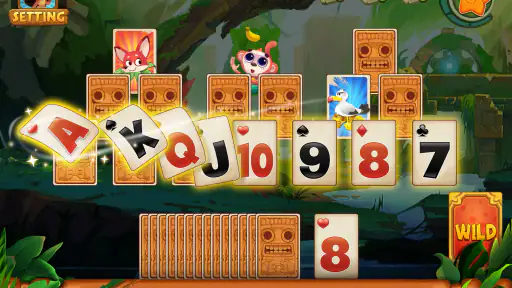
I spent time with Solitaire Tripeaks: Card Games as a quiet, pick-up-and-play card game, and its appeal became clear very quickly: it asks for attention without demanding a long session. The basic idea is familiar, but the Tripeaks layout gives each deal a little more tension than ordinary Klondike. You remove cards that sit one step above or below the active card, uncover hidden cards, and try to keep the chain moving before your useful options disappear.
That makes it a natural choice for a short break, a commute, or the few minutes before bed. It is free to start, rated for Everyone, and belongs to the casual card-game corner rather than the competitive strategy space. My overall impression is positive, especially if you want a relaxing solitaire variant that feels more active than simply sorting a deck. At the same time, players who dislike repeated layouts, monetization prompts, or luck playing a large role may find its limits noticeable.
How the game feels in everyday play
The strongest part of the experience is the rhythm. A move usually takes only a moment to understand, yet choosing the right card can affect several turns afterward. I often found myself looking beyond the immediately available move and asking which card would expose the most useful section of the board. That small decision-making layer prevents the game from becoming completely automatic.
Tripeaks also works well when your attention is divided. You do not need to memorize a complicated rule set, and a round can be approached in small pieces. If I had only a short pause available, I could make a few moves, stop, and return without needing to reconstruct a story or remember a large collection of objectives. That simplicity is one reason this particular format remains more approachable than many deeper card games.
The game is published by Card Games, Inc, and its store summary presents it as a relaxing solitaire experience built around a Tripeaks journey. In practice, the relaxing quality depends on how you play. Taking time to inspect the open cards keeps the mood calm, while chasing a long sequence can make a supposedly casual round surprisingly tense.
Speed expectations on a normal session
From a player’s point of view, the game is designed around quick interaction rather than lengthy preparation. The rules are easy to grasp, the board is immediately readable, and the card-by-card flow does not require the kind of setup associated with tabletop solitaire. That makes it suitable for people who want to open a game and begin making decisions almost at once.
I would not choose it for a demanding gaming session where I expect constant novelty or a large strategic system. Its speed comes partly from its simplicity. You can move through a round briskly, but the underlying action remains a familiar cycle of revealing cards, extending a run, and deciding when to protect a useful option. The pace is comfortable rather than intense.
One useful habit is to pause before using the only card that continues a sequence. A fast move is not always the best move. Sometimes clearing a lower-value card first exposes another route, while immediately extending the chain can leave you with no productive follow-up. This is a small but meaningful improvement for anyone who feels that losses are happening randomly.
The current version is 3.2.6, and the game has been available since December 31, 2017. That history helps explain why the format feels established rather than experimental. It is not trying to reinvent solitaire; its job is to make a known pattern easy to pick up and pleasant to repeat.
What happens during heavier use
The moments that feel busiest are not necessarily the longest rounds. A dense sequence of available moves can make me tap quickly, especially when several cards can be cleared in succession. That is where a little discipline helps. I found it better to scan the remaining exposed cards after each meaningful reveal instead of treating every possible move as equally valuable.
Longer play sessions also make repetition more visible. The first few rounds feel naturally engaging because the rules are simple and each reveal offers a small surprise. After more time, the pleasure depends more on personal goals: preserving a streak, clearing the layout efficiently, or simply using the game as a low-pressure distraction. If you need constant new mechanics, this may feel narrow.
For an everyday example, imagine waiting for an appointment with your phone in hand. A traditional puzzle game might punish you for leaving halfway through, while a more competitive card title could require concentration that you do not have. This game sits comfortably between those extremes. I can play a few moves, put the phone away, and return when the situation changes. That flexibility is more valuable than it sounds.
On the other hand, it is not the best companion for someone who wants a completely uninterrupted, high-focus challenge. The casual structure means that luck and the order of the cards matter. Careful play improves your chances, but it cannot turn every layout into a guaranteed win. I would skip it if your main goal is a tightly balanced contest in which skill consistently outweighs the deal.
Reliability and returning to a round
Reliability matters more in a small casual game than many people expect. A title like this is often opened spontaneously, so the experience needs to feel straightforward when you come back to it. In my use, the most important recovery question was not whether the game offered a huge feature set, but whether I could resume the same relaxed routine without unnecessary friction.
That said, I would avoid treating a solitaire game as a substitute for a dedicated note-taking or progress-tracking tool. If you are in the middle of a carefully planned sequence, it is sensible to finish a natural group of moves before switching to another task. Casual games are easy to abandon, but the board state may not be equally easy to reconstruct if you leave during a complicated moment.
There is also a psychological form of reliability. The rules remain consistent, so a poor result is understandable even when the deal is unlucky. I never needed to learn a new control scheme between ordinary turns. The familiar card logic makes it easier to identify whether a mistake came from my choice or from an unfavorable layout.
Its broad adoption suggests that the basic concept has found an audience: the game has passed one million installs and holds a 4.8 average from around 125 thousand ratings. Those figures are useful context, but they do not guarantee that every player will enjoy the same balance of relaxation and repetition. I would read them as evidence of strong general appeal, not as a promise of flawless personal fit.
Device constraints and practical expectations
The listed minimum operating-system requirement is Android 6.0, which makes the game accessible to a wide range of Android devices that are not running the newest software. That is helpful if you keep an older phone for simple entertainment. Still, compatibility is only one part of the experience. Screen size, available storage, background activity, and the general condition of the device can all affect how comfortable any card game feels.
A smaller display may make the cards feel crowded, particularly when you are trying to compare several exposed options. A larger phone or tablet should make the layout easier to inspect, but it does not change the underlying strategy. I would prioritize clear visibility over raw device power for this particular title.
Because the game is free, it is easy to try without committing money at the start. There are in-app purchases ranging from $0.99 to $99.99 per item, so I would keep purchase controls in mind if the phone is shared with a child. The Everyone rating makes it broadly suitable from a content perspective, but age suitability does not remove the need for sensible spending boundaries.
That pricing range also creates an important trade-off. A player who only wants occasional solitaire can enjoy the free entry point and stop there. Someone who becomes invested in extended play may encounter reasons to consider optional purchases, and the value of those purchases will depend on how often the game is used. I would not recommend spending simply to solve a frustrating round; the appeal should come from the card play itself.
Small strategic choices that improve the experience
My first practical tip is to treat the visible cards as a map rather than a queue. Before tapping, look for moves that uncover a new card and moves that merely extend an existing chain. The former usually gives you more information, while the latter can be valuable when it preserves momentum. This distinction makes the game feel less like blind luck.
Second, avoid assuming that the longest possible run is automatically best. A short sequence that reveals a card from an important part of the layout can be more useful than a longer sequence that leaves the remaining peaks untouched. When I started judging moves by what they exposed, not only by how many cards they removed, the rounds became more deliberate.
Third, use short sessions intentionally. The game’s relaxed structure works best when it fills a small gap rather than becoming an obligation to keep playing. If I continue after my attention has faded, I make more impulsive moves and blame the deal for mistakes that were really caused by rushing. A few focused minutes can be more satisfying than a long, distracted run.
Finally, distinguish between a bad decision and a bad layout. Not every loss is evidence that you played poorly, and not every win proves that your strategy was perfect. That mindset matters because Tripeaks combines choice with card order. It is enjoyable when you accept that uncertainty, but frustrating if you expect every result to be fully controllable.
How it compares with other solitaire choices
Compared with classic Klondike, this game feels more immediate. Klondike often asks you to manage several piles and think about conventional tableau organization, while Tripeaks puts more emphasis on maintaining a sequence and uncovering the layered layout. I prefer this version when I want visible progress after nearly every move.
Compared with FreeCell, it is much less methodical. FreeCell rewards planning around open spaces and usually feels closer to a logic puzzle. This Tripeaks game is better for a relaxed mood, but it offers less control and therefore less satisfaction to someone who wants to calculate a solution with precision.
Compared with competitive multiplayer card games, it removes the pressure of facing another person. There is no need to wait for an opponent’s turn or worry about ranking while playing casually. The trade-off is that the challenge is personal and repetitive. If your motivation comes from social competition, a multiplayer alternative will probably hold your attention longer.
It also differs from elaborate puzzle games that introduce characters, stories, or numerous systems around the board. Here, the cards are the main event. That focus is a strength for anyone who wants a clean distraction, but a weakness for players who need narrative progression or a steady stream of new mechanics.
Who should install it, and who should skip it
I would recommend it to someone who already enjoys solitaire but wants a slightly more active variation. It is also a good fit for casual players who prefer rules that can be understood without a tutorial-heavy introduction. The Everyone rating and free price make it easy to test, while the familiar card format keeps the learning curve gentle.
It suits short breaks particularly well. I can imagine using it while waiting for food, taking a quiet pause during the day, or winding down without starting a game that demands a large time commitment. The lack of a complicated control scheme is valuable when the phone is being used one-handed or attention is limited.
I would be more cautious about recommending it to players who need guaranteed fairness, deep strategic control, or a strong sense of permanent progression. The randomness of the deal can outweigh careful choices, and repeated rounds may begin to feel similar. Likewise, anyone who wants a completely purchase-free experience should examine the in-app purchase structure before handing the device to a child or another family member.
The game is also not my first choice when I want to improve at a formal card discipline. It teaches useful habits such as scanning options and protecting future moves, but it is primarily entertainment. For serious solitaire study, a more specialized version with detailed statistics and rule variations may be a better fit.
My performance verdict after extended use
As a lightweight card game, Solitaire Tripeaks: Card Games succeeds because it keeps the central interaction clear. Its perceived speed comes from quick access and uncomplicated turns, while its main demand is attention rather than device power. The most noticeable strain is mental repetition during longer sessions, not the card rules themselves.
I also appreciate that it can be played at two different tempos. I can move quickly when I want a simple distraction, or slow down and evaluate which reveal gives me the best future options. That flexibility gives the game more staying power than its short description might suggest, even though the core loop remains intentionally narrow.
The limitations are equally clear. Luck is part of the experience, repeated layouts can lose their freshness, and the presence of purchases means parents and shared-device users should be attentive. These are not reasons to reject the game outright, but they do define the audience. It is a casual Tripeaks experience, not a deep strategy platform or a competitive card arena.
Card Games, Inc has made a sensible choice by keeping the concept approachable. With a free starting point, Everyone content rating, Android compatibility beginning at version 6.0, and a mature current release, it is easy for the right player to try. The important question is whether you enjoy the particular balance of planning and chance.
My final recommendation is simple: install it if you want a calm, familiar card game that fits naturally into short pauses and gives each move a small consequence. I would choose a different solitaire variant if I wanted more control, more detailed progression, or less repetition. For relaxed Tripeaks play, though, this is a dependable choice when you want a few quiet minutes rather than a demanding gaming session.
Pros
- Simple rules make it easy for beginners to start playing.
- Short rounds work well for quick breaks or casual sessions.
- Daily challenges add variety beyond the standard levels.
- Helpful boosters can make difficult boards more manageable.
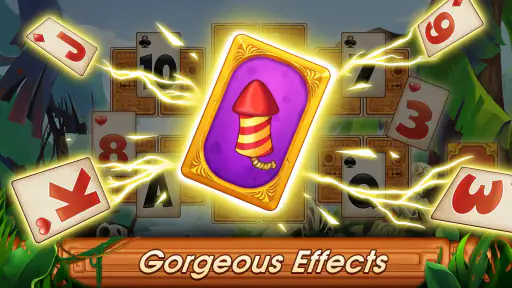
- Bright card designs and animations make gameplay pleasant.
Cons
- Some levels may depend heavily on luck rather than careful planning.
- Boosters and extra moves can become expensive over time.
- Frequent ads may interrupt play between levels.
- Progress can feel repetitive after completing many similar boards.
- Several features may require an internet connection to function.
- Category
- Card
- Version
- 3.2.6