Solitaire: Big Card Games
- 891.00
- 4.6
- Installs
- 500.00K
- Price
- Free
Screenshots
Analysis by Reviewed
I opened Solitaire: Big Card Games expecting a straightforward card game, and that is exactly what I found: a familiar solitaire experience built around easy reading, calm play, and a low-pressure pace. It does not try to turn a quiet card session into an adventure or a competitive event. Its appeal is much simpler. You deal a hand, look for the next useful move, and let a few unhurried minutes pass.
That simplicity is important because many solitaire apps become cluttered with distractions. This one presents itself as a game from Card Games, Inc, aimed at players who want the cards to remain the main event. I found it most comfortable when I treated it as a small daily break rather than something to master quickly. The large-card focus makes a practical difference, especially for anyone who finds tiny symbols tiring on a phone.
It is free to play and suitable for Everyone, which makes it easy to recommend as a casual option for a family tablet or a personal phone. At the same time, “free” does not automatically mean it will suit every solitaire player. People looking for deep strategy, unusual variants, or a highly customizable visual playground may eventually want something more specialized. My impression is that this game succeeds by keeping its promise narrow: familiar card play with a relaxing presentation.
A calm card table rather than a busy game world
The first few minutes tell you what to expect
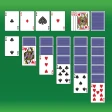
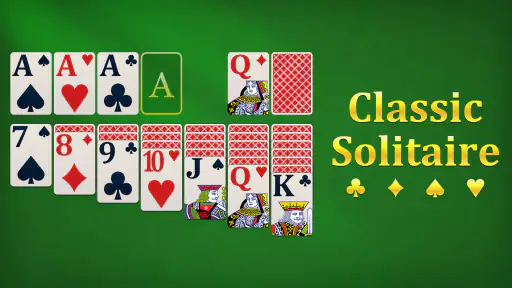
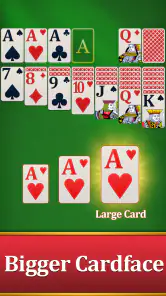
The strongest part of the first impression is the immediate clarity of the card table. Solitaire depends on seeing ranks, suits, and available spaces without hesitation, so oversized cards are not merely decorative. They reduce the visual work required before making a move. I could focus on deciding whether to uncover a hidden card or preserve a useful sequence instead of squinting at the layout.
That design choice also changes the emotional tone. Small cards can make a solitaire app feel cramped, particularly on a phone held in one hand. Bigger cards make each move feel more deliberate. The game becomes easier to follow from a short distance, which is useful when playing on a tablet or setting a device down on a table while taking a break.
The presentation is restrained. Rather than asking me to learn a fictional setting, follow characters, or understand a decorative theme, it keeps attention on the traditional card-table image. That makes the experience approachable for someone who already knows solitaire and less intimidating for someone returning to it after years away.
There is also a trade-off in this restraint. Players who judge a mobile game by visual novelty may find the opening plain. The large-card approach improves legibility, but it does not create the kind of visual spectacle found in puzzle games with animated worlds. I see that as a deliberate exchange: less visual excitement in return for less friction.
Who benefits most from the large-card approach
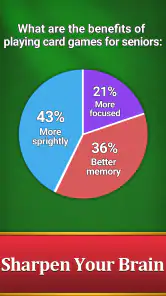
I would put this game near the top of the list for older players, people with tired eyes, and anyone who wants a card game that can be understood without studying a complicated interface. The age rating of Everyone reinforces that broad accessibility. It is also a sensible choice for a relative who enjoys physical playing cards but prefers the convenience of a phone.
A realistic use case is a quiet morning with coffee, when I want something interactive but do not want to start a demanding game. Another is waiting in a reception area or taking a short rest after work. Because the core activity is turn-based and self-paced, I do not feel punished for putting the phone down halfway through a thought.
That same calm structure may be less attractive to someone who needs constant stimulation. If you want rapid rounds, online opponents, dramatic effects, or a strong reward loop, this is probably not the right destination. It is better suited to a player who enjoys arranging possibilities and watching a familiar layout gradually open.
How the visual language supports the setting
The game’s “world” is really a quiet tabletop setting, and that is enough. The cards provide the visual language: suits, colors, ranks, stacks, and empty spaces. Because those elements carry the meaning, the interface does not need a story layer to make the session feel coherent. Every visual decision points back toward the same activity.
I appreciate that consistency because solitaire can be weakened by decoration that competes with the cards. A crowded background, oversized buttons, or excessive animation would make the game less restful. Here, the large-card identity gives the experience a clear center. The setting feels like a digital card table rather than a themed game that happens to contain cards.
There is a useful distinction between “relaxing” and “passive.” I still need to read the layout, recognize possible sequences, and decide which move protects future options. The calm mood lowers pressure, but it does not remove the small mental puzzle. That balance is why I found the game more satisfying than simply watching something on my phone.
One practical tip is to play with a deliberate scanning habit. I first check for moves that expose a covered card, then look at the open stacks, and only afterward consider drawing or rearranging. The large cards make this sequence easier to perform consistently. It turns the visual clarity into a real gameplay advantage rather than treating it as a cosmetic feature.
Sound, silence, and the pace of a round
Solitaire does not need a dramatic soundtrack to work, and this game’s appeal comes from leaving room for concentration. The overall rhythm is shaped less by spectacle and more by the steady sequence of selecting, moving, and reassessing. That makes it comfortable in places where I would not want a loud or attention-seeking game.
I think of the sound design here as part of the game’s restraint. A card game can become tiring when every action is surrounded by exaggerated effects. A quieter approach keeps the player aware of the layout and lets the session blend into a break in the day. It also makes the game feel appropriate for a shared room, where a more aggressive audio style would be distracting.
The pacing is especially forgiving for beginners. There is no need to react within a short countdown or memorize a rapid chain of commands. I can pause to inspect the consequences of a move. For older players or anyone using solitaire as a way to unwind, that is more valuable than speed.
However, a slow rhythm can feel repetitive if I play for too long without changing my expectations. This is not a game I would choose for a long, intense session. I get the most from it in short bursts, where the repeated card movements feel meditative rather than monotonous. The best way to use it is to let the pace remain gentle instead of trying to force it into an arcade-style experience.
Where the mechanics and mood meet
The familiar solitaire structure is the reason the relaxing presentation works. The game does not ask me to learn an unfamiliar control system before I can enjoy the atmosphere. I already understand the basic pleasure: reveal information, build useful sequences, and avoid closing off the table too early. The interface supports that thought process rather than distracting from it.
For a newcomer, I recommend slowing down before making an apparently obvious move. A newly available card can look helpful while actually blocking a more important sequence. I found that the large layout encouraged me to compare several possibilities instead of tapping the first legal move I noticed. That is one of the less obvious strengths of the design: readability gives the strategic layer more breathing room.
For an experienced solitaire player, the attraction is convenience rather than discovery. You are not downloading this because the basic card logic has been reinvented. You are choosing it because the presentation makes a familiar activity comfortable on a modern device. If you already have a favorite solitaire app with exactly the controls and options you want, switching may not be necessary.
Compared with physical cards, the digital version removes the need to shuffle, deal, and keep the table organized. That is useful when I have only one hand free or a small surface available. Physical cards still feel better for players who enjoy the tactile sound and movement of a real deck, but this app is more practical for spontaneous play.
Compared with feature-heavy solitaire collections, its advantage is focus. A large collection can offer more variety, but it may also bury the simple game under menus, challenges, themes, and progress systems. This title is more appealing when I want to start playing without turning a short break into a project of managing the app itself.
What the version and reputation suggest in daily use
The current version is 1.3.2, and the game supports devices running Android 6.0 or later. That gives it a relatively broad place in the Android ecosystem, including some older phones and tablets that newer games may leave behind. I would still check the device’s available space and general condition before installing any game, but the minimum operating-system requirement is not especially demanding.
Its reception is encouraging without being a reason to ignore personal taste. The game holds a 4.6 average from around 3.9 thousand ratings, with roughly 891 written reviews. It has passed 500 thousand installs, so it is not an obscure experiment with no visible player base. Those figures tell me that the basic combination of readable cards and relaxed play connects with many people, while my own decision would still depend on whether I want simplicity or variety.
The free price lowers the risk of trying it. I can install it for a short session and quickly learn whether the card size and pacing suit me. For a family member, that also makes it easier to suggest without asking them to commit money before they know whether the interface feels comfortable.
One point I would keep in mind is that a broad audience can include very different expectations. A senior player may value clarity above everything else, while a competitive solitaire fan may care more about advanced statistics or specialized rule sets. The positive reception supports the game’s approachable identity, but it should not be mistaken for proof that it covers every preference in the card category.
Small habits that make the experience better
I found three habits particularly useful. First, I use the large cards as a visual map rather than looking at each card in isolation. I check the color pattern and the order of the open stacks together, which helps me avoid moves that create a neat-looking but unhelpful arrangement.
Second, I treat a short session as a mental reset instead of measuring success only by completion. That matters on difficult layouts or when I am playing while tired. The game’s value can come from the focused pause itself, even when the cards do not cooperate.
Third, I keep the phone at a comfortable viewing distance instead of holding it too close. The oversized presentation is most useful when I let the whole table remain visible. This is especially helpful on a tablet, where the layout can be read at a glance and the player can think about the next move without constant zooming or repositioning.
These are modest adjustments, but they explain why the game feels more considered than a bare digital deck. Its main strength is not a hidden layer of complexity. It is the way a clear visual arrangement supports a calm decision-making routine.
When I would choose another option
I would skip this game if my priority were a large menu of solitaire variants, competitive leaderboards, or a strongly personalized theme. A broader card collection would be a better fit for someone who quickly tires of one familiar format. Likewise, players who want a vivid narrative setting should look toward another genre entirely.
I would also hesitate to recommend it to someone who dislikes slow, solitary play. The lack of pressure is a benefit only if you enjoy making small decisions at your own speed. If you need constant goals or social interaction, the quiet table may feel empty rather than relaxing.
On the other hand, I would choose it over a busier alternative for a parent, grandparent, or casual player who needs the cards to be easy to read. I would also choose it for a short break when I want a game that respects my attention instead of demanding all of it. That is the clearest boundary: this is a comfort-focused solitaire game, not an all-purpose card platform.
My atmosphere verdict
After spending time with it, I see the game as a carefully narrowed experience. The art direction stays close to the card table, the sound and rhythm avoid unnecessary urgency, and the mechanics provide just enough thought to keep the session engaging. Nothing feels as though it belongs to a different game. The visual scale, the quiet pacing, and the familiar rules all support the same mood.
The best reason to try it is its combination of readability and calm concentration. That combination makes it particularly suitable for seniors, beginners, tired eyes, and anyone who wants a gentle activity between larger tasks. The free price and Everyone rating make the first step easy, while the broad device support means it can remain useful on an older Android phone.
My final recommendation is positive, with a clear condition: choose it for a peaceful solitaire table, not for endless novelty. I would happily keep it available for morning coffee, a waiting room, or a few quiet minutes before bed. If that sounds like the kind of play you want, Solitaire: Big Card Games earns a place on the phone. If you need variety, competition, or spectacle, its focused design will probably feel too limited.
Pros
- Large cards make suits and numbers easy to distinguish.
- Includes several solitaire variations for added replay value.
- Offline play is useful when no internet connection is available.
- Simple controls are suitable for both beginners and casual players.
- Short rounds make it convenient for quick breaks.
Cons
- Frequent ads may interrupt games
- especially between rounds.
- Some features may be locked behind in-app purchases.
- Limited strategic depth can make long sessions feel repetitive.
- Battery use may increase during extended play sessions.
- Personalization options may be less extensive than in premium rivals.
- Category
- Card
- Version
- 1.3.2