Toki Mahjong Games For Seniors
- 496.00
- 4.6
- Installs
- 1.00M
- Version
- 1.3.0
Screenshots


Analysis by Reviewed
I found Toki Mahjong Games For Seniors easy to understand within minutes, which is exactly what I want from a casual board game. It presents mahjong as a matching-tile puzzle rather than as a complicated multiplayer rules lesson, so the first session feels calm instead of demanding. I can open it when I have a short break, focus on one layout, and stop without feeling that I have abandoned a long match.
That simple rhythm is the main reason I would recommend trying it. The game is free to download, made by Card Games, Inc, and listed for Everyone, so it is approachable for older players, beginners, and anyone who prefers relaxed visual puzzles. It has also reached over a million installs and holds a 4.6 average from around 4.1 thousand ratings, which suggests that its straightforward format has found a sizeable audience.
Why the first week feels so approachable
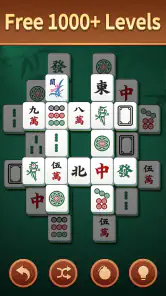
The opening appeal comes from the basic loop: look across a large tile layout, identify two matching available tiles, and clear them. There is no need to learn a card ranking system, remember a long rulebook, or coordinate with other players. That makes the game particularly suitable for someone who wants a gentle brain exercise after lunch, during a television break, or before bed.
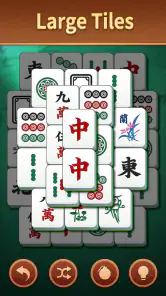
I also think the “large tile” presentation matters more here than it would in an ordinary mahjong discussion. The attraction is not traditional table play; it is the act of scanning a board and making careful pairs. For players who find small symbols tiring, a spacious layout can make the difference between a relaxing puzzle and an irritating one. I would still advise adjusting the device position and brightness before judging the experience, because comfort depends on how clearly the tiles can be seen.
During a first week, the game works best as a short-session habit. I might play one layout while waiting for an appointment, then leave it alone. That low commitment is valuable because the puzzle does not ask me to reserve a full evening. It is also a useful choice for a family member who wants something more mentally engaging than passive scrolling but does not want the pressure of a timed competitive game.
For an older player, the biggest advantage is the modest learning curve. Someone unfamiliar with digital games can understand the purpose by watching a single round. I would introduce it by demonstrating the first few matches rather than explaining mahjong terminology. Once the player sees that only exposed, usable tiles can be paired, the rest becomes a matter of observation and patience.
There is a small but important distinction between “easy to start” and “easy to solve.” The controls may be simple, but a crowded board can still require planning. Removing an obvious pair immediately is not always the best move if it exposes an awkward tile or leaves fewer choices later. That makes the game more interesting than a purely reflex-based matching activity, especially for people who enjoy thinking several moves ahead.
A practical routine for new players
My advice is to avoid treating every opening as a race. First, I scan the whole layout for pairs that are clearly available, then I look for tiles that are blocking several others. Clearing those strategically can create more options than simply taking the first matching symbols I notice. If the board becomes visually confusing, I pause for a moment and restart the scan from one side rather than tapping randomly.
This approach gives the game more value as a brain-training pastime. It encourages visual discrimination, short-term planning, and attention to changing patterns. I would not mistake that for a medical claim or a replacement for structured cognitive care, but as a light daily mental activity, the format is sensible. The benefit comes from concentrating on the board, not from rushing through as many matches as possible.
The first-week weakness is that the novelty depends heavily on how much the player enjoys repeated tile matching. If you need a story, characters, social competition, or a strong sense of progression, this may feel bare. It is deliberately closer to a quiet puzzle session than to a large entertainment package. That focus is a strength for some people and a clear limitation for others.
What remains useful after the novelty fades
The more important question is whether the game earns a place on my device after the first few days. In my experience, its recurring value comes from convenience rather than constant surprise. A board-based matching session can become a dependable mental reset: short enough for a spare moment, familiar enough not to require preparation, and focused enough to pull attention away from other distractions.
That makes it a good fit for a monthly routine built around consistency. I can use it as a small daily challenge, play only when I want a quiet break, or keep it available for visits with a parent or grandparent who enjoys puzzles. The game does not need to dominate my free time to be useful. Its role is closer to a crossword kept on a side table than to a main game that demands regular commitment.
There is also value in the lack of social pressure. Many alternatives in the wider puzzle category push leaderboards, lives, countdowns, or competitive events. Those systems can make a game feel active, but they can also turn relaxation into another obligation. Toki Mahjong is more appropriate for someone who wants to work at their own pace and put the device down without worrying about losing a streak or disappointing a team.
On the other hand, players who need a strong long-term reward structure may prefer a more elaborate mahjong app or another puzzle game with chapters, collections, or visible goals. A simple matching board can remain satisfying, but it may not provide enough variety for someone who expects new mechanics every week. I would choose this game for a calm repeatable activity, not for a deep progression system.
One useful way to keep it from becoming stale is to change the purpose of each session. Sometimes I focus on careful planning and try to preserve options. At other times, I use it as a visual warm-up and simply concentrate on recognizing pairs. For an older player, alternating between a short session and a longer, more deliberate one can make the habit feel less repetitive without requiring any complicated setup.
The game’s current version is 1.3.0, and it runs on Android 7.0 or newer. That broad compatibility makes it practical for people using an older phone or tablet rather than the newest hardware. It is worth checking the device’s screen size and responsiveness in real use, though, because a supported operating system does not automatically guarantee that every player will find the display comfortable.
Who gets the most lasting value
I see three especially strong audiences. The first is the older adult who wants a familiar-feeling puzzle with a digital convenience. The second is the casual player who dislikes timers and competitive systems. The third is anyone looking for a low-effort activity that can occupy five or ten quiet minutes without requiring a story to remember.
It is less suitable for someone who wants traditional mahjong with opponents, scoring, and a full table-game structure. The matching-puzzle interpretation is its identity, so choosing it while expecting a simulation of a complete mahjong match would lead to disappointment. It is also not my first recommendation for players who quickly tire of repeating one central mechanic or who measure value mainly through constant content updates.
For a realistic everyday example, I could give it to a relative who spends time in a waiting room and wants something less noisy than social media. I would set up the phone with a comfortable viewing angle, explain the matching idea, and encourage short sessions rather than prolonged screen time. That use case feels more convincing to me than presenting it as an all-day game.
Maintenance, friction, and the reasons fatigue can appear
The maintenance burden is fairly light because the game is free and easy to revisit. I do not need to organize a collection of cards, learn a changing competitive meta, or remember a complicated control scheme. The main upkeep is personal: keeping the device charged, making sure the screen is comfortable to view, and deciding whether optional purchases fit my budget.
Those purchases range from $0.99 to $49.99 per item, so I would be careful when handing the device to a child or to someone who may tap through offers without checking. The free entry point is helpful, but “free” does not mean every part of the experience is cost-free. I would treat the game as a no-cost trial first and only consider spending if the additional value is clear to me.
This is also where the game may create friction for families. An older player may be comfortable matching tiles but less comfortable navigating purchase prompts or unfamiliar store screens. If I were setting it up for someone else, I would explain that no purchase is necessary to begin and would review the device’s purchase controls beforehand. That small bit of preparation can prevent an otherwise relaxing pastime from becoming stressful.
Visual fatigue is another realistic concern. Mahjong tiles contain repeated symbols and small differences, and extended scanning can become tiring even when the board is described as large. I would recommend playing in good light, holding the device at a natural distance, and stopping when concentration starts to feel like strain. The game is better used as a short mental break than as a test of endurance.
Repetition is the deeper source of fatigue. The matching action is satisfying because it is clear and orderly, but it can lose its pull if every session feels identical. I notice this most when I play without a specific reason. A simple routine helps: one board after breakfast, a short session while waiting, or a few minutes when I want to replace aimless scrolling. Without that context, the game may sit untouched after the initial curiosity fades.
Another trade-off is the absence of urgency. For me, that is usually positive, but some players interpret a relaxed pace as a lack of excitement. If you enjoy countdowns, head-to-head matches, or the tension of a shrinking move limit, a more competitive puzzle alternative will probably hold your attention better. Toki Mahjong is designed around calm concentration, and its quietness cannot be fixed by playing faster.
How it compares with familiar alternatives
Compared with solitaire, this game relies more on visual pairing and spatial awareness than on card sequencing. Solitaire can offer a stronger feeling of tactical risk, while the tile board is easier to explain to a first-time player. Compared with word puzzles, it avoids vocabulary and spelling, making it friendlier for someone who prefers symbols and patterns. Compared with traditional mahjong apps, it is less about a complete rule system and more about accessible matching.
That comparison helps clarify the right choice. I would select this game for a player who wants the recognizable look of mahjong tiles without the complexity of a full tabletop adaptation. I would choose solitaire for someone who enjoys card logic, a word game for someone who wants language practice, and a competitive mahjong title for someone seeking opponents and scoring. None is universally better; they serve different kinds of attention.
The strongest long-term argument in favor of this title is that it does not ask me to become a serious gamer. I can use it occasionally and still understand what to do. The strongest argument against it is that occasional use may expose its limited central loop rather than deepen my interest. Its staying power depends on whether I value a reliable, peaceful activity more than constant novelty.
My long-term verdict
I would keep Toki Mahjong on a device used by someone who enjoys gentle board puzzles, especially an older player who benefits from clear matching tasks and flexible session length. The Everyone rating, free starting point, and support for Android 7.0 or newer make it easy to consider, while the 4.6 average shows that many players respond well to its approach.
My recommendation comes with boundaries. I would not present it as a full mahjong simulation, a competitive game, or an endlessly varied entertainment system. I would also explain the optional purchase range before giving it to a family member and encourage sensible screen breaks. Those details do not ruin the experience; they simply define what the game is best at.
After the novelty fades, the title survives when it becomes part of a small routine. One carefully played board can be a pleasant way to focus, unwind, or share a simple digital activity with a relative. It is not the right choice for everyone, but for the person who wants a calm matching puzzle that is easy to return to, I think it earns lasting space more convincingly than its modest premise first suggests.
Pros
- Large tiles and clear visuals make matching easier for older players.
- Simple controls reduce the learning curve for beginners.
- Relaxing gameplay can support focus and mental stimulation.
- Multiple layouts provide variety across repeated sessions.
- Offline play is convenient when no internet connection is available.
Cons
- Some puzzles may become repetitive after extended play.
- Ads can interrupt the experience in the free version.
- Limited customization may not suit every player’s preferences.
- Small mistakes can be frustrating when tiles look similar.
- Performance may vary on older phones or tablets.