Hello Kitty And Friends World
- 98.00
- 3.7
- Installs
- 1.00M
- Price
- Free

Screenshots
Analysis by Reviewed
I approached Hello Kitty And Friends World as a game for the moments when a child wants to make something, explore a familiar character-filled setting, or simply enjoy a gentle activity. Its appeal is easy to understand: the world is colourful and welcoming, and the focus is on creativity rather than serious competition. My overall impression is that it is best treated as a playful digital space for short visits, not as a structured course or a game that promises a deep challenge.
That distinction matters when deciding whether it suits your family. This is an educational game from TapTapTales, marked for everyone and free to install, with optional in-app purchases. Its audience is plainly young children and the adults choosing something suitable for them. The experience may also work for a Hello Kitty fan who enjoys imaginative play, though older players looking for layered strategy or demanding goals will probably want something else.
Small goals make the first visit approachable
A gentle entry point for young players
The first strength I notice is the low-pressure premise. Rather than presenting itself as a contest to master, the game invites children into a playful setting where creativity is part of the attraction. That makes it easier to offer to a child who is still learning how to navigate games on a phone or tablet. They can approach it as play, rather than feeling they must understand a complicated objective before they can enjoy it.
The familiar Hello Kitty identity can also help a child settle in. A recognizable character gives the setting a point of connection, while the wider “and friends” framing suggests a social, cheerful world rather than a single-character activity. I would use that familiarity to invite a child to explore at their own pace, not to promise a particular activity or lesson. The game’s educational label is useful context, but I would not treat it as a replacement for a focused learning app with clearly defined teaching goals.
For a first session, I would keep the invitation simple: let the child look around, choose what catches their attention, and explain controls only when needed. That approach is more likely to preserve the sense of discovery than turning the opening into a set of instructions. If a child prefers being shown exactly what to do, an adult may need to sit nearby at first and help them get comfortable with the game’s flow.
Progress that should feel like play
When I judge a children’s game, I look at whether its goals encourage curiosity or make the child feel behind. Here, the creative framing is a point in its favour: it gives the experience room to be enjoyed without measuring every action against a score. The most suitable expectation is that a child will find things to engage with, return to favourite parts, and make the experience their own.
Parents should still distinguish between a welcoming game and one that teaches a specific skill in a measurable sequence. If your main goal is practice with letters, numbers, reading, or another defined subject, a dedicated learning title may make progress easier to track. This game is a better fit when the goal is a friendly, character-based activity that can sit alongside other play. I would judge success by whether the child is engaged and comfortable, rather than by expecting a particular educational result.
You May Like

Clash of Clans Is Won Between the Battles

Android Auto Makes the Case for Quieter Car Software

MobiOffice: Transforming Mobile Productivity with Seamless Integration

EA SPORTS FC™ Mobile Soccer: Redefining Mobile Sports Gaming

How Microsoft OneDrive Became a Mobile Productivity Giant

How Google Translate Breaks Language Barriers Effortlessly
What counts as a progress signal?
Not every game needs a level ladder or a checklist to make a visit feel worthwhile. In a creative setting, progress can be as simple as a child becoming more confident about choosing what to do, remembering where they enjoyed spending time, or finding a new way to play. Those are useful signs for a parent to notice, even if they are not the same as formal learning milestones.
One practical tip is to ask a child to show you what they liked after a short session. Their answer can reveal whether the game is holding their attention or whether the appeal is mostly the character branding. If they can describe a choice they made or an activity they want to revisit, the game has given them something to engage with. If they quickly lose interest, there is little reason to push them through a longer session just because the title is familiar.
Challenge, pacing, and the decision to return
A forgiving pace, with a trade-off
The gentle creative pitch makes this more approachable than games built around fast reactions, strict timers, or head-to-head competition. That can be a real advantage for younger children, for a quiet break, or for a child who gets frustrated when a game repeatedly tells them they have failed. A low-pressure atmosphere gives them space to explore without needing an adult to turn every attempt into a lesson.
The trade-off is that a child who thrives on clear difficulty increases may not find enough challenge here. Some players want increasingly demanding tasks, visible milestones, or a strong sense of mastery. If that describes your child, I would compare this with a puzzle game or a more structured educational title rather than expecting a character-centred creative game to supply that same progression. The right choice depends less on age alone and more on whether the child enjoys open-ended play or wants a goal they can work toward.
I would also avoid assuming that a relaxed game will hold attention for a long stretch. A child may enjoy it in brief bursts and then move on, which is not automatically a flaw. For a waiting room or a quiet moment at home, a short visit can be exactly the right use. For a long journey where you need a game to sustain attention for an extended period, I would have another option ready rather than relying on this one alone.
Unlocks and motivation without pressure
Parents often want to know whether a child can keep enjoying a game after the first look around. My advice is to watch how the child responds to the experience itself, rather than assuming that unlocks or rewards will provide lasting motivation. A young player may return because the setting feels familiar and pleasant; another may want more obvious goals. Those preferences are worth observing before treating the game as a regular activity.
There is also a useful boundary-setting point: because the game is free to install but includes optional purchases, I would check the device’s purchase controls before handing it to a child. The listed purchase range runs from $1.99 to $64.99 per item, so the word “free” should not be read as meaning every possible item or option costs nothing. I recommend making clear that purchases require an adult’s permission and using the device’s available safeguards. That is a practical step for any child-facing game with paid extras, not a reason to assume a child will encounter a purchase prompt at a particular moment.
Everyday use: a calm activity with an adult nearby
A realistic way I would use it is during a short wait at home while dinner is being prepared. I would let a child spend a little time exploring, then ask what they enjoyed before putting the device away. That keeps the game in the role of a small activity rather than an automatic screen-time filler. It also gives me a chance to notice whether the child is playing comfortably, needs help, or is becoming distracted by the device rather than enjoying the game.
For a child who is new to games, staying close during the first session can be helpful even when the content is suitable for everyone. Age suitability does not tell you whether a particular child will understand the controls, stay within a family’s screen-time routine, or manage purchase prompts responsibly. I would treat the age rating as one useful consideration, then make the final decision based on the child’s maturity and the way they use a shared device.
How it compares with other children’s games
Compared with a worksheet-style educational app, this game’s strongest apparent appeal is its character-led, playful setting. A worksheet app is often the better pick when you want a clear lesson and a direct sense of practice. Compared with a fast arcade game, this one is the more natural choice for calm, imaginative play, while the arcade option may suit a child who wants action and a sharper challenge. Those alternatives serve different needs; one is not automatically better for every child.
It is also worth thinking about what your child already enjoys. A child who is attached to Hello Kitty may be more willing to explore this world than an unfamiliar learning game. A child who does not care about the characters may be more motivated by a title with explicit puzzles or progression. I would not choose it solely because it carries an educational label; I would choose it when the gentle, familiar setting is itself part of what will make the child want to play.
Practical details and a balanced verdict
The game is free, has an Everyone content rating, and is listed for Android devices running version 7.0 or later. Its current version is 7.3. It has an average rating of 3.7 from around 3,000 ratings, alongside 98 written reviews, and has reached over a million installs. Those figures suggest a substantial audience, but they are not a substitute for checking whether its style matches your child. The release date is October 30, 2025.
My verdict is positive with a clear caveat: this is a better fit for relaxed, character-led creativity than for structured lessons or escalating challenge. I would recommend it to families seeking a friendly activity for a young Hello Kitty fan, especially when brief, low-pressure play is the aim. I would skip it if your priority is a tightly guided curriculum, a demanding progression curve, or a game that reliably occupies a child for a long stretch. Go in with modest expectations, supervise purchases, and let the child’s own interest decide whether it deserves a place in their rotation.
A useful way to decide after installing
Rather than judging the game by whether a child stays with it for a long session, I would look at how easily they can start and stop. For a preschooler or early primary-age child, a comfortable little routine can matter more than a long chain of goals: open the game together, let the child choose where to spend time, and agree on a stopping point before play begins. If ending the session becomes difficult, the family routine may be a bigger issue than the game’s content, and a non-screen activity could be a better choice for that moment.
I would also try it on the device the child will actually use, rather than assuming an adult’s experience transfers directly. A tablet may feel more comfortable for a small child than a phone, while a shared phone can make it easier to keep play brief. Either way, an adult can demonstrate how to return to the home screen and close the game. That small bit of setup reduces the chance that a child who is still learning device basics will need help in the middle of a quiet activity.
Where its educational value fits
The practical question is not simply whether a game is educational, but what kind of value you want from it. I see this as a way to invite imaginative engagement around familiar characters, not as a substitute for reading together, hands-on creative play, or targeted practice. If a child tells a story about what they are doing or wants to draw something inspired by the play, an adult can extend the moment offline without expecting the game itself to teach a lesson.
That makes it a reasonable option for a child who responds warmly to Hello Kitty and enjoys choosing their own pace. It is less convincing as a tool for a parent who wants a clear sequence of learning objectives or evidence of mastery. In that case, a dedicated subject-focused app or an activity with an adult is likely to be more useful. I would treat the educational category as a broad description, then decide based on the kind of play your child actually enjoys.
Final fit for a family’s rotation
Hello Kitty And Friends World makes the most sense as one small option in a varied mix of play, rather than the default answer whenever a child asks for a screen. Its character-led atmosphere may make it an easy invitation for a fan, and its gentler pace suits short, supervised visits. The main compromises are the limited appeal for children who need explicit goals, the possibility that interest fades quickly, and the need for an adult to manage purchases and screen-time boundaries.
If you are deciding whether to keep it, pay attention to what the child chooses to do and how they feel when it is time to stop. A child who returns willingly and can talk about what they enjoyed is giving you a better signal than any assumption based on the character or educational label. For families seeking calm creative play, I think it is worth trying; for structured learning or a reliably demanding game, I would choose a more focused alternative.
Hello Kitty And Friends World Frequently Asked Questions
What is Hello Kitty And Friends World?
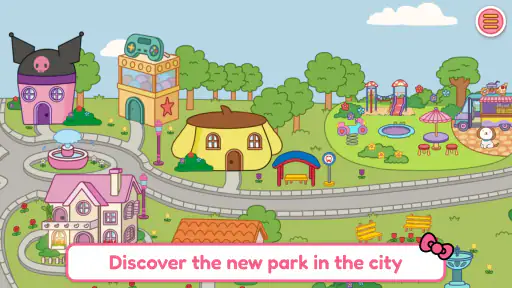
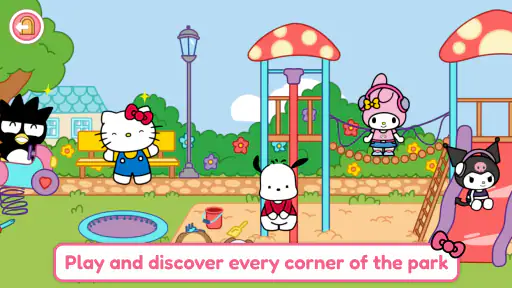
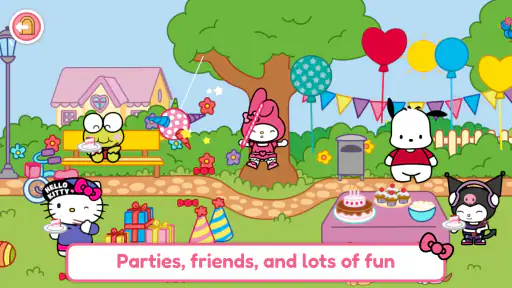
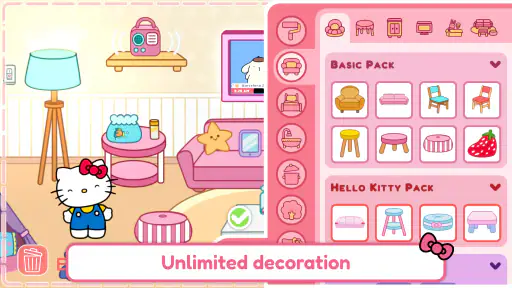
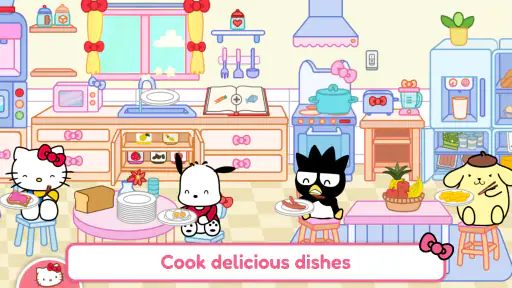
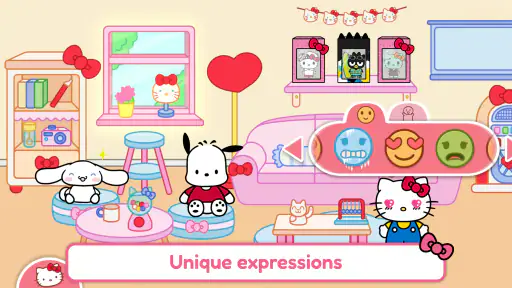
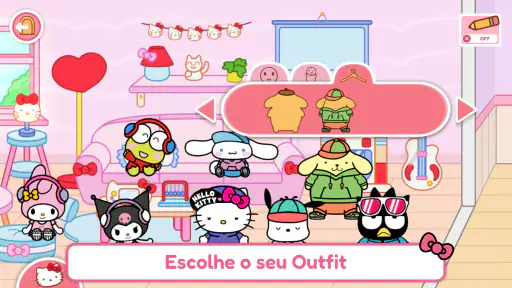
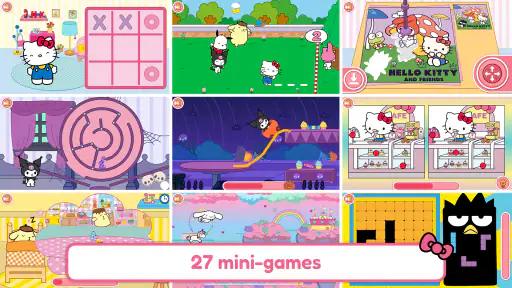
Hello Kitty And Friends World is a casual, character-focused game built around Hello Kitty and her Sanrio friends. It is designed for relaxed play, with activities and settings that may include decorating, collecting, and interacting with familiar characters. The exact features can vary by version and update, so check the current store listing and screenshots to see what is available on your device before downloading.
Is Hello Kitty And Friends World free to download and play?
The game may be available to download without an upfront purchase, but that does not necessarily mean every item or feature is free. Some versions of mobile games include optional in-app purchases, subscriptions, advertisements, or paid content. Review the app’s store page for its current pricing details, and check your device’s purchase settings if children will be playing to help prevent accidental spending.
Can children play Hello Kitty And Friends World?
Its colorful Sanrio characters and casual style may appeal to children, but parents should review the age rating and store information before installing it. Pay particular attention to whether the current version contains ads, in-app purchases, online features, or links to external pages. You can also use parental controls to restrict purchases and screen time, and supervise play if the game requests personal information or permissions.
Does Hello Kitty And Friends World work offline?
Offline availability depends on the game’s current design and version. Some activities may work without a connection after the necessary files have been downloaded, while updates, purchases, account features, or other online content may require internet access. If you need the game for travel or a place with limited connectivity, install it and test its main features while online before relying on offline play.
Which devices support Hello Kitty And Friends World, and how much space does it need?
Compatibility and storage requirements can change with updates, so the most reliable details are on the official Google Play or Apple App Store listing for your device. Check the supported operating-system version and available storage before downloading. The initial download may not reflect the full space used after additional game data is installed, and performance can vary depending on your device’s age and specifications.
Pros
- Recognizable Sanrio characters make the world appealing to longtime fans.
- A relaxed pace makes it approachable for younger players.
- Exploring different areas offers variety beyond a single screen.
- Decorative options let players personalize parts of the world.
- Simple interactions are easy to learn without lengthy tutorials.
Cons
- The experience may feel repetitive after the main areas are explored.
- Some activities offer limited depth for players seeking a challenge.
- Fans of action or competitive gameplay may find it too passive.
- Progress can depend on completing similar tasks repeatedly.
- The colorful presentation may be visually busy on smaller screens.

- Category
- Educational
- Version
- 7.3