Bluey's Quest for The Gold Pen
- 362.00
- 4.7
- Installs
- 1.00M
- Price
- Free

Screenshots
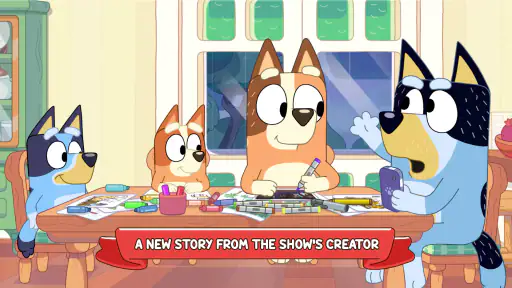
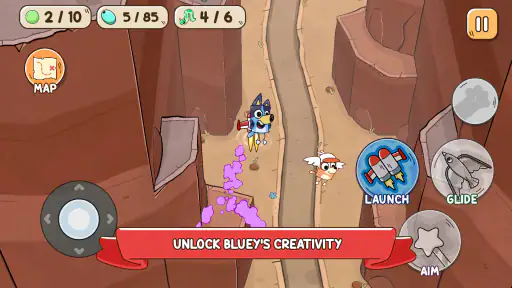
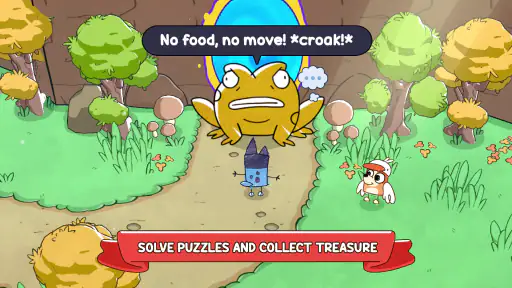
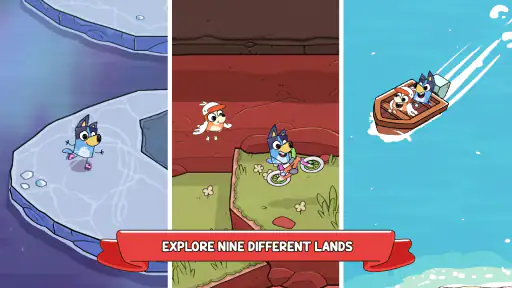

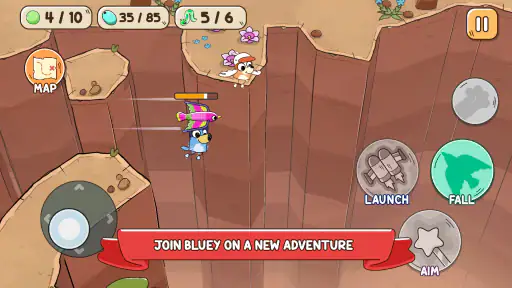
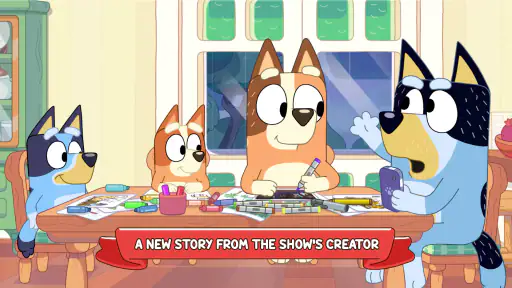
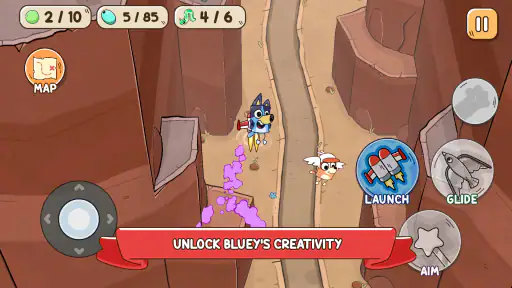
Analysis by Reviewed
I approached Bluey's Quest for The Gold Pen expecting a light adventure built around a familiar character, but what matters most here is how inviting it feels to begin. It is a free game from Halfbrick Studios, and its story-led setup gives the experience a clearer sense of purpose than a string of unrelated mini-challenges. The central appeal is easy to understand: take an action, see what happens, make progress, and find a reason to continue. That straightforward rhythm makes it approachable, though it may not satisfy players looking for deep systems or a demanding adventure.
Easy to enter, with a story to follow
The first useful quality is how little commitment the game seems to ask of a new player. Its adventure framing gives each bit of play a destination, rather than making the experience feel like an open-ended task list. I find that helpful when I want a game I can pick up without first studying complicated rules or managing a long chain of decisions.
Bluey's Quest is listed in the adventure category, but the story is important to its identity: it gives the player a reason to care about the next step, not just the act of playing. That distinction is worth considering if you are choosing between this and a pure arcade game. An arcade alternative may offer an immediate, repeatable challenge, while this one is better suited to someone who wants actions to sit within a broader journey.
In an ordinary day, I can imagine opening it during a short break, playing until I reach a natural pause, and returning later without needing to turn the game into a major project. That is a practical fit for casual play. If you prefer adventures where every session must involve extensive exploration, strategic planning, or a long uninterrupted stretch, this may feel too light.
What the moment-to-moment rhythm offers
The loop is at its best when an action leads to a clear response and that response makes the next move feel worthwhile. The story-driven structure helps connect those beats: progress feels like part of an adventure rather than progress for its own sake. I think that is the right kind of feedback for a family-friendly game, where clarity and momentum matter more than punishing difficulty.
A useful way to approach it is to treat each play session as a small chapter in your own routine. Rather than opening the game expecting a sprawling role-playing experience, look for a compact run of play that gives you a bit of forward motion. This expectation makes the design easier to appreciate and reduces the chance of judging it by standards intended for bigger, more complex adventures.
The trade-off is that a simple rhythm can become familiar. Players who need constant mechanical surprises, layered combat, or extensive character development may want a more involved adventure. Here, the attraction is the ease of following what is happening and continuing when the next beat catches your attention. That is an advantage for relaxed play, but it also sets a ceiling on how much complexity you should expect.
Progress that gives the next session a purpose
Reward matters most when it answers a simple question: why come back? In a story-led game, the answer can be the feeling that the journey is not finished yet. That is a gentler motivation than chasing a leaderboard or mastering a high-pressure challenge, and it suits players who enjoy making steady progress without turning every session into a test.
One practical tip is to stop when you reach a satisfying point rather than continuing just because the game is open. A clear pause makes it easier to return with interest, especially if you are fitting play around chores, travel, or family time. For a child, that kind of stopping point can also make the game easier to share as a short activity instead of an all-evening commitment.
It is free to download, but in-app purchases are listed at $14.99 per item. I would keep that in mind if a child will be playing: agree on purchase expectations before handing over a device, and use the platform’s purchase controls if you want to avoid accidental spending. The price of an individual item is not the same as a requirement to pay to begin; the game itself is free.
The audience fit is broad: the content rating is Everyone, and the game is presented as an accessible adventure rather than an experience aimed at older players. That makes it easier to consider for family play, although an age rating cannot tell you whether a particular child will enjoy the pace or story. If you are choosing for someone who prefers fast competition or elaborate building, a different style of game may be a better match.
How it compares with other adventure choices
Compared with a traditional platforming adventure, a story-led casual game tends to put more weight on approachability and less on demanding precision. Compared with an endless runner or arcade title, it offers a stronger reason to connect one moment to the next. Those differences make the choice fairly clear: pick this if you want a friendly narrative frame, and look elsewhere if your priority is reflex training, competitive scoring, or a deep world to explore for hours.
Its familiarity is also part of the appeal. The name Bluey will be a draw for fans, but recognition alone is not a reason to install it. I would decide based on whether the player enjoys following a character through an adventure and whether a gentler pace fits their habits. Someone who likes the character but expects a highly complex game could come away disappointed; someone who wants a low-friction way to spend a little time may find the format more rewarding.
There is also a useful distinction between a game that is easy to start and one that stays compelling indefinitely. Bluey's Quest makes a case for the former: it is approachable, story-oriented, and suited to returning in manageable bursts. If you want extensive mastery goals or a large collection of systems to learn, consider a more involved adventure instead. That is not a flaw so much as a question of matching the game to the player.
Practical fit, ratings, and version
The game has a 4.7 average from around 12,000 ratings, with more than 1 million installs. Those figures suggest that plenty of players have tried it, but I would treat them as context rather than a promise that it will suit every household. Personal preference still matters more than broad approval, especially when choosing a game for someone who has a strong preference for either fast action or a detailed story.
The current version is 1.1.8, and the minimum operating system is 8.0. Before installing, check that your device meets that requirement and has enough room for another game. If you are selecting it for a younger player, it is also sensible to look over the device’s purchase settings first, since optional spending can matter more to parents than the gameplay itself.
For a shared device, I would make a simple routine: let the player start a session when there is time to finish at a natural break, and decide in advance whether purchases are allowed. That small bit of planning avoids two common frustrations—being interrupted mid-play and encountering an unexpected purchase prompt. It also helps keep the game in the role it suits best: a light adventure to enjoy in spare moments.
Who should start, and who should pass
I would recommend Bluey's Quest to Bluey fans, families looking for an Everyone-rated game, and casual players who prefer a story to an abstract score chase. It is especially appealing if you want a game that can fit around everyday life rather than demand a dedicated gaming session. The free entry point makes it easy to try, while the adventure framing gives casual play more direction than a bare collection of quick challenges.
I would skip it if your main goal is a tough, skill-focused adventure, competitive play, or deep customization. In those cases, a more demanding platformer or a strategy-heavy game will probably offer more to master. I would also avoid choosing it solely because a child recognizes Bluey; the best fit depends on whether they enjoy the style and pace of this particular game.
My overall view is that the appeal comes from a simple, readable cycle: begin with an action, get a response, make progress, then return when you are ready for another small stretch of the story. That loop is not designed to replace a sprawling adventure, and it does not need to. For the right player, it makes a friendly, low-pressure option for short sessions. If that is what you want, I think it is worth giving a try.
Bluey's Quest for The Gold Pen Frequently Asked Questions
What is Bluey’s Quest for The Gold Pen?
Bluey’s Quest for The Gold Pen is a story-driven adventure game featuring characters from the Bluey animated series. Players follow Bluey through a playful quest centered on finding the Golden Pen, exploring illustrated environments and encountering familiar faces along the way. Its presentation is designed to capture the show’s humor and colorful style, making it especially appealing to young fans and families looking for a gentle, character-led game.
How does the gameplay work, and is it suitable for children?
The game focuses on exploring scenes, interacting with characters and objects, and progressing through a lighthearted story rather than competing in demanding battles or complex challenges. Its approachable premise makes it a natural fit for children who enjoy Bluey, while adults can share the experience with them. As with any game intended for younger players, parents should check the age rating and try the game themselves to assess its content and controls.
Is Bluey’s Quest for The Gold Pen free to download?
Availability and pricing can vary depending on the platform, country, and store listing, so check the official Google Play or Apple App Store page before downloading. A game may be free to install yet still include optional purchases, advertisements, or other paid features; the store page should clarify these details. Review the listed price and purchase settings first, particularly if a child will be using the device.
Can I play Bluey’s Quest for The Gold Pen offline?
Whether the game works without an internet connection can depend on the version and device, and online access may be needed for the initial download, installation, or updates. Check the current store description for offline-play information, then test the game in airplane mode if you need to know for sure. If you are planning a trip or want to limit connectivity, install and open it beforehand.
Which devices support the game, and what should I check before downloading?
Device compatibility can change as the game is updated, so consult the official store listing for its supported operating-system version, device requirements, and available storage information. Confirm that your phone or tablet meets those requirements and has enough free space for the download and any updates. Downloading through the official app store also helps ensure you receive the legitimate version and the latest available release.
Articles Related to Bluey's Quest for The Gold Pen
Clash of Clans Is Won Between the Battles
Its raids are quick; its community is a long-term project of coordination, teaching, rivalry, and shared responsibility—with all the friction that entails.
Android Auto Makes the Case for Quieter Car Software
The car interface is no longer judged by how much it can do, but by how quietly it helps. Android Auto shows what drivers now expect—and what still gets in the way.
MobiOffice: Transforming Mobile Productivity with Seamless Integration
MobiOffice: Word, Sheets, PDF is redefining mobile productivity with a surprising blend of functionality and innovation.
EA SPORTS FC™ Mobile Soccer: Redefining Mobile Sports Gaming
Dive into EA SPORTS FC™ Mobile Soccer, where immersive gameplay and strategic depth transform mobile sports gaming.
Pros
- Bright
- colorful visuals bring Bluey’s world to life.
- Familiar characters and playful dialogue add charm.
- Simple controls are approachable for younger players.
- Exploration encourages curiosity and discovery.
- A gentle adventure suits short play sessions.
Cons
- Gameplay may feel too easy for experienced players.
- Limited challenge can reduce replay value.
- Some sections may require adult help from younger children.
- The adventure may be brief compared with full-length games.
- Fans looking for multiplayer may be disappointed.

- Category
- Adventure
- Version
- 1.1.8