Jetpack Joyride Racing
- 25.00
- 3.4
- Installs
- 100.00K
- Price
- Free

Screenshots
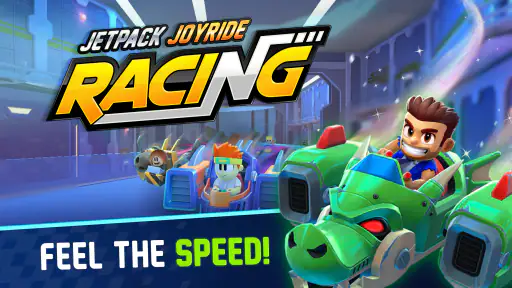


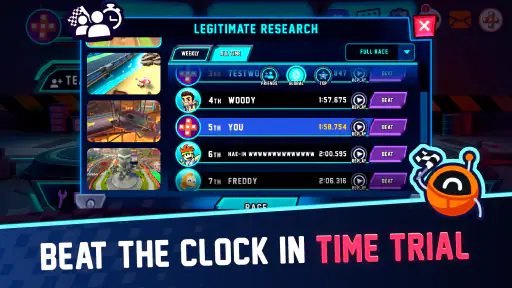
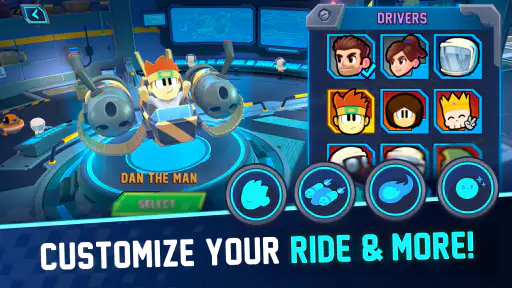
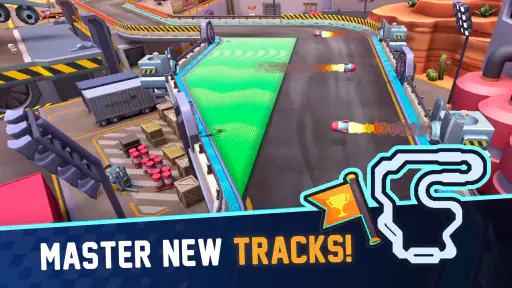


Analysis by Reviewed
I went into Jetpack Joyride Racing expecting a quick arcade racer, and that is the right way to approach it. This is a free racing game from Halfbrick Studios that mixes short rally-style runs with drifting, speed boosts, and collectible cards. It is built for people who want something easy to pick up without committing to a long session, but it still asks you to make decisions rather than simply hold the accelerator.
The first thing worth understanding is its identity. Despite the familiar name, this is not simply the original endless-runner experience with vehicles added on. The focus here is on racing, controlling momentum, taking corners, and using the card-collecting layer to give repeated races a sense of progress. I found that distinction useful because it sets the right expectations from the start: if you want a deep simulation racer, this will feel light; if you want a playful mobile game with quick competitive runs, the format makes much more sense.
What the first few races feel like
The opening experience is deliberately approachable. You can begin with the basic controls, learn how the car responds, and gradually pay attention to the moments where speed and positioning matter. The central challenge is not memorizing a complicated control scheme. It is learning when to stay aggressive and when to prepare for a turn before the track forces the decision.
In my first meaningful attempts, the most satisfying improvement came from treating drifting as a timing tool instead of a trick to use constantly. Entering a bend too quickly can make a boost feel wasted, while entering with a little control gives the drift a purpose. That makes each run feel more active than a simple tap-to-win game, even though the overall presentation remains friendly and accessible.
The card collection adds another reason to replay races. I would not treat the cards as a substitute for driving skill, though. They give the game a longer-term layer, but the immediate difference between a messy run and a clean run is still easy to feel. For a new player, that is encouraging: you can make progress by improving your decisions, not only by waiting for better items.
The game is free to download, which makes it easy to test without a financial commitment. It is rated for Everyone, so it is suitable for a broad audience in terms of content. There are optional in-app purchases ranging from $2.99 to $29.99 per item, so I would recommend deciding early whether you want to play strictly at no cost or are comfortable spending on extras. Knowing that boundary beforehand helps keep the progression enjoyable rather than turning every reward into a shopping decision.
Installing and getting oriented
The game runs on Android 8.0 or later, so anyone using an older device should check compatibility before planning around it. On a suitable phone, the practical first step is simple: install it, launch it, and give yourself a few races before judging the controls. The first run is not the best moment to decide whether the handling suits you, because you are still watching the track, learning the drift response, and noticing how boosts fit into the course.
You May Like

Clash of Clans Is Won Between the Battles

Android Auto Makes the Case for Quieter Car Software

MobiOffice: Transforming Mobile Productivity with Seamless Integration

EA SPORTS FC™ Mobile Soccer: Redefining Mobile Sports Gaming

How Microsoft OneDrive Became a Mobile Productivity Giant

How Google Translate Breaks Language Barriers Effortlessly
I suggest playing the opening session with sound on if possible, not because audio is required, but because small feedback cues can make it easier to connect an action with its result. If you are playing during a commute or in a waiting room, the game still works as a short-session option, but you will get more from it when you can concentrate on corners rather than treating every race as background entertainment.
One useful habit is to resist the urge to spend or chase every available reward immediately. First learn what a normal race asks from you. Pay attention to whether you lose because of a poor line through a bend, a badly timed boost, or a mistake caused by trying to recover too aggressively. That diagnosis matters more than simply repeating the same run with more speed.
How to reach a first satisfying win
For a first successful action, I would focus on completing a clean section of track rather than trying to drift through every corner. Approach a turn with enough room to react, begin the drift before the bend becomes sharp, and release your attention from the boost button long enough to keep the vehicle stable. The goal is to finish the corner with momentum still available, not to produce the flashiest maneuver.
After that, use boosts when they have a clear purpose. A boost is most helpful when the car is already pointed in a useful direction and the track gives you space to capitalize on the extra speed. Activating it just before a difficult turn can turn an advantage into a mistake. This is one of the first trade-offs the game teaches: maximum speed is not always the same as maximum progress.
When a race goes badly, replay it with one change only. If you altered your drift timing, keep the boost timing familiar. If you saved the boost for a straight section, do not also experiment with a completely different cornering approach. This small method makes the game easier to learn because you can identify which decision actually helped.
The card system is best approached as a gradual support layer. Collect what you earn, inspect how it affects your available progression, and then return to the track. New players can easily spend more time thinking about the collection screen than practicing the driving, but the strongest early improvement comes from understanding the course rhythm. Cards become more useful once you know which part of your performance needs help.
Where new players can become confused
The title can create an expectation that the game will behave exactly like Jetpack Joyride, but the racing format changes the rhythm completely. Here, the important questions are about lines, corners, speed management, and race outcomes. If you install it expecting the familiar side-scrolling structure, the first minutes may feel surprising rather than immediately comfortable.
Another possible source of confusion is the relationship between drifting and speed. Drifting looks like an aggressive action, but it is not automatically beneficial. A drift that begins too late may leave you pointed poorly, while one that is held too long can sacrifice the exit speed you need for the next section. I found it more helpful to judge a drift by how well it sets up the following part of the track.
Boosts can also tempt you into playing reactively. Seeing an opportunity to go faster is exciting, but the best use is often planned a moment earlier. Before activating one, ask whether the vehicle is aligned, whether the next section is open enough, and whether the extra speed will help you overtake or simply make the next turn harder. That three-part check is quick enough to use during a real race.
The collectible cards may make progression feel more complicated than the driving itself. My advice is to separate the two activities mentally. Racing improves your immediate results; cards support the longer journey. If you treat every card decision as something that must be optimized perfectly, the game loses some of its easygoing appeal. If you ignore the cards entirely, you miss a major reason to keep returning.
A realistic short-session routine
Imagine you have ten minutes before an appointment. This is where the game makes the most sense. I would play one race without changing anything, note the corner or section that caused the problem, and then play again with a single adjustment. If the second attempt improves, collect the result and stop there. That gives the session a clear purpose instead of turning it into an endless sequence of frustrated retries.
For a longer evening session, I would alternate between racing and reviewing progression. Playing several races in a row can make mistakes feel repetitive, especially if you are forcing the same boost timing. A short pause to look at the cards and decide what kind of improvement you want helps keep the next run focused. This is also a good way to avoid spending impulsively, because you are making a deliberate choice rather than reacting to a disappointing result.
The game is particularly well suited to players who enjoy visible, incremental improvement. You do not need to master everything in one sitting. A better corner, a smarter boost, or a more controlled finish can make a short session feel worthwhile. That is a stronger fit for casual mobile play than a racer that demands long uninterrupted races or a large amount of setup.
How it compares with other mobile racing choices
Compared with simulation-focused racing games, this is much easier to approach. You are not coming here for detailed vehicle tuning, realistic driving physics, or a serious motorsport career. The reward is immediacy: start a race, make a few decisions, and see the result quickly. Players who want technical depth should look elsewhere, while players who find simulations too demanding may appreciate the lighter structure.
It also differs from endless racers. An endless game usually emphasizes survival and reaction over reaching a defined racing outcome. This title gives your actions a more competitive shape because the run is framed around racing and winning. That can make mistakes feel more meaningful, but it also means you may notice poor cornering more clearly than you would in a purely reflex-based runner.
Against other arcade racers, the card collection is the most distinctive part of the package. It gives you a reason to return beyond simply beating your previous run. The trade-off is that progression systems can make a small racing game feel less immediate if you prefer every result to depend only on driving. I think the cards work best for casual players who enjoy collecting, not for purists who want a clean, skill-only contest.
The developer, Halfbrick Studios, gives the game a recognizable arcade direction, and the name helps communicate that this is meant to be playful rather than realistic. Still, the average rating of 3.4 from around 593 ratings suggests that the experience will not satisfy everyone equally. I would read that as a reason to try it personally rather than assume the branding guarantees a perfect fit.
Who should play, and who should skip it
I would recommend it to someone who wants a free racing game for short breaks, enjoys learning simple timing-based controls, and likes having collectible goals alongside the races. It is also a reasonable choice for younger or mixed-age households because of its Everyone content rating, provided the person playing understands that optional purchases are available.
It is less suitable for anyone looking for a realistic racing experience. If your favorite part of the genre is adjusting suspension, comparing detailed car statistics, or completing long championship events, this will probably feel too compact and arcade-oriented. I would also skip it if you dislike card-based progression or prefer a game where every improvement comes directly from manual skill.
Players who are sensitive to in-app purchase prompts should decide on a no-spend approach before launching into progression. The free entry point is useful, but optional items can change how you think about rewards. I had a better experience when I treated purchases as entirely unnecessary to the basic test: first learn whether the driving is enjoyable, then decide whether the additional progression is worth considering.
What to do after the first win
Once you have completed a successful race, do not immediately chase the highest possible speed. Repeat the course with the aim of improving one measurable part of your play: a cleaner drift, a better boost exit, or fewer corrections. This turns the game from a sequence of wins and losses into a small practice loop. It is also the quickest way to find out whether the handling has enough depth for your personal taste.
Next, use the cards as a planning tool rather than a checklist. Look at what you have collected and ask which part of your current approach it supports. If you are already comfortable with speed but lose control in turns, more speed may not solve the real problem. The useful insight is that progression should complement your driving habits, not hide weaknesses that you never address.
Keep an eye on your session length as well. Because races are short and rewards arrive regularly, it is easy to continue longer than intended. That is not a flaw for everyone, but it matters if you are installing the game specifically for controlled breaks. A simple rule such as “one practice race and one improvement race” keeps the experience focused and makes it easier to put the phone down.
The current version is 1.2.1, and the game has passed 100K+ installs, so there is already a meaningful group of players trying this particular racing experiment. Those figures do not replace personal testing, but they do make it clear that the title is not an obscure one-off. I would still approach it as a focused arcade game rather than a complete racing platform.
My final recommendation
Jetpack Joyride Racing works best when you accept its narrow goal: quick rally-flavored races, playful drifting, boosts that reward timing, and cards that encourage another run. I enjoyed it more after I stopped treating speed as the only objective. The real satisfaction comes from setting up a corner correctly and finishing with enough control to use the next opportunity.
Its limitations are equally clear. The lightweight arcade design will not replace a serious racer, and the card layer may not appeal to players who want a purely skill-based experience. The presence of optional purchases also means you should decide your spending limits before progression becomes part of your routine.
For a first-time user, my practical recommendation is to install it, play several races without spending anything, and judge the handling after you have practiced both drifting and boost timing. If that short learning curve feels rewarding, the collection system gives you a reason to continue. If you are still fighting the controls after focused practice, another racing game with a different control style will probably serve you better. For casual players who want an accessible, free arcade racer that fits into everyday gaps, it is worth giving a fair first session.
Jetpack Joyride Racing Frequently Asked Questions
Can I play Jetpack Joyride Racing on my device?
Jetpack Joyride Racing is available for devices running Android 8.0 or later. Before downloading, check your device’s operating system version and make sure you have enough available storage for the game and its updates. The game is published by Halfbrick Studios and is described as Jetpack Joyride, so confirm the title in your app store before installing.
What does Jetpack Joyride Racing involve, and is it different from the original game?
Jetpack Joyride Racing is a racing game built around rally races, where the focus is on boosting speed, drifting to victory, and collecting cards. Its store description presents it as Jetpack Joyride, but the racing emphasis gives players a different kind of challenge from simply navigating a course. If you enjoy fast-paced competition and collecting items as you play, its central idea may appeal to you.
What is Jetpack Joyride Racing?
Jetpack Joyride Racing is an action-focused mobile game that combines fast side-scrolling gameplay with racing-style challenges. Players guide a character through obstacle-filled courses, collect items, avoid hazards, and try to finish with the highest possible score. Its quick rounds make it suitable for short play sessions, while unlockable content and competitive goals encourage longer-term progress.
How do you play Jetpack Joyride Racing?
The controls are designed to be simple, but mastering them requires timing and concentration. You generally control the character’s movement or jetpack flight by tapping, holding, or using on-screen controls, depending on the version and device. During each run, you must react quickly to barriers, moving objects, gaps, and other hazards while collecting bonuses and maintaining momentum.
Is Jetpack Joyride Racing free to download?
Jetpack Joyride Racing is free to download, with optional in-app purchases priced from $2.99 to $29.99 per item. Those purchases are worth keeping in mind if children use the device or if you prefer to avoid extra spending. You can check your platform’s purchase controls before playing, and the game can still be downloaded without buying an item.
Pros
- Fast-paced races make short play sessions exciting.
- Simple controls are easy to learn on a touchscreen.
- Many vehicles offer different handling styles and abilities.
- Bright visuals and playful animations suit casual players.
- Leaderboards add competition for players who enjoy chasing scores.
Cons
- Races can feel repetitive after the initial novelty wears off.
- Some upgrades may require considerable grinding or in-app purchases.
- Frequent obstacles can make progress feel dependent on trial and error.
- The small screen can make fast-moving hazards difficult to judge.
- Online features may be limited compared with dedicated racing games.

- Category
- Racing
- Version
- 1.2.1