Flags Quiz - Guess The Flag
- 116.00
- 4.7
- Installs
- 1.00M
- Price
- Free
Screenshots
Analysis by Reviewed
I like trivia games best when they turn a spare moment into a small challenge rather than asking me to settle in for a long session. Flags Quiz - Guess The Flag has a clear starting point: look at a flag, work out which country it represents, and make a choice. That simple action is easy to understand, but familiar colors and patterns can be surprisingly hard to place once several countries come to mind.
A useful geography break, with a real learning curve
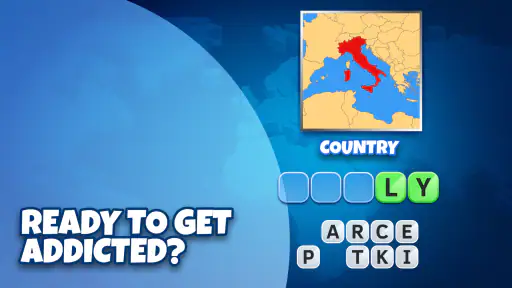
This is a free trivia game from PrizePool Studios, built around flags and country maps. Its premise suits quick play, but the knowledge it tests is not limited to memorizing a few famous designs. When I am unsure, I try to name the colors and symbols first, then narrow the answer by region instead of guessing immediately. That extra pause turns a lucky pick into a more useful bit of practice.
The game is aimed at a Teen audience, and its broad geography topic makes it an easy fit for older children, students, and adults who enjoy quizzes. It is also a natural option for a family waiting room or a low-key challenge with friends. Younger players may enjoy recognizing familiar flags, while adults can use the questions to spot the places they have never properly learned.
Getting Started with Flags Quiz
Once you download and fire up Flags Quiz - Guess The Flag, you’re greeted with a simple yet engaging interface. The app is incredibly user-friendly, making it easy for anyone to dive right in, regardless of age. It’s the perfect app for when you’re waiting for a friend, on your commute, or just in need of a quick brain teaser.
Gameplay Experience
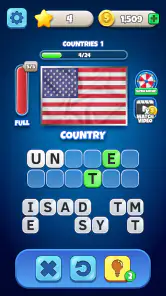
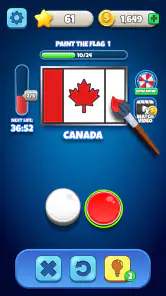
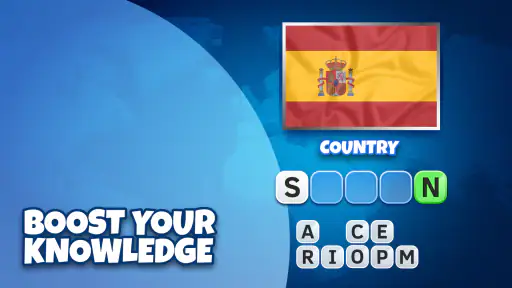
The gameplay is straightforward but addictive. You’re presented with a flag, and your mission is to guess which country it belongs to. Sounds easy? Trust me, it’s more challenging than you might think! The app offers different levels of difficulty, so whether you’re a geography novice or a seasoned pro, there’s something here for you.
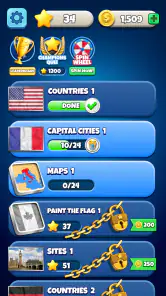
The app also includes hints and clues to help you out when you’re stuck. Plus, there’s a nifty feature where you can earn coins for every correct answer and use those coins to unlock more hints. It’s a clever way to keep you hooked while ensuring you’re learning as you play.
How to make each guess count
Hints are most useful when I treat them as a last step in reasoning, not an automatic button to press. I first make a mental shortlist, then use a clue if the remaining options are still too close. That keeps the question engaging and makes the answer easier to remember afterward. If I get one wrong, I try to connect the design to a visual detail rather than simply memorizing the country name.
That approach also helps with the game’s reward loop: a correct answer earns coins, and coins can be spent on more hints. It gives careful play a practical payoff, but it means using a hint on every uncertain question can eat into the resource you might want later. I would save clues for flags that genuinely stump me and use easier questions to build confidence without assistance.
Visuals and User Interface
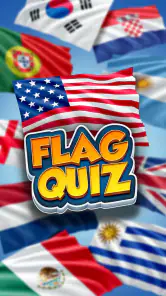
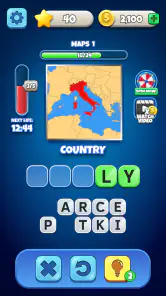
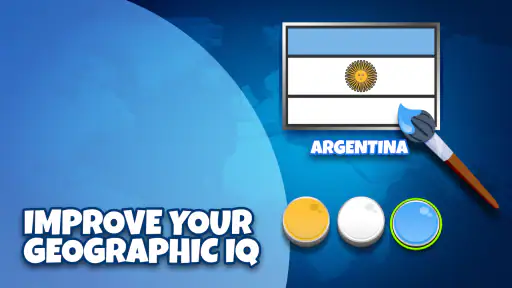
In terms of visuals, the app is clean and vibrant. The flags are displayed in high resolution, making it easy to discern even the most intricate designs. The user interface is intuitive, with smooth transitions and quick response times. It’s clear that the developers put a lot of thought into making the app as appealing and functional as possible.
What the quiz is best suited for
Compared with a broad trivia game that jumps between history, science, and pop culture, this one keeps attention on a single visual subject. That focus is its advantage if you want to improve flag recognition; it is also a limitation if you want varied questions or a story-driven game. Someone who already knows flags well may find the basic identification loop less compelling, while a geography learner gets a focused way to revisit the subject.
A realistic use is a short commute: answer a few questions, pause when your stop arrives, and return to it when another spare moment appears. I would not treat it as a complete geography course, though. Recognizing a flag is a useful starting point, but it does not teach the wider context of a country by itself. Pairing a tricky answer with a map or atlas afterward is a good way to turn the quick quiz into a broader learning habit.
Why You Should Try Flags Quiz
So why should you give Flags Quiz - Guess The Flag a try? Well, apart from being a fun way to pass the time, it’s a great educational tool. You’ll find yourself learning without even realizing it. Whether you’re preparing for a geography bee or just want to impress your friends with your newfound knowledge, this app is a fantastic resource.
Moreover, it’s a great conversation starter. You can challenge friends and family to see who can guess the most flags, turning it into a fun and competitive group activity. It’s a wonderful way to connect with others while expanding your knowledge of the world.
Cost and reasons to look elsewhere
The game is free to start, with optional in-app purchases listed from $0.99 to $49.99 per item. I would decide whether hints are worth buying only after playing naturally for a while; the coin-and-clue loop already gives you a reason to think before spending. Its current version is 1.41.0, and it requires Android 6.0 or later. The game has a 4.7 average from around 36,000 ratings and over 1 million installs, which suggests plenty of players have found its focused format appealing.
If you dislike repeated quiz prompts, prefer multiplayer competition built into the game, or want detailed country profiles alongside each answer, a broader geography title may fit better. I would also skip this if flag recognition is not a subject you enjoy: the narrow focus is the whole point, not a temporary mode within a larger game. For a quick test of what you know, however, it is easy to approach without making a big commitment.
A small loop that earns another round
The rhythm is simple: inspect a design, choose a country, see whether your knowledge holds up, and decide whether the next question is worth your time. Hints provide a safety net, while coins give correct answers a small reward. Then the session can end naturally after a few guesses—or continue because one unfamiliar flag has made you curious. That reset is what works for me: there is no complicated setup between a spare minute and another attempt.
With over 1,000 flags and maps in its subject matter, there is room to encounter plenty beyond the few designs most people recognize instantly. I find it most satisfying when I use a wrong answer as a prompt to learn a visual clue, rather than racing through guesses. That small change makes the quiz feel less like a test and more like practice.
A practical way to play in short bursts
I would use this as a deliberately small habit rather than a task to complete in one sitting. For example, while waiting for a meal or sitting in a lobby, I can answer a handful of questions and stop before the quiz starts to feel repetitive. When a flag catches me out, I can make a quick mental note of its standout feature—the arrangement of colors, a central emblem, or an unusual shape—and try to recall that clue later. This gives each brief visit a purpose beyond simply filling time.
That method is especially useful for learners who recognize a flag visually but struggle to retrieve the country name. Instead of immediately tapping through, I pause long enough to say the answer silently, then check it. If I am wrong, I focus on what made my first guess plausible and how the correct design differs. The contrast is often easier to remember than a bare name, and it makes similar-looking flags less likely to blur together on a later question.
Making it work for different players
For a parent or teacher, the most useful role for the game is as a conversation starter, not a stand-alone lesson. A child can make a guess, and an adult can follow up by asking where that country is or what nearby countries might share a region. The quiz gives the group something concrete to look at; a paper map or a separate reference can supply the wider context. This is a low-pressure approach because a wrong answer becomes an opening for discussion rather than a score to worry about.
It can also suit a pair of friends who enjoy friendly competition, even without treating the app as a full multiplayer game. One person can hold the phone while the other calls out an answer, then they can swap roles after a few turns. I would keep the challenge informal and agree not to spend hints automatically: that creates a better discussion about reasoning and makes the coins less of a shortcut. If everyone wants built-in head-to-head play, though, a title designed around direct competition will be a better fit.
The experience is less suited to someone looking for deep explanations after every answer. The central appeal is recognition and recall, so players who want country histories, capitals, population facts, or a guided course should use a broader learning resource alongside it or choose one that teaches those subjects directly. Likewise, confident flag experts may want a game with a wider pool of trivia categories to keep each session unpredictable. The focused format is valuable precisely because it does not try to be everything at once.
Reading the clues instead of spending them too quickly
A small but useful trade-off is deciding when a hint actually improves learning. If I use one as soon as I hesitate, I may reach the right answer without understanding why it fits. If I first eliminate countries by region or compare the flag’s main elements, the clue can resolve a genuine tie rather than doing all the thinking. That makes the hint feel like support, not a replacement for attention.
I would also avoid treating coins as a reason to rush for correct answers. The reward adds a clear reason to continue, but the more lasting payoff is recognizing a design the next time it appears. A wrong answer can still be productive if I stop for a moment and identify what I missed. In that sense, the best score is not necessarily the fastest run; it is the set of visual associations I can still recall after closing the game.
What to expect from the free-to-play setup
The game costs nothing to begin, while its optional purchases make spending a personal choice rather than a prerequisite I would assume every player needs. I would first see how far the earned coins and available hints take me. If I find myself considering a purchase, I would ask whether I want more assistance or whether I would actually enjoy the quiz more by making the guesses unaided. For a casual player, that distinction matters: buying help can reduce frustration, but it can also remove the satisfying effort that makes a correct answer memorable.
It is also worth setting expectations around variety. The broad subject gives the quiz many designs to draw on, but the basic action remains flag identification. The presence of country maps expands the geography angle, yet players seeking a rotating mix of puzzles, narratives, or unrelated trivia should not expect this focused game to provide that kind of change of pace. I see its strength as a repeatable, compact exercise rather than a large collection of different game modes.
Where it fits beside other geography games
Compared with geography apps built around placing countries on a map, this quiz favors visual recognition: the first question is whether you can connect a design to a place. Map-placement games are better if your goal is to learn borders and locations through spatial recall. Compared with general knowledge quizzes, this one sacrifices subject variety but gives you more repeated attention to flags. Choosing between them depends on what you want to practice, not on which format is universally better.
I would combine the two styles if geography is a genuine interest. A flag question can reveal a gap in recognition; a map can then help place the country in relation to its neighbors. That two-step routine makes the game more educational without expecting it to explain everything itself. If I only have a minute, I can still enjoy the quiz on its own; if I have longer, following up on a surprising answer is a simple way to turn entertainment into a small study session.
A small loop that earns another round
The rhythm is simple: inspect a design, choose a country, see whether your knowledge holds up, and decide whether the next question is worth your time. Hints provide a safety net, while coins give correct answers a small reward. Then the session can end naturally after a few guesses—or continue because one unfamiliar flag has made you curious. That reset is what works for me: there is no complicated setup between a spare minute and another attempt.
With over 1,000 flags and maps in its subject matter, there is room to encounter plenty beyond the few designs most people recognize instantly. I find it most satisfying when I use a wrong answer as a prompt to learn a visual clue, rather than racing through guesses. That small change makes the quiz feel less like a test and more like practice.
In conclusion, Flags Quiz - Guess The Flag is more than just a game; it’s an engaging educational experience wrapped up in a fun package. So, if you’ve got a few minutes to spare and a thirst for knowledge, give it a go. You might be surprised at how much you enjoy it, and who knows, you might even become a flag expert in the process!
Flags Quiz - Guess The Flag Frequently Asked Questions
Can I play Flags Quiz - Guess The Flag with friends or family?
Flags Quiz - Guess The Flag is a geography trivia game centered on identifying flags and maps, so it can make a natural quiz activity to enjoy together. Players can take turns guessing or compare what they know about different countries. The game’s store summary describes over 1,000 flags and maps to guess, giving groups plenty of geography topics to explore.
What language skills do I need to play Flags Quiz - Guess The Flag?
The game asks players to connect a flag with the correct country, so recognizing country names is part of the challenge. It is most approachable if you can read the language used in the game’s questions and answer choices. If you are downloading it for someone else, consider whether they are comfortable reading country names and following a trivia quiz.
Is Flags Quiz - Guess The Flag free to download, and are there optional purchases?
Flags Quiz - Guess The Flag is free to download, so you can try its flag-guessing gameplay without paying upfront. Optional in-app purchases are available, with prices ranging from $0.99 to $49.99 per item. Consider checking purchase options before handing your device to a child, and remember that the listed purchase range does not mean every player needs to buy anything to play.
What is Flags Quiz - Guess The Flag?
Flags Quiz - Guess The Flag is a fun and educational app where players can test their knowledge of world flags. The game presents national flags, and players must correctly identify the country associated with each flag. Its store summary describes over 1,000 flags and maps to guess, making it an engaging way to learn about different countries and their flags.
How does the gameplay work in Flags Quiz - Guess The Flag?
In Flags Quiz - Guess The Flag, players are shown a flag and given multiple-choice options to select the correct country name. The game may also feature timed challenges or levels of increasing difficulty, where players need to identify as many flags as they can within a certain time limit. It’s designed to be both entertaining and educational.
Pros
- Fun educational game.
- Improves geography skills.
- Easy to play interface.
- Offline mode available.
- Regular updates.
Cons
- Limited flag database.
- No multiplayer mode.
- Ads interrupt gameplay.
- Basic graphics.
- Repetitive questions.
- Category
- Trivia
- Version
- 1.41.0