Bible Trivia - Word Quiz Game
- 4.03K
- 4.8
- Installs
- 5.00M
- Price
- Free
Screenshots

Analysis by Reviewed
I approach Bible quizzes differently from general-knowledge trivia: a good question can jog a familiar story, but it can also expose how easily I mix up names, places, and events. Bible Trivia - Word Quiz Game is aimed squarely at that kind of recall, turning Bible knowledge into a casual game rather than a reading assignment. I’d consider it most useful when I want a short, focused mental break with a faith-related subject, not when I need a detailed study guide or a substitute for reading scripture.
What the current game is best suited to
This is a trivia game from Topy Games, and its appeal is easy to understand: it gives Bible enthusiasts a way to check what they remember and make the process feel playful. It’s free to start, rated for Everyone, and has a 4.8 average from around 58,000 ratings. Those figures suggest broad interest, but they don’t tell me whether every question will match a player’s preferred translation or level of biblical familiarity.
That distinction matters in everyday use. I can imagine opening it while waiting for an appointment, or handing the phone around during a relaxed family gathering so people can take turns answering. The short-session format suits spare moments better than a long reading session, while the subject gives a group something more specific to talk about than standard quiz questions. For a Sunday school teacher, it could be a light warm-up, though I’d still check the material against the lesson rather than treating a game answer as the final word.
How the quiz plays and where it fits
The game’s central draw is straightforward: answer questions about the Bible and see how much you know. I’d use hints as a way to keep a round moving when I’m blanking on a detail, not as a reason to rush through every question. A more useful habit is to pause before using one and try to recall the surrounding story. That turns a lucky guess into a small memory exercise, even when I don’t get the answer right.
Compared with a general trivia app, this game gives up variety in exchange for a clear subject and a more focused audience. Compared with reading a Bible passage or using a dedicated study resource, it is quicker and more game-like, but it won’t provide the same context or depth. I’d pick it for testing recall and starting conversation; I’d choose a study tool or the text itself when I want to understand a passage, compare interpretations, or prepare a lesson carefully.
Questions, hints, and friendly competition
The hint system can lower the frustration of getting stuck, but it also changes the challenge: if I lean on hints too often, my score says less about what I actually remember. For a fair self-test, I’d save them for questions where I have genuinely reached a dead end. For a family game, I’d use them more freely so less experienced players can stay involved rather than sitting out after a difficult question.
The leaderboard adds a reason to compare results, though I’d treat it as a casual nudge rather than a serious measure of biblical knowledge. Scores can reflect familiarity with quiz wording as much as broader understanding. If I were playing with friends, I’d make the conversation after an answer part of the fun: ask what story someone remembered, or what detail helped them decide. That makes competition less important than sharing what people know.
More From Our News Desk

Weather by Xiaomi Review: Clear at a Glance, Less Clear Up Close

X Under Pressure: Can It Recover When Posting Goes Wrong?

Clash of Clans Is Won Between the Battles

Android Auto Makes the Case for Quieter Car Software

MobiOffice: Transforming Mobile Productivity with Seamless Integration

EA SPORTS FC™ Mobile Soccer: Redefining Mobile Sports Gaming
Design and the small-screen experience
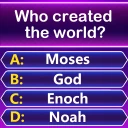
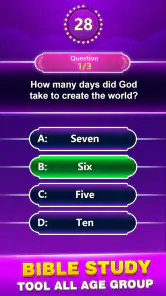
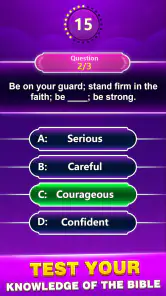
The simple visual approach keeps attention on the questions instead of elaborate effects. I find that a practical choice for a quiz: readable text and uncluttered screens matter more than decoration when I’m trying to compare possible answers. The original experience I tried felt easy to navigate, and I didn’t run into lag or crashes during that use. Those impressions are useful, but performance can still vary between devices.
If you’re planning to play in a group, a little preparation helps: agree on whether everyone will answer aloud or take turns holding the phone, and avoid letting the quickest player dominate. In solo play, stopping after a few questions and checking which topics caused hesitation may be more rewarding than chasing a long streak. I would not assume the game replaces a Bible or offers enough explanation to settle a disagreement; the quiz works better as a prompt to look something up than as a reference source.
Version, expectations, and who should choose it
The game was released on October 15, 2021, and its current version is 2.9. That gives existing players a concrete version to check when deciding whether to update, but a version number alone doesn’t tell me which changes were made or how the game has evolved. I’d judge a future update by whether it improves clarity, question usefulness, or the ease of playing—not by assuming that a higher number automatically means a better quiz.
There are more than 5 million installs, and the game remains free to download, with optional in-app purchases ranging from $0.99 to $49.99 per item. I’d keep that in mind if I were setting it up for a child or sharing a device: the age rating is Everyone, but purchase controls are still worth checking on the device. It requires Android 5.0 or later. The biggest trade-off for me is that a quick trivia format can reward memorized answers without teaching why they matter, so anyone seeking structured lessons or detailed explanations should look elsewhere.
Choosing it for a real routine
The strongest reason to keep this game around is that it fits into an otherwise idle moment without requiring me to plan a study session. For example, if I have a few minutes before a family meal, I can play a short round alone, then bring one question to the table as a conversation starter. I wouldn’t turn that into a test of who is the most religious or knowledgeable; people’s backgrounds differ, and a quiz score can easily make a relaxed activity feel like an exam. Used lightly, the questions can invite memories and discussion rather than rank the people answering them.
It may also suit someone who already reads the Bible and wants a quick way to notice gaps in recall. A useful routine is to mentally answer first, use a hint only after making a genuine attempt, then note the subject that caused hesitation. Later, I can look up the relevant passage in a Bible or trusted study resource. That simple follow-through is more valuable than treating a correct answer as proof that I understand the passage. The game is a prompt for curiosity, not a complete learning path.
How it differs from other ways to learn
Against broad trivia games, the advantage is focus: Bible-related questions are the point, rather than one theme among many. That makes it a more natural choice for a faith-oriented gathering or a player who wants to test familiarity with scripture. The trade-off is a narrower pool of subject matter. If I want a changing mix of science, history, sport, and entertainment, a general quiz is a better fit; this one is more rewarding when the biblical theme itself is what I’m looking for.
Against flashcards, it feels more like a game and less like deliberate repetition. Flashcards are usually better when I need to memorize a specific set of names or facts in a controlled order. Against a Bible reading plan or a study app, this quiz is lighter and faster, but those tools are better for context, interpretation, and sustained learning. I’d choose based on the job: recall and a quick challenge here, careful study elsewhere. Neither the score nor a leaderboard should be mistaken for a measure of spiritual understanding.
Making hints and scores more useful
One small adjustment can make solo play more honest: decide before starting whether the goal is a clean self-test or simply an enjoyable round. In self-test mode, avoid hints until you have narrowed down what you remember, and don’t count a hint-assisted answer as an independent success. In relaxed play, use hints freely and let the fun matter more than the result. Separating those two approaches prevents the score from becoming misleading while keeping the game welcoming when other people join in.
I’d also resist replaying questions solely to improve a leaderboard position. Repetition can make wording feel familiar, and that familiarity may look like stronger knowledge than it really is. When an answer surprises me, the better next step is to recall the wider story or check the passage, rather than memorizing just the quiz response. This is especially useful if I’m using the game with children: asking what they think happened before or after the event makes the activity more thoughtful without pretending the quiz itself provides a lesson.
Where the experience has limits
The focused format is also its clearest limitation. A player who is new to biblical stories may find that some questions assume background knowledge, while a longtime reader may want fuller explanations after answering. Either way, a right-or-wrong result can leave the most interesting question unanswered: why is this the answer, and where does the detail fit? I’d keep a Bible nearby if accuracy or context matters, and I’d be cautious about using a game response to settle differences between traditions or translations.
There’s also a practical distinction between a game being suitable for all ages and being ideal for every child to use independently. The Everyone rating makes it broadly accessible, but the optional purchases mean I’d still set appropriate purchase controls before handing over a shared phone. Likewise, anyone who dislikes score-driven play may find the leaderboard distracting rather than motivating. If I were looking for quiet reading, structured lessons, or a detailed reference, I’d skip this in favor of a resource built for those needs.
Getting Started with the Game
Upon downloading Bible Trivia - Word Quiz Game, I was greeted with a friendly and intuitive interface. Setting it up was a breeze, and I was ready to dive into the world of biblical knowledge in no time. The app is designed to cater to both casual players and Bible scholars, offering a range of difficulty levels. Whether you’re a Sunday school teacher or someone just curious about the Good Book, there’s something in it for everyone.
Gameplay and Features
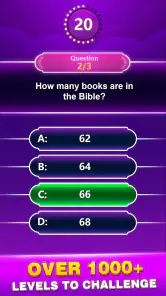
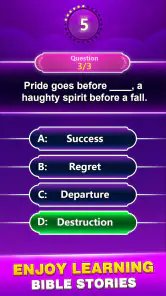
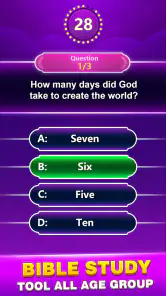
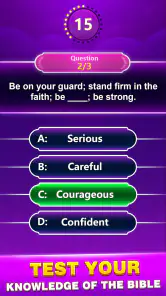
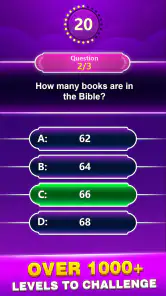
The game is structured around a series of trivia questions that cover a wide array of topics from the Old and New Testaments. What I loved about it is how it’s not just about answering questions; it’s about learning and reflection. As you progress, the quizzes increase in difficulty, challenging your understanding and memory of biblical events, characters, and teachings.
One nifty feature is the hint system. If you’re stuck on a tricky question, you can use hints to nudge you in the right direction. It’s like having a lifeline, which is super helpful when you’re scratching your head over a tough one. There’s also a leaderboard, which adds a competitive edge to the game. You can compare your scores with friends or other players globally, which is a fantastic way to keep the motivation high.
Visuals and User Experience
The app’s design is simple yet effective. It doesn’t overwhelm you with flashy graphics, which I think is a plus. The focus remains on the content, making sure that your learning experience is uninterrupted. The fonts are easy to read, and the color scheme is soothing, which helps during long quizzes.
Navigation is seamless, and I didn’t experience any lags or crashes while using the app. It’s pretty lightweight, so it shouldn’t take up too much space on your device – a definite win for those of us with limited storage!
Final Thoughts
Overall, Bible Trivia - Word Quiz Game offers an engaging way to deepen your understanding of the Bible. It’s educational, fun, and perfect for all ages. Whether you’re playing solo or with friends, it’s a fantastic way to spend some quality time.
If you’re looking to explore the Bible in a new way or just want to challenge your knowledge, this app is worth a download. So, why not give it a try and see how well you score? Who knows, you might just discover a new favorite pastime!
Bible Trivia - Word Quiz Game Frequently Asked Questions
Is Bible Trivia - Word Quiz Game free to download, and are there optional purchases?
Bible Trivia - Word Quiz Game is free to download, so you can try its Bible-themed trivia without paying upfront. It also offers in-app purchases, with items priced from $0.99 to $49.99 each. The previously published FAQ describes these as potentially covering extra question packs, an ad-free experience, or other premium features; consider checking purchase options before letting children play.
What should I know about the app before downloading it?
Bible Trivia - Word Quiz Game is a free trivia game from Topy Games, with a Everyone content rating. It has an average rating of 4.8 from around 58,000 ratings, and has been downloaded over 5 million times. It is a Bible-themed option for players who want to test their knowledge through quiz questions.
What is Bible Trivia - Word Quiz Game?
Bible Trivia - Word Quiz Game is an engaging and educational app designed for both Android and iOS users. The game offers a variety of questions based on biblical themes, stories, and teachings, making it a fun way for users to test their knowledge of the Bible. It provides a combination of challenging quizzes and interactive learning experiences.
Is Bible Trivia - Word Quiz Game suitable for all age groups?
Yes, Bible Trivia - Word Quiz Game is designed to be family-friendly and suitable for all age groups. The questions range from easy to challenging, allowing players of different knowledge levels to enjoy the game. It encourages learning and discussion among family members, making it an excellent choice for both individual play and group activities.
Does Bible Trivia - Word Quiz Game require an internet connection?
Bible Trivia - Word Quiz Game can be played both online and offline. While an internet connection is required for downloading the app and accessing some features, such as leaderboards or updates, the core gameplay can be enjoyed offline. This flexibility makes it convenient for users to play anytime, anywhere.
Pros
- Engaging and educational quizzes.
- Wide variety of Bible topics covered.
- Easy to navigate interface.
- Suitable for all age groups.
- Encourages learning through play.
Cons
- Limited offline functionality.
- Ads can be intrusive at times.
- Some questions may repeat.
- Requires internet for updates.
- In-app purchases can be costly.
- Category
- Trivia
- Version
- 2.9