Ball Sort Puz - Color Game
- 9.64K
- 4.8
- Installs
- 10.00M
- Price
- Free
Screenshots
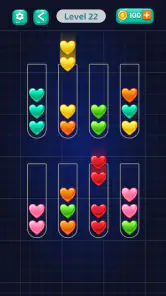
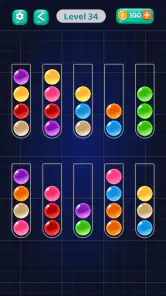
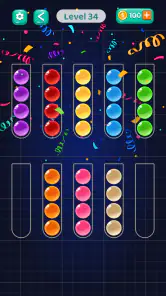


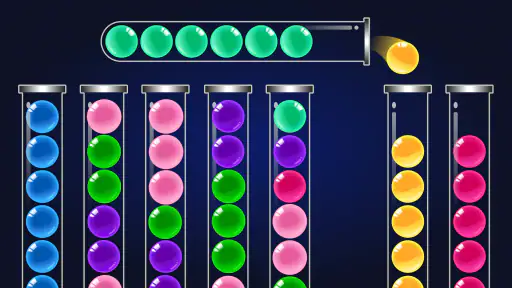
Analysis by Reviewed
I usually recommend a color-sorting puzzle when someone wants a game they can understand before their coffee gets cold. Ball Sort Puz - Color Game makes that first step easy: you look at the tubes, work out where each color belongs, and begin moving balls toward a tidy finish. My first meaningful success came from pausing to check which colors were already grouped, rather than tapping quickly. That small bit of attention made the goal feel clear instead of fussy.
What the first session feels like
This is a puzzle game from Playvalve, built around arranging colored balls in bottles. It is free to install, rated for Everyone, and has optional in-app purchases priced from $0.99 to $21.99 per item. The game was released on December 1, 2022, and version 1.8.1 is listed for Android 7.0 and up. Its average rating is 4.8 from around 342,000 ratings, with more than 10 million installs. Those figures suggest a widely played sort of puzzle, but what matters in practice is whether the simple rules suit the way you like to think.
There is no elaborate setup to learn before the central task makes sense. You are looking at colors, containers, and the consequences of each move. I find that directness useful when I want a small mental reset: unlike a word puzzle, I do not need to remember clues, and unlike a match-three game, I am not chasing a changing board. The challenge is to plan a sequence that leaves room to finish sorting.
How I get to a clean first solve
When I start a level, I take a moment to identify colors that are already together and notice which tube has space to receive a ball. Then I consider what a move will expose underneath, not only where the top ball can go. That is the habit that turns random tapping into a plan. A useful rule of thumb is to avoid filling a tube just because it looks convenient; if it blocks access to a color you need next, the short-term tidy result can make the rest harder.
If a board begins to feel tangled, I slow down and trace a couple of moves ahead. I ask myself which tube can act as temporary space and whether moving a top ball will uncover something that has a clear destination. This is a practical way to reduce backtracking without needing to treat every level like a serious logic exam. For a first-time player, the reassuring part is that success comes from observing the board, not from quick reactions.
Mixing Colors and Fun
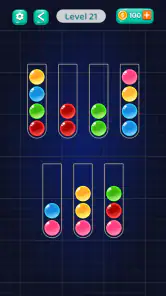
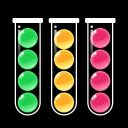
The premise of the Ball Sort Puz - Color Game is as straightforward as it is addictive. Imagine a series of test tubes filled with a colorful jumble of balls. Your mission? Sort them by color. Sounds simple, right? But don't be fooled! As you progress, the levels ramp up in complexity, requiring not just a keen eye but strategic planning to move the balls around efficiently.
A Visual Treat
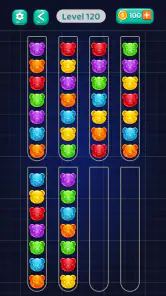
One of the first things that struck me was the game's vibrant and crisp graphics. Each color pops on the screen, making it not only a feast for the eyes but also easier to distinguish between the different hues. This visual clarity is crucial, especially when you're knee-deep in a challenging level and need to focus on your next move.
Another visual plus is the smooth animation. Watching the balls glide into place is oddly satisfying, adding to the overall enjoyment of the game.
Brain-Teasing Levels
As you delve deeper into the game, you'll find yourself facing increasingly intricate puzzles. The early levels ease you in, but soon enough, you'll be scratching your head, pondering the best way to rearrange those stubborn balls. It's this gradual increase in difficulty that keeps the game engaging without becoming overwhelming.
And let's not forget the "aha!" moment when you finally crack a tough level. That sense of accomplishment is what keeps me coming back for more.
Perfect for Quick Sessions
One of my favorite aspects of this game is its suitability for short, casual gaming sessions. Whether you're waiting for the bus or just need a quick break from work, you can easily pick up where you left off. The game saves your progress, so there's no pressure to solve a puzzle in one go. Just tackle it at your own pace.
Making the most of a short visit
I get the best use from this sort of puzzle when I set a modest goal: inspect the board, make a few deliberate moves, and stop when my attention is called elsewhere. That keeps a casual session from turning into a stubborn attempt to finish at any cost. If I am interrupted, I can leave the board and return to it rather than having to keep a sequence of timed actions in my head. It is a small but practical difference from games that reward constant attention.
For a first session, I would not try to prove how quickly I can solve a level. I would use the opening puzzles to learn how the visible arrangement changes after a move, then let that experience guide the next decision. Once a color has been exposed, I check whether moving it helps create a useful path or merely relocates the problem. This makes the first success feel earned and gives me a repeatable approach for later boards.
How I avoid getting stuck in a loop
A common source of frustration is making a move because it appears neat, then discovering that the resulting arrangement has fewer useful choices. When that happens, I mentally review the last few moves rather than continuing to shuffle balls around. I look for the moment when a tube stopped being flexible, and ask whether another tube could have served as temporary space. Even without searching for a perfect solution from the outset, that backward check can teach me something about the puzzle’s structure.
Another useful habit is to separate a move that reveals information from one that commits a lot of space. Moving a ball may uncover a color that clarifies the next step, but filling a tube can make it harder to access what is below. I try to value open capacity as an option, not as an empty spot that must be used immediately. That is a more subtle way to think about the board than simply grouping whichever colors are easiest to reach.
Final Thoughts
In a world crowded with mobile games, the Ball Sort Puz - Color Game stands out with its simple yet challenging gameplay, vibrant graphics, and the satisfaction it offers with each sorted puzzle. It's a perfect pick for anyone looking to unwind or give their brain a workout. So, next time you find yourself twiddling your thumbs, why not give this colorful puzzle a try? You might just get hooked!
When it fits into an ordinary day
I can picture opening it while waiting for a delayed bus, solving a board before the ride arrives, then returning later if the next one takes longer. Because the action is turn-based rather than dependent on fast reactions, I can pause to think without losing the thread. It also suits a quiet break between chores: one puzzle gives the mind something specific to focus on, while the sorting motion stays calmer than a timer-led arcade challenge.
It can also work as a gentle transition between tasks. After finishing something that demands sustained concentration, I sometimes want a small activity with a clear visual goal rather than another feed to scroll. A color arrangement gives me something concrete to consider, but it does not ask me to memorize a plot or keep track of a long set of clues. I would keep expectations modest, though: it is a way to occupy a spare moment, not a substitute for a more varied game when I have a longer evening free.
Who will enjoy it, and who may not
I would point a first-time player toward this if they like puzzles where planning matters more than speed. It is especially approachable for someone who wants to learn by looking at the board and testing a considered move, rather than studying a rulebook. The Everyone content rating also makes the presentation suitable for a broad audience, though the main appeal is the sorting challenge itself rather than a story or character-driven experience.
I would be more cautious recommending it to someone who quickly tires of repeating one central mechanic. The satisfaction comes from arranging the balls and managing space, so the basic activity remains recognizable even as the layouts become harder. Players who want a succession of very different puzzle types, a narrative reason to keep going, or competitive action may get more out of another game. It is also not the best fit for anyone who prefers puzzles built around words, numbers, or a constantly changing board.
Where the trade-offs show
The same narrow focus that makes the game easy to pick up can eventually feel repetitive. Every puzzle asks me to organize colors through limited space, so players seeking a story, varied objectives, or a strong sense of progression beyond harder arrangements may prefer a broader puzzle game. Color distinction is central, too; although the bright display helps, anyone who finds similar hues difficult to tell apart may need to take extra care rather than rely on a quick glance.
Compared with a match-three game, this is less about spotting a fast combination and more about preserving options across several moves. Compared with a crossword, it asks for visual planning instead of vocabulary or general knowledge. I would choose it for a brief, low-pressure logic break, but not when I want a new kind of challenge every few minutes. The optional purchases are worth keeping in mind if you prefer games with no paid extras at all; the game itself is free to install, but those purchases are part of its offer.
There is a useful distinction between “simple to understand” and “always easy.” The basic task is immediately legible, but a board can still become awkward if I use the available space without thinking ahead. That makes the game more satisfying for players who enjoy correcting their own assumptions than for people who want every move to produce visible progress. When I am tired and want something entirely effortless, even a small planning puzzle can feel like work; when I want a focused pause, that same planning is the point.
Questions I would settle before installing
If you are wondering whether this is a game you can start without preparation, I would say yes: the main idea is visible as soon as you see the colored balls and containers. You do not need to bring puzzle experience from another game. The more useful question is whether you enjoy visual organization and thinking a few moves ahead. If that sounds appealing, the first levels give you a natural chance to decide without committing to a complicated style of play.
If you are asking whether it suits short play sessions, that is one of its strongest practical qualities. A level gives you a compact problem, and you can pause when real life interrupts. If you are concerned about getting stuck, the best first response is to stop moving for a moment and inspect what each tube is making available; continuing to tap just to see what happens can make the board harder to read. If you are deciding between this and another casual puzzle, choose this for deliberate sorting, and choose a match game or word puzzle when you want a different kind of mental task.
One more consideration is whether the purchase model fits your preferences. The game costs nothing to install, but optional in-app purchases range from $0.99 to $21.99 per item. I would treat that as a reason to check your own comfort with paid extras, not as a reason to assume you need to buy anything to understand the central puzzle. If you prefer a completely purchase-free experience, a different option may feel more comfortable.
A sensible next step
For a new player, I would begin by sorting only when a move has a clear purpose: expose a useful ball, group a color, or preserve a space that may be needed later. If I reach a point where every move seems to make the board worse, I stop and inspect the top balls again instead of tapping through frustration. That simple reset in attention is often more useful than trying to solve the whole arrangement at once.
The game has a 4.8 average across around 342,000 ratings, and its 10 million-plus installs show that this straightforward format has found a large audience. I would recommend trying it if you like visual logic puzzles and want something that works in short visits. If you need constant novelty, narrative, or a game that tests several different skills, I would look elsewhere. For the right mood, though, sorting one stubborn board into order is a satisfying little win.
Ball Sort Puz - Color Game Frequently Asked Questions
Does Ball Sort Puz - Color Game work on my Android device?
Ball Sort Puz - Color Game requires Android 7.0 or later, so checking your device’s operating-system version is a useful first step. The game is a puzzle title built around sorting colored balls, and its current version is 1.8.1. You can also check the app page on your device before installing to make sure it is compatible.
How much space or setup does Ball Sort Puz - Color Game need before I can start?
Getting started is straightforward: install the game on a compatible Android device and open it to begin sorting colored balls. The game’s basic idea is easy to grasp, so there is no complicated setup involved in learning the puzzle. Before downloading, it is sensible to make sure your device has enough available storage for the installation.
Is Ball Sort Puz - Color Game suitable for children?
Ball Sort Puz - Color Game is rated Everyone, so it is presented as suitable for a broad audience. Its basic activity is sorting colored balls into tubes, making it easy to understand without requiring complicated controls. Parents can still check the game’s store page and device settings before downloading, especially if they want to manage in-app purchases or set limits on play time.
What is Ball Sort Puz - Color Game about?
Ball Sort Puz - Color Game is a fun and addictive puzzle game where players must sort colored balls into tubes. The aim is to have all balls of the same color in the same tube. With increasing levels of difficulty, it challenges your sorting and problem-solving skills. It's an engaging way to pass time and stimulate your brain.
How do I play Ball Sort Puz - Color Game?
To play Ball Sort Puz - Color Game, you need to tap on a tube to select a ball and then tap on another tube to place the ball there. The goal is to sort all the balls by color. You can only move a ball onto another ball of the same color or into an empty tube. The game becomes challenging as you progress through the levels.
Pros
- Simple and intuitive gameplay
- Visually appealing graphics
- Challenging levels increase gradually
- No internet required to play
- Regular updates with new features
Cons
- Ads can be intrusive
- Limited free levels available
- In-app purchases can get pricey
- Gameplay can be repetitive
- No multiplayer mode
- Category
- Puzzle
- Version
- 1.8.1