Pocket Chess – Chess Puzzles
- 3.26K
- 4.6
- Installs
- 1.00M
- Price
- Free

Screenshots
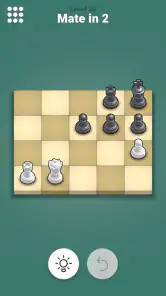
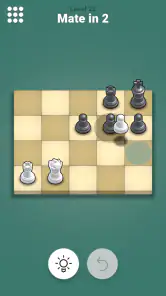
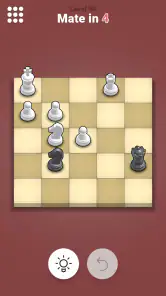
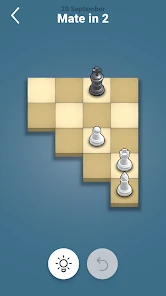
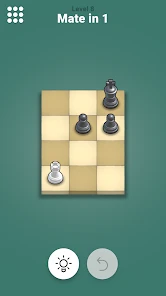
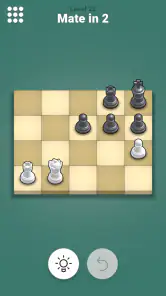
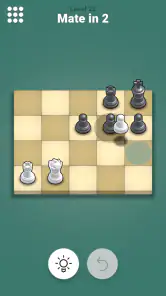
Analysis by Reviewed
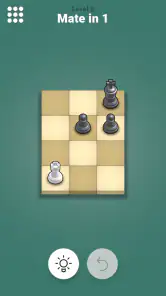
When I want a small chess challenge without setting up a full match, Pocket Chess – Chess Puzzles is an easy game to reach for. It focuses on solving positions rather than playing an opponent, which makes it a different kind of chess companion: useful for a few spare minutes, but not a replacement for every way of learning or playing.
Where it fits in a chess routine
I find this game most useful in the in-between moments when I have enough time to concentrate but not enough to start a full game. A short wait, a quiet stretch before bed, or a break between tasks can all suit a single position. The important difference from casual chess on a full board is that the puzzle gives me one problem to examine; I do not have to invent a plan from the opening or manage an entire game.
That focused format can also help when I want to practise deliberately. Before moving, I try to identify the opponent’s strongest reply and calculate a short line all the way through. If I see a tempting check or capture, I pause to ask whether it actually wins something or merely looks active. This is a small workflow, but it makes a puzzle session more valuable than tapping at guesses and hoping one is accepted.
Who benefits from the compact format
For a newer player, the appeal is the manageable scope: a puzzle can prompt you to look for threats and consider what pieces are doing without the pressure of an opponent waiting on every move. More experienced players can use the same format as a quick tactical warm-up. I would not expect either group to get a complete chess education from it, but it can slot neatly alongside games, books, or lessons that cover other parts of the game.
There is a useful trade-off here. A puzzle isolates a position, which makes it easier to focus on calculation, but that also removes the context of how the position arose. When I want to practise converting an advantage over many moves, handling an unfamiliar opening, or making decisions with a clock running, I would rather play a full game or use a more comprehensive training tool. The puzzle format is best when the goal is a concise tactical exercise.
A focused puzzle experience
The current version is 0.29.0, and the game is made by Lessmore UG. Its straightforward premise suits the board-game format: open a position, think through the moves, and work toward a solution. I like that this gives each short session a clear purpose. You do not need to reserve time for a complete game, and a single puzzle can make a coffee break feel a little more engaging.
That focus is also the main trade-off. If you are looking for live matches, a full chessboard for casual play, or a broad course with lessons and explanations, this is not the same experience as a chess-playing app or a structured learning platform. I would choose it when I want to practise spotting tactics, and choose a match-focused alternative when I want to test decisions against another player.
More From Our News Desk

Clash of Clans Is Won Between the Battles

Android Auto Makes the Case for Quieter Car Software

MobiOffice: Transforming Mobile Productivity with Seamless Integration

EA SPORTS FC™ Mobile Soccer: Redefining Mobile Sports Gaming

How Microsoft OneDrive Became a Mobile Productivity Giant

How Google Translate Breaks Language Barriers Effortlessly
Engaging Puzzles on the Go
The first thing that struck me about Pocket Chess is its simplicity and focus on what matters most: the puzzles. The app doesn’t overload you with unnecessary features or clutter. Instead, it offers a clean, intuitive interface that makes diving into a game both straightforward and enjoyable. Whether you’re on a quick coffee break or commuting, these puzzles are the perfect brain teaser to keep you sharp.
Variety and Challenge
One of the standout features is the sheer variety of puzzles. They range from beginner-friendly scenarios to more complex challenges that even seasoned players will find engaging. I’ve often found myself hooked on a particularly tough puzzle, determined to solve it before moving on. This variety ensures that the game remains fresh and keeps you coming back for more.
For a more useful practice session, I try not to move a piece the moment I see a tempting capture. I first ask what the opponent can do in reply, then look for forcing moves such as checks or threats. That small pause helps turn puzzle-solving into a habit I can carry into real games, rather than a race to tap the first plausible move. If a position stalls me, stepping away and returning later can also be more productive than making random guesses.
Making short sessions count
A practical way to use the game is to set a modest target for each visit: solve one position carefully, then say in your own words why the solution works. Naming the tactical idea, checking the opponent’s reply, and comparing that line with your first instinct makes even a brief session feel complete. I would avoid turning every spare moment into a test of speed; a slower, considered attempt is more likely to sharpen calculation than a string of rushed moves.
For example, if I open it while waiting for a train, I can treat the first puzzle as a focused exercise rather than trying to clear as many as possible. If I cannot see a sound line, I stop and return later instead of clicking through speculative moves. That approach is especially helpful for beginners, who may otherwise mistake finding the accepted move for understanding the position. Stronger players can use the same pause to test whether they have considered defensive resources as well as their own threats.
User-Friendly Experience
Another thing I genuinely appreciate about this app is how user-friendly it is. The developers seem to have put a lot of thought into the user experience. Navigating through the app is a breeze, and the clear instructions ensure that even those new to chess can quickly pick up the basics and start enjoying the puzzles. Plus, the app’s performance is smooth, with no annoying lags or crashes, which is something I always look for.
A realistic use for it is a short daily routine: solve one position while waiting for a train, then spend a moment reviewing why the move works before closing the game. That is a better fit than opening a long lesson when you only have a few minutes. Beginners can use the puzzles to practise looking ahead, while experienced players may prefer to treat them as a quick tactical warm-up rather than a complete training plan.
How it compares with other chess options
Compared with a standard chess app built around playing other people, this one asks less of your schedule and gives you a narrower task. There is no need to wait for an opponent or commit to a game that may run longer than your break. In exchange, you miss the practical experience of responding to an unpredictable player and carrying a plan through an entire position. I see the two formats as complements, not substitutes.
It also differs from a course-based learning app. A course can explain a theme in sequence and guide you through related examples, while a puzzle-led game is more immediate: you face a position and work out what to do. If you learn best from structured explanations, choose a course as your main resource and use this for extra practice. If you already know the basics and want quick tactical questions, the lighter format may be easier to return to regularly.
Cost, age suitability, and expectations
The game is free to download, rated for Everyone, and has optional in-app purchases priced from $1.99 to $26.99 per item. It has a 4.6 average from around 30,000 ratings, with more than a million installs. Those figures suggest it has found an audience, but they do not tell me whether its puzzle style will suit you; the best test is whether you enjoy pausing to calculate instead of moving pieces around in a full match.
The age rating makes it suitable for a broad audience, though a younger player still needs enough chess knowledge to understand the board and the aim of a position. I would start with a child or beginner by solving together and talking through candidate moves, rather than assuming every puzzle will teach its idea without help. The optional purchases are worth keeping in mind if you prefer to avoid spending inside games; the free starting point makes it possible to judge the basic experience before deciding whether any purchase is worthwhile.
Learning and Improving
What’s great about Pocket Chess is that it’s not just about solving puzzles for fun; it’s also a fantastic tool for learning and improving your chess skills. Each puzzle is a learning opportunity, helping you to understand different strategies and tactics. I’ve noticed my own gameplay improving as I tackle more puzzles, and it’s satisfying to see that progress.
I would keep expectations practical, though. Solving a tactic in isolation does not automatically teach opening choices, endgame technique, or how to manage a long game under pressure. To make the practice stick, I like to name the idea behind a solution—such as a fork or a discovered attack—then watch for that pattern in later positions. This makes the app more useful than simply tapping through puzzles, especially if you already play chess elsewhere.
Version, continuity, and what I would watch
The game was released on March 21, 2021, and its current version gives existing users a concrete reference point for the app as it stands now. A version number alone does not tell me which features changed or how the puzzles evolved, so I would not assume a particular update history. What matters in practice is whether the present puzzle selection continues to offer positions that feel worth thinking through.
For someone returning after a break, the practical question is whether the current experience still matches their preferred level and routine. I would judge it by the puzzles themselves: do they make me calculate, and do I understand the solution well enough to remember the idea? For someone considering a first download, the current version is simply the version to evaluate now, rather than a promise about what future changes will bring.
The game has an average rating of 4.6 from around 30,000 ratings and more than 3,000 written reviews. I treat that as a sign that many players have found something to enjoy, not proof that every puzzle is equally satisfying or that the difficulty will suit every chess background. If you are deciding whether to keep using it, a useful test is whether you leave a session with a clearer tactical idea, rather than only a tally of positions attempted.
Who will enjoy it, and what to expect
I’d recommend it most to casual chess players, beginners who want bite-sized tactical practice, and anyone who likes solving a defined problem more than playing a full match. If you mainly want opponents, deep coaching, or a guided curriculum, a dedicated chess platform is likely a better fit. The game’s puzzle-first approach is a strength when you want a compact challenge and a limitation when you need broader instruction.
One thing I would watch for over time is whether the challenge stays rewarding as your calculation improves. A beginner may value clear, approachable positions, while a stronger player may want harder problems and enough explanation to understand a missed line. The developer is Lessmore UG, and the game has around 3,300 written reviews; I’d treat player feedback as a useful companion to trying it yourself, not as a guarantee that every puzzle will match your level.
In conclusion, whether you’re a casual player looking to pass the time or someone eager to hone their chess skills, Pocket Chess – Chess Puzzles is a must-have app. It offers a perfect blend of entertainment and education, wrapped up in a neat, user-friendly package. So, next time you have a few minutes to spare, why not challenge yourself with a puzzle or two?
Pocket Chess – Chess Puzzles Frequently Asked Questions
Who develops Pocket Chess – Chess Puzzles, and when was it released?
Pocket Chess – Chess Puzzles is developed by Lessmore UG. It was released on March 21, 2021, and is a board game centered on chess puzzles rather than full matches. If you are looking for a focused way to spend a few minutes working through chess problems, its format is designed around that kind of play.
What kind of chess content can I expect from Pocket Chess – Chess Puzzles?
The game is presented as a collection of hundreds of chess puzzles and problems intended to help improve your chess game. That makes it a good fit for players who want to think through chess positions and practice decision-making in short sessions. It is focused on puzzle-solving, so it is different from choosing an app primarily for complete games against an opponent.
Is Pocket Chess – Chess Puzzles free to download, and what does it cost to unlock extras?
Pocket Chess – Chess Puzzles is free to download, so you can try its chess-puzzle format without paying upfront. Optional in-app purchases are available, with individual items priced from $1.99 to $26.99. If you prefer to play without buying extras, check the free content first and decide whether the additional options suit the way you want to use the game.
Is Pocket Chess – Chess Puzzles suitable for children and casual players?
The game has an Everyone content rating, making it suitable for a broad audience, including families and casual players. Its puzzle-based format can be approached at your own pace, and the published description presents it as a way to work on chess skills. As with any game that offers purchases, parents may wish to review purchase settings before letting a child play.
What is Pocket Chess – Chess Puzzles?
Pocket Chess – Chess Puzzles is a mobile app designed for both Android and iOS platforms, offering a variety of chess puzzles that challenge and enhance your strategic thinking. The app provides a fun and interactive way to improve your chess skills, whether you're a beginner or an experienced player. It features different levels of puzzles, from easy to hard, making it accessible for all skill levels. The game is developed by Lessmore UG and focuses on short, puzzle-style chess challenges rather than full matches.
Pros
- Engages users with challenging puzzles.
- Improves strategic thinking and planning.
- High-quality graphics and smooth interface.
- Suitable for all skill levels.
- Offline play is available.
Cons
- Limited free puzzles without purchase.
- Occasional ads interrupt gameplay.
- No multiplayer or online mode.
- Might be too challenging for beginners.
- Requires frequent updates.

- Category
- Board
- Version
- 0.29.0