Y/n
- 116.00
- 4.3
- Installs
- 100.00K
- Price
- Free

Screenshots




Analysis by Reviewed
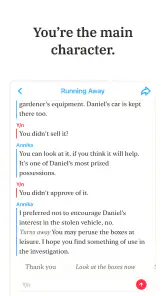
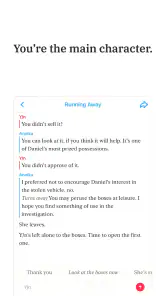
Y/n is a free Books & Reference app from Emittance Inc. built around one simple idea: you step into a story instead of only reading it. That sounds familiar if you have tried interactive fiction before, but the important difference in my experience is the way the app makes the reader’s identity part of the reading session. Rather than following a completely fixed protagonist, I read with “Y/n” as the stand-in for myself, which gives each scene a more personal feeling.
I approached it less like a conventional digital library and more like a collection of guided reading experiences. The app’s store summary, “Play your story,” is a better description of its purpose than calling it a normal ebook reader. It is aimed at people who enjoy narrative immersion, imagined conversations and the feeling of being placed inside a fictional situation. If you want searchable reference material, a large traditional ebook shelf or a quiet reader with no interactive framing, this is probably not the right fit.
After spending time with it, my main conclusion is that the identity-based reading format is the real reason to try Y/n. It can make a familiar type of fictional scene feel more immediate, especially when I am in the mood for a short escape rather than a long, carefully structured novel. At the same time, that same format will not appeal to everyone. Readers who prefer a clearly defined hero, deep world-building or complete control over the story may find the experience narrower than expected.
How Y/n turns reading into a personal experience
The central capability is the use of “Y/n,” a common shorthand for “your name,” as the reader’s place in the story. Instead of asking me to observe a character from a distance, the format invites me to imagine that the events are happening to me. This changes the emotional distance of the writing. A line addressed to Y/n feels more direct than the same line delivered to a named fictional character, even when the underlying idea is simple.
That distinction matters because this is not merely a cosmetic name replacement. The whole appeal depends on how willing I am to occupy the role. When I read passively, the app feels like lightweight fiction. When I accept the premise and picture myself in the scene, the same material becomes more engaging. I found that the experience works best when I treat it as a personal narrative session rather than comparing it with a conventional novel paragraph by paragraph.
For readers who already enjoy self-insert fiction, the format is immediately understandable. For readers who have never used it, the first few moments may feel slightly unusual. There is no need to invent a detailed personality for Y/n, but I did get more from the scenes when I allowed myself to make small choices about tone and reaction. The app’s strength is therefore partly technical and partly imaginative: it provides the frame, while I supply some of the emotional participation.
This also explains why the app belongs comfortably in Books & Reference while feeling more active than a standard reading tool. It is still a reading-focused product, but its value comes from the relationship between the text and the reader’s imagination. I would not install it expecting a general-purpose reader for documents or novels I already own. I would install it when I want fiction that addresses me directly.
More From Our News Desk

Clash of Clans Is Won Between the Battles

Android Auto Makes the Case for Quieter Car Software

MobiOffice: Transforming Mobile Productivity with Seamless Integration

EA SPORTS FC™ Mobile Soccer: Redefining Mobile Sports Gaming

How Microsoft OneDrive Became a Mobile Productivity Giant

How Google Translate Breaks Language Barriers Effortlessly
What the format feels like during an ordinary session
In practice, I found the best approach was to begin with a small amount of time available rather than expecting a full evening of reading. Y/n suits the moment when I want to open an app, enter a fictional situation and follow the mood without preparing a reading plan. The personal framing makes even a brief session feel purposeful, because I am not simply browsing a shelf and deciding what to read next.
A realistic example is a commute or a quiet break after work. I can use that time for a story experience that feels more involving than scrolling through short posts, but less demanding than starting a long novel. If I am tired, the direct-address format helps me get into the scene quickly. I do not have to remember a large cast or reconstruct an elaborate setting before the reading becomes enjoyable.
There is a trade-off here. The same immediacy that helps me start quickly can make the experience feel less substantial when I am looking for a long-form reading project. Traditional ebooks are better when I want layered prose, a stable protagonist and a story that develops through sustained chapters. Y/n is better when the pleasure comes from the sensation of being included in the scene.
I also think the app works best when I use it with the right expectations about the role of the reader. It is not a substitute for every kind of book. Its appeal is closer to interactive or self-insert fiction, where emotional proximity matters more than literary distance. Readers who dislike being addressed as part of a story may find the premise distracting rather than immersive.
A useful way to approach the reading experience
My first practical tip is to decide before opening a story whether I want immersion or casual browsing. If I am only looking for something to fill a few seconds, I may judge the app too quickly because the format needs a little imaginative cooperation. When I deliberately set aside a quiet stretch, even a short one, I notice more of the appeal. The app rewards attention, but not necessarily long sessions.
A second tip is to avoid forcing a detailed self-insert persona. I initially thought I needed to decide exactly how Y/n would speak or behave, but that made the experience feel like work. It was more natural to treat Y/n as a flexible version of myself and let the scene suggest the reaction. That keeps the reading accessible while preserving the personal feeling that makes the format different from an ordinary protagonist.
A third useful habit is to compare the experience with the kind of reading I actually want that day. If I want comfort, curiosity or a quick fictional escape, the direct-address approach can be effective. If I want research, factual lookup or a book I can annotate in a conventional way, I would choose another app. This simple distinction prevents the common disappointment of expecting Y/n to behave like a full ebook platform.
Because the app is free to install, it is relatively easy to test without committing to a purchase. However, the presence of in-app purchases means I would still pay attention to what is included before spending money. Individual items are listed in the range of $4.99 to $14.99, so the free entry point does not automatically mean every reading experience is free. For me, that makes sampling important: I would first decide whether the identity-based format genuinely works for me before buying additional content.
The scenario where Y/n makes the most sense
The strongest use case is a reader who wants a personal, mood-driven story experience during short pockets of free time. Imagine finishing dinner, having half an hour before bed and wanting something more absorbing than social media but not wanting to begin a five-hundred-page novel. Y/n can fill that space by placing the reader at the center of the fictional situation. The experience has a clear emotional hook without requiring the commitment of a conventional reading project.
It may also appeal to readers who enjoy imagining dialogue and relationships from inside the scene. The “your name” framing gives those moments a direct quality that a named character cannot provide in exactly the same way. I found this particularly useful when I wanted fiction to feel intimate and immediate rather than observational. The app’s value is not that it removes imagination; it gives imagination a defined place to enter.
Another good scenario is someone exploring self-insert fiction for the first time. The app offers a straightforward way to understand why this style attracts people. Instead of reading explanations about the format, I can experience the central idea directly. If I enjoy being addressed as part of the story, that is a strong sign the app may become a regular choice. If the device feels artificial after a few attempts, I have learned something useful without needing to invest in a large reading library.
I would be more cautious about recommending it for academic reading, professional reference work or serious note-taking. The category label may make some people expect a broad reference utility, but the actual appeal is narrative participation. Students looking for textbooks, dictionaries or study tools should use an app designed for those tasks. Y/n is a better match for personal entertainment through reading than for information retrieval.
Where it sits beside familiar alternatives
Compared with a standard ebook reader, Y/n offers more emotional immediacy but less general usefulness. A normal reader usually wins for typography controls, a broad personal library and long-form concentration. Y/n wins when I want the story to address me and make my imagination part of the experience. The choice is not really about which app is universally better; it depends on whether I want to observe a protagonist or occupy the narrative space myself.
Compared with interactive fiction, the distinction is more subtle. Interactive fiction often emphasizes explicit decisions and branching outcomes, while the defining attraction here is the reader’s position inside the story. I would not assume that choosing Y/n means I am getting a complex decision tree. The safer expectation is a personalized reading frame, not a full game system. That difference is important for anyone downloading it because they want extensive control over plot direction.
Compared with fan-fiction platforms, Y/n may feel more focused because the identity premise is central to the experience. Large community platforms are often better for discovering a wide range of writing, following authors and participating in comments. Y/n is more suitable when I want the app’s format itself to guide the session. The trade-off is breadth: a large platform may offer more variety, while Y/n can provide a more consistent style of reader involvement.
That comparison also helped me understand the app’s audience. It is not trying to replace every reading service on a phone. Its strongest argument is specialization. The more I value direct address and self-insert immersion, the more meaningful the app becomes. The less I care about those qualities, the more likely a conventional reader or a broader fiction platform will serve me better.
Limits that affect the recommendation
The biggest limitation is also the app’s defining feature: not everyone wants to be the protagonist. Some readers prefer characters with established names, histories and personalities because those details create emotional complexity. With Y/n, the reader has to provide more of that identity personally. That can feel liberating, but it can also make the writing seem less vivid if I want the author to do all the character-building.
There is also a risk of a narrow emotional range if I use the app only for the novelty of seeing “your name” in a scene. The format creates an initial spark, but sustained enjoyment still depends on the quality and variety of the stories available within the experience. I would not recommend buying content solely because the premise sounds appealing. I would first confirm that the actual tone and storytelling style match what I like to read.
The purchase model deserves practical attention as well. The app itself is free, but optional items can cost from $4.99 to $14.99 each. That is not necessarily unreasonable for readers who find a story they value, yet it changes how I evaluate the download. I treat the free installation as an opportunity to understand the format, not as a promise that the complete experience will remain without cost.
The Teen content rating is another useful signal for families. I would not interpret it as a detailed description of every story, but I would take it seriously when deciding whether the app is suitable for a younger reader. Parents should look at the app together with the teenager and discuss purchases before allowing them. For adult readers, the rating simply places the experience in a more mature range than children’s reading apps.
Device compatibility is reasonably broad for people using older Android hardware, since the listed minimum is Android 8.0. I still would not choose an app based on that detail alone. The more important question is whether the reader enjoys the format. A modern phone can run the app and still deliver an unconvincing experience if the user dislikes self-insert storytelling. Compatibility removes one barrier; it does not solve that personal preference.
Who will get the most from it
I would recommend Y/n first to readers who already enjoy immersive fiction, imagined scenarios and stories that speak directly to them. It is especially suitable for someone who wants a quick narrative break during a commute, a lunch pause or a quiet evening. The app’s strongest benefit is not productivity or reference efficiency; it is the feeling of entering a story without needing to build a complete fictional identity from scratch.
It is also a sensible trial for people curious about self-insert reading but unsure whether they will enjoy it. Since the app is free to download, the initial test is relatively low-risk. I would spend enough time with the experience to move past the first novelty, then decide whether I want to explore paid items. That approach gives a clearer answer than judging the concept from the short description alone.
I would steer other readers elsewhere. If your priority is a large ebook collection, advanced study tools, factual references, extensive branching choices or fully developed protagonists, a conventional reading app, interactive fiction title or community writing platform may be a better match. Y/n is not weak because it does not cover those needs; it is simply focused on a different kind of reading relationship.
The app has reached a meaningful audience, with more than one hundred thousand installs and an average score of 4.3 from around one thousand two hundred ratings. Those figures suggest that the concept connects with many readers, while the Teen rating and optional purchases make it worth approaching thoughtfully. I would treat the rating as encouragement to try it, not as proof that every story will suit my taste.
At the time of my review, the app is on version 1.3.34 and is listed as released on November 21, 2025. Those details help identify the current product, but they do not change my main advice: start with the free experience, pay attention to how naturally you accept the Y/n role and only then consider spending on individual items. The developer, Emittance Inc., has built a focused reading concept rather than a universal book utility.
My final view is that Y/n is worth trying when you want to feel included in a story, not merely entertained by one. I like the way its central capability changes the reader’s position and makes a short session feel personal. I also appreciate that the idea is clear enough to evaluate quickly. The limitation is equally clear: readers who want traditional books, broad reference functions or deep control over plot and character may outgrow the format almost immediately.
For the right person, that focus is a strength. I would recommend it to a friend who enjoys self-insert fiction and wants a convenient narrative escape on Android, while warning them to check the paid content before making purchases. If that sounds like your kind of reading, the free download makes experimentation easy. If you prefer to remain an observer, choose a standard ebook reader instead.
Y/n Frequently Asked Questions
What does Y/n’s Teen content rating mean for readers?
Y/n has a Teen content rating, which can help families decide whether the app is suitable for a particular reader. Parents and guardians may want to review the app’s description and available content with younger users before downloading. The rating is a useful starting point, but personal comfort with reading material can differ, so consider the intended reader’s age and preferences.
What is Y/n, and what can users do with the app?
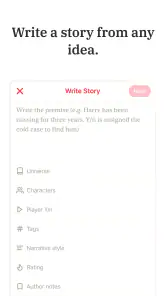
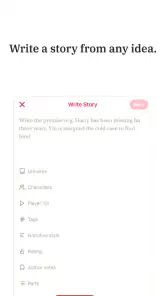
Y/n is presented as an app for users who want a straightforward way to explore its available features and content from a mobile device. Its short description is “Y/n,” while its store summary invites users to “Play your story,” suggesting a story-focused experience. Before downloading, it is worth checking the app’s current description, screenshots, and supported functions, since the experience may vary by version, device, operating system, and region. Reviewing these details helps confirm that Y/n matches your expectations.
Is Y/n free to download and use?
Y/n is free to download, though optional in-app purchases are available, priced from $4.99 to $14.99 per item. Users should review the store listing carefully before installing, especially the billing terms and whether optional purchases are needed for the complete experience. Check purchase details before confirming any transaction, and use your device’s purchase controls if you want to prevent unintended spending.
Which devices and operating systems support Y/n?
Before downloading Y/n, users should verify that their Android or iOS device meets the application’s minimum requirements. The Android version requires Android 8.0 or later. Compatibility can also depend on available storage, screen size, and device performance. Older phones or tablets may not provide the same results as newer models, and certain features may be unavailable in specific regions or on particular hardware.
Does Y/n require an account or an internet connection?
Depending on how Y/n is designed, some functions may work immediately while others may require registration, login, or permission to access device features. An internet connection may also be necessary for downloading content, synchronizing information, displaying advertisements, or using online services. Check the permissions requested during installation and avoid providing personal information unless it is genuinely needed.
Pros
- Simple interface that is easy to navigate from the first launch.
- Runs smoothly on most modern Android and iOS devices.
- Useful features are accessible without a complicated setup.
- Regular updates can improve performance and add new content.
- Clear controls make the app comfortable for everyday use.
Cons
- Some features may require a paid subscription or in-app purchases.
- Performance can vary on older devices with limited storage or memory.
- The app may request permissions that some users find unnecessary.
- Notifications can become distracting if they are not adjusted manually.
- Offline access may be limited when there is no internet connection.
- Category
- Books & Reference
- Version
- 1.3.34