Wag! - Dog Walkers & Sitters
- 4.85K
- 4.3
- Installs
- 1.00M
- Price
- Free

Screenshots
Analysis by Reviewed
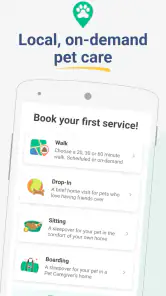
I approached Wag! - Dog Walkers & Sitters as the kind of app you open when your dog’s routine suddenly stops fitting your own. A late meeting, a weekend away, a puppy that needs more structure, or a pet that would benefit from attention during the day can turn a simple care problem into a stressful search. Wag! brings walking, sitting, boarding, training, and remote veterinary care into one travel-and-local app, which makes it more useful than a basic dog-walking directory.
My first impression was that its appeal is immediate: instead of asking friends for recommendations, checking several local services, and coordinating everything through separate conversations, I could begin with the type of help I needed. That convenience is the main reason to try it. The more important question, though, is whether it remains useful once the novelty wears off. In my experience, the answer depends less on how often someone needs a walk and more on whether the app can become a dependable part of an existing pet-care routine.
What the first week feels like
The first week is where Wag! makes its strongest case. The service categories match real situations rather than forcing every need into the same booking pattern. A walk is appropriate when I am delayed at work, while sitting or boarding makes more sense for travel. Training addresses a longer-term behavior goal, and remote vet care can be useful when I need professional guidance without immediately arranging an in-person visit. That range gives the app a practical advantage over relying only on a neighborhood walker.
I also like the way the app frames pet care as an ongoing local service instead of a single emergency transaction. If I am new to an area, I do not have to build an entire contact list before handling a routine need. The developer, Wag Labs, Inc., has positioned the app around several connected forms of support, so I can start with one task and return later for another without learning a completely different service.
A realistic example is a normal weekday that goes wrong. I might plan to leave work on time, then get stuck in a meeting while my dog is waiting at home. In that moment, the value is not entertainment or discovery; it is reducing the number of decisions I have to make. I can look for a local walk rather than texting several people and hoping someone is available. If the same problem happens repeatedly, the app has a chance to become part of my weekly planning instead of a last-minute rescue tool.
That said, I would not treat the first successful booking as proof that every future booking will feel effortless. Local availability, the suitability of a caregiver, the dog’s temperament, and the clarity of the instructions all matter. The app can organize the request, but it cannot remove the responsibility of explaining a nervous dog, a complicated entry arrangement, medication needs, or household rules. The better I prepare those details, the more likely the service is to fit my expectations.
Useful beyond the obvious walk request
One of the less obvious strengths is the way the different services can cover different stages of ownership. A new puppy may need training and frequent daytime help, while an older dog may make remote veterinary guidance more relevant. A household that normally manages care alone may still need boarding during a trip. I see more lasting value here than in an app built only around occasional walks, because the reason for opening it can change as the dog’s needs change.
Training is particularly important in that respect. It is easy to think of a dog-walking app as a temporary convenience, but training can be part of a deliberate plan to make future care easier. If a dog learns to handle visitors, leash routines, or separation more calmly, later walks and sitting arrangements may become less stressful. I would not expect an app to solve behavior problems by itself, but having training available in the same place can make it easier to act before a small issue becomes a recurring obstacle.
Remote vet care also changes the role of the app. It is not a replacement for every veterinary situation, and I would never use a remote option to delay urgent in-person treatment. Still, it can be a sensible first step for questions that are appropriate for remote guidance, especially when the alternative is searching randomly online. The practical insight is to decide in advance which concerns belong in remote care and which require a clinic, rather than making that judgment while worried.
Who gets the most from it
Wag! is best suited to dog owners who value flexibility and occasionally need help outside their normal support network. It can be especially useful for people with changing work schedules, frequent short trips, new residents who have not yet met local pet-care providers, and owners who want several kinds of assistance in one app. It also makes sense for someone who prefers arranging services digitally rather than coordinating through phone calls and separate messages.
I would be more cautious if my dog is highly reactive, has complex medical needs, or becomes distressed with unfamiliar people. That does not automatically make the app unsuitable, but it raises the importance of continuity and communication. A dog that needs a very specific caregiver may be better served by a trusted local professional who already knows its routine. Likewise, if I need guaranteed daily care from the same person at a fixed time, a direct long-term arrangement may be more predictable than relying on an on-demand marketplace.
The app is free to install, which lowers the barrier to testing it. The actual care arrangement is where the practical cost decision begins, so I would compare the total booking cost with a local walker, kennel, trainer, or veterinary clinic rather than assuming the app is automatically the cheaper choice. Convenience has value, but it is not the same thing as savings.
Does it earn a place in a monthly routine?
After the first week, the question changes from “Can this solve today’s problem?” to “Will I remember and want to use it next month?” For me, recurring value comes from having a single starting point for several kinds of dog care. The app earns its place when it reduces planning friction across ordinary weeks, not merely when it helps during an unusual crisis.
The strongest long-term workflow is to use it as a backup layer. I would keep a primary routine for food, exercise, medication, and familiar caregivers, then use Wag! when that routine breaks. This approach avoids making the app responsible for every part of the dog’s life while preserving its usefulness. It also gives me time to evaluate which services fit my dog before an important trip or a genuinely urgent day.
Another good workflow is to use a quiet period to prepare for a busy one. Before traveling, I would review the sitting or boarding option, think through the dog’s schedule, and write down the details a caregiver would need. Before a demanding work period, I would consider whether a recurring walk is more sensible than repeatedly arranging one at the last minute. Planning ahead is a non-obvious advantage because it turns the app from a panic button into a tool for reducing predictable stress.
Its broad service mix also helps households with changing circumstances. Someone may begin by booking walks, later need sitting during a holiday, and eventually explore training. That progression gives the app a chance to remain relevant without requiring a new search every time the need changes. In contrast, a single-purpose directory may be perfectly adequate for one regular walk but less convenient when the household needs a different kind of support.
Where it compares well with usual alternatives
The usual alternatives are personal recommendations, a direct relationship with a local walker, a boarding facility, a trainer found separately, or a veterinary clinic. Those options can be excellent, and I would not replace a trusted professional merely because an app is available. A direct relationship often wins on consistency, personal knowledge, and communication. A dedicated clinic is the better choice for hands-on medical care. A local trainer may also offer a depth of familiarity that a general platform cannot match.
Wag!’s advantage is coordination. It gives me one place to begin when I am unsure which type of help fits the situation or when my usual provider is unavailable. That matters most during transitions: moving to a new neighborhood, changing jobs, adopting a dog, or preparing for travel. The trade-off is that convenience can involve more variability than a long-established one-to-one arrangement. I would choose the app for access and flexibility, then build direct trust selectively where a particular caregiver proves reliable.
The app’s public scale suggests that it is not an obscure experiment. It has passed one million installs, carries a 4.3 average from around 9.6 thousand ratings, and has roughly 4.8 thousand written reviews. Those figures make me more comfortable treating it as an established option, but they do not tell me whether a particular caregiver in my area will suit my dog. Local fit still matters more than broad popularity.
For someone who already has a dependable walker, sitter, trainer, and clinic, Wag! may add little beyond redundancy. For someone who has none of those relationships, it can be a useful bridge while building them. That distinction is important: I see it as a practical layer of access, not a universal replacement for every local pet-care relationship.
The maintenance burden after the novelty fades
Any service app creates a small amount of upkeep, and pet care makes that upkeep meaningful. I would need to keep my dog’s profile, instructions, schedule, access details, and care expectations accurate. A change that seems minor to me—new feeding habits, a different leash, a medication adjustment, or a changed reaction to strangers—can matter greatly to the person providing care. The app is only as useful as the information I maintain inside it.
This is one of the hidden trade-offs. A centralized profile saves repetition, but it can also create false confidence. I should not assume that an old note covers a new situation, especially when arranging boarding or sitting. Before each unfamiliar service, I would reread the instructions as if I were the caregiver seeing them for the first time. Clear details about timing, behavior, routines, and emergency contacts are more valuable than a long but disorganized explanation.
I would also keep a personal backup plan. That means knowing who can help if a booking does not fit, keeping the regular veterinary contact available, and avoiding a single point of failure before a trip. This is not a criticism unique to Wag!; it is simply good pet-care planning. The app can make access easier, but my dog should not be left without an alternative because I assumed availability would always line up with my schedule.
On iOS, the minimum operating system is version 11, so owners using very old devices should check compatibility before planning around it. The current version is 3.117.2, which tells me the app is actively maintained as a product, but I still judge updates by whether the everyday booking experience remains clear and dependable. A new version matters less to me than being able to find the right service, communicate the important details, and manage the arrangement without confusion.
The Everyone content rating makes the app broadly approachable from an age-classification perspective. Even so, the responsibility for choosing suitable care remains with the adult arranging it. I would involve other household members in the plan, but I would not leave a child to make decisions about a dog with medical, behavioral, or access requirements.
What can become tiring
The first source of fatigue is repetition. If I use the service frequently, I may find myself reviewing the same instructions, checking timing, and confirming details for situations that feel routine. That is necessary for safety, but it can reduce the sense of effortless convenience. The app saves the search step; it does not eliminate the mental work of responsible ownership.
The second is uncertainty around fit. A profile and a booking flow can help me start, yet neither guarantees that the person is the right match for my dog’s personality. Some dogs warm up immediately; others need a gradual introduction. I would be wary of using a new caregiver for a high-stakes trip without first allowing time to see how the dog responds. A short trial arrangement is more sensible than discovering a mismatch when I am already out of town.
The third is overuse during emergencies. When I am stressed, it is tempting to accept the first apparent solution. That is exactly when I should slow down enough to check whether the service matches the dog’s needs. A remote veterinary option may be appropriate for a non-urgent question, but it should not become an excuse to postpone immediate care. Similarly, a last-minute walk may solve a schedule problem while still being unsuitable if the dog needs specialized handling.
There is also a psychological fatigue that comes from managing too many options. Having walking, sitting, boarding, training, and remote vet care together is convenient, but it can encourage me to treat every problem as a booking problem. Some issues are better solved by adjusting the dog’s routine, speaking directly with a trusted professional, or getting proper medical assessment. The app is strongest when it helps me choose the right kind of support, not when it becomes the automatic answer to everything.
Small habits that improve the experience
I would create a concise care note rather than relying on scattered explanations. It should cover the dog’s normal rhythm, comfort triggers, handling boundaries, feeding instructions, and anything that could surprise a new caregiver. I would then update it after meaningful changes instead of waiting until the next trip. This makes each future request clearer and reduces the chance that an important detail gets buried.
I would also separate routine care from contingency care. If I need regular walks, I would look for a stable pattern and assess whether the arrangement is genuinely helping the dog. If I only need occasional support, I would use the app as a flexible backup and keep expectations realistic. Mixing those two purposes can create frustration because a service that is excellent for a sudden gap may not be the best foundation for a highly structured daily schedule.
Finally, I would evaluate the result from the dog’s perspective, not just mine. Did the dog settle afterward? Was the routine preserved? Did the arrangement reduce stress or merely move it to another part of the day? These questions help me decide whether Wag! is providing recurring value or just making a booking easy. Convenience is meaningful only when the care outcome is also acceptable.
My long-term verdict
After the initial appeal fades, Wag! remains worthwhile for the right kind of owner. I see it as a flexible local-care hub that can cover walks, sitting, boarding, training, and remote veterinary guidance without forcing me to search from scratch each time. Its lasting value comes from variety and access, especially when my schedule changes or my dog’s needs evolve.
I would recommend it to someone who wants a practical backup, is new to an area, has an unpredictable routine, or wants to explore several forms of dog support through one service. I would be more hesitant to recommend it as the only care plan for a dog that requires one highly familiar person, specialized handling, or guaranteed continuity. In those cases, a direct relationship with a trusted local professional may be the better long-term investment.
The app is free to download and rated for Everyone, so trying it is relatively easy. My advice would be to test it during a low-pressure situation, maintain the care information carefully, and avoid waiting until a major trip or urgent problem to discover whether the local options suit your dog. That approach lets me judge the real experience rather than the promise of convenience.
My lasting verdict is that Wag! earns space as a dependable backup and a useful doorway into local dog care, but not as a substitute for judgment or trusted relationships. If I use it thoughtfully—planning ahead, matching the service to the situation, and checking how my dog responds—it can remain valuable month after month. If I already have every care need covered by people I trust, its role may be limited. For everyone in between, Wag! - Dog Walkers & Sitters is a sensible app to keep available when ordinary plans stop working.
Pros
- Easy booking for walks
- sitting
- and drop-in visits
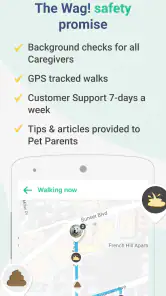
- GPS tracking helps monitor walks while they are in progress
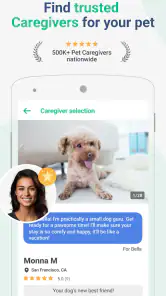
- Profiles include caregiver reviews
- ratings
- and service details
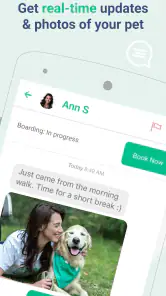
- In-app messaging makes it simple to share pet-care instructions
- Useful for arranging care when your usual sitter is unavailable
Cons
- Service availability depends heavily on your location
- Prices can increase during busy periods or for extra requests
- Caregiver quality may vary despite ratings and reviews
- Some features require sharing detailed pet and home information
- Last-minute bookings may offer fewer caregiver choices

- Category
- Travel & Local
- Version
- 3.117.2