ValeroPay+
- 1.42K
- 4.2
- Installs
- 500.00K
- Price
- Free
Screenshots

Analysis by Reviewed
ValeroPay+ makes the most sense when a Valero stop is already part of your routine. I see it as a focused fuel-payment app, rather than a general travel wallet: it is intended to make paying at Valero pumps easier, and its usefulness depends on how often those stops fit your routes. Valero Marketing and Supply Company develops it, and it is free to use. I would consider it if I regularly fuel at Valero, but I would not install it expecting one app to handle every station or every part of a trip.
When one person pays and another helps navigate
A shared drive is where a little planning can make a dedicated pump app feel useful rather than awkward. Picture a family heading home after a day out: one adult drives, another follows directions, and the fuel warning appears before the next familiar stop. If Valero fits the route, the person who owns the account can handle payment while the passenger keeps navigation and the rest of the trip organized. The important choice is to make that arrangement before pulling into the station, not while the driver is trying to focus on the pump.
That setup works best when the account holder is also the person responsible for the payment method. A passenger can help with directions or remind the driver about a planned stop without needing access to the account. If the phone is usually kept by the driver, decide in advance whether the passenger will hand it over only while the car is parked safely. Small boundaries like these help prevent a convenient payment option from becoming a last-minute distraction.
There is a useful distinction between sharing a journey and sharing an account. A household may travel together often but still have different cars, budgets, and fuel habits. I would not assume that everyone needs to log in on one device just because they sometimes ride together. Keeping payment access with one responsible adult makes it easier to track who is using the account and reduces confusion when a fuel purchase needs to be discussed later.
Using it on a shared household drive
A typical shared-use moment is a family road trip: one person drives, another handles navigation, and the car pulls in for fuel. Paying by phone can reduce the handoff of a physical card, but the driver still needs to keep attention on the pump and the payment steps. My practical advice is to decide before arriving who will manage the phone and payment, rather than trying to sort it out beside a busy forecourt. That small bit of coordination matters more than the app itself.
It can also suit a household where one adult regularly fills the same car on the way home. The app may make that familiar stop feel more streamlined, while a passenger can use a separate navigation tool to check the route. It is less compelling when household members use different fuel brands or rarely visit Valero; in that case, a bank card or a broader payment option is simpler than maintaining a single-brand app.
Payment convenience, with a brand boundary
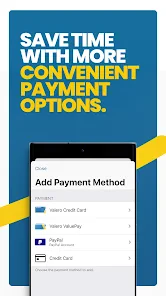
First off, the ValeroPay+ app transforms the way you pay at Valero gas stations. Gone are the days of fumbling with your wallet at the pump. With the app, you simply pull up to the pump, open the app, and tap a few buttons to pay instantly. It's as easy as that! The app links directly to your preferred payment method, whether it's a credit card, debit card, or even PayPal. This feature saves you time and minimizes contact, which is a big win, especially in today’s world.
More From Our News Desk

Clash of Clans Is Won Between the Battles

Android Auto Makes the Case for Quieter Car Software

MobiOffice: Transforming Mobile Productivity with Seamless Integration

EA SPORTS FC™ Mobile Soccer: Redefining Mobile Sports Gaming

How Microsoft OneDrive Became a Mobile Productivity Giant

How Google Translate Breaks Language Barriers Effortlessly
The trade-off is that this convenience is tied to Valero, not to fuel stops everywhere. I would keep a usual backup payment method available, especially on a long drive or when travelling somewhere unfamiliar. If the app is not the easiest option at a particular stop, a physical card avoids turning a quick refuel into a troubleshooting session. For drivers who compare stations across brands before choosing where to fill up, a general navigation or fuel-price tool may be more useful alongside it.
Compared with paying by card at the pump, a dedicated app adds a phone-based step and makes sense mainly when it fits an existing Valero habit. A general digital wallet may be easier for someone who wants to keep everyday payments in one place, while a map or travel app is better for planning a route that includes different fuel brands. I would not treat these as interchangeable tools: one can help with a Valero transaction, while the others serve a broader purpose. For a driver who stops at Valero regularly, using both a map and the dedicated payment option can be a practical combination.
One useful habit is to prepare before the first time you rely on it during a trip. Set up the account and payment method at home, when there is time to read each step, rather than trying to do that at the pump with passengers waiting. Then keep a physical payment option accessible. This is not because the app is necessarily difficult; it is simply a sensible backup for any phone-based payment routine, particularly when a journey is time-sensitive.
Rewards are useful only if the routine fits
Another fantastic feature is the rewards system. Who doesn't love saving money? With each purchase, you accumulate points that can be redeemed for discounts on future fuel purchases. The app frequently offers promotions and exclusive deals, giving you more bang for your buck. It's like having your own personal fuel discount card, right in your pocket.
I would treat rewards as a bonus, not as a reason to take a detour or assume every visit earns the same benefit. For a household, it is worth agreeing who makes the purchase and checks any available offer, so people do not rely on separate assumptions about points or discounts. Before changing where you buy fuel, compare the actual value of an offer with the extra distance or time involved. A saving that requires an inconvenient trip may not be a saving in practice.
There is also a small coordination issue when several adults share fuel expenses. If one person checks an offer and another person fills the car, they should agree beforehand who is making the purchase and using the account. That keeps expectations clear without turning a routine stop into a debate about who earned a reward. If the household does not want to coordinate around one brand’s offers, ordinary payment at whichever station is convenient may be the calmer option.
Finding a station and planning the stop
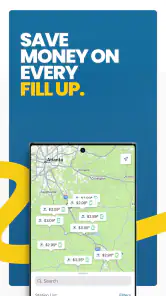
The user interface is sleek and intuitive, designed for all levels of tech-savviness. The navigation is straightforward, with large, clear buttons and a logical layout that makes finding what you need a breeze. Plus, the app includes a handy station locator, so you can always find the nearest Valero station with ease. It's perfect for road trips or when you're in an unfamiliar area.
In my view, the locator is most helpful when used before the fuel gauge becomes urgent. Check for a Valero stop while planning a route, then decide whether it fits the journey instead of assuming the nearest result is automatically the best stop. This is especially useful when travelling with children or coordinating several passengers: choosing a suitable stop in advance leaves less to negotiate at the last minute. For a route that depends on stations from multiple brands, keep a general map app in the mix.
A practical planning approach is to use the station locator as one part of the decision, not as the whole trip plan. Check whether a Valero stop is convenient for the route and whether the driver is comfortable making that stop, then keep a general map available for the rest of the journey. This avoids a common mismatch: a brand-specific locator can help find the right kind of station, but it is not a substitute for a full route planner when the trip crosses areas where another brand may be more convenient.
For a household with children, deciding on a stop before setting off can also make the journey feel less rushed. The adults can choose where to refuel, while children can be told what to expect without being asked to manage the phone or payment. If the planned stop is busy or does not suit the route when you arrive, the backup payment method and broader map are more useful than trying to force the original plan.
Account boundaries and everyday trust
Security is always a top concern with mobile payments, and ValeroPay+ does not disappoint. The app employs advanced encryption to protect your financial information, ensuring all transactions are secure. Plus, you can enable biometric login, such as fingerprint or facial recognition, adding an extra layer of security and convenience. It's reassuring to know that your data is safe while enjoying the benefits of modern technology.
For shared devices, I would be careful about whose payment details are connected and who can unlock the phone. A household should not treat a phone left in the car as a shared account: keep access with the person responsible for the payment, and use the device’s own lock settings. Biometric access can make routine use smoother for the account holder, but it does not replace sensible boundaries between adults or make a child the right person to manage a financial transaction.
Before using a phone for a pump payment, I would also check that the account holder can unlock the device and reach the app without passing a phone around in a crowded setting. That is a workflow tip, not a reason to make the app the only way to pay. A dedicated account can be convenient for the person who regularly fuels the car, but another adult should know which backup method to use if the account holder is not present or the phone is unavailable.
The app is rated for Everyone, which describes its content age category; it does not mean a young child should make payments or handle an adult’s account. I would leave installation and payment decisions to an adult, and involve children only in age-appropriate parts of the stop, such as choosing a snack or helping watch the route. That distinction makes the app easier to fit into family travel without confusing a general audience rating with permission to use someone else’s payment method.
For a teenager who is learning how household travel works, it may be reasonable to explain how the adult plans the stop and checks the payment, while keeping account credentials and financial decisions with the adult. I would not interpret a general age rating as a family-sharing feature or a way to authorize a child’s purchases. The right level of involvement depends on the household, but the account holder should remain clear and accountable.
Who will get the most from it
ValeroPay+ has an average rating of 4.2 from around 3,500 ratings, with roughly 1,400 written reviews, and it has passed 500,000 installs. Those figures suggest it has found an audience, but they do not tell me whether it suits a driver whose routes rarely include Valero. The app is free, has an Everyone content rating, and is currently at version 5.5.0, with Android 8.0 as its minimum operating system. I would check compatibility on an older phone before relying on it for a trip.
It is best suited to drivers who already stop at Valero and want a dedicated way to pay there, especially if they value keeping their fuel routine simple. It is less suitable for someone who prioritizes the widest choice of stations, prefers not to connect a payment method to a phone, or wants one shared household account without clearly assigning responsibility. In those cases, a physical card or a general-purpose payment option is the more straightforward alternative.
It can be particularly handy for an adult who makes most of the household’s refuelling stops and already knows which Valero locations fit the commute. That person has a consistent reason to keep the app ready, while other household members can use their own preferred payment method when driving elsewhere. The arrangement is less attractive if several people regularly take different cars and choose stations independently, because the app’s brand focus then adds another routine to maintain.
If you are wondering whether you need it for occasional travel, I would decide based on how often your routes naturally pass Valero rather than on the promise of a single convenient payment. A driver who makes a regular stop may find the setup worthwhile; someone who sees a Valero station only now and then can probably rely on a bank card and a general map. The app does not need to replace those alternatives to be useful, but it should have a clear job in your routine.
For a shared household, the simplest test is to ask who will actually open it and whose payment method will be used. If there is one obvious answer, the app can fit neatly into that person’s routine. If everyone expects someone else to manage the account, or if the household would rather not use a phone for fuel payments, keeping to a card is a perfectly reasonable choice. Convenience only counts when the process feels clear to the people using it.
A practical household verdict
In conclusion, ValeroPay+ is a game-changer for anyone who frequents Valero gas stations. Its combination of convenience, savings, and security make it a must-have app for drivers. Whether you're interested in saving time or money—or both—this app has something to offer. So, next time you find yourself at a Valero pump, give it a try. You might just wonder how you ever lived without it!
My own recommendation is a little more specific: try it if Valero is already a regular stop, and judge it by whether it makes that existing habit easier. Set up the account with the adult’s device and payment method, agree who will use it on shared drives, and keep a backup payment option for other stations. For a household with compatible routines, that is a sensible arrangement. If everyone fuels at different places, the convenience is likely too narrow to become essential.
ValeroPay+ Frequently Asked Questions
What devices and operating systems can run ValeroPay+?
ValeroPay+ is a mobile app for managing parts of your fueling experience, and its current version is 5.5.0. It requires Android 8.0 or later, so check your device’s operating system before downloading. The app is free and rated for Everyone. Compatibility and app-store availability can vary by device, so review the listing for your phone or tablet before installing.
Who develops ValeroPay+, and is it a free app?
ValeroPay+ is developed by Valero Marketing and Supply Company and is free to download. It is listed in the Travel & Local category and is intended for people who want to make fueling at Valero more convenient. As with other mobile apps, your mobile carrier may charge for data use when you access it away from Wi-Fi.
What is ValeroPay+ and what does it offer?
ValeroPay+ is a mobile application designed to streamline and enhance your fueling experience at Valero gas stations. It allows users to pay for fuel directly from their smartphones, track fuel purchases, and manage their Valero accounts efficiently. The app also provides access to exclusive promotions and rewards, making it a convenient tool for frequent drivers who prefer a seamless and contactless payment process.
How secure is ValeroPay+ for making payments?
Security is a top priority for ValeroPay+. The app uses advanced encryption technologies to protect users' financial information and personal data. It complies with industry standards for mobile payment security, ensuring that every transaction is safe. Additionally, users can set up biometric authentication methods, such as fingerprint or facial recognition, for an added layer of security when accessing the app or making payments.
Can I use ValeroPay+ at all Valero gas stations?
ValeroPay+ is designed to be used at participating Valero gas stations across the United States. While it is widely accepted, it's important to check in the app or on the Valero website to ensure that your local station supports ValeroPay+ payments. This can save time and ensure a smooth transaction process without any unexpected inconveniences.
Pros
- User-friendly interface simplifies payment.
- Wide range of payment options available.
- Secure transactions with encryption technology.
- Quick setup and easy account linking.
- 24/7 customer support for quick issue resolution.
Cons
- Limited to specific partner stores only.
- Occasional app crashes reported by users.
- No offline payment feature available.
- High transaction fees for some services.
- Requires constant internet connection.
- Category
- Travel & Local
- Version
- 5.5.0