Twenty-Four Hours a Day
- 1.05K
- 4.9
- Installs
- 10.00K
- Price
- $7.99

Screenshots
Analysis by Reviewed
I like recovery tools that can be used in ordinary moments, not just during a carefully planned morning routine. Twenty-Four Hours a Day is a paid Books & Reference app from BookMobile, centered on a brief reading for each day. Its focus is sobriety and reflection rather than lessons, social networking, or broad self-help advice, which gives it a clear purpose: a small daily pause for someone who wants recovery-minded words close at hand.
What the purchase gets you
The listed price is $7.99, so this is not a free download with an optional upgrade. I would treat it as a one-time purchase decision and compare it with the value of having a familiar recovery reading available on a phone. The price alone does not tell me how someone will respond to the writing, so I’d first consider whether daily meditations and prayers are the kind of support I actually want to use.
The app is marked for Everyone, and it has a 4.9 average from around 3,900 ratings, with roughly 1,000 written reviews. It has over 10,000 installs. Those figures suggest an established audience, but they can’t guarantee that the tone or approach will suit every reader. It was released in 2011, and version 2.0.13 lists Android 4.1 as its minimum operating system requirement.
Daily Reflections at Your Fingertips
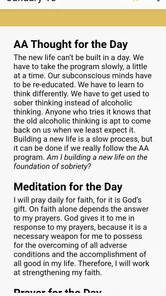
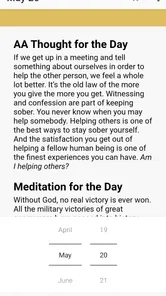
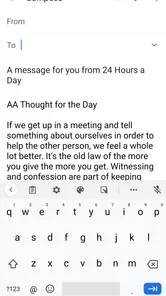
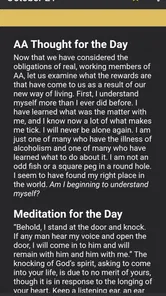
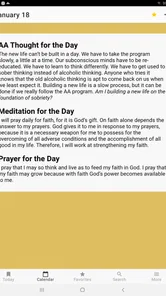
The heart of Twenty-Four Hours a Day lies in its daily meditations. Every day, a new passage is delivered right to your device, offering a moment of peace and contemplation. These reflections are succinct yet profound, often resonating with the struggles and victories faced by those in recovery. It's like having a pocket-sized mentor, always ready with the right words at the right time.
User-Friendly Features
One of the standout features of this app is its simplicity. The developers have done a brilliant job of keeping the interface intuitive and clutter-free. You won't find unnecessary distractions here, just a straightforward layout that lets you focus on the content. It's perfect for those moments when you need a quick dose of inspiration without any fuss.
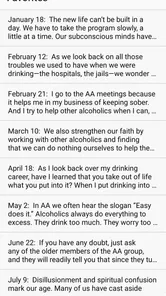
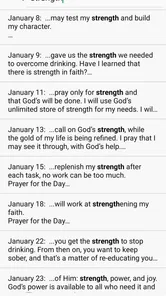
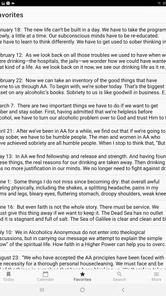
Navigation is a breeze with a neat menu that lets you access daily readings, track your progress, and even revisit past reflections. This feature is particularly handy if you ever want to go back and reflect on a day that was particularly meaningful to you.
A Community of Support
While the app itself is a solitary experience, it indirectly connects you to a vast community of individuals walking the same path. Knowing that thousands of others are reading the same passage each day can be incredibly comforting and empowering. It's a silent camaraderie that reinforces the notion that you're never alone in your journey.
More From Our News Desk

 Gmail
Gmail in a Busy Inbox: Who Benefits Most?
From first account to crowded workday, Gmail earns its place through dependable search and flexible sorting—but its best fit depends on how much inbox maintenance you can tolerate.

 Prime Video
Switching to Prime Video: What Changes in Your Viewing Routine
Prime Video can make a compelling second home for streaming, but switching means learning a different catalog, rental layer, and route from browsing to playback.

 Universal TV Remote Control
 Works Best as a Reliable Backup
A phone remote earns its place through quick setup and reliable habits. Here is how to get more from Universal TV Remote Control—and where its limits show.

 Weather - By Xiaomi
Weather by Xiaomi Review: Clear at a Glance, Less Clear Up Close
Xiaomi’s weather app makes everyday forecasts quick to scan, but its calm surface can leave useful details and recovery paths harder to find than they should be.

 X
X Under Pressure: Can It Recover When Posting Goes Wrong?
A resilience-focused review of X, examining setup, mistaken posts, interruptions, weak connections, and the gaps that matter when recovery needs to be dependable.

 Clash of Clans
 Is Won Between the Battles
Its raids are quick; its community is a long-term project of coordination, teaching, rivalry, and shared responsibility—with all the friction that entails.
Latest News



Moreover, the option to share passages with friends or support groups can spark meaningful conversations and deepen connections with others who understand your struggles and triumphs.
Making the reading useful
One practical way I’d use the daily passage is to read it at a consistent transition point: after breakfast, before a meeting, or when I put my phone away at night. The routine matters more than finding a perfect interpretation. If a line feels especially relevant, I’d note the idea in a personal journal or bring it up with a trusted support person; that turns a short reading into something I can return to during the day. I would not treat a reflection as a substitute for professional care or peer support when those are needed.
There is also a useful trade-off in having a dated reading rather than an endless feed. A single passage can make it easier to slow down and sit with one thought, but it may feel repetitive if you prefer a wide range of authors, topics, or a search-driven library. If I missed a day, I’d use the option to revisit earlier reflections rather than trying to turn the app into a streak challenge. That keeps the ritual supportive instead of making a missed reading feel like failure.
Who is likely to find it worthwhile
I’d recommend it most to someone who already appreciates concise recovery-oriented readings, wants a dependable daily prompt, and is comfortable paying for a focused reference app. It can also suit a person who wants a quiet starting point for journaling or a conversation with a sponsor or support group. If you’re choosing between this and a general meditation app, the deciding factor is subject matter: this one is specifically about sober living, while a broader mindfulness library may offer more variety and themes unrelated to recovery.
I’d skip it if you want interactive coaching, a tailored recovery plan, or a lively community inside the app. Its value is in the reading ritual, not in replacing meetings, counseling, or direct contact with other people. The daily format is also not ideal for readers who dislike spiritual language or prefer practical exercises over reflection and prayer. In those cases, a secular workbook, a general-purpose reading app, or in-person support may be a better fit.
Final Thoughts
In the hustle and bustle of everyday life, finding a moment of peace can seem elusive. However, with Twenty-Four Hours a Day, serenity is just a tap away. It's an app that doesn't just offer daily readings but provides a daily ritual, a moment to pause, reflect, and renew your commitment to sobriety.
Whether you're in recovery or simply seeking daily inspiration, this app is a valuable tool that fits seamlessly into any lifestyle. Give it a try, and let it guide you through your journey, one day at a time.
My buy-or-skip verdict
For me, the purchase makes sense when the daily reading itself is what I’m seeking and I expect to return to it regularly. The clearest test is whether a short, recovery-focused reflection sounds more helpful than a broad library or an interactive program. If it does, the focused format may justify the cost; if you need customization, deeper guidance, or a different spiritual tone, I’d put the money toward a resource that better matches those needs.
A realistic way to fit it into a difficult day
Imagine waking up already thinking about a stressful appointment or an unsettled conversation. I’d open the day’s reading before checking messages, give it a quiet minute, and choose one sentence or idea to carry into that situation. Later, I might revisit the passage and ask myself whether it changed how I responded. That small loop—read, choose a thought, reflect afterward—makes the app more useful than treating it as another item to tick off a list.
I’d also keep the reading deliberately separate from urgent support. A daily meditation can help me pause, but it cannot assess a crisis or offer the give-and-take of a real conversation. If someone is looking for immediate help, accountability, or a plan tailored to their circumstances, I’d reach out to a trusted person or qualified professional rather than expecting a short passage to do that work.
How I would build a sustainable routine
The progress-tracking and past-reading access mentioned in the app’s navigation can support a light routine, but I would use them gently. I’d choose a repeatable cue—making coffee, sitting down after breakfast, or winding down before bed—and read at that point when practical. If I miss a day, I would return without trying to compensate by reading several entries at once. The aim is a dependable moment of attention, not a perfect record.
For a passage I want to remember, I’d write a short note in my own words rather than saving a long collection of quotations. For example, I might record what the reading made me consider and one action I can take today. This personal response helps distinguish a useful insight from a line that merely sounds reassuring. It also gives me something concrete to bring to a support conversation without suggesting the app itself provides counseling.
Where it sits among recovery resources
Compared with a general meditation app, this one has a narrower purpose: its daily material is tied to sobriety and recovery rather than stress management across many areas of life. That focus is an advantage when I want language aimed at this particular part of my life; it is a limitation when I want breathing exercises, varied guided sessions, or a customizable course. A broad mindfulness library may be the better everyday companion for someone whose main goal is relaxation rather than recovery reflection.
It also differs from a recovery workbook or a structured program. A workbook usually asks for more active effort, while a daily reading is easier to open for a brief pause; the trade-off is that reflection alone may not provide the structure or practical steps a reader needs. And unlike a meeting or direct peer support, a phone reading cannot listen, ask follow-up questions, or notice when someone needs more help. I see it as a companion to those resources, not a replacement.
Questions I would settle before paying
The first question is whether the spiritual tone feels supportive. The app includes meditations and prayers, so I would expect that kind of reflective approach to be central rather than assume the content is entirely secular. If prayer is unwelcome or you specifically want evidence-led exercises, I’d compare other options before buying. If you are open to spiritual language but do not connect with every passage, the ability to revisit readings may make it easier to focus on entries that speak to you.
The second question is whether you want a daily reading or a searchable reference shelf. The dated format favors consistency and a small amount of material at a time; it is not the same experience as browsing a large catalog by topic. A person who often wants to look up a particular challenge may be better served by a resource organized around themes. Someone who tends to feel overwhelmed by too many choices may appreciate receiving one focused reading instead.
I would also consider how I plan to use the app around other people. Since passages can be shared, a reading might help start a conversation with a friend or support group, but I’d share only when it feels welcome and relevant. A useful approach is to offer the thought as a conversation starter, not as advice for someone else’s recovery. That keeps a personal reflection from becoming a substitute for listening.
Who should pass, and who may return to it
I would pass if I expected a comprehensive recovery service, personalized recommendations, interactive coaching, or a private substitute for professional support. I would also hesitate if paying for a narrowly focused reading app feels unjustified before I know whether its style suits me. The high average rating can be reassuring as a sign that many users value it, but it cannot predict my own response to spiritual language or daily meditations.
I can see the value most clearly for someone who already reads recovery material, wants a low-friction prompt on a phone, and can connect the reading to a real-world habit. The app’s age rating is Everyone, but the intended subject is still recovery; suitability depends less on the label than on whether the reader is looking for that subject and is comfortable with the format. For an adult supporting someone else, it may offer a shared text to discuss, but it should not be presented as a treatment plan.
My final test would be simple: can I picture opening it on an ordinary, imperfect day—not just during a burst of motivation? If I can, a focused daily reading may earn a place alongside my other supports. If I would rather have practical exercises, a wider choice of topics, or direct human contact, I’d choose those instead. That distinction is more useful than buying it because recovery apps in general seem like a good idea.
Twenty-Four Hours a Day Frequently Asked Questions
Who is the Twenty-Four Hours a Day app intended for?
Twenty-Four Hours a Day is aimed at people looking for daily reading and reflection as part of a sober life in recovery. Its focus on meditation and prayer may also appeal to anyone who wants a brief, sobriety-centered thought to return to each day. The app is a reading companion, rather than a substitute for a recovery program or support from other people.
What is the main purpose of the Twenty-Four Hours a Day app?
The Twenty-Four Hours a Day app is designed as a companion for individuals seeking to maintain sobriety and enhance their recovery journey. It offers a daily meditation book based on the traditional AA text, encouraging users to engage in reflective thinking, spiritual growth, and daily sobriety-focused meditations. Ideal for those in recovery programs, it’s a tool to help reinforce the principles of Alcoholics Anonymous.
Is the Twenty-Four Hours a Day app suitable for all devices?
Yes, the Twenty-Four Hours a Day app is available for both Android and iOS devices, making it accessible to a wide range of users. It is optimized for both smartphones and tablets, ensuring a seamless experience across different screen sizes and operating systems. Users can easily download it from Google Play Store or Apple App Store. On Android, it requires version 4.1 or later, so it is worth checking your device’s software before installing.
Does the app offer any personalized features for users?
While the Twenty-Four Hours a Day app provides a standardized daily meditation guide, it does not offer personalized features tailored to individual users. However, its consistent daily readings are designed to support personal reflection and encourage users to adapt the messages to their personal experiences and recovery journey.
Is an internet connection required to use the Twenty-Four Hours a Day app?
No, an internet connection is not required to use the Twenty-Four Hours a Day app after it is initially downloaded. The app’s content is stored locally on your device, allowing you to access daily readings and meditations anytime, anywhere, without needing an active internet connection. This is particularly useful for users who prefer offline access.
Pros
- Daily inspirational quotes.
- User-friendly interface.
- Supports habit-building.
- Offline access available.
- Customizable reminders.
Cons
- Limited free content.
- No dark mode option.
- Ads in free version.
- No cross-platform sync.
- Requires account to save progress.