Truthly: Catholic AI
- 183.00
- 4.6
- Installs
- 50.00K
- Price
- Free

Screenshots


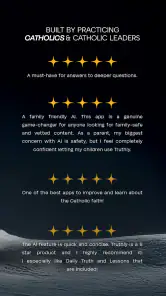
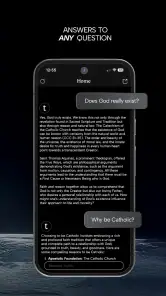
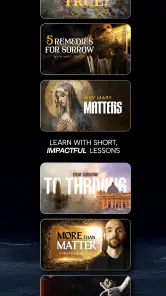
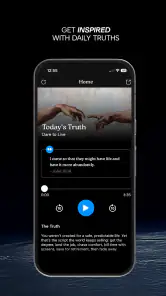
Analysis by Reviewed
I approached Truthly: Catholic AI as a practical reference app rather than as a replacement for a Bible, a parish, or a trusted spiritual adviser. Its central idea is simple: bring questions to an artificial-intelligence tool and receive answers through a Catholic lens. That makes it potentially useful when I want a quick starting point, especially when a question is too specific for a general search but too small to justify opening several books.
The app sits in the Books & Reference category and is developed by Truthly, Inc. It is free to download, which lowers the barrier to trying it. At the same time, its purchase structure matters: optional in-app items range from $4.99 to $149.99 each. I would therefore treat the free entry as an opportunity to test the experience, not as a promise that every useful part will remain free.
What interested me most was not the word “AI” on its own. General chatbots can already answer many religious questions, but the framing changes the way I use the tool. Instead of asking for a broad internet-style response, I can approach a topic expecting Catholic terminology, context, and priorities to shape the answer. That distinction is valuable, but it also means I need to read critically and know when a generated response should be checked elsewhere.
How the Catholic question-and-answer experience works in practice
A focused starting point for everyday questions
The most natural use is a question that comes up during ordinary life. I might be reading a Gospel passage, preparing for a conversation about faith, or trying to understand why Catholics approach a moral issue in a particular way. In those moments, a Catholic-focused assistant can be more convenient than beginning with a general search and sorting through pages that mix denominations, opinions, and unrelated commentary.
The important benefit is not that the app removes the need for judgment. It gives me a first layer of orientation. A well-framed response can help identify the relevant concept, distinguish a teaching from a popular assumption, and suggest what I should investigate next. That is a better role for an AI reference tool than pretending it can settle every personal or theological question by itself.
I found that the quality of the exchange depends heavily on the wording of the prompt. A question such as “What does the Catholic Church teach about forgiveness?” is broad and may produce a general overview. A more useful request would explain the situation, ask for relevant distinctions, and request references to Scripture or Catholic teaching where appropriate. The app becomes more valuable when I use it as a conversation partner for organizing a question, not as an oracle.
A realistic routine for study and reflection
Imagine finishing a short reading session and wondering how Catholics interpret a passage differently from a purely historical or literary reading. I could ask for a concise explanation, then follow up by requesting the key terms I should look up in a catechism or Bible. That two-step routine is more practical than asking for a long essay immediately. First I get a map; then I decide which parts deserve deeper study.
More From Our News Desk

Clash of Clans Is Won Between the Battles

Android Auto Makes the Case for Quieter Car Software

MobiOffice: Transforming Mobile Productivity with Seamless Integration

EA SPORTS FC™ Mobile Soccer: Redefining Mobile Sports Gaming

How Microsoft OneDrive Became a Mobile Productivity Giant

How Google Translate Breaks Language Barriers Effortlessly
Another useful routine is preparing for a discussion group. I can ask the app to explain a topic in plain language, identify possible misunderstandings, and suggest questions for conversation. I would still compare the result with the group’s chosen materials, but the assistant can reduce the time spent turning a vague interest into a workable discussion outline.
There is also a quieter use case: private reflection. Someone who feels embarrassed asking a basic question may appreciate a low-pressure place to begin. The app can make it easier to form the question in the first place. That does not make the response automatically correct, but it can remove the social friction that often prevents people from seeking clarification.
Why the Catholic lens is more than a search filter
A general chatbot may provide a polished answer while quietly blending Catholic, Protestant, secular, and purely personal viewpoints. A search engine has a different problem: it returns sources, but the reader must determine which ones represent Catholic teaching and which ones do not. Truthly’s stated purpose addresses that gap by making the Catholic perspective the starting point.
That focus is especially helpful for vocabulary. Terms such as sacraments, tradition, conscience, grace, vocation, and magisterium carry specific meanings. A response that begins within Catholic language can be easier to follow than one that translates everything into generic spirituality. For a learner, that can make further reading less intimidating.
Still, the lens can also narrow the conversation in ways that are not always ideal. If I want a comparative study of Catholic, Orthodox, Protestant, Jewish, or secular interpretations, a broader reference source is better. This app is designed around a perspective, so its strength is also its boundary.
Cost, access, and the question of paid value
The app is free to obtain, so the sensible first step is to try it with the kinds of questions I actually expect to ask. That matters because the value of an AI reference app is personal. Someone who wants occasional explanations may be satisfied with basic access, while a regular student or teacher may quickly want more extensive use.
The available in-app purchase range is wide, from $4.99 to $149.99 per item. I would not assume that the most expensive option is worthwhile simply because it exists. Before paying, I would look at what a particular purchase unlocks, whether it matches my frequency of use, and whether the same need could be met by a parish resource, a library book, or a reliable Catholic reference website. The free download is easy to justify; a paid commitment deserves a specific reason.
This is also where the app should be compared with its alternatives honestly. A conventional catechism offers stable wording and authority but requires more time and effort to navigate. A Bible app is better for reading the text directly. A general AI service may be more flexible across subjects. Truthly’s value lies between those options: it aims to make Catholic-oriented explanations conversational and immediate, while still requiring the reader to verify important conclusions.
Where the app can save time—and where it cannot
One non-obvious advantage of a conversational reference tool is that it can help me discover the shape of a question. Sometimes I do not know whether I am asking about doctrine, moral theology, church discipline, biblical interpretation, or personal guidance. A few follow-up questions can reveal that distinction. That is useful because the right source depends on the type of question.
For example, a question about whether an action is sinful may involve intention, circumstances, knowledge, and habit. A short answer that labels the action without exploring those elements could mislead me. I would use the app to identify the relevant factors, then take a serious personal case to a priest or another qualified adviser. The AI can organize the issue; it should not replace pastoral discernment.
It can also help with language. If a Catholic text feels dense, I can ask for a plain-language explanation and then request a list of terms that should remain precise. That workflow is better than asking the app to simplify everything indiscriminately, because oversimplification can erase the very distinctions that matter in theology.
Limitations I would keep in mind
The first limitation is inherent to generated answers: confidence and correctness are not the same thing. A fluent response can still omit an important qualification or present a disputed interpretation too neatly. I would be especially careful with questions involving confession, marriage, serious moral decisions, medical situations, or conflict with a parish or family member.
The second limitation is source transparency in everyday use. When an answer matters, I want to know which biblical passage, council, catechism section, or authoritative document supports it. If the response does not make that next step clear, I would not treat it as final. A useful habit is to ask for the basis of an answer and then verify the cited material independently.
The third limitation is that a Catholic lens does not automatically mean every answer will fit every personal circumstance. Catholic life includes differences in rite, culture, pastoral practice, and individual formation. The app may provide a helpful general explanation while still missing the local or personal detail that determines what someone should do next.
There is also a practical trade-off in relying on conversation instead of a structured book. Chat encourages follow-up and feels approachable, but it can make learning feel fragmented. I might collect several answers without building a coherent understanding. To avoid that, I would keep a short list of topics and use the app to support a planned reading path rather than letting every session become a disconnected question.
Who is most likely to benefit
I see the strongest fit for Catholics who want quick explanations, people exploring Catholicism, students preparing questions, and readers who need help translating unfamiliar terminology into ordinary language. It may also suit someone returning to religious practice who wants to rebuild confidence before joining a class or speaking with a parish contact.
The age rating is Everyone 10+, which makes the app approachable for younger users, but that should not be confused with suitability for unsupervised answers on sensitive subjects. A parent, teacher, or catechist can add real value by discussing how to check an answer and how to distinguish information from personal guidance.
It can be particularly useful before a conversation with a priest. I might use it to clarify what I am actually asking, list the relevant background, and identify terms I do not understand. That makes the eventual conversation more focused. The app is not the destination in that scenario; it is preparation.
It is less suitable for someone who wants an authoritative, citation-first study system, a complete digital library, or a neutral comparison of religions. A serious theology student may prefer primary documents and scholarly works. Someone seeking immediate emotional or sacramental support should contact a person, not depend on an automated exchange.
Compatibility and current state
The current version is 1.7.0, and the app supports devices running Android 7.0 or later. That broad operating-system range is helpful for people using older Android hardware. On the Android store, it has an average rating of 4.6 from around 1.2 thousand ratings, with over 50 thousand installs and 183 written reviews. Those figures suggest that the app has attracted a real early audience, while the relatively modest scale means I would still judge it by my own questions rather than by popularity alone.
The release date was July 3, 2025, so I would approach it as a relatively young product. That is not automatically negative: newer software can improve quickly, but it may also have a less settled workflow than long-established reference apps. Before relying on it for regular study, I would spend time testing how it handles follow-up questions, nuanced topics, and requests for supporting sources.
My practical way of testing it
I would begin with three different prompts instead of one. The first would be a simple factual question about Catholic terminology. The second would ask for an explanation of a Bible passage while requesting relevant Catholic context. The third would be a morally sensitive scenario phrased without personal identifying details. This small test reveals whether the app can explain, qualify, and recognize when a question needs human guidance.
Next, I would ask it to restate one answer at three levels: for a child, for a newcomer, and for someone already familiar with Catholic vocabulary. That tests whether the conversation is genuinely useful or merely repetitive. I would also ask which parts are established teaching and which parts involve interpretation. Even if the answer needs checking, the way it handles that distinction tells me whether it is suitable for serious use.
Finally, I would compare one response with a trusted Catholic source. The goal is not to demand identical wording. The goal is to see whether the app preserves important qualifications and points me toward further reading. This is a better test than judging the writing style alone, because attractive prose is not the same as reliable reference work.
My verdict on whether it is worth trying
I recommend trying Truthly: Catholic AI if you want an approachable Catholic-oriented starting point for questions, reflection, or study preparation. Its free availability makes experimentation relatively straightforward, and its focused perspective gives it a clear identity that general chatbots and ordinary search tools do not share.
I would not recommend treating it as a final authority, a substitute for Scripture and established Catholic sources, or a replacement for pastoral care. The more personal, consequential, or controversial the question becomes, the more important human and authoritative follow-up is. Its best role is to help me understand what I need to ask, where to look next, and which distinctions deserve attention.
The purchase range means I would remain cautious about upgrading. I would first confirm that the free experience solves a recurring problem, then evaluate a specific paid option against how often I use the app and what it actually adds. For occasional curiosity, free access may be enough. For sustained study, paid value depends entirely on the details of the chosen item and whether it improves a workflow I already use.
Overall, this is a promising niche reference app for readers who want Catholic context without beginning every search in a large library. I like it most as a bridge: it can take a vague question and turn it into a clearer path toward reading, discussion, prayer, or professional guidance. If that is what you need, it is worth installing and testing carefully. If you need definitive citations, broad religious comparison, or personal pastoral answers, I would skip the purchase and choose a more traditional source instead.
Truthly: Catholic AI Frequently Asked Questions
Who develops Truthly: Catholic AI, and what kind of app is it?
Truthly: Catholic AI is a Books & Reference app developed by Truthly, Inc. Its focus is offering answers to questions through a Catholic lens, making it a potential resource for users exploring faith-related topics. If you are looking for an app centered on Catholic learning and reflection rather than a general reference tool, its stated purpose may fit what you need.
What devices can run Truthly: Catholic AI?
Truthly: Catholic AI is available for devices running Android 7.0 or later. Before downloading, check the operating system version on your device and make sure you have enough available storage for the installation. Compatibility can also depend on the device and the app store you use, so confirm that the download page offers the app for your particular device before proceeding.
What is Truthly: Catholic AI and what can I use it for?
Truthly: Catholic AI is designed to provide faith-related assistance based on Catholic teachings. You can use it to explore questions about Scripture, prayer, Catholic traditions, moral topics, saints, and aspects of Church life. It may be useful for personal reflection, learning, or finding ideas for prayer, but it should be treated as an informational companion rather than a replacement for a priest, catechist, or official Church resources.
Can Truthly: Catholic AI provide accurate and official Catholic guidance?
The app can offer helpful explanations and Catholic-oriented responses, but artificial intelligence may occasionally misunderstand a question, simplify a complex doctrine, or provide an incomplete answer. Its responses should not automatically be considered official Church teaching. For matters involving doctrine, confession, serious moral decisions, marriage, vocations, or other important spiritual concerns, compare the information with the Catechism, approved Catholic sources, and guidance from a qualified priest.
Is Truthly: Catholic AI suitable for prayer and spiritual reflection?
Truthly: Catholic AI can be useful when you want prayer suggestions, reflections on biblical passages, prompts for examining your conscience, or ideas for building a more consistent spiritual routine. However, generated prayers and reflections may not always match your personal circumstances or the liturgical context. Use the app as a starting point for reflection, while keeping regular prayer, participation in the sacraments, and guidance from your local Catholic community at the center of your faith life.
Pros
- Provides quick answers to common Catholic questions.
- Useful for exploring prayers
- saints
- and Church teachings.
- Simple interface makes the app easy for beginners to navigate.
- Can support personal reflection and faith-based study.
- Convenient reference tool for users who want guidance on the go.
Cons
- AI responses may contain inaccuracies or lack theological nuance.
- Should not replace advice from a priest or qualified spiritual director.
- Some answers may reflect limited Catholic traditions or interpretations.
- Requires careful verification when discussing doctrine or Scripture.
- Privacy details should be reviewed before sharing personal faith concerns.
- Category
- Books & Reference
- Version
- 1.7.0