Tri-City Herald: WA Local News
- 60.00
- 3.2
- Installs
- 10.00K
- Price
- Free

Screenshots
Analysis by Reviewed
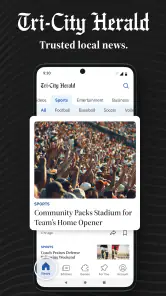
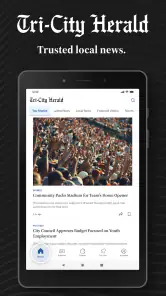
Tri-City Herald: WA Local News is the kind of app I would install when I want news centered on Kennewick, Pasco, Richland, and the surrounding Tri-Cities area rather than a feed dominated by national headlines. It belongs to the News & Magazines category, and its focus is easy to understand: local reporting alongside politics, crime, weather, and sports. In my experience, that narrow focus is both its strongest reason to exist and the main question a new user has to answer: do I need a dedicated local news habit, or will a general news app cover enough?
The app is free to download, although it includes in-app purchases ranging from $7.99 to $159.99 per item. That makes the initial decision fairly simple, but the longer-term decision deserves more thought. A local news app is useful when it becomes part of a routine, not merely something opened once after installation. I looked at it with that standard in mind: how useful it feels during the first week, whether it continues earning attention later, and how much effort it takes to keep the experience worthwhile.
What the first week feels like
The first appeal comes from relevance. Instead of asking me to filter a huge national stream for something happening nearby, the app starts with a regional identity. That matters on an ordinary morning when I want to know what is affecting local roads, schools, public safety, weather, or community life. A general news service may offer excellent national coverage, but it rarely makes local context feel like the center of the experience.
I found the combination of local news, politics, crime, weather, and sports practical because those subjects serve different moments of the day. Weather is useful before leaving home, local reporting can explain a change in the community, sports may matter in the evening, and public-safety coverage can become important without warning. The value is not that every section will interest every reader. It is that the app gives residents one place to check the subjects most likely to connect directly with daily life in the Tri-Cities.
The developer is McClatchy, a name associated with newspaper publishing, and that background helps explain the app’s newspaper-centered approach. This does not feel like a social feed built around whatever happens to be trending. I would approach it as a digital local-news destination. That distinction is useful for readers who prefer reporting organized around a community rather than a constantly shifting collection of viral posts.
One practical way to test it is to use it at two fixed points instead of leaving it open all day. I would check it briefly in the morning for weather and major local developments, then return later for updates in politics, crime, or sports. This prevents a local news app from becoming a distracting stream while still giving it a fair chance to prove whether it belongs in a routine.
The app has an average rating of 3.2 from around 170 ratings, with roughly 60 written reviews. I would not treat that number as a final judgment by itself, but it does suggest that the experience may not satisfy everyone equally. Local news apps often depend on expectations about access, presentation, and update frequency, so a reader who wants a quick headline scan may react differently from someone who values deeper regional coverage.
More From Our News Desk

Clash of Clans Is Won Between the Battles

Android Auto Makes the Case for Quieter Car Software

MobiOffice: Transforming Mobile Productivity with Seamless Integration

EA SPORTS FC™ Mobile Soccer: Redefining Mobile Sports Gaming

How Microsoft OneDrive Became a Mobile Productivity Giant

How Google Translate Breaks Language Barriers Effortlessly
Who gets the most from the local focus
The best audience is someone who lives in, works in, studies in, or regularly visits Kennewick, Pasco, or Richland. It can also suit former residents who still care about the area, although the usefulness will naturally depend on how closely their current life remains connected to local events. If your main interest is national politics, international reporting, technology, or entertainment, this is not likely to replace a broader news service.
I also think it can help people who are new to the area. A national app may tell you that something happened in Washington, but a Tri-Cities-focused source is more likely to make the location and local significance feel understandable. That does not mean every story will be essential. It means the app gives a newcomer a more direct way to learn which issues, teams, public decisions, and weather concerns shape the region.
For families, the local emphasis can be more useful than a generic headline feed because it supports conversations about what is happening close to home. For commuters, weather and regional developments may be the most valuable parts. For sports followers, the dedicated local angle can make the app worth opening even when the rest of the news feels quiet. The trade-off is that the narrower the reader’s interests, the more important it becomes to decide which sections deserve attention.
How it compares with broader news alternatives
A general news app usually wins on breadth, speed, and the ability to follow many regions at once. It is the better choice if I want a single place for national elections, world events, business news, and international stories. A social platform may also surface breaking local information quickly, but its posts can be uneven, repetitive, or difficult to verify. The Tri-City Herald app makes more sense when I want a publication-oriented local source instead of an unpredictable stream.
Its advantage over a newspaper website opened in a mobile browser is convenience. An app has a permanent place on the phone, so checking local coverage can become a deliberate action rather than something I remember only after searching. Its disadvantage is that installing another app adds to notification clutter and home-screen maintenance. If I already use the newspaper’s website comfortably and do not need a dedicated mobile shortcut, the difference may be too small to justify another installation.
The most sensible setup is not necessarily choosing this app instead of every other news source. I would pair it with one broader service if I wanted both regional depth and national context. The local app can answer “what is happening around here?” while a general source answers “how does this fit into the larger picture?” That division keeps each tool focused instead of expecting one feed to do everything.
Whether it keeps earning a place over time
Month-to-month value depends on changing local needs
The first-week novelty of a local news app can fade quickly if I open it without a purpose. Its lasting value comes from recurring situations: a stretch of unusual weather, a local election, a public-safety concern, a major community decision, or a sports season that matters to me. During those periods, a focused source can feel much more useful than a broad app where local stories are easy to miss.
Outside those moments, the app has to earn attention through consistency rather than excitement. I would not expect every visit to reveal a major story, and that is normal for a regional publication. The better question is whether the app helps me stay oriented without requiring a long reading session. A short check that answers what changed locally can be enough to justify keeping it installed.
One of the less obvious benefits is that a local feed can help me notice slow-moving issues. National headlines tend to emphasize events with immediate impact, while local politics, public decisions, and community developments may matter through a series of smaller updates. Checking periodically rather than only during a crisis gives those stories a chance to make sense over time. That is a stronger long-term use case than treating the app as an emergency bulletin.
I would create a simple personal rule: open it when a local decision affects my schedule, household, commute, school plans, or community interests. This turns the app into a reference point instead of a habit driven by endless scrolling. If several weeks pass and none of its coverage relates to my life, that is a fair sign that a browser bookmark or occasional visit may be enough.
The current version is 11.1.16, and the app supports Android 8.0 or later. For someone using an older device, compatibility is an important practical checkpoint before relying on it. For supported phones, keeping the app updated is part of maintaining a dependable news routine, especially because mobile reading behavior can be affected by changes in performance or presentation even when the subject matter remains familiar.
The maintenance burden is small, but not invisible
Maintaining this app does not require much work, but I would still treat it like any recurring information source. The first task is deciding how often to check it. Opening it constantly can make local coverage feel repetitive, while ignoring it for too long defeats the point of having a dedicated source. A morning-and-evening pattern is a reasonable starting point, then I would adjust it based on how often the Tri-Cities stories actually change.
Notifications deserve particular attention. A local news alert can be valuable when it concerns severe weather or a major regional development, but too many interruptions can make me disable alerts altogether. I prefer a selective approach: allow the app to support timely awareness, but do not let every update compete with messages, work, and other news services. If the notification controls do not fit my preferred level of interruption, I would simply use the app manually rather than abandon local coverage entirely.
There is also a financial maintenance question. The app is free at the starting point, but the presence of paid in-app items means I would check what an offered purchase changes before committing. A reader who only wants occasional headlines may not receive enough recurring value from a paid option. Someone who relies on local reporting as a regular part of daily life may judge access differently. The important trade-off is to compare the purchase with actual reading frequency, not with the excitement of a single breaking story.
Another useful habit is to separate reading from saving. If a story matters because it affects a meeting, a local decision, or a family plan, I would record the key detail elsewhere rather than assuming the app will remain my permanent archive. That is not a criticism of this particular publication; it is a sensible practice for any news reader. It reduces the risk of having to search through an old feed later when I need a fact I noticed only once.
Where reader fatigue can begin
The narrow subject area can become tiring for people who expect a constant flow of variety. A national app can move from world news to science to business in seconds. This one is more intentionally regional, so repeated visits may feel less rewarding when there are no major local developments. I see that as a trade-off rather than a flaw, but it means the app should not be judged by the same standard as a full-spectrum news platform.
Another source of fatigue is emotional repetition. Crime coverage can attract attention, yet checking it too often may create a distorted impression of daily life. I would balance that section with weather, sports, civic reporting, and other local subjects instead of allowing the most alarming headlines to define the whole experience. This is one reason a deliberate reading schedule is better than opening the app whenever a notification appears.
Paid options may also create hesitation for readers who assumed that a free installation meant every part of the experience would remain free. Since individual purchases can range from $7.99 to $159.99, I would read the purchase screen carefully and decide whether the terms match my needs before spending anything. The broad range makes it especially important not to tap through quickly, particularly if I am only testing the app.
The rating of 3.2 indicates a mixed reception, so I would pay attention to my own experience rather than assuming the app will work perfectly for every phone or reading style. If the layout feels slow, the coverage does not match my interests, or the app creates more interruption than value, a mobile browser may be the better solution. On the other hand, a resident who appreciates having local sections gathered in one place may find that the focused design outweighs those frustrations.
Everyday scenarios where it earns its keep
Imagine I am planning a normal weekday in the Tri-Cities. Before leaving, I check the weather coverage to understand whether the day may require a change of plans. Later, I scan local reporting and politics to see whether a community decision could affect my neighborhood or schedule. In the evening, I look at sports or follow a developing regional story. None of these visits needs to become a long session; the value comes from reducing the effort required to find relevant information.
A different scenario is a sudden local concern. If severe weather, a public-safety event, or a major civic announcement changes the day, a regional source is more useful than scrolling through national headlines and hoping the right item appears. I would still cross-check important information with official channels when making safety decisions, but the app can provide context and help me understand what deserves closer attention.
For someone following local sports, the app may have a stronger reason to remain installed throughout the year. Sports interest creates a recurring return pattern that general news alone may not provide. The same is true for readers who track local politics or community developments. The app is weakest for someone who downloads it out of curiosity, opens it twice, and has no continuing connection to the Tri-Cities region.
It is also worth considering storage and attention as part of the decision. With over 10 thousand installs, the app has found a real audience, but that does not mean it will be essential for every resident. I would keep it only if its local focus saves me time or helps me notice information I would otherwise miss. If it merely duplicates a website I already check, removing it is reasonable and does not mean the concept failed.
Who should skip it
I would skip this app if my main requirement is international coverage, deep national analysis, technology news, or a single feed covering several unrelated regions. Its identity is too local for those needs. I would also hesitate if I dislike managing in-app purchases or if I want a completely free reading experience with no purchase decisions. In that case, a general source with a clear free model may feel simpler.
I would also skip it if I rarely spend time in Kennewick, Pasco, Richland, or nearby communities. Local relevance is not something that can be generalized to everyone. A person who visits the area once in a while may get more value from a browser search when needed than from maintaining a dedicated app. Likewise, readers who prefer social updates or audio news may not enjoy a newspaper-style mobile destination enough to build a routine around it.
For readers who do want local coverage but dislike notifications, the app can still make sense if manual checking is comfortable. For readers who require instant, highly customized alerts, I would compare its behavior with a broader service before making it the primary source. The right choice depends less on the app’s download price than on whether its local focus matches the way I actually consume news.
My long-term verdict
After the novelty fades, I think Tri-City Herald: WA Local News earns lasting space mainly for people who have a continuing connection to the Tri-Cities and want a focused local-news routine. Its strongest quality is not endless content; it is relevance. Weather, politics, crime, sports, and community reporting all become more useful when the reader wants information tied to Kennewick, Pasco, and Richland.
I would keep it installed if a short daily check consistently helps me understand local events, plan around conditions, or follow issues that matter close to home. I would manage notifications carefully, avoid purchases until I understood their value, and use a broader news source for national and international context. That combination makes the app more sustainable than expecting it to replace every other news tool.
My recommendation is therefore specific rather than universal: residents and regular visitors should give it a structured trial and judge it by whether it becomes useful after the first week. Occasional visitors, broad-news readers, and people frustrated by paid options should probably choose a different approach. The app is free to start, rated for Everyone 10+, and built around a clear regional purpose, but its real success depends on turning that purpose into a habit that remains helpful month after month.
Tri-City Herald: WA Local News Frequently Asked Questions
Who is the Tri-City Herald app intended for?
The app is aimed at people who want news and updates from Kennewick, Pasco, Richland, and the surrounding Tri-Cities area of Washington. It may be useful to local residents, people with family or work connections in the region, and readers who want to keep up with community issues from elsewhere. Its focus is regional rather than broad national coverage.
What is Tri-City Herald: WA Local News?
Tri-City Herald: WA Local News is a mobile news app focused on the Tri-Cities region of Washington, including Kennewick, Pasco, Richland, and nearby communities. It provides access to local reporting, breaking news, politics, education, crime, business, sports, entertainment, and community updates. The app is designed for readers who want regional coverage in one convenient place.
Is the Tri-City Herald app free to download and use?
The app can generally be downloaded at no cost, allowing users to browse selected news content and explore the publication. However, some articles and premium features may require a subscription or account, depending on the current access policy. Before downloading, users should review the in-app subscription details, pricing, renewal terms, and available trial options to understand what content is included.
What type of news and features are available in the app?
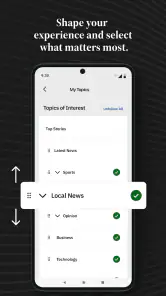
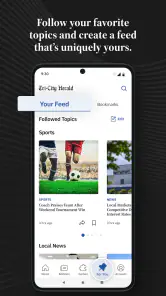
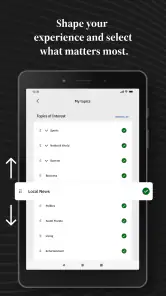
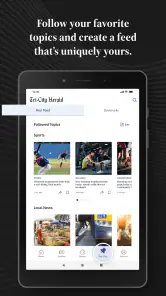
The application typically includes local and regional headlines, breaking news updates, sports coverage, opinion pieces, weather-related information, community stories, and reporting about important issues affecting southeastern Washington. Depending on the version installed, users may also find article sharing, saved stories, notifications, multimedia content, and personalized news preferences. Feature availability can vary by device and subscription status.
Does Tri-City Herald: WA Local News require an internet connection?
Yes, an internet connection is normally required to load current articles, images, videos, notifications, and other online content. The app may retain limited information temporarily through caching, but it should not be considered a complete offline news reader. For the best experience, use a reliable Wi-Fi or mobile data connection, especially when opening multimedia stories or receiving breaking-news alerts.
Pros
- Focused coverage of local news across Washington’s Tri-Cities area.
- Useful for following community events
- schools
- and regional developments.
- Breaking-news alerts can help readers stay informed quickly.
- Clean layout makes articles easy to browse on a phone.
- Supports saving articles for reading when more convenient.
Cons
- Many full articles may require a subscription or account.
- Advertising can interrupt reading and reduce available screen space.
- Coverage is regional
- so it may feel limited for non-local readers.
- Some features may depend on a stable internet connection.
- Notification frequency may become distracting if alerts are enabled.
- Category
- News & Magazines
- Version
- 11.1.16