TrainKothai - BD Train Tracker
- 5.00
- 4.5
- Installs
- 10.00K
- Price
- Free

Screenshots
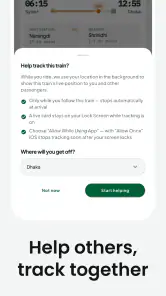
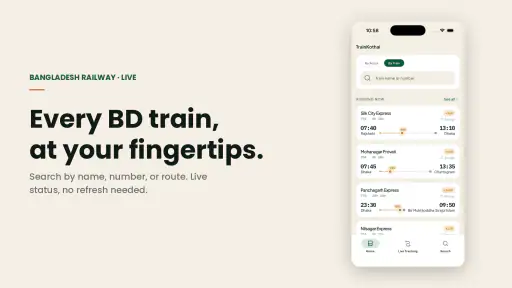
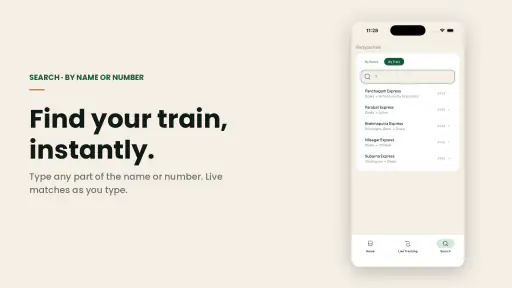
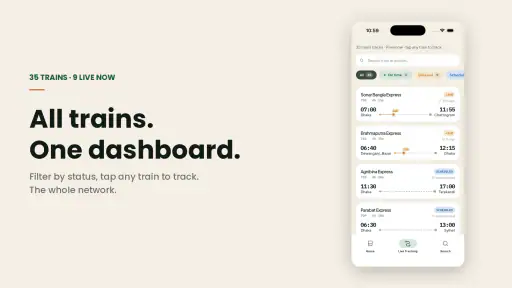
Analysis by Reviewed
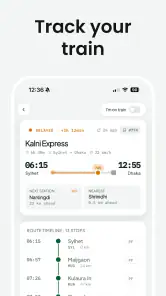
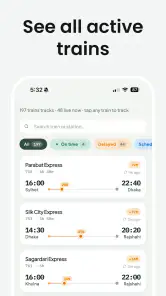
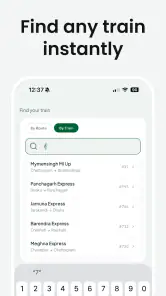
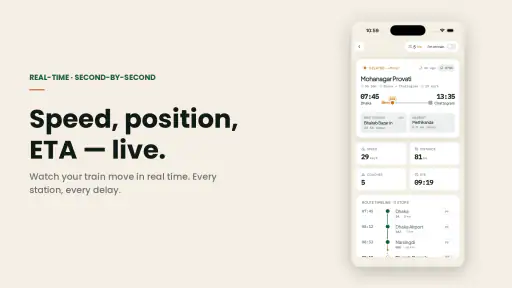
When I need to check a train journey quickly, I usually want one thing first: a clear answer about where the train is and whether a delay will affect my plans. TrainKothai - BD Train Tracker is built around that simple need. It is a free travel and local app from FoodOS that focuses on live train location and delay information for Bangladesh. After spending time with it, I found it most useful as a quick travel companion rather than a complete replacement for every railway information source.
The app’s appeal is easy to understand. Instead of relying only on a timetable or asking someone at the station, I can open one place and look for a moving train. That is especially helpful when I am leaving home for a station, waiting for a connection, or trying to decide whether I need to hurry. The experience is aimed at ordinary passengers, not railway enthusiasts, and the Everyone age rating fits that straightforward approach.
What TrainKothai actually offers for free
The most important cost detail is simple: TrainKothai is free to use. There is no purchase decision to make before trying its central purpose, which makes it easy to recommend as a practical tool for occasional passengers. I can install it without committing money, test it during a real journey, and decide whether its live tracking is useful for my routes.
That free access matters because train tracking is often a just-in-case service. I may use it heavily during a holiday trip and hardly touch it afterward. A paid app would need to offer unusually strong advantages to justify that pattern, while this one can remain installed without turning an occasional need into a recurring expense. The current version is 1.1.7, and the app supports Android 7.0 or later, so its compatibility reaches many older phones as well as newer devices.
Its presence is still relatively modest compared with the biggest travel platforms, with over 10 thousand installs and a 4.5 average from around 375 ratings. I read that combination as encouraging but not conclusive. It suggests that many early users find the concept useful, while the smaller audience means I would personally test the app on a familiar route before depending on it for an important connection.
There is no need to confuse “free” with “complete.” The app gives its value through access to train location and delay information, not through a broad travel marketplace. I would not install it expecting ticket purchases, hotel searches, route planning across several transport types, or a full replacement for official railway communication. Its free price is attractive precisely because the job is narrower.
A useful tool before leaving home
My preferred workflow begins before I travel. I check the train I intend to catch while I am still at home, then check again shortly before leaving. That second look is more useful than repeatedly staring at a fixed timetable because it can change my decision about when to walk, take a rickshaw, or arrange another ride to the station.
There is also a small but important habit I would recommend: use the app to support a plan, not to create one from nothing. I would first know the train name or service I am looking for, then use the tracker to verify its movement and delay status. That reduces the chance of searching in a hurry and mistaking a similarly named service for the one on my ticket or itinerary.
For family travel, the app can also reduce unnecessary phone calls. If someone is waiting for a passenger arriving by train, checking the train’s progress may provide a faster update than repeatedly contacting the traveler. The person waiting still needs sensible judgment about station access and arrival procedures, but the tracker can make the waiting period less uncertain.
Where it fits beside familiar alternatives
The usual alternatives each solve a different part of the problem. A printed timetable or saved schedule is useful when I need planned departure information, but it cannot tell me as much about the train’s current movement. A general maps app may help me reach the station, yet it is not necessarily focused on the train itself. Official railway channels can remain the better choice for formal announcements, ticket matters, or information that affects a larger disruption.
TrainKothai sits between those options. It is more focused than a general travel app and more immediate than a static timetable. That focus is its strongest argument. I do not have to navigate through unrelated transport listings when my question is simply whether a Bangladesh train is moving and whether a delay is showing.
At the same time, I would keep an official source nearby when the journey is important. A tracker is excellent for situational awareness, but it should not be the only basis for decisions involving missed connections, refunds, ticket rules, or major service changes. The best setup is a combination: use TrainKothai for quick movement checks and use the relevant railway channel for formal confirmation.
How the app feels in everyday travel
The practical strength of this app is its narrow purpose. When I open a dedicated train tracker, I already know what kind of information I am looking for. That can be faster and less distracting than opening a large travel platform filled with buses, hotels, maps, promotions, and booking options. For a passenger standing outside a station with a phone in one hand and luggage in the other, fewer unrelated steps are a genuine advantage.
A realistic example would be an evening journey where I have finished work but do not want to leave for the station too early. I can check the intended service, see whether it appears to be progressing normally, and make a more informed choice about when to start the trip. If a delay is visible, I may have time to eat, finish a task, or arrange a slower but cheaper ride to the station instead of waiting there without useful information.
Another useful situation is meeting someone arriving from another city. Rather than asking for updates every few minutes, I can monitor the train and make my own way to the station at a sensible time. This is not just about convenience. It can reduce confusion when mobile calls are difficult, the passenger is tired, or several family members are coordinating the same arrival.
I also see value for students and workers who travel regularly but do not want a complicated planning system. A person who already knows the usual route may not need full navigation. They need a quick check for disruption before committing to the trip. That is the kind of repeated, small decision where a focused app earns its place.
Three habits that make the tracker more dependable
First, I would check the app at two separate moments: once while preparing and once near departure. A single check can become outdated, especially when travel conditions change after the initial look. This two-stage habit turns the app from a one-time curiosity into a practical decision aid.
Second, I would compare the displayed train identity with my own ticket, message, or travel plan before acting. Similar service names and nearby departure times can cause mistakes when a person is rushing. The tracker is most useful when I use it to verify a known service rather than browse casually and assume the first result is correct.
Third, I would keep a backup plan for the final decision. If the app shows a delay, I can adjust my departure time, but I would still allow extra margin for getting through the station and finding the correct platform. Live information can improve timing without eliminating the ordinary uncertainties of a busy railway journey.
These habits reveal an important trade-off. The app can make information easier to reach, but it cannot remove the need for judgment. A live location display is helpful evidence, not a guarantee that every part of the journey will unfold exactly as expected.
What I found less convincing
The biggest limitation is the narrow scope. If I want to buy a ticket, compare fares, understand a complicated multi-leg journey, or receive broad travel advice, I need another service. TrainKothai’s focused design is convenient for tracking, but it also means I may switch between apps when planning a complete trip.
I would also avoid treating any live tracker as perfectly authoritative during serious disruption. Data may appear late, change suddenly, or fail to explain why a train is delayed. The app can show an important status without answering every follow-up question a passenger has. For that reason, I would not use it alone when I have a flight connection, an examination, a medical appointment, or another commitment where a small error has a large cost.
The relatively small review base is another reason for a measured approach. A 4.5 average is a positive sign, but it does not tell me how the app behaves on every route, at every station, or during every type of disruption. My advice would be to test it on a normal journey first. That gives me a personal sense of how quickly I can find my train and how useful the displayed status is before I rely on it in a stressful situation.
There is also a difference between technical compatibility and a good experience on every phone. Supporting Android 7.0 or later makes the app accessible to owners of older devices, but older hardware, unstable mobile data, or a crowded station environment can still affect how comfortable the process feels. I would open it before entering a poor-signal area and avoid waiting until the last second to perform the first check.
Who will get the most value
I think the app is a strong fit for passengers who regularly use Bangladesh’s trains and mainly need current movement or delay information. It is particularly suitable for people who already know their service but want more confidence about when to leave home. Families waiting for arrivals, commuters watching a return journey, and occasional travelers who dislike large all-purpose apps can all benefit from its focused role.
The free price also makes it sensible for travelers who only need tracking during certain trips. There is no paid-value calculation to make: I can try it, keep it for future journeys, and remove it if it does not match my route. That low commitment is one of the app’s clearest advantages.
I would be more cautious about recommending it as the only travel app for international visitors, complex itineraries, or passengers who need booking and customer-service functions in the same place. Those users may prefer a broader travel platform, with this tracker used as a supplementary check. Likewise, anyone who needs formal confirmation for a ticket dispute or cancellation should go beyond a live-location tool.
My buy-or-skip verdict
There is no purchase to weigh here, so my verdict is really about whether the free installation earns space on your phone. In my view, it does if your trips involve Bangladesh trains and you regularly wonder whether a service is on time. The app’s focused purpose, free access, and support for older Android versions make it easy to try without much risk.
My recommendation is to use TrainKothai as a fast tracking layer, not as your entire railway information system. Check it before leaving, verify the train identity carefully, and keep an official source available for tickets, major disruptions, and formal decisions. Used that way, it can turn an uncertain wait into a better-informed plan without pretending to solve every travel problem.
FoodOS has made a practical app for a very specific moment: the few minutes when I need to know what a train is doing right now. That focus is both its strength and its boundary. If that is the question you ask often, I would install it. If you need bookings, complete itinerary planning, or guaranteed official explanations, I would skip relying on it alone and choose a broader companion instead.
Pros
- Provides live Bangladesh train location updates and tracking.
- Useful schedules help plan journeys before leaving home.
- Covers many Bangladesh Railway routes and services.
- Simple interface makes train information easy to find.
- Helpful for checking delays and estimated arrival times.
Cons
- Tracking accuracy depends on available railway data and network coverage.
- Some trains or routes may have limited real-time information.
- Ads may interrupt navigation or reduce the viewing space.
- Estimated times can change quickly during operational disruptions.
- The app may be less useful outside Bangladesh or unsupported routes.

- Category
- Travel & Local
- Version
- 1.1.7