TopDeck.gg
- 14.00
- 4.6
- Installs
- 10.00K
- Price
- Free

Screenshots
Analysis by Reviewed
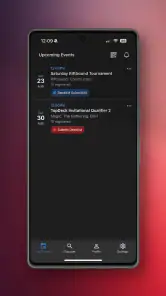
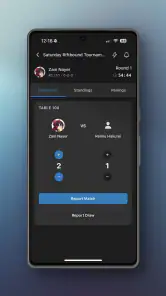
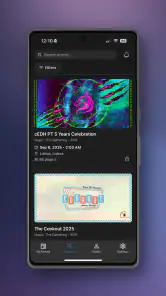
I approached TopDeck.gg as an events app rather than something I would open casually every day. Its purpose is easy to understand: it brings tournament activity into one place for people who follow competitive events and want a more focused way to keep track of them. That narrow purpose is also its biggest strength. Instead of asking me to search through unrelated social posts, general event pages, or scattered community messages, it gives tournament-minded users a dedicated home.
The app is developed by TopDeck.gg and is available free of charge for everyone. It belongs to the events category, runs on Android devices using version 7.0 or later, and the current release is 2.2.0. Those details make it accessible to a wide range of Android users, including people who are not using a recent phone. The important question, though, is not whether it is easy to install. It is whether a tournament hub remains useful after the first burst of curiosity disappears.
What makes the first week appealing
During the first few sessions, the attraction is straightforward. A dedicated tournament app feels less noisy than the usual alternatives. If I am interested in competitive events, I would rather begin with a service built around that interest than adapt a general calendar, chat app, or social network to do the same job. The focused setting makes browsing feel intentional, especially when I already know that I want to find or follow tournament activity.
The store summary calls it “The Ultimate Tournament Hub,” but I found the more useful interpretation to be a central reference point. It is not the kind of app I would install merely to fill spare time. I would install it because I expect to return to tournament information often enough that a dedicated place saves effort. That distinction matters: its appeal depends on having a real connection to competitive events, not on offering a broad collection of unrelated entertainment.
For a new user, my advice is to decide what role the app should play before judging it. Is it going to be the first place you check when planning an event? A companion while following a tournament? A way to stay connected to a competitive scene? Thinking about that first prevents a common disappointment: expecting a general-purpose social platform when the app is designed around a more specific interest.
I also like the low commitment created by the free price. There is no purchase decision standing between curiosity and a trial, which makes it reasonable to spend a week seeing whether the available tournament information fits your routine. The Everyone content rating broadens its audience as well, although suitability for a particular competitive community still depends on whether that community is represented in the experience you want.
A realistic first-week routine
Imagine that I hear about an upcoming tournament from friends on a weekday. Rather than saving a message and hoping I remember it later, I can open TopDeck.gg and use it as my dedicated starting point for checking the event landscape. If I am preparing to watch, participate, or simply keep up with results, that single habit is more useful than leaving the information buried in a busy conversation.
The same approach works for someone who attends events. Before committing time to travel or rearranging a weekend, I would use a tournament-focused app as an early planning step, then confirm the details through the relevant official channels when necessary. That is a practical distinction: the app can help organize discovery and awareness, while important personal decisions should still be based on the most authoritative event information available.
For organizers or highly active competitors, the value may appear even sooner because tournament information is not just something to consume. It can be part of a recurring workflow. A person who regularly checks competitive activity may appreciate not having to reconstruct the same search from scratch each time. That is one of the less obvious benefits of a specialized hub: even modest convenience becomes meaningful when repeated across many events.
Where it compares well with familiar alternatives
The usual alternative is a general social network. Social platforms are excellent for conversation, reactions, and community energy, but tournament details can become difficult to locate once new posts arrive. A general calendar is better for personal scheduling, yet it usually lacks the competitive context that makes an event meaningful. Search engines can find individual pages, but they turn every discovery into a separate task.
TopDeck.gg makes more sense when the problem is fragmentation. I would not replace every other tool with it, because social discussion and official event pages still have their own roles. Instead, I see it as a front door for tournament-focused discovery. It can reduce the number of places I need to check before deciding what deserves my attention.
That advantage has a trade-off. A specialized app is only as valuable as the activity I want to follow. If my interests are spread across unrelated event types, or if I only attend something once in a while, a normal calendar may be simpler. The dedicated approach wins through focus, not universality.
Does it keep earning a place after the novelty?
Month-to-month value depends on a repeatable habit
After the first week, the app has to prove that it is more than a convenient first impression. In my view, its lasting value comes from repetition. Someone who follows tournaments regularly can turn it into a quick check-in: look for relevant activity, decide what matters, and move on. That is a healthier long-term use than opening it without a clear reason and expecting endless new entertainment.
The best habit is probably event planning rather than passive scrolling. I would check it when setting up my week, when deciding which competitions deserve attention, and when returning to a scene after a break. Used this way, the app has a job. It becomes part of a small routine instead of another notification-heavy service competing for attention.
There is also value in reducing memory load. Competitive events often involve several dates, changing priorities, and information spread across conversations. A central tournament destination can help me remember where to begin the next time I want to investigate what is happening. The gain is not dramatic in a single session, but repeated small savings are exactly what make an app worth keeping.
Still, I would not describe it as essential for every month of the year. If I am between competitive seasons, taking a break from a particular community, or simply have no events I care about, the app may naturally move down my list. That is not necessarily a flaw; it reflects the seasonal nature of event-following. The important test is whether returning after a quiet period feels easier than starting over elsewhere.
Who benefits most over time
The strongest audience is someone with a continuing relationship to tournaments: a regular attendee, an active competitor, a dedicated spectator, or a community member who helps others find events. These users have a recurring reason to open an events hub, so the focused design can become genuinely useful rather than decorative.
It is also a good fit for people who dislike maintaining a patchwork of bookmarks and chat searches. If I repeatedly find myself asking where to look for tournament activity, a specialized app is a sensible experiment. The free price makes that experiment low risk, and the broad Android compatibility means an older device is less likely to be an immediate barrier.
I would be more cautious if I only want occasional reminders for a small number of personal appointments. In that situation, the calendar already on my phone may be faster. I would also hesitate to rely on it as my only source for critical logistics. A tournament hub can be a practical discovery layer, but I would still verify anything that affects travel, entry, timing, or other commitments with the event’s own communication.
Maintenance: light for users, dependent on attention
One reason I could keep this app installed is that its maintenance burden is potentially modest when I use it with a clear purpose. I do not need to force it into every part of my day. A short check before planning the week may be enough. That is preferable to apps that demand constant interaction to remain useful.
There is a different kind of maintenance, however: maintaining my own relationship with the information. I need to decide which tournaments matter, avoid treating every listing as equally important, and keep my personal schedule aligned with what I discover. No tournament hub can make those decisions for me. The app can centralize awareness, but it cannot remove the need for judgment.
My practical workflow would be to check the hub at a deliberate moment, identify only the events relevant to me, and then record genuine commitments in my normal calendar. That two-step process is more reliable than expecting one app to handle discovery, planning, reminders, and official confirmation equally well. It also prevents the tournament app from becoming cluttered with events I never intended to attend or follow.
For an organizer, the maintenance question is even more important. A hub is useful when it reduces repeated communication, but it should complement—not replace—the channels used for final instructions. I would use it to orient myself and keep a broad view of activity, then direct participants toward the precise information they need. That separation of roles keeps the workflow clear.
Where fatigue can set in
The first source of fatigue is repetition without personal relevance. If the app regularly presents activity that does not match my interests, the initial sense of focus can fade. A specialized catalog still needs a good personal filtering habit from the user. I would rather spend a minute choosing what matters than allow a long list of loosely relevant events to turn every visit into sorting work.
The second is the temptation to check too often. Tournament culture can generate a feeling that I should always be watching for the next event, update, or discussion. That is not a problem unique to this app, but a dedicated hub can reinforce it. I would avoid opening it automatically throughout the day. Scheduled check-ins are more sustainable and make the information feel useful rather than urgent.
A third issue is dependence on a single destination. If I treat the app as the complete authority for every detail, I may overlook changes communicated elsewhere. My long-term recommendation is to use it as the organized starting point, not as a reason to abandon official event communication. That small boundary protects against misunderstandings and keeps expectations realistic.
There is also a natural limit to the app’s appeal for casual users. Someone who only wants a one-off event may find the dedicated installation unnecessary. For that person, a direct event page or a normal search may be quicker. TopDeck.gg earns its space through repeated need, so occasional users should judge it by convenience over several visits rather than by the excitement of the first launch.
What the public response suggests
The app has reached over ten thousand installs and holds a 4.6 average from around eighty-eight ratings, with fourteen written reviews. Those figures suggest a positive early reception, but I would read them as an encouraging signal rather than proof that it fits every tournament community or every workflow. A focused events app can satisfy its core audience very well while still being unnecessary for people outside that audience.
The release date of August 5, 2024, also places the app in a relatively young stage of its life. That makes the current version, 2.2.0, worth viewing as part of an evolving product rather than a finished replacement for every established tool. I appreciate that the app is active enough to have moved beyond its first version, but long-term confidence comes from continued usefulness and dependable upkeep, not simply from a version number.
For someone deciding today, I would use the rating as a reason to try it, not as the final answer. Install it, test whether the events you care about are easy to find, and see whether it saves time during a real planning task. That practical test tells me more than a quick browse because it measures the app against my own recurring need.
My long-term verdict
I would keep TopDeck.gg installed if tournaments are a regular part of my life. Its strongest quality is focus: it gives competitive event discovery a dedicated place instead of forcing me to assemble the experience from social feeds, calendars, bookmarks, and searches. The free entry point and Everyone rating make trying it uncomplicated, while support for Android 7.0 or later keeps it approachable for users with older devices.
I would not recommend it as a universal events replacement. Casual users, people who only track a few appointments, and anyone who needs one definitive source for time-sensitive logistics may be better served by a normal calendar plus official event channels. The app works best when I understand its role and do not ask it to become every tool at once.
My lasting recommendation is therefore conditional but positive: use it as a recurring tournament checkpoint, not as an app that must occupy your attention every day. If that checkpoint helps you discover relevant events, plan your time, and return to a competitive scene without rebuilding your search each time, it has earned a permanent place. If your interest is occasional, the novelty may fade quickly. The real test is whether it removes repeated friction from a habit you already have.
For me, that makes TopDeck.gg a worthwhile specialist app rather than a general-purpose essential. Its value grows with regular tournament involvement, sensible use alongside official sources, and a disciplined approach to checking only what matters. Those conditions are fairly specific, but for the right reader they are exactly why this focused tournament hub can remain useful long after the first week.
Pros
- Clean interface makes browsing gaming communities quick and straightforward.
- Useful for discovering tournaments
- events
- and competitive gaming opportunities.
- Community-focused features can help players connect with like-minded gamers.
- Works well for users seeking organized gaming content in one place.
- Regularly updated listings can make it easier to find current activities.
Cons
- Some features may require creating an account before they can be fully used.
- Content quality and activity levels may vary between different communities.
- The platform may feel limited if your preferred game has little coverage.
- Notifications could become distracting when following multiple gaming activities.
- New users may need time to understand all available sections and options.

- Category
- Events
- Version
- 2.2.0