The Lutheran Study Bible
- 47.00
- 4.4
- Installs
- 10.00K
- Price
- Free

Screenshots

Analysis by Reviewed
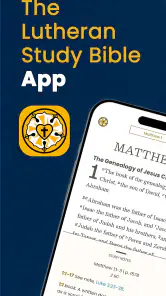
I approached The Lutheran Study Bible as a reading and study companion rather than as a simple replacement for a printed Bible. Its central appeal is clear from the first use: it brings the Bible together with in-depth notes in one mobile experience. That changes the way I read. Instead of stopping to search for background information elsewhere, I can stay with the passage and use the surrounding study material to think about its meaning, context, and Lutheran interpretation.
That focus makes this a particularly relevant Books & Reference app for readers who want more than a plain digital text. It is developed by Concordia Publishing House, and the app is free to install, with optional in-app purchases ranging from $2.99 to $9.99 per item. The free entry point makes it easy to try, while the paid content means I would still check exactly what I want before treating it as my only study resource.
In-depth notes are the feature that changes the reading experience
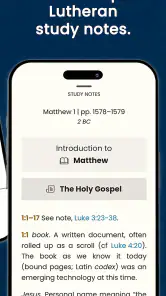
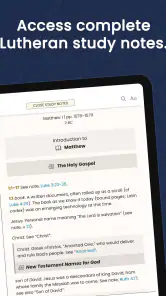
The most important capability here is not simply having Scripture on a phone. Many Bible apps already do that well. The difference is the attempt to place explanatory material beside the text, so a reading session can move naturally from the passage to reflection and study. In my experience, that is most useful when I encounter a name, event, phrase, or theological idea that feels difficult to understand on its own.
With a conventional Bible app, my usual habit is to read a passage, leave the app, search the web, compare several explanations, and then try to remember where I started. That workflow is flexible, but it is also distracting. A study Bible keeps the first layer of interpretation close at hand. I can read a section, consult its notes, and return to the original passage without rebuilding the context in another application.
The real strength is continuity: the notes encourage a slower and more deliberate reading style. This is not necessarily the best tool for quickly looking up a verse and moving on. It is better suited to someone who wants to understand why a passage matters, how it connects with the larger biblical story, or how a Lutheran study tradition approaches it.
I also found that the notes can change what counts as a useful reading session. A short break during the day does not have to become a rushed attempt to cover a large amount of text. I can choose one passage, read it carefully, examine the related explanation, and write down a question or thought elsewhere. That makes the app feel closer to carrying a compact study edition than to opening a basic reference database.
What happens during an ordinary reading session
My practical approach is to begin with the passage I already intended to read instead of opening the notes at random. I read the text once without interruption, then return to the points that seem unclear or especially significant. That order matters. If I begin with commentary, I risk letting the explanation determine my first reaction. Reading the passage first gives me a personal starting point, while the notes then help me test and deepen that first impression.
More From Our News Desk

Clash of Clans Is Won Between the Battles

Android Auto Makes the Case for Quieter Car Software

MobiOffice: Transforming Mobile Productivity with Seamless Integration

EA SPORTS FC™ Mobile Soccer: Redefining Mobile Sports Gaming

How Microsoft OneDrive Became a Mobile Productivity Giant

How Google Translate Breaks Language Barriers Effortlessly
The app works best when I treat the notes as a guide, not as a substitute for reading. The text remains the center of the session, and the supporting material is most valuable when it answers a specific question. For example, if a passage uses unfamiliar historical language, I can consult the notes to gain orientation before rereading it. If a familiar passage feels different in context, the notes can help me notice details I might otherwise overlook.
This approach also makes the app useful for preparing a discussion. Before a small-group meeting, I can read the selected passage, review the explanatory material, and mark down two kinds of questions: what the text appears to say, and what I still do not understand. That distinction is easy to lose when reading quick summaries online. The study format encourages me to stay close to the actual passage.
For personal devotion, I would avoid trying to consume every note in one sitting. That can turn a reflective activity into a research task. A better workflow is to choose a manageable section, read it slowly, consult only the notes connected to genuine questions, and finish by returning to the passage. This keeps the app from becoming overloaded with information and preserves the quiet quality many people want from Bible reading.
Useful habits that are easy to miss
One useful habit is to separate reading days from study days. On a reading day, I can focus on the biblical text and use the notes only when necessary. On a study day, I can deliberately follow the explanations more closely and compare them with my own observations. This two-stage method prevents the in-depth material from making every session feel demanding.
A second practical insight is to use the app for preparation rather than only for reaction. If I know I will attend a service, Bible class, or conversation about a particular passage, reviewing the notes beforehand gives me a stronger foundation. I can arrive with more precise questions instead of relying on vague impressions. The app becomes a preparation tool, not merely something I open after becoming confused.
A third trade-off is that the notes can be more valuable when I resist the urge to read them all. The presence of extra explanation creates a temptation to keep tapping through related material. I find the experience more rewarding when I choose one interpretive question at a time. That keeps the main passage visible in my mind and reduces the feeling of being pulled into endless secondary reading.
For readers who use a phone in shared or quiet spaces, the format also has a practical advantage over carrying a larger printed volume. A phone is already available during a commute, lunch break, or waiting period. The disadvantage is equally obvious: the same device contains notifications and other distractions. I would use a quiet setting or silence interruptions when I want a serious session, because the app cannot create concentration on its own.
A realistic everyday scenario
Imagine that I have twenty minutes before leaving for work and want to read a passage connected to an upcoming church discussion. I open the app, read the selection once, and note the sentence that seems hardest to place in context. I then use the in-depth notes to clarify that point, reread the passage, and save a brief question for the discussion. That is a realistic use because it does not require an hour-long study plan or several separate reference tools.
Later, I can return to the same passage when I have more time. The first session gave me orientation; the second can be more reflective. This is where a mobile study Bible has an advantage over a printed book for some users. It can fit into small pieces of time without requiring me to carry a separate reference volume. For others, the printed format will remain more comfortable for long reading, especially if screen fatigue is a concern.
Where the free model helps and where it needs attention
The free price is a meaningful benefit because it lowers the barrier to testing the reading experience. I can see whether the study approach fits my habits before committing money. At the same time, optional purchases between $2.99 and $9.99 per item mean that “free” should not be interpreted as every possible study resource being included without charge. I would look at the available content carefully and decide whether the included material already meets my needs.
This matters especially for people comparing the app with a single printed study Bible. A printed purchase may cost more at the beginning, but it gives a predictable physical object and does not divide its content into mobile purchases. The app has the opposite advantage: a lower starting commitment and easier portability. The better value depends on whether I prefer flexible digital access or a complete volume that I can own and annotate in one place.
The app is also not automatically the best alternative to a general Bible app. A general-purpose option may be preferable for someone who wants a broad collection of translations, extensive cross-references, audio listening, or highly customizable reading plans. Those tools often prioritize breadth and convenience. This app makes more sense when the study notes and Lutheran perspective are central to the decision.
That distinction is important. I would not choose it simply because I need any Bible on my phone. I would choose it because I want a study-oriented experience shaped around a particular tradition. Readers who are exploring several denominations or who prefer neutral comparison may want a wider reference library alongside it. The app can support study, but it should not be mistaken for an all-purpose research platform.
Who will benefit most from this approach
I think the strongest audience is Lutheran readers who want a dependable digital study companion for personal reading, prayer, preparation, or group discussion. It can also suit someone returning to Bible reading after a long break and looking for explanations that make difficult passages less intimidating. The notes give a starting point when the text feels distant or unfamiliar.
It may also help students and discussion leaders who need a compact way to prepare. The mobile format makes it easier to consult the material outside the home, while the study emphasis encourages more thoughtful preparation than a quick verse lookup. I would still compare interpretations when working on a serious academic project, but for everyday church study, the focused approach is practical.
Families may find it useful for preparing questions before reading together, although the phone format can make shared reading less natural than a large printed Bible. Likewise, older readers or anyone who strongly prefers paper may not enjoy extended screen reading, even if the content itself is helpful. The app is a better match for people who already feel comfortable reading longer passages on a mobile device.
The age rating is Everyone, which fits a reference app intended for a broad audience. Its current version is 1.1.5, and the app requires at least OS 10, so compatibility is worth checking before installation. It has reached over ten thousand installs and holds a 4.4 average from 127 ratings, with 47 written reviews. Those figures suggest a modest but established user base; I would treat them as useful context rather than as a substitute for deciding whether its study method suits me.
Limitations I would consider before installing
The first limitation is focus. A Lutheran study Bible is intentionally narrower than a large, multi-purpose Bible platform. That focus will feel reassuring to some readers and restrictive to others. If I want to compare many traditions in one place, I may need another reference source. If I want a simple text with no interpretive material, the notes may feel like unnecessary weight.
The second limitation is the potential interruption caused by paid content. Even when the app is useful at no initial cost, I still need to understand which resources are included and which require separate purchases. A reader who wants a complete digital library may prefer a service with one clearly defined subscription or a single complete purchase. Someone who only needs occasional study may appreciate the ability to spend selectively.
The third limitation is that mobile convenience can work against concentration. Reading a long passage on a phone exposes me to the habits associated with every other phone activity. I would not blame the app for that, but it affects the experience. A printed edition remains better for extended, distraction-free reading, and a tablet may be more comfortable than a smaller screen when I want to examine text and notes for a longer period.
I would also avoid treating any study note as the final word on every question. Notes are valuable for orientation and reflection, but difficult theological or historical issues can deserve more than one perspective. The app is strongest as a structured companion to reading, not as permission to stop thinking or comparing. That is a strength when used wisely and a weakness when someone expects it to replace broader study.
My recommendation after using it as a study companion
My overall view is positive, with a clear qualification: this is worth trying if you specifically want Bible text supported by in-depth notes and you appreciate a Lutheran framework. The app’s central capability has a real effect on daily use because it reduces the distance between reading a passage and investigating its meaning. It encourages me to slow down, ask better questions, and prepare more thoughtfully for conversations about Scripture.
I would recommend starting with a passage you already know rather than judging the app from a random first impression. Familiar material makes it easier to notice whether the notes add useful context or simply repeat what you already understand. I would then try a less familiar passage and see whether the explanations help me continue reading instead of sending me to unrelated searches.
For a person who wants a free starting point, a portable study resource, and a clearly defined Lutheran identity, it offers a sensible way to begin. For someone seeking a universal Bible toolbox, a paper-first reading experience, or a completely predictable one-time purchase, another option may be a better fit. I would choose this app for guided depth, not for maximum breadth.
That is ultimately why I see value in it. The app does not need to compete with every Bible tool at once. Its purpose is more specific: to bring a study Bible into the reading moments people already have, while keeping explanatory notes close enough to shape a more careful encounter with the text. Used with that expectation, it becomes a thoughtful companion rather than just another copy of the Bible on a phone.
The Lutheran Study Bible Frequently Asked Questions
Who publishes The Lutheran Study Bible app, and what devices can run it?
The Lutheran Study Bible is published by Concordia Publishing House and is listed in Books & Reference. It is intended for devices running Android 10 or later, so check your device’s operating system before downloading. The app is free to install, with in-app purchases available. Its Everyone age rating makes it suitable for a broad audience.
What is The Lutheran Study Bible app?
The Lutheran Study Bible app is a digital Bible resource designed for readers who want to study Scripture from a Lutheran perspective. It typically combines the biblical text with explanatory notes, introductions, cross-references, devotional material, and study tools. The app is intended for personal reading, deeper theological study, sermon preparation, and daily faith development rather than simple Bible reading alone.
What study materials and features does the app include?
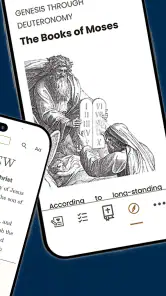
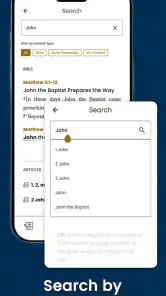
The app generally offers more than the Bible text itself. Depending on the edition and platform, users may find verse-by-verse notes, book introductions, maps, timelines, cross-references, theological explanations, bookmarks, highlights, search tools, and reading plans. These features make it easier to understand historical context, compare related passages, return to important verses, and organize personal study sessions in one place.
Is The Lutheran Study Bible suitable for beginners?
Yes, the app can be useful for beginners, especially those who want guidance while reading the Bible. Introductions and explanatory notes help clarify unfamiliar people, events, vocabulary, and theological themes. However, the amount of study content may feel extensive at first. New users may have a better experience by beginning with a familiar Gospel or a structured reading plan before exploring the more detailed reference material.
Does The Lutheran Study Bible app require an internet connection?
Internet requirements can vary according to the app version, device, and the content that has been downloaded. Basic access, updates, account services, or synchronization may require an internet connection, while some Bible text and study resources may be available offline after installation. Before traveling or studying without Wi-Fi, users should open the desired books and confirm that the relevant content is stored locally.
Pros
- Extensive cross-references help connect related passages across the Bible.
- Clear navigation makes it easy to move between books
- chapters
- and study notes.
- Useful for personal devotion
- group study
- and deeper theological reflection.
- Includes historical and cultural context that enriches Scripture reading.
- Search tools help locate verses
- topics
- and biblical terms quickly.
Cons
- The large amount of commentary may feel overwhelming for first-time Bible readers.
- Some theological notes reflect a specifically Lutheran perspective.
- Rich study content can require considerable storage and device resources.
- Reading plans and note tools may feel limited compared with dedicated Bible apps.
- Some features may be less convenient without an internet connection.
- Category
- Books & Reference
- Version
- 1.1.5