Terrible's+ Rewards
- 121.00
- 4.2
- Installs
- 50.00K
- Price
- Free

Screenshots

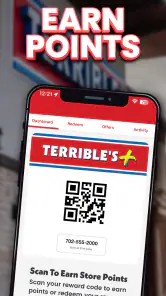
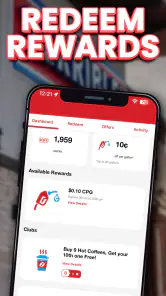
Analysis by Reviewed
I approached Terrible's+ Rewards as a practical travel and local app rather than another general shopping tool. Its purpose is narrow but useful: it keeps local Terrible's deals and promotions in one place and connects that information with a rewards experience. If you already visit a Terrible's store, the app has a clear reason to earn space on your phone. If you do not, its value drops quickly because the whole experience depends on being interested in that particular local business.
The app is free, which removes the biggest barrier to trying it. It comes from TH External Development and has reached over fifty thousand installs, with a 4.2 average from around two hundred eighty ratings. Those figures suggest a reasonably positive reception, although the smaller audience also tells me this is a focused utility rather than a mainstream travel companion. I would describe it as a location-oriented rewards app for people who want timely store offers, not as a full trip planner or a replacement for maps.
How Terrible's+ Rewards feels in everyday use
The strongest part of the concept is convenience. Instead of remembering to check a website, search social media, or ask at the counter about current promotions, I can use one dedicated place to look for offers connected with a Terrible's location. That makes the app most useful before a visit, when a quick check can help me decide whether stopping at the store is worthwhile or whether I should wait for another promotion.
A realistic example would be a road trip through an area where I already expect to stop for fuel, snacks, or other essentials. I would open the app before leaving, review the available local information, and then check again shortly before arriving. That two-step habit matters because promotions can be more useful when checked close to the actual visit than when viewed days in advance. I would not treat the app as a complete travel itinerary; I would use it as a small decision-making tool within a larger trip.
The rewards angle also changes how I think about repeat visits. A single discount may be enough to justify opening the app once, but the longer-term appeal comes from combining regular store visits with awareness of current deals. In my experience, rewards apps work best when they reduce mental effort. The user should not need to remember complicated routines, and a local promotion should be easy to recognize when it is relevant.
That is also where expectations need to stay realistic. The app is not designed to replace a general map, a restaurant guide, a booking service, or a broad coupon platform. Those alternatives are better when I am comparing many businesses or planning an entire day. Terrible's+ Rewards is more specialized: it is useful when the store itself is already part of my plans.
The audience that gets the most from it
I would recommend it first to frequent Terrible's customers, travelers who regularly pass locations served by the brand, and people who actively check promotions before making local purchases. It can also suit someone who dislikes carrying a physical rewards card or trying to remember whether a deal is currently available. The free download makes it easy to test without committing money.
More From Our News Desk

Clash of Clans Is Won Between the Battles

Android Auto Makes the Case for Quieter Car Software

MobiOffice: Transforming Mobile Productivity with Seamless Integration

EA SPORTS FC™ Mobile Soccer: Redefining Mobile Sports Gaming

How Microsoft OneDrive Became a Mobile Productivity Giant

How Google Translate Breaks Language Barriers Effortlessly
Occasional visitors may still find value, especially if they are about to make a planned stop. However, I would not expect much benefit for someone who rarely visits Terrible's locations, does not care about promotions, or wants one app that covers every nearby business. In those cases, a general maps app or a broader local-deals service will usually provide more variety.
The mature seventeen-plus content rating is worth noticing before installation. It does not automatically tell me how every screen will feel, but it does mean the app is not positioned as a family-oriented rewards tool for children. Parents choosing apps for younger users should take that rating seriously rather than assuming that a store-rewards app is automatically suitable for everyone.
What the current version tells me
The current version is 42.02.06, and the app supports devices running Android 7.0 or later. That gives it a relatively broad reach for Android users, including people who keep an older phone for travel or as a backup device. I see that compatibility as practical: a rewards app does not need to demand the newest hardware if its main job is to present local information and account-related content.
The release date is August 12, 2025, so I view this as a relatively recent product rather than a mature platform with a long public history. That distinction affects how I judge it. I am comfortable recommending it for its focused purpose, but I would still watch how consistently the developer maintains promotions, handles updates, and responds to user feedback over time.
The version number alone does not prove that every part of the experience has been redesigned. What it does show is that the app has an identifiable current build and is being presented as an actively available product. I would separate that confirmed present state from any assumption that future updates will add larger rewards, more locations, or deeper personalization. Those possibilities may be appealing, but they should not be treated as existing features.
Why the local focus is both its strength and its limit
General coupon apps often overwhelm me with offers that are irrelevant to where I am going. A dedicated local rewards app can be better when the business relationship is specific and the user already knows the brand. Terrible's+ Rewards has an advantage in that focused situation because the information is less likely to be buried among unrelated retailers.
The trade-off is obvious: a narrow app has a narrow reason to open it. If I am planning a trip and want fuel prices, opening hours, nearby attractions, traffic, restaurants, and accommodation, I still need other tools. The app may complement those services, but it cannot replace them. I would keep it alongside a maps app rather than expecting it to manage the entire travel experience.
There is another practical trade-off with notifications and attention. A promotions app is only helpful when it tells me something relevant, but frequent or poorly timed alerts can make me ignore it. I would approach notification settings carefully and keep only the information that supports real visits. Checking manually before a planned stop may be preferable to allowing every alert to interrupt the day.
Useful habits that make the app more worthwhile
My first tip is to check the app at two different moments: once while planning the route and again shortly before visiting. The first check helps with decisions, while the second reduces the chance of relying on an offer that is no longer useful to my schedule. This is a simple workflow, but it is more effective than installing the app and waiting passively for it to become relevant.
My second tip is to treat promotions as a reason to compare, not an automatic reason to buy. A reward only has real value when it matches something I already need. If I change my plans just to chase a deal, the saving may be cancelled by extra travel, an unnecessary purchase, or wasted time. The app works best as a confirmation tool for an existing stop.
Third, I would keep the app updated on the phone I actually use for travel. A rewards app is not very helpful if it is installed only on an old device left at home. Since the current build supports Android 7.0 and newer, many users should be able to keep it on a regular travel phone, but I would still check that the device has enough battery and connectivity before setting out.
Finally, I would make a personal note of which promotions are genuinely useful to me. That helps separate valuable recurring offers from deals that look attractive but rarely fit my routine. The app can present the opportunity, but the user still has to decide whether the timing, location, and purchase make sense.
What existing users may notice over time
For someone already using the app, the most important question is not simply whether a new version exists. It is whether the current experience makes checking deals faster and more dependable. A version update can matter when it improves stability or keeps the app compatible with newer phones, but I would judge its practical success by how easily I can find relevant local information during an actual visit.
Existing users should also think about their own routine. If the app has become part of a regular stop, its value may come from consistency rather than dramatic new features. A dependable place to check current promotions can be more useful than a flashy redesign that adds complexity. On the other hand, if opening the app feels like extra work every time, the rewards may not compensate for that friction.
The current public reception is encouraging without being definitive. A 4.2 average across around two hundred eighty ratings is a positive signal, but it is not enough for me to assume that every user has the same experience. Travel apps can feel very different depending on location, visit frequency, phone age, and whether the available promotions match a person's needs.
Where the experience still needs careful judgment
The biggest limitation is relevance. A promotion is useful only if it applies to a location I can reach and a purchase I actually want. That means the app may feel excellent during a planned Terrible's stop and almost pointless between visits. I would not install it expecting a constant stream of broadly useful travel information.
Another limitation is dependence on timely information. Promotions are inherently time-sensitive, so I would avoid planning an entire trip around a deal until I have checked the details close to the visit. The app can make discovery easier, but it cannot remove the need for common sense about timing, location, and eligibility.
I also would not choose this app as my only source of local guidance. A maps service remains better for route planning and navigation, while a general local-search app is better for comparing many businesses. Terrible's+ Rewards makes the most sense as a companion: open it for the brand-specific opportunity, then use the appropriate travel tool for everything else.
The mature age classification may be another reason some households skip it. Even though the core idea is a rewards service, the published rating places it outside the category I would casually recommend for younger users. That is not a problem for its intended adult audience, but it is relevant when one phone is shared by a family.
What I would watch in future updates
Because the app is relatively recent, I would pay attention to whether its local coverage and promotion quality remain consistent. A rewards app earns trust when users can open it before a visit and find information that is current enough to act on. I would also look for signs that the developer, TH External Development, keeps the experience straightforward instead of adding unnecessary layers.
I would be especially interested in how the app handles the balance between useful reminders and notification fatigue. The best future direction would preserve quick access to relevant deals while giving users clear control over when the app speaks up. I would also value improvements that make it easier to understand where an offer applies and whether it fits a planned stop, without turning the app into a complicated shopping platform.
Those are expectations, not promises. The confirmed product today is a free Travel & Local app centered on Terrible's promotions and rewards, available in version 42.02.06 for Android 7.0 and later. I would judge future releases by practical reliability rather than by version numbers alone: can I find the right local information quickly, understand what is useful, and use it without unnecessary effort?
My recommendation after using it
I think Terrible's+ Rewards is worth trying if Terrible's is already part of your routine or your route. Its focused purpose is easy to understand, the free price makes experimentation painless, and the positive average rating gives it a reasonable starting level of confidence. I especially like it as a pre-stop check during road travel, where a small promotion can help me make a better-informed decision without searching several unrelated services.
I would skip it if I want a complete travel planner, a universal coupon wallet, or a broad directory of local businesses. It is also a poor fit for people who rarely encounter Terrible's locations or who do not want to manage another app and its possible alerts. In those situations, a general maps or local-search alternative will serve more purposes in one place.
My final view is deliberately practical: this app is most valuable when it supports a visit you were already considering. It does not need to become an all-purpose travel platform to be useful. As a focused rewards companion from TH External Development, it succeeds when it helps a nearby Terrible's customer notice a relevant promotion at the right moment. I would install it for that specific job, keep my expectations narrow, and let my actual travel routine decide whether it deserves a permanent place on my phone.
Terrible's+ Rewards Frequently Asked Questions
Is Terrible’s+ Rewards available for my phone?
Terrible’s+ Rewards is a mobile app for Android, and it requires Android 7.0 or later. Before downloading, check your device’s operating system version and make sure you have enough space for the installation. The app is free to download, and its Travel & Local focus may suit people who want to keep store-related deals and promotions handy while out and about.
What can I use the app for while traveling?
The app is intended to help you hear about deals and promotions from your local Terrible’s store. That can make it useful when you are on the road and want to check for offers connected with a nearby Terrible’s location. Its usefulness will depend on whether there is a participating store or promotion relevant to your plans, so review individual offers before relying on them.
What is Terrible’s+ Rewards?
Terrible’s+ Rewards is the loyalty program for Terrible’s convenience stores, travel centers, casinos, and related services. After creating an account, members can generally earn points or receive promotional benefits from eligible purchases and activities. The program is designed to give regular customers access to rewards, member-only offers, and a convenient way to track their benefits from a mobile device.
How do I sign up for Terrible’s+ Rewards?
You can usually register through the Terrible’s+ Rewards app or its official membership platform by providing basic information such as your name, email address, phone number, and a password. Depending on the current enrollment process, you may also need to verify your email or mobile number and accept the program’s terms. Use accurate details so purchases and rewards are properly connected to your account.
How do I earn and redeem rewards in the app?
Rewards are normally earned by identifying yourself as a Terrible’s+ member when making eligible purchases or participating in qualifying promotions. The app can help you view your points, available offers, and redemption options, although rules may differ by location and product category. Before completing a transaction, check the offer’s expiration date, minimum requirements, and any exclusions to avoid losing an expected benefit.
Pros
- Earn points on eligible purchases at participating Terrible’s locations.
- Digital rewards make it easier to track available offers and benefits.
- Promotions can provide extra value for regular Terrible’s customers.
- The app keeps account-based rewards accessible from a mobile device.
- Useful for checking member perks without carrying a physical rewards card.
Cons
- Rewards availability may vary by location and participating store.
- Some offers can include expiration dates or specific redemption conditions.
- Requires account registration and personal information to use member features.
- Benefits are limited if there are few participating Terrible’s locations nearby.
- App usefulness depends on making eligible purchases regularly.
- Category
- Travel & Local
- Version
- 42.02.06