Symphony of the Cells
- 14.00
- 1.3
- Installs
- 10.00K
- Price
- Free

Screenshots



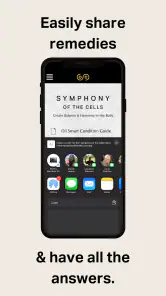


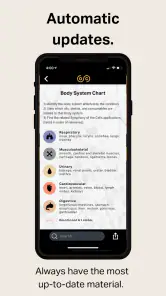

Analysis by Reviewed
I approached Symphony of the Cells as a reference tool rather than as a conventional medical app. Its purpose is to help users cross-reference remedies with favorite Symphony of the Cells applications, so the value depends less on entertainment or automation and more on whether that kind of organized lookup fits your personal wellness routine. My overall impression is mixed: the concept can be useful for someone already familiar with this approach, but the very low average rating suggests that many people have not found the experience satisfying enough.
The app sits in the medical category and is developed by Truman Global LLC. It is free to install, with optional in-app purchases ranging from $4.99 to $29.99 per item. That combination makes it easy to try, but it also means I would not treat the free download as the whole experience until I had checked what material is available without paying. It is rated for Everyone, runs on Android 7.0 or later, and the current version is 3.1.4.
Start with the question you need it to answer
Before installing, I would ask myself whether I already know what a Symphony of the Cells application is and simply need a way to look up its relationship to a remedy. If the answer is yes, the app has a clear job. If I am hoping it will teach me the whole method, decide what is wrong with me, or explain which treatment to choose, I would look elsewhere first. That distinction is the most useful decision criterion here: this is a specialized reference, not a general-purpose guide to health.
I would also think about how often I need this particular cross-reference. Someone who returns to the same material as part of an established routine may find a dedicated app easier than keeping a stack of notes. A person who is only curious about the approach may get little from installing it, especially if the terminology is unfamiliar or the information they want is part of a paid item.
How the reference experience works in everyday use
A focused tool for people who already know the method
The clearest strength is its narrow focus. Instead of trying to be a general symptom checker, appointment manager, medication reminder, or health diary, it concentrates on connecting remedies with Symphony of the Cells applications. That makes the app easier to understand for a user who already follows this system and wants a digital companion for consultation.
I would use it in a calm, deliberate way rather than opening it in an urgent moment. For example, imagine someone preparing for an evening wellness routine and trying to remember which application is associated with a particular remedy. A cross-reference tool can save time compared with searching through printed notes, scattered web pages, or messages from a practitioner. The benefit is practical: the app can put related information in one place when memory is unreliable.
That workflow also reveals an important limitation. The app is not a substitute for diagnosis, emergency care, or professional medical advice. A reference connecting a remedy with an application should not be read as proof that the remedy treats a disease or that an application is appropriate for every person. I would keep that distinction in mind every time I used it, especially when a symptom was new, severe, persistent, or connected to prescribed treatment.
More From Our News Desk

Clash of Clans Is Won Between the Battles

Android Auto Makes the Case for Quieter Car Software

MobiOffice: Transforming Mobile Productivity with Seamless Integration

EA SPORTS FC™ Mobile Soccer: Redefining Mobile Sports Gaming

How Microsoft OneDrive Became a Mobile Productivity Giant

How Google Translate Breaks Language Barriers Effortlessly
Why the cross-reference idea can be genuinely helpful
The most useful way to approach the app is as a retrieval aid. Rather than asking it to make a decision for you, use it to answer a narrower question: “Where does this remedy appear in the system I already use?” That shift matters because it prevents the app from becoming an authority it was not designed to be.
A good personal workflow would be to begin with one clear topic, inspect the related entries, and then write down the application you are considering before starting anything. I would also record the date, the reason for choosing it, and any reaction afterward in a separate notebook or health app. This creates a simple personal record without assuming that the reference itself can track outcomes or replace clinical documentation.
Another useful habit is to compare the app’s information with the instructions supplied by a qualified practitioner. If the two disagree, I would pause rather than improvising. That is especially important for people who use several remedies, have allergies, are pregnant, take prescription medicines, or care for a child. The Everyone age rating describes who can access the app; it does not mean every recommendation inside a wellness system is suitable for every individual.
Where it differs from ordinary medical apps
Most mainstream medical apps are built around conventional tasks such as symptom logging, medication schedules, telehealth, fitness tracking, or access to clinical information. This one serves a much more specialized purpose. That specialization is its main advantage and its main risk.
If I wanted reminders for prescribed medicine, I would choose a dedicated medication manager. If I needed reliable information about symptoms, interactions, or treatment options, I would look for a reputable clinical reference and speak with a healthcare professional. If I wanted to monitor sleep, pain, or mood over time, a tracking app would be more suitable. Symphony of the Cells makes sense only when the user specifically wants this remedy-and-application cross-reference.
That means a person discovering it by accident may feel lost or disappointed. The short store description gives the basic direction, but someone unfamiliar with the terminology may still need background knowledge before the entries become meaningful. In my view, the app works best as a companion to an existing practice, not as a beginner’s complete introduction.
Three practical details that affect the decision
First, I would test the free portion before committing to any purchase. The app costs nothing to download, but individual in-app items can cost between $4.99 and $29.99. That is a significant difference between “trying a reference” and building a larger paid library. Before spending money, I would check whether the specific remedies and applications I actually need are included in the accessible material and whether the purchase is useful enough to justify the price.
Second, I would avoid using the search process as a form of self-diagnosis. Searching for a remedy based on a symptom can create false confidence, particularly when several conditions share similar signs. A safer workflow is to identify the purpose of the lookup independently, then use the app only to organize the information associated with that purpose.
Third, I would keep a backup of any notes that matter to me. A reference app is convenient, but my own record should not depend entirely on remembering where a piece of information appeared. Writing down the name of the application, the remedy considered, and the practitioner’s guidance gives me something I can review later without repeatedly searching.
The biggest weakness is trust and usability confidence
The most difficult part of recommending this app is its reception. It has an average rating of 1.3 from around 70 ratings, with around 14 written reviews. That is a serious warning sign, even though ratings alone do not explain whether the problem is navigation, missing content, purchases, crashes, or disagreement with the underlying approach.
I would not ignore that signal. When an app is used for health-related reference, friction matters more than it does in a casual game. Confusing navigation, unclear access to paid material, or difficulty locating an entry can make the tool frustrating at exactly the moment a user wants a quick answer. The low rating does not prove that every person will have a poor experience, but it does mean I would approach the download with modest expectations.
The install base is over 10 thousand, which shows that the app has reached a real group of users, but popularity alone does not resolve the quality question. I would judge it by a short trial: can I find a relevant entry without guesswork, understand what I am looking at, and determine which material is free or paid before making a purchase? If the answer is no, the app is not earning a place in my regular routine.
Where a different kind of app is the better fit
The usual alternatives are not necessarily competing versions of the same reference. They solve different problems. A symptom journal is more useful when the goal is to notice patterns over time; a medication tool is more useful when the priority is taking prescribed doses on schedule; and a clinical reference is a better starting point for understanding symptoms and treatment options. I would not expect any of those to provide this app’s specific remedy-and-application organization, just as I would not expect this app to replace their core functions.
For a beginner, a guided conversation with a qualified healthcare professional is a better first step than searching a list of remedies without context. For someone who already has practitioner guidance, the app could serve as a handy lookup alongside that advice. The trade-off is straightforward: the more you need broad, clinically grounded health support, the less suitable this narrow reference becomes.
Who is most likely to benefit
I can see a reasonable fit for someone who already uses Symphony of the Cells applications, keeps remedies at home, and wants a compact reference instead of a paper manual. It may also help a practitioner’s client who has been given a specific framework to follow and needs a convenient way to revisit related information between consultations.
The best user is patient, selective, and comfortable treating the app as an index rather than a doctor. That person will probably get more value from the focused subject matter than a casual downloader would. They are also more likely to understand that a cross-reference can support a routine without proving that a remedy is medically effective.
I would recommend skipping it if you are looking for evidence-based diagnosis, urgent symptom guidance, prescription management, or broad health education. I would also skip it if you expect a polished all-purpose health dashboard. A conventional clinical information source or a dedicated medication and symptom tracker would be a better choice for those needs.
Questions I would answer before installing
Is it free? The download is free, but optional items inside the app cost from $4.99 to $29.99 each. I would not assume that every reference entry is included at no cost. I would first identify the exact material I need and review the purchase information carefully.
Can a child use it? The app carries an Everyone content rating, so it is broadly accessible. Still, I would not let an age label decide whether a child should follow a remedy or application. Any use involving a child should be discussed with an appropriate healthcare professional and a responsible adult.
Will it replace a doctor? No, and I would never use it that way. Its role is reference and cross-referencing. It does not turn a remedy lookup into a diagnosis, and it should not delay professional care for serious or unexplained symptoms.
What device does it need? It supports Android 7.0 and newer. The current release is version 3.1.4, so users with older Android devices should check compatibility before planning to rely on it.
Who made it? Truman Global LLC is the developer. That is useful to know when checking the app’s identity in the store or looking for support, but the developer name alone should not be treated as a guarantee of medical reliability.
My final view after weighing the trade-offs
Symphony of the Cells has a clear and unusual purpose, and I appreciate that it does not pretend to be a complete medical platform. For the right person, its cross-reference approach can make an established wellness routine easier to consult and less dependent on scattered notes. The focused design is more useful than a generic health app when the user already knows exactly what kind of information they want.
However, the low average rating weighs heavily against an enthusiastic recommendation. The paid-item structure also deserves attention, because a free install can become a more expensive purchase if the material most relevant to you is locked separately. I would try the accessible content first, test whether the navigation feels clear, and avoid buying anything until the app has demonstrated practical value in my own routine.
My verdict is cautious: this is a niche reference app for existing Symphony of the Cells users, not a general medical solution. I would recommend it only to someone who understands its limited role, checks every health decision with appropriate professional judgment, and is willing to evaluate the free experience before paying. For everyone else, a conventional medical reference, a symptom journal, or a medication tool will probably be more useful and easier to trust.
Symphony of the Cells Frequently Asked Questions
Who develops Symphony of the Cells, and what kind of app is it?
Symphony of the Cells is a medical-category app developed by Truman Global LLC. Its store summary describes it as a way to cross-reference remedies and favorite Symphony of the Cells applications. If you are considering it, keep in mind that it is a reference resource for exploring wellness content, not a substitute for guidance from a qualified healthcare professional.
What is Symphony of the Cells, and what can the app be used for?
Symphony of the Cells is a wellness and educational app centered on essential-oil application protocols created for different physical, emotional, and lifestyle concerns. It is mainly designed to help users explore protocol information, review suggested oil combinations, and follow application guidance. The app should be viewed as a complementary wellness resource rather than a diagnostic tool or a replacement for professional medical care.
Does Symphony of the Cells require essential oils or other products to use it?
Yes, the app’s content is most useful for people who already own, or plan to purchase, the essential oils referenced in its protocols. It may provide information about oil selections, application areas, and recommended sequences, but it generally does not supply the products themselves. Before using any oil, check its label, dilution instructions, and safety information, since quality, concentration, and intended use can vary between brands.
Is Symphony of the Cells safe for everyone to follow?
Not necessarily. Essential oils can cause skin irritation, allergic reactions, photosensitivity, breathing problems, or other unwanted effects, especially when used incorrectly. Extra caution is important for children, pregnant or breastfeeding individuals, older adults, pets, and people taking medication or managing a medical condition. Perform appropriate safety checks and consult a qualified healthcare professional before following any protocol if you have concerns.
Can Symphony of the Cells treat illnesses or replace a doctor’s advice?
No. The app presents complementary wellness information and should not be used to diagnose, prevent, or treat a disease without professional guidance. Claims associated with essential-oil routines may not apply equally to every person, and they should not replace prescribed medication, emergency care, vaccination, or an evaluation by a licensed clinician. Seek medical advice whenever symptoms are severe, persistent, or unexplained.
Pros
- Clear
- easy-to-follow guidance for essential-oil application routines.
- Useful reference for users exploring complementary wellness practices.
- Organized symptom-based layout makes protocols quick to find.
- Supports offline access if content is downloaded in advance.
- May help users keep personal wellness routines more consistent.
Cons
- Scientific evidence for many recommended oil applications is limited.
- Some essential oils may cause skin irritation or allergic reactions.
- Certain oils can be unsafe during pregnancy or around children.
- The app should not replace professional medical diagnosis or treatment.
- Full access may require payment
- depending on the version and content.
- Category
- Medical
- Version
- 3.1.4