Surfline: Wave & Surf Reports
- 2.46K
- 4.2
- Installs
- 1.00M
- Price
- Free

Screenshots
Analysis by Reviewed
For me, the real test of a surf app is not whether it looks exciting on the first morning. It is whether I still reach for it after the novelty wears off, when I have a familiar break, a tight schedule, and no appetite for turning a simple surf check into a long research session. Surfline: Wave & Surf Reports makes its case through a surf-centered mix of forecasts, cameras, wind, and tide information, but its lasting usefulness depends on how regularly you surf and how selectively you use it.
Why the first week feels useful
When I first open a surf app, I want a quick answer to a practical question: is it worth making the trip to the beach today? Surfline brings forecasts, cameras, wind, and tide information together, so I can compare a spot with another before packing the car. The live view is especially useful when a forecast looks promising but I want to see what the break is doing right now. A camera can help me avoid a wasted drive, though it is still only a view from one angle, not a guarantee of what every part of the water will be like.
That first-week appeal is strongest for people who already have a few places they check regularly. I’d save the breaks I care about and use the same routine before a session: look at the forecast, check the wind and tide, then glance at the camera if there is one. Comparing those signals is more useful than treating any single forecast as a promise. If I’m visiting an unfamiliar coast, Surfline can help me narrow down where to look, but I’d still ask a local about access, hazards, and conditions that a screen cannot show.
The Ocean at Your Fingertips
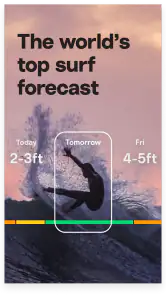
Picture this: you're sitting at home, daydreaming about catching the perfect wave. Enter Surfline, your personal ocean whisperer. This app offers real-time reports on wave conditions, tides, and weather for surf spots around the globe. It's like having a crystal ball for surf conditions. No more guesswork, just pure wave-riding bliss.
Features that Make a Splash
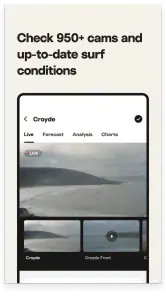
So, what exactly can you expect from Surfline? For starters, it provides live streaming from over 500 surf cams worldwide. Yes, you heard that right—live footage of the waves you're eyeing. It's the next best thing to being there.
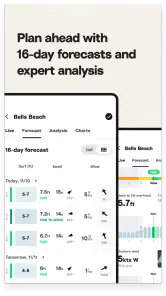
But that's not all. The app also offers detailed surf forecasts, wind conditions, and swell analysis. It's like having a team of surf experts in your pocket. And let's not forget the personalized surf alerts that notify you when conditions are just right at your favorite spots. It's like the app knows your surfing soul.
From first checks to a dependable habit
The first week is easy to enjoy because every forecast and camera feels like a new window onto the coast. The more useful test comes later: can I make a quicker, calmer decision with the same information? I find that Surfline works best when I build a small personal baseline. After checking a familiar break across different days, I start to notice which combinations of wind, tide, and forecast usually suit my own plans. That judgment is personal, not a universal rating of whether a spot is good.
More From Our News Desk

Clash of Clans Is Won Between the Battles

Android Auto Makes the Case for Quieter Car Software

MobiOffice: Transforming Mobile Productivity with Seamless Integration

EA SPORTS FC™ Mobile Soccer: Redefining Mobile Sports Gaming

How Microsoft OneDrive Became a Mobile Productivity Giant

How Google Translate Breaks Language Barriers Effortlessly
A practical workflow is to check once the evening before and again shortly before leaving, rather than refreshing the same screen all morning. The earlier look helps me decide whether to keep time open; the later one is a check for changes, not a reason to assume conditions will stay fixed. If the forecast and camera seem to disagree, I treat that as a reason to pause and gather another view, not to cherry-pick whichever one supports the trip I already want to make.
For a surfer with a commute, this can matter more than having a huge collection of features. Imagine I have an hour free before work and two possible breaks within reach. I can compare the conditions I care about, look at a camera where available, and decide whether either option is worth the drive. If neither looks convincing, I can skip the trip instead of spending that limited window hoping the forecast turns out differently. That is a modest benefit, but it is the kind of repeated decision that gives a planning app a reason to stay installed.
Making the routine last
Surfline is a weather app built around surfing, developed by Surfline/Wavetrak, Inc. That focus is its main advantage over a general weather app: instead of making me translate a broad forecast into surf decisions, it puts surf-related conditions and spot cameras at the center. A standard weather app may be the better everyday choice if I only need rain, temperature, or a simple forecast; Surfline earns its place when I regularly plan around the ocean.
To keep it useful month after month, I’d avoid checking every available spot just because it is there. A short list of familiar breaks makes the information easier to compare over time. I’d also treat alerts as prompts to check conditions, not automatic instructions to go. The value is in having a steady reference point and learning how a particular spot responds to changing wind and tide, rather than expecting one notification to settle every decision.
There is also a useful distinction between choosing a destination and deciding whether it is safe or suitable once I arrive. Surfline can help me compare options and prepare questions, but I should still account for my ability, the conditions on the beach, and advice from people who know the area. That boundary keeps the app in its proper role: a planning aid rather than a substitute for experience or an on-site assessment.
Riding the Learning Curve
If you're new to surfing, don't fret. Surfline isn't just for the pros. The app includes a plethora of resources for beginners, from surf etiquette to wave selection. Plus, the community feature allows you to connect with other surfers, share tips, and maybe even find a new surf buddy.
One of the standout features for newbies is the "Surfline Sessions". This nifty tool lets you record your surfing sessions using your smartwatch, giving you insights into your performance. It's like having your own personal surf coach!
What to expect from everyday use
A realistic use case is checking the app before work, when I have only a limited window to surf. I can compare my usual break with a nearby alternative, see whether the wind or tide changes the picture, and use a camera where available before deciding whether the trip makes sense. That does not remove uncertainty: conditions can change, and a camera cannot show everything happening beyond its frame. I’d use the forecast to plan, then make the final call with my own judgement at the beach.
The app is best suited to surfers who enjoy checking conditions often, travel between breaks, or want a more surf-specific view than a general forecast provides. Someone who surfs only occasionally may find a basic weather app and a quick local check less demanding. If you are new to the water, the information can help you prepare, but it should not replace learning safety, surf etiquette, and local conditions from reliable people on site.
It is also a reasonable companion for someone planning a surf trip, even if they do not need it every day at home. Before traveling, I would use it to compare candidate breaks and get a sense of the conditions to investigate, then confirm practical details such as access and local guidance independently. The app can narrow the search; it cannot tell me whether a particular beach suits my skill level or whether I should enter the water when I arrive.
By contrast, a casual beachgoer who mainly wants to know whether it will rain or feel warm may be better served by a general weather app. Those apps are usually simpler for broad daily forecasts, while Surfline’s appeal is the surf-specific context and spot-oriented checking. I would not keep two weather tools open out of habit; I’d choose based on the question I ask most often. If surf conditions are only an occasional curiosity, the extra focus may feel like clutter rather than a benefit.
Maintenance, costs, and fatigue
Surfline is free to install, with in-app purchases ranging from about one dollar to around one hundred and fifty dollars per item. I’d start with the free experience and decide whether I use its features often enough to justify any purchase; frequent checking alone is not a reason to pay. The app is rated for Everyone, has a 4.2 average from around 8,900 ratings, and has been installed over a million times. It first arrived in 2011, and version 10.2.2 requires Android 8.0 or later.
The main maintenance burden is not complicated setup so much as the habit of interpreting changing conditions. If I keep too many spots and alerts in view, checking can become noisy rather than helpful. It can also be frustrating when I want a simple yes-or-no answer, because surf decisions involve several conditions and personal ability. I’d keep my saved locations focused and use the app as one input, not as a substitute for local knowledge or caution.
The paid options deserve a deliberate decision rather than an impulse purchase. I would first work out which parts of my routine I actually use, then consider whether an upgrade would address a recurring need. If I mostly open the app for a quick forecast and an occasional camera check, paying may not improve my day enough to justify it. Someone who checks conditions frequently or relies on more involved planning may weigh that differently, but the right choice depends on actual use, not on assuming every available feature is essential.
Fatigue can come from checking too often as much as from paying for features. Forecasts are most useful when they help me make a decision; repeatedly reopening them without a clear question can turn uncertainty into anxiety. I try to set a simple stopping point: check the main conditions, compare the realistic options, and decide what would change my plan. If nothing would, another refresh is unlikely to make the call easier.
Another trade-off is that a camera can create confidence while leaving important gaps. A fixed view may show a useful slice of a break, but it cannot represent every peak, current, or hazard, and visibility itself can limit what I learn from the image. I would use the footage to answer a narrow question—does the scene broadly resemble what I expected?—rather than treating it as a complete survey. That keeps a genuinely convenient tool from becoming a false guarantee.
Catch the Wave
Ready to take the plunge? Downloading Surfline is like opening the door to endless surf adventures. With its user-friendly interface and wealth of information, it's no wonder surfers around the world are raving about it. Whether you're planning your next surf trip or just want to check out the local break, Surfline has you covered.
In the end, Surfline: Wave & Surf Reports is more than just an app—it's a community, a teacher, and a guide rolled into one. So grab your board, download the app, and let the surf adventures begin!
Does it earn a lasting place?
For me, Surfline earns space on a phone when surfing is a regular part of life, not just a holiday novelty. Its mix of forecasts, tide and wind details, and camera views gives me a repeatable way to plan, while the choice to check only a few familiar breaks keeps that routine manageable. The trade-off is that it asks for attention and interpretation; it cannot make a difficult call on safety or guarantee the conditions I want.
If you want surf-focused planning and expect to check conditions repeatedly, I’d give it a try. If you rarely surf or only need ordinary local weather, a simpler alternative will probably feel lighter. The lasting value comes from how well its information fits your own routine, not from opening it every day simply because it is installed.
My bottom line is that this is a focused tool, not an all-purpose reason to follow the ocean from a phone. The best reason to keep it is a repeated, concrete need: comparing a couple of breaks, checking a camera before a drive, or keeping a surf routine organized around limited free time. If those decisions are part of my month, the app can earn its place long after the first-week curiosity fades. If they are not, I would uninstall it without feeling I had missed an essential everyday weather tool.
Surfline: Wave & Surf Reports Frequently Asked Questions
Is Surfline useful for beginners, or is it mainly aimed at experienced surfers?
Surfline can be useful for surfers at different experience levels because it brings wave forecasts, surf reports, weather details, tide schedules, and surf alerts together in one app. Beginners can use that information to get a clearer picture of conditions before heading out, while more experienced surfers may appreciate the reports and camera access when planning a session. As with any forecast, conditions can change, so use good judgment in the water.
What does Surfline include besides wave forecasts?
Surfline is a comprehensive app designed for surfers, providing wave forecasts, surf reports, and live streaming from surf cameras around the world. It benefits surfers by offering information about wave conditions, helping them plan their surf sessions effectively. The app also includes weather patterns, tide schedules, and surf alerts, making it a valuable tool for both amateur and professional surfers.
What is Surfline and how can it benefit me as a surfer?
Surfline is a comprehensive app designed for surfers, providing wave forecasts, surf reports, and live streaming from surf cameras around the world. It benefits surfers by offering accurate wave conditions, helping them plan their surf sessions effectively. The app also includes detailed weather patterns, tide schedules, and surf alerts, making it a valuable tool for both amateur and professional surfers.
How accurate are the surf forecasts provided by Surfline?
Surfline's surf forecasts are highly reliable, backed by a team of meteorologists and surf experts who analyze oceanic and atmospheric data. The app offers detailed 16-day forecasts, hourly updates, and real-time conditions, ensuring surfers get the most accurate information possible to plan their activities. User reviews often highlight the accuracy and reliability of Surfline's predictions.
Is Surfline free to use, or are there any subscription fees?
Surfline offers both free and premium subscription options. The free version includes basic features like surf reports and limited camera access, while the premium plan, called Surfline Premium, provides an ad-free experience, unlimited camera access, and extended forecasts. Subscriptions can be billed monthly or annually, offering flexibility depending on the user's needs and preferences. The app is free to download, with in-app purchases available.
Pros
- Comprehensive wave reports and forecasts
- Live surf cams at various beaches
- User-friendly interface design
- Detailed weather conditions included
- Customizable alerts for favorite spots
Cons
- Requires subscription for premium features
- Occasional inaccuracies in forecasts
- High data usage for live cams
- Limited free features
- Ads can be intrusive in free version
- Category
- Weather
- Version
- 10.2.2