SkillCat: HVAC & EPA 608
- 1.32K
- 4.9
- Installs
- 100.00K
- Price
- Free

Screenshots
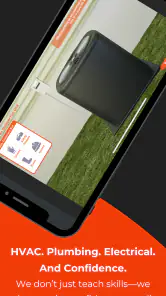
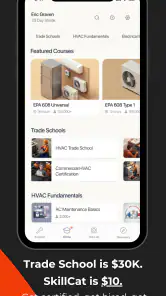
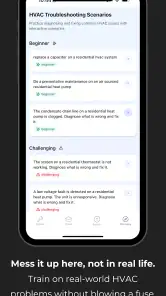
Analysis by Reviewed
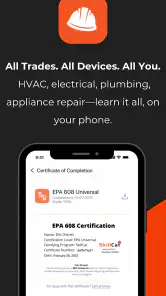
Learning a skilled trade is different from memorizing facts for a school exam. You need to understand how systems behave, recognize terms quickly, and build enough confidence to keep studying when the material becomes technical. That is the space where SkillCat tries to help. It is a free education app from SkillCat focused on skilled-trade training, including HVAC, EPA 608, OSHA-10, and related learning paths, with the convenience of studying on a phone.
I found its strongest appeal during the first few study sessions. The idea is simple: instead of waiting until I have a long, uninterrupted block of time, I can use a short break to review trade material. That makes the app a sensible companion for an apprentice, a career changer, or someone preparing to take the first steps into HVAC work. It is available for Everyone, runs on Android devices using Android 7.0 or later, and is currently listed as version 7.0.5.
The important question, though, is not whether an education app feels useful on day one. Nearly any well-organized learning tool can create that impression. The better test is whether it remains useful after the novelty fades, whether its lessons fit a real routine, and whether the study burden stays reasonable. My experience with this app is positive overall, but it works best when I treat it as a structured study aid rather than a complete replacement for hands-on training, an instructor, or field experience.
What the first week feels like
The first week is where the mobile format makes the biggest difference. HVAC and safety subjects can look intimidating when approached through a large textbook or a long video course. On a phone, the material feels easier to approach because I can open the app with a specific goal: review a concept, continue a lesson, or spend a few minutes reinforcing terminology.
That lower barrier matters for people who work irregular hours. A student may have time before a shift but not enough energy for a full classroom session. An apprentice may want to review after seeing a component or procedure during the day. Someone considering a career change can use the early lessons to find out whether the subject genuinely interests them before investing heavily in other training.
The app’s focus is also more useful than a general study platform for this audience. A broad flashcard app can help with memorization, and video platforms offer plenty of demonstrations, but neither automatically creates a trade-oriented path. SkillCat is more appealing when I want my study time connected to HVAC or workplace-safety topics rather than scattered across unrelated resources.
One practical way to start is to choose a single learning objective for each session. For example, I might decide to review refrigerant-related vocabulary, then stop instead of opening several unrelated subjects. This keeps the first week from becoming a tour of every available topic. The app is easier to judge when I use it as a routine, not as a catalog to browse endlessly.
More From Our News Desk

Clash of Clans Is Won Between the Battles

Android Auto Makes the Case for Quieter Car Software

MobiOffice: Transforming Mobile Productivity with Seamless Integration

EA SPORTS FC™ Mobile Soccer: Redefining Mobile Sports Gaming

How Microsoft OneDrive Became a Mobile Productivity Giant

How Google Translate Breaks Language Barriers Effortlessly
I also recommend keeping a separate notebook or digital document while studying. A phone lesson can introduce an idea, but writing down unfamiliar terms, confusing distinctions, and questions for later makes the material more memorable. This is especially important in technical education, where recognizing a word is not the same as understanding how it applies in a real situation.
The early experience is helped by the app’s broad subject range. HVAC learners can focus on a central trade area, while people interested in compliance and workplace preparation have OSHA-10 and EPA 608-related material to consider. That variety gives the app a wider use case than a single-topic revision tool, although it also creates a temptation to jump between paths before finishing one.
Its reputation suggests that many learners find the approach useful: the app has a 4.9 average from around 6.6 thousand ratings, with roughly 1.3 thousand written reviews and over 100 thousand installs. I would not treat those figures as proof that every learner will enjoy it, but they do indicate that the app has attracted a substantial audience for a specialized education product.
A realistic everyday study routine
Imagine a new technician working during the day and commuting home in the evening. Instead of promising to study for an hour every night, that person could use SkillCat during a lunch break for one focused session, then revisit the same subject later in the week. On a busy day, even a short review can preserve continuity. On a quieter day, the learner can continue further and write down questions that need practical clarification.
The key is not to measure success by how many screens are completed. I would measure it by whether I can explain the concept without immediately looking at the answer, connect it to a familiar HVAC situation, and identify what I still do not understand. That approach turns the app from passive reading into a small but repeatable study habit.
Where it differs from the usual alternatives
Compared with a printed manual, the app is more convenient for quick revision and less demanding to carry around. A manual is usually better for deep reference, marking pages, comparing diagrams, and building a personal technical library. Compared with classroom instruction, the app offers flexibility but cannot respond to a confused learner in real time or demonstrate a physical task in front of them. Compared with random online videos, it provides a more intentional route through trade subjects, but it may not offer the variety of teaching styles or real-world demonstrations found across a broad video library.
That trade-off is central to deciding whether it belongs in a learner’s routine. If I need a portable starting point and a way to keep studying between other responsibilities, SkillCat is more practical than relying only on a book. If I need supervised practice, detailed troubleshooting, or an instructor who can correct my technique, a course, lab, or apprenticeship is the better choice.
Does the value survive after the first month?
The lasting value depends on repetition. An education app can be impressive during the first week because every lesson feels new. By the second or third week, the harder question appears: does it help me return to important material instead of simply moving forward? For SkillCat, I see the strongest ongoing role in review, preparation, and keeping trade concepts active between formal learning opportunities.
That makes it particularly useful alongside another commitment. A learner attending a technical program can use the app to preview a subject before class or reinforce it afterward. Someone working in the field can use it to revisit terminology and safety content. A career changer can use it to maintain momentum while researching apprenticeships, certifications, or entry-level opportunities.
I would not use it as a substitute for every other resource. Technical knowledge has layers. A mobile lesson may help me understand a principle, but I still need to interpret diagrams, work through realistic problems, and see how equipment behaves. The app earns recurring value when it fills the small gaps between those experiences. It is less convincing if I expect it to provide the complete education by itself.
One non-obvious benefit of a focused app is that it can expose weak areas earlier than a large course sometimes does. If I repeatedly hesitate over the same terms or questions, that pattern tells me where to slow down. Rather than rushing through the full curriculum, I can use those friction points to decide what deserves a second pass. This is a better long-term workflow than treating completion as the only goal.
How I would use it month to month
In the first month, I would choose one primary track and create a modest weekly rhythm. I might study new material on two days, review older material on another day, and reserve one session for writing questions or checking a related reference. The exact schedule matters less than returning consistently. A routine that survives a busy week is more valuable than an ambitious plan abandoned after a few sessions.
In later months, I would revisit earlier lessons instead of assuming that finishing them means mastering them. Trade learning is cumulative, and forgotten basics can make advanced material feel harder than it needs to be. Short review sessions also help before an exam or a classroom unit, especially when I have not touched a topic for several weeks.
The app can also serve as a decision tool for beginners. If I am unsure whether HVAC is a good fit, working through introductory material gives me a more honest taste of the vocabulary and concepts than reading a career advertisement. It will not replicate the physical demands of the job, but it can reveal whether I enjoy the technical side enough to continue exploring the field.
Who should skip it?
I would skip SkillCat as a primary learning resource if I already have a complete instructor-led program with strong practice facilities and personalized feedback. In that situation, the app may still be useful for revision, but paying attention to the instructor’s sequence and hands-on assignments should come first.
I would also be cautious if I dislike studying from a phone. Technical subjects can become tiring on a small screen, particularly when I need to compare information, take extensive notes, or concentrate for a long period. A laptop, printed material, or classroom setting may be more comfortable for sustained work.
Finally, someone seeking only general career inspiration may find the trade focus too specialized. This is not a broad personal-development app. Its value increases when I have a clear interest in HVAC, EPA 608 preparation, OSHA-10 content, or related skilled-trade learning.
Maintenance, fatigue, and the cost of keeping the habit
The maintenance burden is fairly low in one sense: the app is free to download, so I can try its learning approach without committing to a purchase. However, free access does not remove the need for discipline. I still have to choose a subject, return regularly, review difficult areas, and connect the lessons with deeper practice. The app can reduce friction, but it cannot create motivation on my behalf.
There are also optional in-app purchases ranging from $0.99 to $119.99 per item. That wide range means I would check the exact purchase before paying and decide whether it supports a specific learning goal. The free starting point is valuable, but I would not assume that every useful path or extended study option is included at no cost. A learner with a strict budget should explore the available material first and avoid buying simply because a topic feels urgent.
Another maintenance issue is device dependence. Studying on a phone is convenient, but notifications, calls, and general screen fatigue can break concentration. My practical solution would be to use a quiet setting, silence unnecessary alerts, and keep sessions short enough that the format remains comfortable. If I need to study for a long stretch, I would move to a larger screen or printed notes when possible.
The most likely source of fatigue is repetition without active recall. Reading or tapping through lessons can feel productive even when little is retained. I would pause frequently and ask myself to explain the point in plain language. If I cannot do that, I would review before moving on. This small habit makes the app more demanding, but it also makes the time more worthwhile.
A second source of fatigue is switching subjects too often. Because the app covers several skilled-trade areas, it can be tempting to sample HVAC, safety, and certification-related content in the same sitting. That variety is useful for exploration, but it can weaken retention. I would keep one main track for the week and use other subjects only when they directly support the current goal.
A third limitation is the gap between screen knowledge and physical confidence. Understanding a term on a phone does not prove that I can identify a component, follow a safe procedure, or diagnose a fault. This is not a flaw unique to SkillCat, but it is an important boundary. The app should prompt practical questions and preparation, not encourage anyone to treat mobile study as permission to perform unfamiliar work unsafely.
How to get more from each session
Start with one narrow target, such as reviewing a specific HVAC concept or safety topic, rather than opening several sections at once.
After a lesson, explain the main idea without looking at the screen. Write down the terms that still feel unclear.
Connect the lesson to a real situation, a classroom exercise, or a diagram from a trusted technical reference.
Return to difficult material later instead of repeatedly rereading it in the same sitting.
Before making an in-app purchase, decide what learning problem it solves and whether it fits the rest of your training.
This workflow addresses a weakness common to mobile learning: convenience can make the experience too passive. SkillCat is most effective when I use its portability to study more consistently, then add my own notes, questions, and practical references.
My long-term verdict
SkillCat earns a lasting place on my phone when I need a flexible way to keep HVAC and skilled-trade subjects in my weekly routine. Its free entry point, specialized focus, and mobile format make it easier to begin than a full textbook or a rigid class schedule. The app is especially well suited to beginners, apprentices, career changers, and workers who need short study sessions that fit around real responsibilities.
I would recommend it to a friend with one clear qualification: use it as part of a learning system, not as the entire system. Pair it with hands-on instruction, reliable reference material, practice questions, and conversations with qualified teachers or technicians. That combination gives the app a meaningful role without asking it to do something a phone-based course cannot do.
The app’s current version is 7.0.5, and its strong user response shows that the format has connected with many learners. Still, ratings cannot decide whether it will suit your learning style. If you prefer concise, portable study and can maintain a routine, it is worth trying. If you need extensive demonstrations, immediate feedback, or a physical training environment, choose a classroom or practical program first.
My final judgment is favorable because the app addresses a real problem: trade learners often have small pockets of time but need a way to keep progressing. Its recurring value comes from those moments, not from novelty. The best reason to keep SkillCat is not that it replaces training, but that it helps you return to training more often. Used with realistic expectations, it is a useful education companion for building knowledge steadily while preparing for the more demanding work of learning a skilled trade.
SkillCat: HVAC & EPA 608 Frequently Asked Questions
Can I use SkillCat on both Android and iOS devices?
SkillCat is a mobile education app for learning skilled trades, with HVAC and EPA 608 among its subjects. It is designed for mobile study, so lessons can fit into short sessions rather than requiring a classroom schedule. Before downloading, check that your device meets the app’s operating-system requirements and that the app is available for your device through its app store.
Who develops SkillCat, and what do users think of it?
SkillCat is developed by SkillCat and is intended for people exploring or developing skills in HVAC and other trades. Its store page shows an average rating of 4.9 from around 6,600 ratings, alongside roughly 1,300 written reviews. Those figures offer a useful snapshot of user feedback, but individual experiences can differ depending on a learner’s goals, study habits, and expectations.
What is SkillCat: HVAC & EPA 608?
SkillCat: HVAC & EPA 608 is a mobile learning platform designed for people interested in heating, ventilation, and air-conditioning careers. The app provides HVAC lessons, interactive training, quizzes, and preparation for the EPA Section 608 certification exam. It is aimed at beginners, students, and technicians who want to strengthen their knowledge using a phone or tablet instead of relying only on classroom instruction.
Can I use SkillCat to prepare for the EPA 608 certification exam?
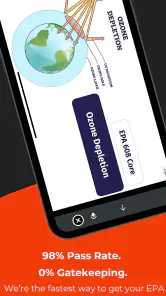
Yes, the app is built to help users study for the EPA Section 608 certification test, which is required for technicians who handle regulated refrigerants. Its training generally covers topics such as refrigerant handling, recovery requirements, safety procedures, environmental rules, and different certification sections. However, completing lessons in the app does not automatically guarantee certification, so users should carefully follow the current testing and certification requirements.
Is SkillCat suitable for complete beginners with no HVAC experience?
SkillCat can be useful for beginners because its learning material is organized into short lessons and typically introduces important HVAC concepts gradually. You do not necessarily need professional experience to start, although basic comfort with tools, measurements, and technical vocabulary may make the material easier to understand. Beginners should treat the app as a foundation and combine it with hands-on practice or additional instruction whenever possible.
Pros
- Free EPA 608 training helps reduce the cost of certification preparation.
- Short lessons make it easy to study during breaks or commutes.
- HVAC terminology and concepts are explained in a beginner-friendly way.
- Practice tests help identify weak areas before taking the official exam.
- Useful career-focused content for aspiring HVAC technicians.
Cons
- Some advanced topics may feel too brief for experienced technicians.
- A stable internet connection may be needed for certain lessons or tests.
- Practice questions may not fully match every official exam version.
- The app focuses mainly on U.S. HVAC certification requirements.
- Progress can feel repetitive when reviewing similar quiz material.
- Category
- Education
- Version
- 7.0.5