SimpliFly: Fly with Confidence
- 10.00
- 4.5
- Installs
- 50.00K
- Price
- Free

Screenshots

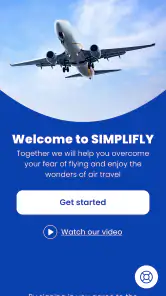
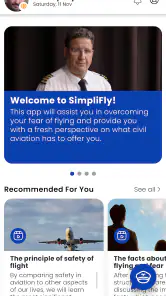
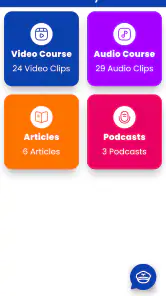
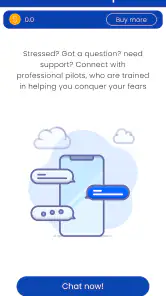
Analysis by Reviewed
Flying can look simple from the outside: arrive at the airport, pass security, find the gate, and take your seat. For someone dealing with aerophobia, though, each step can create its own wave of worry. SimpliFly: Fly with Confidence is designed for that exact situation. It is a free travel and local app from BANNER HOLDINGS AND MANAGEMENT SERVICES LTD that focuses on helping users work through fear of flying with the SimpliFly program.
I approached it less like a travel planner and more like a personal preparation tool. It does not try to replace an airline app, a boarding pass, an airport map, or professional medical care. Its value is in helping a nervous traveler prepare mentally before and during a flight. That narrower purpose is also its biggest strength: the experience is easier to judge when you use it as support for anxiety, not as an all-purpose travel companion.
The app is available to everyone from an age-rating perspective, and it has built a modest but encouraging audience, with more than fifty thousand installs. Its average rating is 4.5 from roughly one hundred thirty-five ratings, alongside about ten written reviews. Those numbers suggest that many users find the idea useful, although they are not enough on their own to prove that it will work equally well for every kind of fear.
From the first anxious thought to a calmer travel plan
Starting with the real problem, not the airport timetable
The most useful way to begin with SimpliFly is before the trip becomes urgent. If I opened it while already standing in a crowded terminal, with a departure approaching and no time to settle into the material, I would be asking too much of it. Fear of flying often builds gradually through anticipation, so a calmer setting gives the program a better chance to become part of a routine rather than a last-minute rescue attempt.
A realistic starting condition might be a person who has booked a flight to visit family but keeps imagining turbulence, engine trouble, takeoff, or being unable to leave the aircraft. Another user may have flown before but now feels tense after a difficult journey. These are different experiences, even though both can be described as fear of flying. I found that the app makes most sense when I identify the moment that triggers me instead of treating all nervousness as one problem.
That distinction matters because a traveler who mainly fears airport crowds may need a different solution from someone who becomes distressed when the aircraft door closes. SimpliFly is aimed at aerophobia, so it is most relevant when the aircraft and the act of flying are central to the worry. If the main issue is severe panic, trauma, or a broader anxiety condition, I would treat the app as a supplementary aid and consider speaking with a qualified professional rather than relying on it alone.
Moving through the program at a usable pace
The program is easier to approach as a sequence of small preparation sessions than as something to rush through in one sitting. I would choose a quiet time, silence unnecessary notifications, and keep a note of what I felt before starting. That simple comparison helps me notice whether a session changes anything, instead of judging the app only by how I feel at the end of a stressful travel day.
More From Our News Desk

Clash of Clans Is Won Between the Battles

Android Auto Makes the Case for Quieter Car Software

MobiOffice: Transforming Mobile Productivity with Seamless Integration

EA SPORTS FC™ Mobile Soccer: Redefining Mobile Sports Gaming

How Microsoft OneDrive Became a Mobile Productivity Giant

How Google Translate Breaks Language Barriers Effortlessly
One practical workflow is to use the app on an ordinary day first, then return to it during the days leading up to departure. On the first visit, I would focus on becoming familiar with the program and noticing which parts feel reassuring or uncomfortable. Later sessions can be connected to specific stages of the journey: leaving home, reaching the airport, boarding, takeoff, time in the air, and landing. This makes the preparation more concrete than simply telling myself to “stay calm.”
I would also avoid turning every session into a test. If I keep checking whether I am completely calm, I can accidentally make anxiety the center of attention. A better approach is to use the material as rehearsal: I am practicing how to respond when worry appears, not demanding that worry disappear immediately. The meaningful outcome is greater control over my response, not a promise of zero fear.
Another useful habit is to pair the program with a written travel plan. I might record when I need to leave home, how I will reach the airport, where I expect to wait, and who I can contact if I become overwhelmed. SimpliFly can support the emotional side of that plan, while ordinary travel tools handle the practical side. Keeping those roles separate prevents disappointment when the app does not provide flight status, navigation, or booking information.
Preparing for handoffs between the app and real life
The handoff from a phone screen to an airport is where many anxiety tools become difficult. At home, I have privacy and control. At the airport, I may be tired, surrounded by strangers, dealing with queues, and watching the clock. I would therefore prepare a small personal routine rather than assume that opening the app at the gate will solve everything.
For example, I could complete a session at home, write down one or two reminders that felt useful, and keep those reminders easy to reach during the journey. I could also tell a trusted travel companion what kind of support helps me: quiet conversation, a seat away from a busy area, or simple reassurance without repeated discussion of frightening possibilities. The app becomes one part of a support chain instead of the only thing I depend on.
This is an important trade-off. A dedicated fear-of-flying program is more focused than a general meditation app, but a general relaxation tool may be easier to use discreetly in public. Someone who wants broad breathing exercises, sleep support, or help with everyday stress may prefer a wider wellness app. Someone whose concern is specifically boarding and remaining on an aircraft is more likely to appreciate SimpliFly’s focused purpose.
I would also check the practical side before travel. The app is free to download, but in-app purchases are listed from $13.49 to $134.99 per item. That means I would review what is available before assuming the entire experience costs nothing. The free entry point is helpful for deciding whether the approach suits me, while the purchase range makes it sensible to understand the value of any optional material before paying.
What happens when the journey actually begins
On a travel day, I would use SimpliFly before the airport becomes hectic rather than waiting until I am already at the gate. A short preparation period at home or in a quiet place can help establish the mental context. Then, during the journey, I would use the app selectively. Constantly reaching for the phone to check my anxiety can become another form of reassurance-seeking, so I would give myself a simple rule: use it when I need to reconnect with the method, not every time an uncomfortable thought appears.
At check-in and security, the main challenge may not be the aircraft itself. Delays, unfamiliar signs, and the fear of missing boarding can raise the overall stress level. This is where the app’s role has a limit. It can be part of my emotional preparation, but I still need an airline app or airport information for gate changes and departure details. That separation is not a weakness in the program; it is a reminder that fear management and travel logistics are different jobs.
Boarding creates another handoff. The user has to carry a calmer mindset into a noisy, social, time-sensitive process. I would avoid beginning an unfamiliar section while walking down the jet bridge. Instead, I would use the program earlier, then rely on a short reminder or a familiar routine once boarding starts. This reduces the chance that I am trying to read, concentrate, and navigate the aircraft at the same time.
During takeoff, the app may be most valuable as preparation rather than entertainment. I would not expect it to distract me continuously. A distraction app, downloaded music, a film, or a conversation may do more for the minutes when I simply need my attention elsewhere. SimpliFly’s more specific contribution is helping me understand and manage the fear around the event, while other tools can occupy my senses during it.
How the result should be judged
I would judge the result by looking for practical changes rather than a dramatic transformation. Perhaps I can board without delaying the process, remain seated through takeoff, or notice an anxious thought without immediately treating it as a warning. Even deciding to continue with the flight despite discomfort can be a meaningful improvement.
That way of measuring progress is especially important for occasional travelers. If I fly only once every few years, I may not have many opportunities to test the approach in real conditions. In that case, preparation, confidence in the travel plan, and a clearer understanding of my triggers are useful outcomes in their own right. The app does not need to make me enthusiastic about flying to have helped me complete a necessary journey.
Frequent flyers may use it differently. A business traveler who knows the route but still feels tense before every departure could build it into a repeatable pre-flight routine. The advantage is consistency: the same preparation can be used before different airlines and airports. The limitation is that repeated use may feel less fresh if the user wants varied content or a broader set of relaxation tools.
Families also need to think about the individual user. The Everyone rating means the app is broadly suitable from a content-rating standpoint, but a child who is afraid of flying may need an adult to explain the material and provide reassurance. A phone program should not become a substitute for a parent, guardian, or professional who understands the child’s particular fears.
Where the workflow can break down
The first friction point is expectation. If I install SimpliFly hoping for live flight information, aircraft tracking, airport directions, or a replacement for an airline booking app, I will be disappointed. Its travel category can make it sound broader than it is, but its purpose is much more specific: support for fear of flying through the SimpliFly program.
The second is intensity. Someone with mild unease may find a focused program approachable, while someone experiencing overwhelming panic may need more personal support than a self-guided app can provide. If fear prevents me from booking flights, causes repeated panic attacks, or affects daily life beyond travel, I would not treat a phone-based program as the complete answer. In that situation, professional guidance is the more responsible next step.
The third is the purchase boundary. A free download makes experimentation relatively easy, but the available in-app purchase range is wide enough that I would pause before unlocking anything. I would first use the accessible portion, decide whether the tone and approach fit me, and only then consider spending money. That is particularly important for a one-off trip, when a paid option may not make sense compared with other support available through an airline, therapist, or travel clinic.
The fourth is context. A method that feels comfortable at home may feel less natural in a crowded terminal. I would test the workflow in a few locations before travel: at home, in a public place, and perhaps during a short period of everyday stress. This does not recreate flying, but it reveals whether I can concentrate on the app when there is background noise and limited privacy.
The current version is 8.00.62, and the app requires at least OS 10. That makes device compatibility worth checking before a trip, especially if I use an older phone. I would install and open it well before departure rather than waiting until the airport. This is a small but important handoff: technical readiness should be settled before emotional preparation is needed.
Who should choose it, and who should look elsewhere
I would recommend SimpliFly to a traveler whose main obstacle is fear of flying and who wants a focused, self-guided way to prepare. It is also a sensible starting point for someone who has never tried a dedicated aerophobia program and wants to explore the idea without paying at download. The focused subject makes it more relevant than a generic relaxation app when the fear is tied directly to air travel.
I would be more cautious for someone seeking a complete travel assistant. That person will still need separate tools for reservations, boarding passes, airport directions, delays, and gate changes. I would also point a user with serious or persistent anxiety toward professional help, using the app only as an additional resource if it fits the advice they receive.
Compared with an airline app, SimpliFly is less useful for logistics but potentially more relevant to the emotional barrier that stops someone from traveling. Compared with a general meditation app, it offers a narrower focus but may be less suitable for users who want help with sleep, work stress, or other forms of anxiety. Compared with in-person therapy or a structured fear-of-flying course, it is more convenient and private, but it cannot provide individualized feedback or adapt to a complex personal history in the same way.
My overall experience with the app
My view is that SimpliFly works best when I give it a clearly defined job: help me prepare for the emotional stages of flying, then hand me back to my own travel plan and support network. That workflow is realistic. It avoids asking one app to manage both my fear and every practical detail of a journey.
The free starting point, Everyone rating, focused subject, and current 8.00.62 release make it approachable for many travelers who want to investigate support before a flight. The 4.5 average and audience of over fifty thousand installs are encouraging signs of interest, although I would still judge the program by my own response rather than by popularity alone.
I would install it before booking a trip if fear of flying were already on my mind, not five minutes before boarding. I would test the program calmly, combine it with an ordinary airport plan, and decide in advance what support I need from another person. Used that way, it can become a practical bridge between knowing I want to travel and feeling able to get on the aircraft.
My recommendation is positive, with realistic expectations: choose SimpliFly if you want focused support for aerophobia, but keep airline and airport tools for logistics and seek professional help when fear is severe. It is not a magic switch, and it is not a complete travel system. For the right user, though, its narrow purpose is exactly what makes it worth trying.
SimpliFly: Fly with Confidence Frequently Asked Questions
Who develops SimpliFly, and what type of app is it?
SimpliFly: Fly with Confidence is a travel and local app developed by BANNER HOLDINGS AND MANAGEMENT SERVICES LTD. Its focus is helping people deal with fear of flying through the SimpliFly program. It may be worth considering if you want travel-focused support for feeling more at ease about flying, whether you are preparing for a trip or looking for reassurance along the way.
What is SimpliFly: Fly with Confidence?
SimpliFly: Fly with Confidence is designed to help nervous or inexperienced travelers feel more comfortable before and during a flight. The app typically combines practical flight information with calming guidance, educational explanations, and confidence-building resources. It may help users understand what to expect at the airport, during takeoff, in turbulence, and throughout the journey, making the overall flying experience feel more predictable.
How can SimpliFly help people who are afraid of flying?
The app focuses on reducing uncertainty, which is one of the most common causes of flight anxiety. It can provide reassuring explanations about aircraft sounds, turbulence, takeoff, landing, and normal in-flight sensations. Depending on the available tools, users may also find breathing exercises, relaxation content, preparation advice, or step-by-step guidance. It should be viewed as a helpful support tool rather than a replacement for professional treatment.
Does SimpliFly work without an internet connection?
Offline availability can depend on the specific feature and the version installed on your Android or iOS device. Some basic information or previously downloaded content may remain accessible without a connection, while live flight details, updates, account features, or streaming resources may require mobile data or Wi-Fi. It is best to open the app before traveling and download or save any useful material you expect to need in the air.
Is SimpliFly suitable for first-time flyers and frequent travelers?
Yes, the app can be useful for both first-time passengers and people who fly regularly but still experience nervousness. Beginners may appreciate explanations of airport procedures and what happens during a flight, while frequent travelers can use the calming exercises and reassurance tools whenever anxiety returns. Its usefulness will vary from person to person, so users should explore the available content before their departure.
Pros
- Simple interface makes flight planning quick and easy.
- Helpful travel information supports more confident trip preparation.
- Useful flight tools can reduce stress before departure.
- Clean layout keeps important details easy to find.
- Convenient for travelers who prefer managing plans from one app.
Cons
- Some features may require an internet connection while traveling.
- Information accuracy can depend on airline and airport data updates.
- Advanced travelers may find the available tools somewhat limited.
- Notifications could become distracting if too many alerts are enabled.
- Extra permissions may concern users who prefer minimal data sharing.
- Category
- Travel & Local
- Version
- 8.00.62