Ride Freebee
- 1.16K
- 4.1
- Installs
- 100.00K
- Price
- Free

Screenshots


Analysis by Reviewed
I found Ride Freebee most useful when I treated it as a practical local-transport tool rather than a complete replacement for buses, taxis, or ride-hailing services. Its central appeal is simple: it helps people look for a free local ride through an app instead of arranging every short trip themselves. That makes it especially interesting for visitors, residents exploring a service area, and anyone who wants to avoid paying for a very short journey. My overall view is positive, but with an important condition: it works best when your destination and timing fit the service, not when you need guaranteed door-to-door transport anywhere.
Ride Freebee is a free Travel & Local app from Freebee. It is suitable for Everyone, and the app has been available since September 30, 2015, giving it a longer track record than many newer local-mobility experiments. Its current version is 2.17.1, and it runs on Android 7.0 or later. The app has passed 100K installs, with a 4.1 average from about 7.4K ratings and roughly 1.2K written reviews. Those figures suggest a solid, established audience, although they do not guarantee that the experience will be equally useful in every location.
What using Ride Freebee feels like in everyday travel
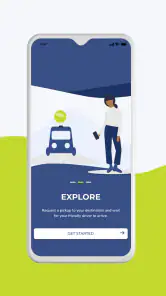
The first thing I noticed is that the app’s value depends less on complicated technology and more on whether it can remove a small piece of travel friction. Imagine arriving in an unfamiliar district, leaving a café, hotel, shopping area, or local attraction, and realizing that the next stop is too far to walk comfortably but too close to justify a conventional paid ride. This is where Ride Freebee makes sense. Instead of opening a general ride-hailing app and immediately thinking about fares, I can check whether a Freebee vehicle is a practical option for that short hop.
That distinction matters. The app is not most compelling when I am planning a long journey across a city. For that, public transit planners usually provide broader route coverage, while taxi and ride-hailing services tend to offer more predictable availability. Ride Freebee is more naturally suited to the “last short stretch” of a day out: getting from one nearby area to another, moving around a destination district, or avoiding a tiring walk in heat, rain, or with shopping bags.
I also like the psychological difference created by a free service. With a paid alternative, I often hesitate over whether a short trip is worth the fare. Ride Freebee changes that calculation. The question becomes whether a vehicle is available and whether its operating area matches my plans. That makes spontaneous travel easier, particularly for people visiting a place for the first time and still learning how its neighborhoods fit together.
The app’s presentation benefits from keeping the idea approachable. Its store summary, “Welcome Aboard!”, captures the friendly character better than a technical explanation would. The short description, “Ride Freebee,” is equally direct. I would not choose the app because of those phrases alone, but they reflect the product’s basic promise: find a local ride and use it as part of getting around.
Where the service is stronger than ordinary alternatives
Compared with walking, the advantage is obvious when the distance is awkward rather than truly far. A ten-minute walk may sound easy on a map, but that calculation changes if I am carrying luggage, traveling with a child, wearing unsuitable shoes, or trying to reach an appointment on time. A free local vehicle can turn that uncomfortable gap into a manageable part of the day.
More From Our News Desk

Clash of Clans Is Won Between the Battles

Android Auto Makes the Case for Quieter Car Software

MobiOffice: Transforming Mobile Productivity with Seamless Integration

EA SPORTS FC™ Mobile Soccer: Redefining Mobile Sports Gaming

How Microsoft OneDrive Became a Mobile Productivity Giant

How Google Translate Breaks Language Barriers Effortlessly
Compared with a standard ride-hailing app, the strongest difference is cost. Ride-hailing platforms are useful because they are familiar and often widely available, but their prices can make short trips feel excessive. Ride Freebee is worth checking first when the route is local and flexible. Even when I ultimately need another option, checking it can be a sensible first step before paying for a journey that may take only a few minutes.
Compared with public transportation, Ride Freebee can be easier for a short, direct movement within its operating area. Buses and trains may be cheaper or more extensive overall, but their routes, stops, and schedules do not always line up with the exact place I want to reach. A local ride can be more convenient when I am moving between nearby points that are poorly connected by fixed routes.
There is also a social advantage that is easy to overlook. A local shuttle-style service can make a destination feel more connected. Visitors do not need to understand every transit line before moving around, and residents may discover that a nearby errand is easier without taking a car. That does not make the app a substitute for a full transport network, but it gives it a useful role between walking and paid private transport.
Three practical habits that improve the experience
My first recommendation is to check the app before you are already standing outside and in a hurry. Free local transport is most helpful when I build a little flexibility into the plan. Before leaving a venue, I can open the app, consider the destination, and decide whether the ride is realistic. If the service does not fit, I still have time to walk, use transit, or order a paid ride without turning the decision into an emergency.
The second habit is to think in terms of zones and short connections rather than exact personal itineraries. A common mistake is to approach a local ride app as if it should behave like a private car that appears for any address. Ride Freebee makes more sense when I use it to connect nearby places within the areas it serves. If my journey crosses a large part of town or requires a precise arrival time, I should compare it with a transit planner or a conventional ride provider immediately.
The third is to use it as a backup layer during a day of exploring. I would not plan an entire trip around one transport option unless I already know that the relevant area is well covered. Instead, I can combine walking for the scenic parts, public transit for longer distances, and Ride Freebee for the uncomfortable gaps. This mixed approach is more reliable than expecting one app to solve every movement from morning until night.
That workflow also helps answer a question many new users have: is the app useful if I have no fixed plan? Yes, but mainly for local exploration. I can use it when deciding whether to continue to another nearby area, particularly if weather or fatigue changes my plans. It is less suitable as the only tool for a tightly scheduled itinerary because local availability and coverage can affect the result.
The limitation that matters most
The main weakness is not the idea of free transport; it is the uncertainty that comes with a service designed around particular operating areas. A user may open the app expecting the same convenience everywhere, only to discover that the intended trip does not fit the available service. This is the kind of friction that can be more frustrating than a clearly paid alternative, because the app encourages hope before the final route is confirmed.
That limitation affects several types of travel. If I need to arrive at an airport, interview, medical appointment, or timed reservation, I would not make Ride Freebee my only plan. A delayed or unavailable local ride could leave too little time to recover. For those situations, I prefer a transport option with a more predictable booking process, even if it costs money. Free is valuable, but reliability has greater value when missing the destination carries consequences.
The same caution applies to late-night movement, long-distance travel, and trips involving several connections. Ride Freebee is strongest as a local convenience, not as a universal trip planner. Someone who wants one app to calculate a journey across an entire metropolitan area may be happier with a public-transit application that combines buses and trains, or with a paid ride service that is built around broad point-to-point coverage.
Another trade-off is that “free” does not mean frictionless. I still need to understand where the service operates and allow enough time for the ride to be useful. I may also need a walking segment at either end. That is not a serious flaw, but it changes how I judge the app. The right comparison is not always “free car versus paid car”; sometimes it is “free local connection plus walking versus a paid vehicle that comes directly to me.” In that comparison, the paid option can win when convenience is the priority.
Who should install it, and who should skip it
I would recommend Ride Freebee to travelers who are exploring a participating local area and want another way to handle short trips. It is also a good fit for residents who regularly move between nearby destinations and dislike paying for small rides. People with flexible schedules will get more from it than people who need a vehicle at an exact minute.
It can be particularly useful for a group whose needs change during the day. A family may walk to one attraction, then decide that the next stop is too far for the youngest traveler. A couple carrying purchases may want to avoid a long return walk. Someone visiting without a car may use it to make a neighborhood feel more accessible. These are modest situations, but they are exactly where a free local shuttle can improve a day.
I would be more cautious about recommending it to commuters who need a guaranteed daily connection, travelers with strict departure times, or anyone planning routes outside the service’s local reach. It is also not the first choice for users who want detailed multi-mode planning, fare comparisons, or a single transport network covering every stage of a journey. In those cases, a transit app or paid ride-hailing alternative is likely to be more useful.
Parents and accessibility-conscious travelers should make their decision based on the practical details of the specific ride and destination rather than assuming that every local trip will be equally easy. The app is rated for Everyone, which makes it broadly approachable, but an age rating does not answer every real-world travel question. I would still plan the walking portions carefully and avoid relying on the service when a traveler needs a highly predictable or specially arranged journey.
What the app’s history and reception tell me
Freebee has been developing the app since 2015, and that longevity is meaningful in a category where local mobility products can appear and disappear quickly. The rating profile is encouraging without being perfect: a 4.1 average from thousands of ratings indicates that many users find it worthwhile, while also suggesting that the experience can vary by situation. The written-review volume gives prospective users enough community feedback to see that this is not an untested concept.
I would interpret the install count in the same practical way. More than 100K installs show that the app has reached a substantial audience, but popularity alone cannot tell me whether it will be useful for my exact destination. Local transport is unusually dependent on geography. An app can be excellent in one area and irrelevant a few miles away, so I would treat the numbers as evidence of an established service rather than a promise of universal coverage.
The current version, 2.17.1, also makes it sensible to keep the app updated before a trip. I do not view an update number as proof that every problem has been solved, but using the latest available version is a simple way to avoid preventable compatibility issues. Since the minimum Android requirement is 7.0, people using very old devices should check compatibility before making the app part of their travel plan.
For iPhone users, the important question is still practical availability in the relevant local area and the quality of the current experience on their device. I would not assume that an app’s presence on one mobile platform automatically makes it equally useful everywhere. The best preparation is to install it before traveling, open it, and see whether its local information matches the places I intend to visit.
My final recommendation
Ride Freebee succeeds because it targets a very specific annoyance: the short journey that is inconvenient to walk but hard to justify paying for. In my experience, that focus is its strength. It can make local exploration easier, reduce the cost of small trips, and provide a useful middle option between walking, fixed-route transit, and paid private rides.
Its weakness is equally clear. I would not depend on it as a guaranteed transport solution for a strict schedule or a trip that extends beyond its local purpose. The app rewards flexible planning, advance checking, and a willingness to combine transport modes. Users who understand that will probably appreciate it much more than those expecting an on-demand car for any address.
Freebee is free to install and use as an option, so the barrier to trying it is low. My advice is to add it before a local trip, check whether it fits the areas you plan to visit, and keep a backup for important journeys. My strongest recommendation is to treat Ride Freebee as a smart short-distance layer in your travel toolkit, not as your entire transportation plan. For visitors, casual explorers, and residents facing those awkward nearby trips, that can be genuinely useful. For guaranteed timing and broad coverage, the usual paid or public-transit alternatives remain the safer choice.
After testing its role as a local travel companion, I would recommend Ride Freebee to anyone who values flexibility and wants to see whether a free ride can simplify the next part of the day. It is not a universal answer, but within the right setting, its focused approach is more valuable than a crowded app that tries to do everything.
Ride Freebee Frequently Asked Questions
Is Ride Freebee available for visitors as well as local residents?
Ride Freebee is intended for use in participating communities, and whether a particular trip is supported depends on the local service area and its rules. Visitors can check the app’s coverage and ride options just as they would before planning a journey. Review any instructions shown for your location, since pickup boundaries and operating arrangements can differ from one community to another.
What is Ride Freebee and how does it work?
Ride Freebee is a local transportation service that connects passengers with free or low-cost rides in participating communities. After installing the app, you can check whether service is available in your area, enter a pickup and destination, and request a vehicle. Availability, operating hours, service zones, and vehicle types may vary depending on the city or local transportation program. It is a Travel & Local app from Freebee, with “Ride Freebee” as its short description.
Is Ride Freebee really free to use?
Ride Freebee is designed to provide complimentary rides in supported service areas, but users should review the details shown in the app before requesting a trip. Some locations may have specific eligibility rules, limited routes, special events, or partnerships that affect availability. Additional transportation options, if displayed, may not follow the same pricing policy as the standard free service. The app itself is free to download.
Where is Ride Freebee available?
Ride Freebee is not available everywhere, so checking local coverage is essential before downloading it for a planned journey. The app generally operates in selected cities, neighborhoods, business districts, campuses, resorts, or event areas. Coverage can change over time, and the service map may include boundaries, pickup restrictions, and operating hours that are different from one location to another.
Do I need an account or location access to request a ride?
Most Ride Freebee features require users to provide basic information and allow location access so the app can identify the pickup point and show nearby vehicles or service zones. You may also need to enter a phone number or other account details for trip communication. If location permission is disabled, you might still browse some information, but requesting and tracking a ride can be limited.
Pros
- Free rides make short local trips more affordable.
- Electric vehicles offer a quieter
- cleaner way to travel.
- Service is convenient for trips within supported coverage areas.
- App-based booking helps you request a ride without cash.
- Useful for connecting with nearby businesses and attractions.
Cons
- Availability is limited to selected cities and service zones.
- Vehicles may be unavailable during busy periods or bad weather.
- Coverage areas can be too small for longer journeys.
- Waiting times may increase when demand is high.
- Service hours and routes may vary by location.
- Category
- Travel & Local
- Version
- 2.17.1