ReelMoney: Watch & Earn Cash
- 2.50K
- 4.8
- Installs
- 100.00K
- Price
- Free

Screenshots

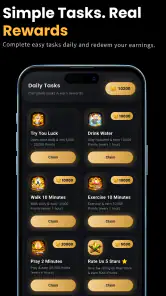
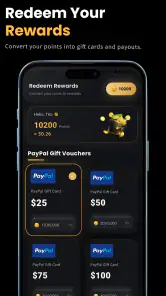
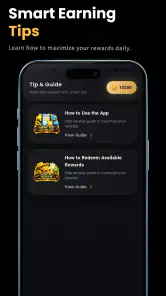

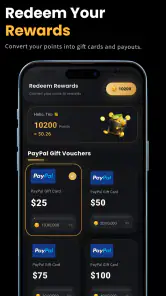
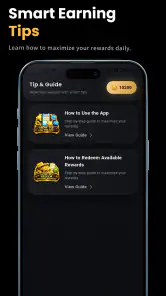
Analysis by Reviewed
I approached ReelMoney as a finance app with a simple promise: spend a little time watching short videos and completing tasks, then use the points you collect toward rewards. That idea is easy to understand, but earning apps deserve a more careful look than a typical entertainment download. The important question is not only whether the screens are easy to use; it is also whether the app gives me enough control to understand what I am doing, what I am sharing, and when I should stop.
My overall impression is cautious but interested. ReelMoney is free, aimed at everyone, and developed by Debug Entity Dev. It has attracted over one hundred thousand installs, with a strong average of 4.8 from roughly fourteen thousand ratings and about two and a half thousand written reviews. Those figures suggest that many people find the basic experience appealing, although they do not replace my own judgment about privacy, reward conditions, or whether the time spent feels worthwhile.
The app is currently version 1.0.0 and works on Android 7.0 or later. It was released on March 15, 2026, so I would treat it as a relatively new product rather than a long-established financial service. That matters when deciding how much personal information to provide. I would begin with the smallest account footprint possible, explore the available controls, and only continue if the reward process feels clear and proportionate to the time involved.
How ReelMoney Builds Trust Through Its Basic Experience
The first thing I noticed about this kind of app is that the central activity is deliberately lightweight. ReelMoney combines short video viewing with tasks, turning spare moments into a points routine. That makes it different from a budgeting app, banking tool, or investment platform. It does not replace those services. Instead, it sits closer to a rewards app, where the user trades attention and completed actions for points.
That distinction is important because the word “cash” can create expectations that the app functions like a conventional income source. I would not approach it that way. Even if the reward flow is convenient, short-video and task-based earnings are better understood as occasional extras. The useful test is whether the experience fits naturally into time I would otherwise waste, not whether it can support regular expenses.
The store summary presents a daily rhythm: watch, complete tasks, collect points, and redeem rewards. I like that the cycle is easy to remember, but I would avoid treating the daily wording as a reason to open the app compulsively. A good routine is one I can end without feeling pressured to keep watching. If a task is unclear, asks for more information than expected, or makes redemption difficult to understand, I would skip it rather than chase a small points balance.
One practical way to evaluate ReelMoney is to separate the experience into three stages. First, I would inspect the account setup and any permission requests. Next, I would complete only a small number of videos or tasks while noting how the points are displayed. Finally, I would examine the redemption area before investing more time. This order prevents the common mistake of spending hours accumulating points before learning how the reward process works.
The developer name is visible as Debug Entity Dev, which gives the app a clear identity in the store. For me, that is useful context, but it is not a guarantee of reliability. Trust comes from the choices the app presents in practice: understandable screens, visible account controls, transparent task descriptions, and a redemption flow that does not hide important steps behind vague wording.
What I Would Check Before Spending Time
I would begin by reading every permission prompt instead of tapping through the setup automatically. A video-and-task rewards app may need certain access for specific activities, but the reason should be understandable at the moment it is requested. If a permission seems unrelated to watching content or completing a chosen task, I would decline it and see whether the core experience still works.
I would also look for a clear way to manage the account. Useful controls include the ability to review account details, change preferences, sign out, and understand what happens to the account if I stop using the app. I would not assume that uninstalling an app automatically removes an account or any information associated with it. If account deletion or data controls are available inside the app, I would locate them before building up a balance.
Another early check is the reward explanation. I would want to see how points are earned, whether different tasks have different conditions, and what steps are required to redeem them. The most important detail is not the size of an advertised reward; it is whether the path from task completion to redemption is understandable. A points total that looks attractive but cannot be interpreted easily is not very useful.
I would take screenshots or personal notes of the terms shown when I start a task, especially if it sends me to another service. This is a simple but valuable habit. Task conditions can be easy to forget, and a record helps me distinguish between a task that was completed and one that merely opened. It also makes it easier to decide whether a particular offer was worth the time.
My strongest practical tip is to test the smallest realistic reward route first. I would not spend a week building a large balance before finding out how redemption works. A small test can reveal whether the app gives clear progress feedback, whether the required steps are manageable, and whether the available reward options match what I actually want.
Where Data-Sensitive Moments Can Appear
Watching a short video is relatively straightforward, but task-based rewards can introduce more sensitive moments. A task may involve an external page, an account registration, a survey, or another action that asks for personal details. I would treat each task as a separate decision rather than assuming that every activity inside the app has the same privacy impact.
My rule would be simple: if a task requests information that is not necessary for the action I want to complete, I would leave it. I would be especially careful with identity details, contact information, payment-related information, and requests that encourage me to connect other accounts. A small points reward is not worth giving away information I would normally keep private.
I would also distinguish between permissions and information entered into a task. A permission controls what an app can access on the device, while a form may send information directly to a third party. Both deserve attention, but they are different choices. Reading one permission prompt does not explain what a separate task provider may do with information entered on its page.
For that reason, I would avoid completing tasks while distracted. The most risky moment is often not the normal video feed; it is the fast tap through a task that appears to offer easy points. I would pause whenever a screen changes from viewing content to requesting registration, downloads, contact details, or account connections. If the transition is not obvious, I would close it and return to the main app.
I would keep notifications limited as well. If the app allows notification choices, I would prefer reminders that are useful rather than constant prompts to return. Notifications can turn a small rewards habit into background pressure. The ability to silence them, at least temporarily, is part of user control even when the main earning features remain available.
There is also a device-safety angle. I would not install unrelated software merely to complete a task unless I already trusted that software and had a genuine reason to use it. The points should never be the only reason I add an unfamiliar app to my phone. This is one of the clearest trade-offs in task-reward platforms: the reward may be small, while the extra download, account, or permission can create a much bigger commitment.
Keeping Control of the Daily Routine
ReelMoney makes the most sense for someone who can set boundaries. I would choose a short session, complete only tasks I understand, and stop when the available options become repetitive or intrusive. This approach protects the value of my time. If I open the app during a commute or while waiting for an appointment, I would treat the session as optional entertainment with a possible reward, not as a job.
A useful personal measure is points per minute, even if I never calculate it precisely. After a few sessions, I can ask whether the activity feels better than another use of that time. If videos are easy to watch but tasks take much longer than expected, the points may not justify continuing. The app’s value depends less on the existence of rewards than on how much effort each reward requires.
I would also avoid chasing incomplete tasks simply because I had already started them. That is a common trap in reward systems. If a task becomes confusing, demands unexpected information, or sends me through several unrelated screens, stopping is a reasonable decision. The time already spent should not force me to accept a new privacy or account commitment.
For families, the Everyone rating makes the app broadly accessible, but I would still explain the difference between watching content and completing offers. Younger users may see points as free money and accept prompts too quickly. An adult should review the account setup, task types, permission requests, and redemption process before allowing unsupervised use. The age label is helpful for general suitability, but it does not remove the need for guidance around personal information.
People who need predictable income should skip this category altogether. ReelMoney is not the right replacement for paid work, a savings plan, or a financial management tool. Someone who dislikes advertising, does not want to create accounts for offers, or expects immediate and guaranteed value will probably be happier with a conventional video app or a straightforward budgeting application.
How It Compares With Familiar Alternatives
Compared with a normal short-video platform, ReelMoney adds a purpose to viewing: I am not only watching, I am checking whether the activity contributes to points. That can make idle time feel more productive, but it also adds a layer of tracking and task management. A regular video service may offer a smoother entertainment experience, while ReelMoney is more suitable for someone willing to trade some convenience for a rewards system.
Compared with survey-only rewards apps, the video element may make the routine feel less demanding at first. On the other hand, surveys often tell me more clearly what information is being requested before I begin. ReelMoney users should therefore examine each task individually rather than assuming that watching content is always the safest or simplest route.
Compared with cashback services, ReelMoney does not fit the same spending pattern. Cashback tools are useful when I am already making a purchase and want a rebate. This app is better suited to spare time, because the activity is based on viewing and tasks rather than shopping. If my goal is to reduce the cost of purchases I already plan to make, a cashback alternative may be more efficient.
Compared with personal finance apps, the purpose is completely different. A budgeting app helps me understand money I already earn and spend. ReelMoney may provide small rewards, but it does not replace planning, tracking bills, or building savings. I would use it alongside those tools only if I could keep the distinction clear.
The trade-off is therefore easy to describe: ReelMoney may be more engaging than a static rewards page, but it can require more attention and more careful screening of tasks. A simpler option may be better for anyone who values predictable steps over variety. The best choice depends on whether I want an occasional points activity or a direct discount on something I was already going to buy.
Who Will Get the Most From It
I think the app is best for patient users who enjoy short sessions and are comfortable reviewing each task before accepting it. It can fit someone who has small gaps in the day, wants to experiment with a free rewards app, and understands that the return may be modest. The free price lowers the barrier to trying it, but it should not lower my standards for privacy or clarity.
A realistic scenario would be waiting for a train. I might open ReelMoney, watch a couple of short items, inspect the task section, and choose one activity that does not require sensitive information or an unfamiliar download. Before closing the app, I would check whether the points appeared correctly and glance at the redemption area. If the process feels clear, I might repeat that routine occasionally. If the task turns into a long registration process, I would stop and use the waiting time differently.
The app is less suitable for users who want a guaranteed hourly return. It is also a poor fit for anyone who tends to accept every prompt without reading it. People with limited mobile data should consider the cost of video viewing as well, since time is not the only resource involved. The reward may be free in monetary terms while still consuming data, battery, attention, and personal information.
I would also recommend caution for users who already have many reward accounts. Adding another points balance can create clutter, especially if each service has separate rules and redemption steps. In that situation, a single alternative with a clearer purpose may be more practical than spreading small amounts of activity across several apps.
My Verdict After Looking Beyond the Points
ReelMoney is appealing because the basic idea is immediately understandable and the app is free to try. Its strong user rating and growing install base make it worth investigating, but I would not treat popularity as proof that every task is suitable for me. The most responsible way to use it is to keep the account minimal, inspect permissions, separate ordinary viewing from higher-commitment offers, and test redemption early.
The app’s biggest strength is flexibility. I can approach it as an occasional activity rather than committing to a fixed financial product. Its biggest weakness is the same flexibility: the value of the experience depends heavily on the tasks available and on my willingness to screen them. If I stop paying attention, a small reward can lead to a much larger commitment of time or information.
My recommendation is therefore measured. I would try ReelMoney if I wanted a free way to fill short idle periods and was comfortable treating the points as a minor extra. I would not use it for essential income, and I would never provide sensitive details simply to complete a low-value task. The right mindset is controlled experimentation, not financial dependence.
For me, that makes it a reasonable app to explore, provided I remain in charge of the account and the routine. I would keep notifications under control, review every task separately, and leave whenever the exchange stops feeling fair. Used with those boundaries, ReelMoney can be an interesting addition to a rewards-app collection; used without them, it is unlikely to be the best choice for someone seeking simple, predictable value.
Pros
- Simple interface makes videos easy to browse and watch.
- Offers multiple earning activities beyond watching short clips.
- Reward progress is visible
- helping users track completed tasks.
- Lightweight design should work smoothly on many older devices.
- Can be used casually without requiring long daily sessions.
Cons
- Earnings per task may be small compared with the time required.
- Cash-out availability can depend on region and account eligibility.
- Reward values and task availability may change without notice.
- Some activities may redirect users to external offers or websites.
- Frequent ads can make navigation and viewing feel repetitive.

- Category
- Finance
- Version
- 1.0.0