Raleigh News & Observer | NC
- 219.00
- 3.1
- Installs
- 10.00K
- Price
- Free

Screenshots
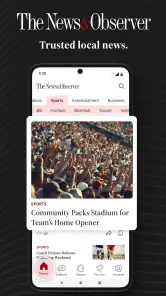
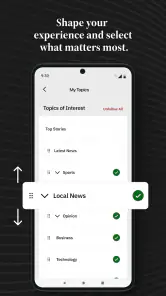

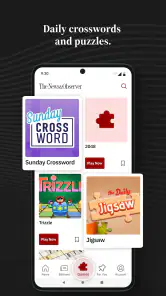
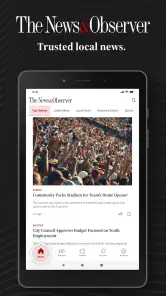


Analysis by Reviewed
I approached Raleigh News & Observer | NC as a focused way to keep up with North Carolina rather than as a replacement for every news source on my phone. That distinction matters. This free News & Magazines app from McClatchy is aimed at readers who want Raleigh-area reporting, state politics, crime, business, weather, and local college sports gathered in one place. In my experience, its value comes from that regional focus: it is most useful when North Carolina stories are the ones I care about, not when I am looking for a broad national news hub.
The app has been around since Apr 18, 2011, and its current version is 11.1.16. It supports Android 8.0 and later, carries an Everyone 10+ content rating, and is free to install. There are in-app purchases ranging from $7.99 to $159.99 per item, so I would not treat the download price as the whole cost question. The important thing is to decide whether the app’s local coverage justifies any access or subscription choices presented during use.
A regional news app with a clear purpose
The strongest reason to try this app is its editorial territory. Instead of making me sort through a large national feed to find something happening in Raleigh or elsewhere in North Carolina, it puts the state’s concerns at the center. That is particularly helpful for people who follow local government, court and crime reporting, regional business developments, weather changes, or college sports that receive little attention from general-purpose news apps.
I found that focus more valuable than a long list of unrelated sections. A local reader often wants to know what is happening near home before checking national headlines. The app’s subject mix reflects that routine. Politics can affect schools, taxes, transportation, and public services; crime coverage can be relevant to a neighborhood; weather information can shape a commute; and local sports can be part of a family or campus routine. Keeping those interests together makes the app easier to justify than a generic headline reader.
It also gives the app a practical role for people who have moved away from North Carolina but still want a connection to the region. Former residents, relatives of students, alumni, and people with business interests in the state may not need a national news application to tell them what matters locally. They need a reliable starting point for North Carolina stories, and this app is designed around that need.
How I would use it during an ordinary day
A realistic routine would be to open the app in the morning and scan the main local stories before work. I might check weather first if I had a long drive, then look at politics or business for developments that could affect the day. Later, I could return to crime coverage for a more immediate local picture or browse college sports in the evening. That sequence feels more natural here than it would in an app built mainly around national or international headlines.
One useful habit is to separate quick checking from deliberate reading. I would use the first pass to identify stories that affect my area or plans, then return to the most important articles when I have time to read carefully. This prevents the app from becoming another endless stream of headlines. It also helps me judge whether the local focus is earning its place on my phone rather than opening it automatically without a purpose.
More From Our News Desk

Clash of Clans Is Won Between the Battles

Android Auto Makes the Case for Quieter Car Software

MobiOffice: Transforming Mobile Productivity with Seamless Integration

EA SPORTS FC™ Mobile Soccer: Redefining Mobile Sports Gaming

How Microsoft OneDrive Became a Mobile Productivity Giant

How Google Translate Breaks Language Barriers Effortlessly
For a household, the app can serve several different interests without requiring separate local sources. One person might care about weather and public safety, another about state politics, and someone else about college sports. That combination is a concrete strength because it reflects how local news is actually consumed: not as one narrow subject, but as a collection of nearby issues that change from day to day.
Where the focused coverage works best
Local politics is one of the areas where a regional publication can be more useful than a broad news aggregator. National apps tend to elevate stories with wide appeal, while decisions made in Raleigh or elsewhere in the state may receive little space. If I wanted to follow state-level debates, officials, or policy developments, I would rather begin with a publication whose audience is already interested in North Carolina.
The same applies to business coverage. A national financial app may be better for markets and major corporations, but it is not necessarily the best place to notice a development involving a local employer, regional economy, or state business environment. The app’s local orientation gives those stories a better chance of being part of my regular reading instead of something I have to search for.
Crime reporting is another area where location matters more than breadth. A national feed may show major incidents from across the country while leaving me unaware of developments close to home. I would still read such coverage carefully and avoid treating a headline as a complete picture, but having local reporting in the same application makes it easier to stay informed about nearby events.
Weather is similarly practical. A general weather app may remain the better tool when I need a detailed forecast, radar, or a quick temperature check. However, a local news application can add context around weather events and their effect on communities. I see the two tools as complementary rather than interchangeable: one for immediate conditions, the other for local reporting and consequences.
The main limitation: local focus is also a boundary
The app’s biggest weakness is inseparable from its main strength. A North Carolina-centered service is not the right choice if I want a balanced national and international news diet from one screen. I would still need another source for wider events, specialist coverage, or a broader range of viewpoints. Readers expecting a complete replacement for a general news app may find the scope too narrow.
There is also a difference between wanting information and wanting a publication relationship. Because the app includes in-app purchases between $7.99 and $159.99 per item, I would pay attention to any access prompts and make sure I understand what an offered purchase provides before confirming it. The free installation makes trying the app straightforward, but it does not mean every part of the reading experience necessarily has the same access conditions.
That may create friction for casual readers. Someone who only wants an occasional weather update or a quick headline could prefer a free local television app, a browser, or an established news aggregator. Those alternatives may be less focused on one newspaper’s coverage and may offer a different balance between local reporting, video, forecasts, and national news. The better option depends on whether depth and regional identity matter more than convenience.
The average rating is 3.1 from around 443 ratings, with around 219 written reviews. I would read that as a reason to approach the app realistically rather than as an automatic rejection. It suggests that the experience has not satisfied everyone, so I would test navigation, article access, and reading comfort during the first few sessions. If the app feels awkward for the way I consume news, no amount of local relevance will make it a good daily tool.
Small workflow choices that improve the experience
My first recommendation is to decide what “local” means for you before settling into the app. Raleigh-focused readers may find the coverage immediately relevant, while someone in another part of the state may need to check whether the stories they see match their community interests. This is an important trade-off: the app’s state identity is broad enough to be useful beyond one city, but it may not replace a highly neighborhood-specific source.
Second, I would use the section mix intentionally instead of treating every headline as equally urgent. Politics, crime, weather, business, and college sports have different reading needs. A quick weather check can be handled in seconds, while a political or business article deserves more context. Separating those purposes helps prevent the most emotionally immediate headlines from dominating my understanding of the day.
Third, I would compare the app with my existing sources for one week rather than installing it alongside everything indefinitely. I would note whether it surfaces North Carolina stories I would otherwise miss, whether its local sports coverage is useful to me, and whether its article access fits my budget. That test gives a clearer answer than simply counting how often I open it. The app earns its place when it adds regional reporting, not when it duplicates headlines I already receive elsewhere.
A fourth useful approach is to pair it with a dedicated weather tool if forecasts are central to your routine. The news app can help explain local effects, road problems, closures, or community response, but a specialist weather application is generally the more efficient choice for detailed forecasting tasks. Using each tool for what it does best is more sensible than expecting one local news app to cover every information need.
Who should install it, and who should skip it
I would recommend Raleigh News & Observer | NC to North Carolina residents who want a publication-centered view of local affairs and who regularly follow more than one regional subject. It is especially well suited to readers who care about state politics alongside business, public safety, weather, or college sports. It can also make sense for former residents and families who want a convenient way to keep North Carolina in their daily reading.
The app is less compelling for someone who only wants national headlines, international reporting, stock updates, or a detailed forecast. In those cases, a general news reader, financial service, or dedicated weather application would probably be more efficient. I would also hesitate to recommend it to a reader who dislikes access prompts or is unwilling to consider paid content, since the presence of in-app purchases means the free download should not be confused with unlimited access to everything.
Its Everyone 10+ rating makes it suitable for a broad audience, but that should not be mistaken for a promise that every article will feel comfortable or appropriate for every reader. Crime and political reporting can involve serious subjects. Parents choosing an app for younger readers should still use their own judgment about the articles being read, even though the formal age guidance is not restrictive.
My final view after weighing the trade-offs
My overall impression is that this is a specialized local news tool with a worthwhile purpose, provided I actually want North Carolina coverage. Its strongest feature is not a flashy extra; it is the editorial concentration on Raleigh and the state around it. That focus makes the app more useful than a generic feed when I need local politics, crime, business, weather context, or college sports in one reading routine.
At the same time, I would not install it expecting a complete news ecosystem. The limited regional scope, the possibility of paid access, and the modest 3.1 average mean I would evaluate it on my own reading habits. I would spend a few days checking whether the navigation feels comfortable and whether the articles add something beyond my current sources.
My recommendation is straightforward: choose it for focused North Carolina reporting, not for all-purpose news. If Raleigh and the surrounding state are part of your everyday life, the app can become a practical starting point for staying informed. If they are not, or if you mainly want free, broad coverage with minimal friction, another news option will likely serve you better. That clear audience makes the app easier to judge honestly, and for the right reader, its regional concentration is a genuine advantage.
Raleigh News & Observer | NC Frequently Asked Questions
What devices can I install the Raleigh News & Observer app on?
The Raleigh News & Observer is a mobile news app for Android and iOS devices. Its current version is 11.1.16, and it requires Android 8.0 or later. The app is listed as free to download, so you can install it and explore its available features before deciding whether a subscription is right for you.
Who publishes the Raleigh News & Observer app, and what is its age rating?
The app is published by McClatchy and is rated Everyone 10+. It is a news and magazine app centered on North Carolina, so its content includes reporting on public affairs and other current events. Parents can consider the age rating when deciding whether it is suitable for a younger reader, and can also review the content together.
What is the Raleigh News & Observer app?
The Raleigh News & Observer app is a mobile news platform focused on Raleigh, the Triangle region, and communities across North Carolina. After opening the app, readers can browse local reporting, breaking news, politics, sports, business, entertainment, opinion, and lifestyle coverage. It is designed for users who want a convenient way to follow regional stories without relying only on a mobile browser.
Is the Raleigh News & Observer app free to download and use?
The app can generally be downloaded at no charge, but access to all articles and premium features may depend on the publication’s subscription policy. Some stories may be available to everyone, while other content can be limited by a digital paywall. The app offers in-app purchases ranging from $7.99 to $159.99 per item, so review the purchase terms shown before subscribing.
What type of news and content can I read in the app?
The app primarily delivers news relevant to Raleigh and North Carolina, including local government, education, crime, public safety, housing, transportation, and community developments. It also includes coverage of regional and national topics, along with sports, business, arts, food, and opinion content. The publication’s focus includes North Carolina news, politics, crime, business, weather, and local college sports. The exact sections and story selection may change as editors update the publication throughout the day.
Pros
- Covers breaking news and local developments across the Raleigh area.
- Strong focus on North Carolina politics
- education
- and community issues.
- Includes sports coverage for local teams and regional events.
- Search tools make it easy to find older stories and topics.
- Useful alerts can help readers stay updated on major local events.
Cons
- Some articles or features may require a digital subscription.
- Advertising can make parts of the app feel visually crowded.
- Coverage is primarily regional and may not suit non-North Carolina readers.
- Notifications may become frequent unless carefully customized.
- App performance and content loading can depend heavily on connection quality.
- Category
- News & Magazines
- Version
- 11.1.16